A few days ago I was scrolling on tiktok, and a man asked the comments to drop their most profound takes on Quran most don't notice.
Someone said one that resonated with me she said, during the story of Maryam it reached a point perhaps the shame the social isolation she said " my lord I wish I was dead or never born" pls it's not word for word, I don't remember exact wording but somewhere along this line.
The commenter said, how many of us have gone through so much and felt this way, but this is an exemplary woman that Allah honored as one of the best, yet he told us this part about her to show us that these are human feelings, that our pain- people better than us have felt them and it does not mean Allah have deserted us. He sees all pain and answers all prayers in due time.
Yesterday, I turned down a well-paying gig that came with a 60% deposit already paid by the client. The money was good and the timeline was just one week. But something didn’t feel right about it.
Instead of rushing to start the work, I asked for 24 hours to consult with a few trusted people. After careful reflection and honest feedback, I decided that the gig wasn’t for me to take. I refunded the client promptly and moved on, even though this time is such a time for me to recover financially.
Here’s what I learned and what every professional, especially freelancers, should internalize:
1. Integrity is not negotiable.
Turning down good money after deposit shows that your principles and long-term reputation are not for sale. In a world where many would force it through, choose character over cash. That decision builds trust that compounds over years.
2. Consultation is professional wisdom.
Never be pressured to say “yes” immediately. Buy time, speak with sound minds, and check alignment with your values, expertise, and peace. It saves you from avoidable stress and regret.
3. Money is replaceable; reputation and peace of mind are not.
One week’s gain can never be worth compromising your standards or delivering with doubt. Refund cleanly and quickly; it turns a potential negative into proof of reliability.
4. Saying “No” gracefully is a mark of maturity. Especially in dispute resolution and family law practice, be selective. Only take what you can deliver with excellence. Boundaries protect both you and your clients.
5. Think long-term, always.
Short-term wins tempt many, but protecting your brand as a principled professional pays far higher dividends. This is how you build a practice and reputation rooted in trust, not just transactions.
Situations like this remind me why we must keep choosing principle over profit. It’s not easy, but it’s necessary.
But because he who wants to save his life shall lose it, Abacha died right inside the Villa.
We have always read that clerics wielded enormous powers, but what many probably never knew is that they also did security work. Gowon said the marabouts were “agents of the French Intelligence Service” whose motive was to infiltrate his government and rule or ruin it from within. He said he ignored them and handed over his life and affairs to God.
Not all leaders avoid marabouts; many court and worship them, often to their ruin. It happened to Afonja, another Kakanfo whose attachment to spiritualists brought Sheikh Alimi into the very centre of his power, and to his sorrow.
How much of that cleric content do we have in our own power bottle today? Gowon said the marabouts who sized him up were French agents; so, whose agents are today’s mystics?
Some ten years ago, Nigerians were told that the country spent N2.2 billion hiring clerics for national prayers against insecurity. The money and the prayers went with the wind. Today, what happens behind the curtains of power? We still have marabouts as drivers of our politics and governments. Many African presidents, we are told, do not sleep, travel or even make appointments without consulting unseen “controllers.”
How much influence do these invisible advisers wield today in Abuja? That is a question worth asking whenever power behaves strangely in Nigeria, especially now that government is afraid to call terror and terrorists by their name.
“I can’t stop thinking of the abducted pupils and their teachers. Many will be traumatised for life. If they were forced to watch the beheading of their mathematics teacher, many will suffer mental health issues. All of them will never be the same again.” An old schoolmate and health practitioner in the United States sent me those words. You should have no difficulty agreeing with her.
I set out to write that Nigeria is the factual setting of the classic horror film or detective novel: bloody, harsh, cold, intriguing and insane. But there is one difference. No matter how long the night of blood and darkness, detective fiction traditionally ends with order restored. The guilty are exposed, justice is served, and society breathes again. Nigeria’s bad story does not end; it remains trapped in the middle chapters where chaos walks forever freely and innocence bleeds till eternity.
Nigeria suffers urban chaos and rural terror. Stand on the terrace of your home and look at the street. What stretches before you is a horizon of insecurity, untamed terror and collapsed social order. The cloud and its storm are not fleeting, yet we individually comfort ourselves with the hope that our own roofs will escape the rain.
The president last Monday expressed similar optimism. He promised bandits and their collaborators hell in the hands of hunters. He said they would face the law. What law? What justice? He spoke as if we do not know that in Nigeria, terrorism moves swiftly while justice limps behind it.
I cite an example. The trial of a kidnapping suspect commenced in an Oyo State High Court only a few days ago. The abduction happened in March 2019. A farm guard from the North masterminded the abduction of his own employers. A ransom of N25 million was paid, one worker was killed, confessional statements were obtained and arrests made almost immediately. Yet, seven years later, the case has only just started crawling through the courts, with witnesses now recounting their ordeal before a judge.
Because terrorism here rejects the certainty of punishment, terror in the South-West has now moved from farms to schools. In Yorubaland, schools are inviolable symbols of innocence and civilisation. Strange men with strange ideas have now turned them into theatres of horror.
I pray those Oriire school kids abducted by kidnappers return home safe and healthy. 🤲🏽
“Allahumma inni a’udhu bika minal-hammi wal-huzni, wal-‘ajzi wal-kasali, wal-bukhli wal-jubni, wa dhala’id-dayni wa ghalabatir-rijal
Today, approximately 2 Billion Muslims and counting believe in the message of Islam.
I bear witness that there is no deity worthy of worship except Allah and prophet Muhammad (peace be upon him) is HIS messenger.
Whoever read this, may you be my witness on the day where we would be brought forward before our Rabb.
May Allah grant us good ending, Ameen.
You may say yours.
I hope you all know that the financial expiation for unnecessarily aborting a pregnancy after 4 months (ensoulment) is now 42 million naira minimum. And if you cannot afford it, the alternative is 60 days of consecutive fasting. I said I should remind you.
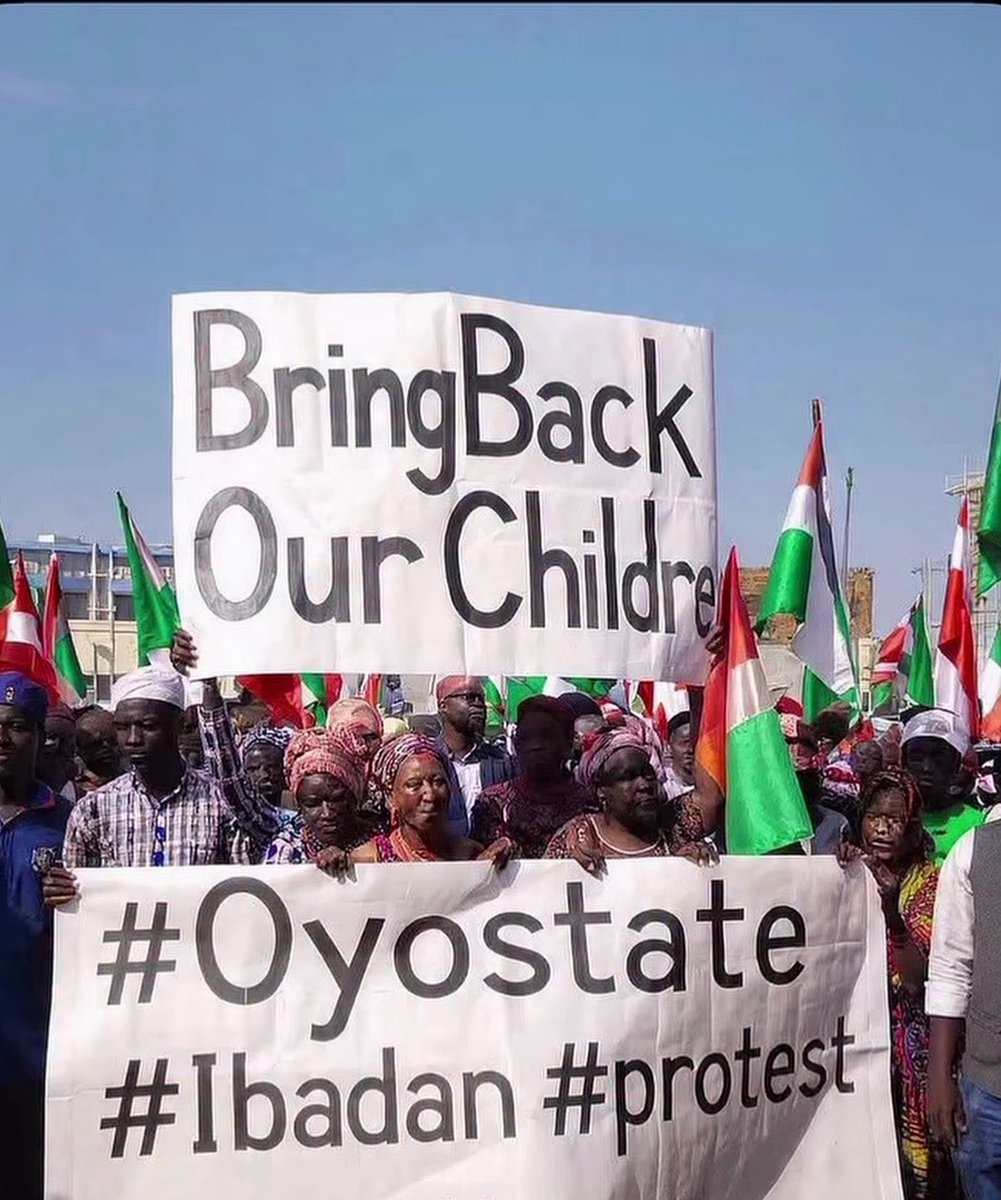
The kidnapped students and their teachers are going to spend another night in that forest again 💔💔💔💔💔
THIS IS THE SIXTH NIGHT 😭😭😭💔💔💔💔💔💔💔💔💔💔💔💔💔💔
Please Do something @oyostategovt@seyimakinde 🙏🏾🙏🏾🙏🏾
Seeing your father, husband, uncle, brother and friend being slaughtered on camera like a goat is another level of pain, loosing a loved one is one thing, loosing them in that manner is painful.
I pray God comfort everyone who are closer to the Ogbomosho teacher.
Students and teachers were kidnapped few days in Ogbomosho by bandits, one of the teacher was slaughtered like animal on camera and his video was posted.
But twitter NG talking about 22k akara and Ugo’s divorce 😔💔
Boys cry too. Boys have fears too. Boys need love, safety, and mental health support too.
Today we celebrate and protect the heart of every boy child. ❤️
#InternationalDayOfTheBoyChild