Interventional Cardiologist | St Michael’s Hospital @UnityhealthTo | University of Toronto @UofT | Transcatheter Structural and Congenital Heart Interventions.
Optimal management of CIED leads pre- TTVR is an area of evolving knowledge. In our recent analysis @JACCJournals, the presence of transvalvular leads was associated with recurrent TR following initially successful TTVR with a non-leaflet-capture platform. @npfam1
First-in-human experience with the Unica cross-caval device for severe tricuspid regurgitation.
Among 8 high-risk patients, implantation was associated with high procedural success, haemodynamic improvement and encouraging early clinical outcomes.
🔗https://t.co/FwVbj2cTWV
#TTVR #TricuspidValve #CardioTwitter
@manuelbarreirop@freixa_xavier@j_hausleiter@SamiAlnasserMD@npfam1
https://t.co/ixNPIJJha7
1/
CHIP-BCIS3: Another Impella Trial bites the dust
History of Impella device:
2008: approved despite pivotal trial PROTECT II (n=448) stopped for futility
2015: Label extended for improving hemodynamic support during high-risk PCI
Excited to share our latest AJC publication on PBMV in patients with left atrial thrombus. It is a contemporary look at safety and outcomes in a traditionally high-risk cohort.
@SamiAlnasserMD@MelissaMoeyMD@npfam1@UnityHealthTO
https://t.co/sVQpKGlqUn
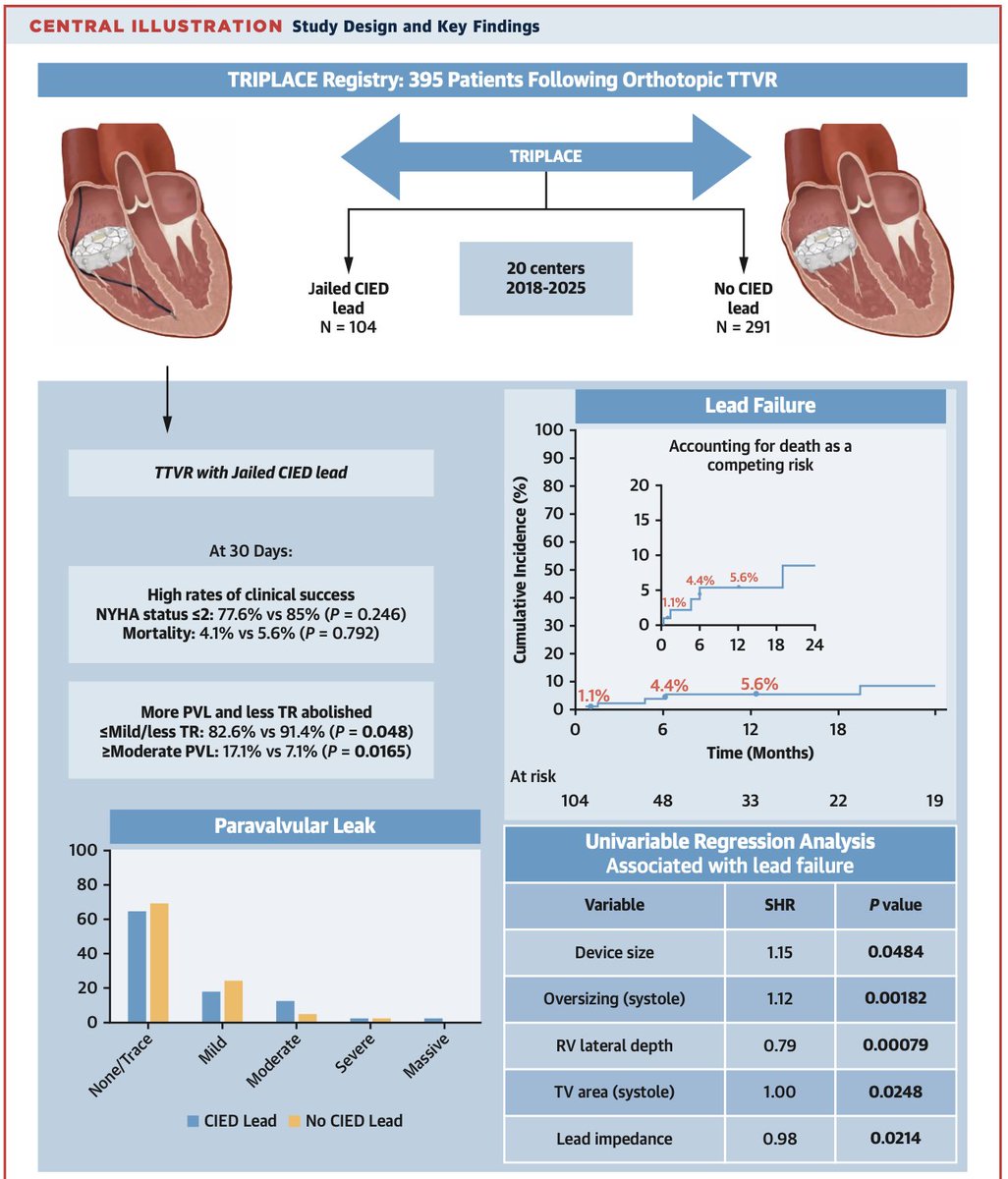
⚠️ Are we underestimating paravalvular leak after TTVR?
In TRIPLACE, ≥Mod PVL occurred in 6.1% and was associated w/
🔴39.7% 1-year mortality
🔴2.6X higher risk of death
🔴Less symptomatic improvement despite successful TTVR
🔗https://t.co/gVLck1eND1
@azeemlatib Rishi Puri
TTVR + CIED leads: What really happens?
Insights from the TRIPLACE Registry in #JACCEP
🎯 Same procedural success
⚠️ Lead failure 5.8%
🫀 More ≥moderate PVL
✅ 30-day mortality not increased
Free (50 days): https://t.co/Uzq2ztjlAE
@MontefioreNYC@EinsteinMed@JACCJournals
📢New Meta-analysis: Rate vs Rhythm Control in AF and Risk of Syncope, Falls & Pacing @hrs_journal@HRSonline@MoShurrabMD
#EPeeps #CardioTwitter
*⃣Background
While early rhythm control m.b. beneficial (EAST-AFNET 4; CASTLE-AF, EARLY-AF), rhythm therapy—especially with AADs—may increase bradycardia-related complications.
*⃣ Why?
⭐️Sinus node dysfunction
⭐️ AAD induced SAN/ AVN pathology
https://t.co/QRsDbRSaRT
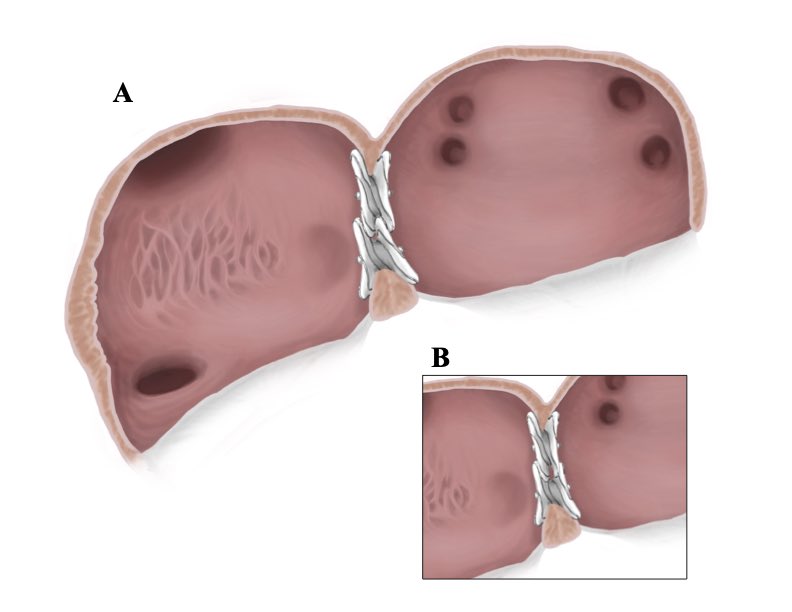
Multiple ASDs can require multiple closure devices. We demonstrate the “interleaving” and “sandwiching” methods using the Gore Cardioform ASD Occluder and their advantages in these different anatomies. #JACCINT@JACCJournals@SamiAlnasserMD@npfam1 https://t.co/ku9OcoTJGk
TV anatomy and TR mechanisms are highly variable, highlighting the need for continued innovation to expand Rx options. After the FDA approval of EDWARDS EVOQUE, it’s exciting to see more TTVR THV options on the horizon ! @JACCJournals@npfam1
https://t.co/okENSj6R7d