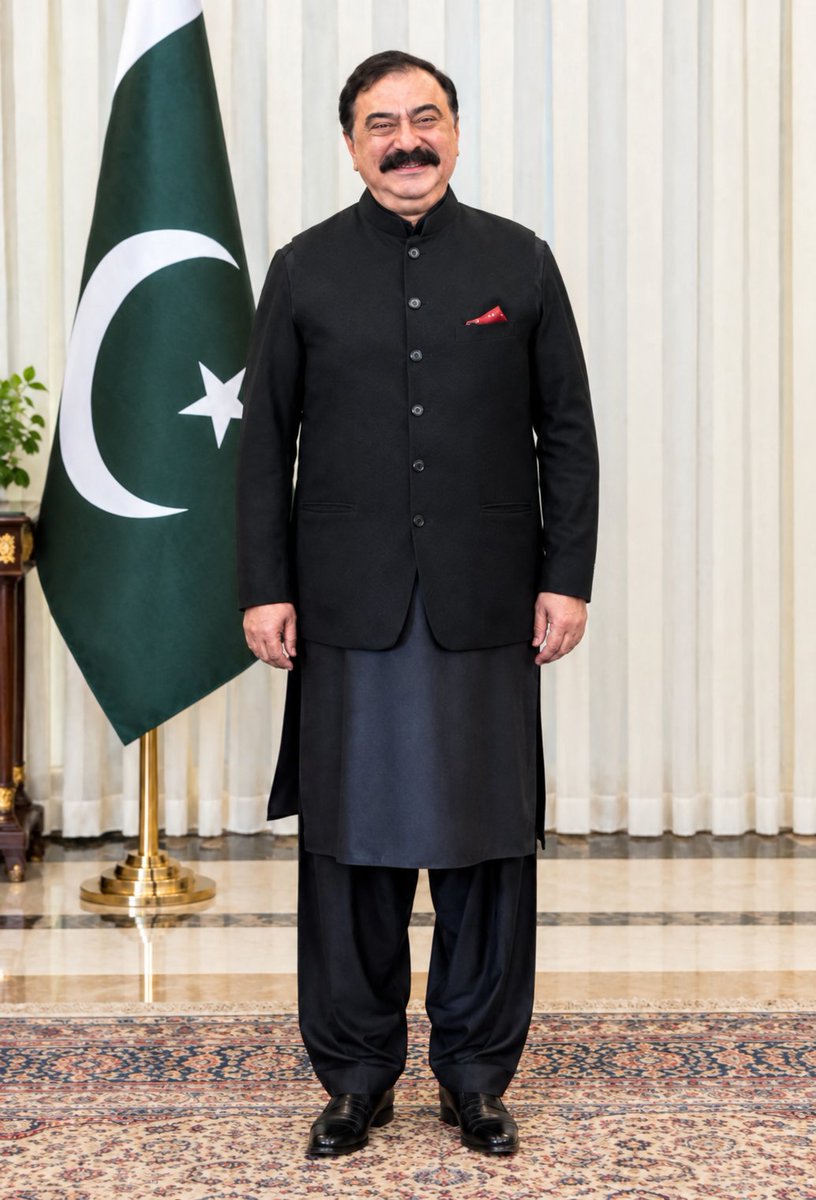
جنرل فیصل نصیر صاحب کی نئی تعیناتی پر یوتھیے کیو آسمان تک اچھل کر زمین پر گر رہیں ہے ؟؟
جنرل صاحب کی تعیناتی سے تو دہشتگردوں کو تکلیف ہونی چاہئیے ؟؟
لیکن یہاں تو یوتھیے آسمان تک اچھل کر زمین کو وج رہیں ہے
مطلب دال میں کچھ کالا نہیں بلکے پوری دال ہی کالی ہیں ،،،
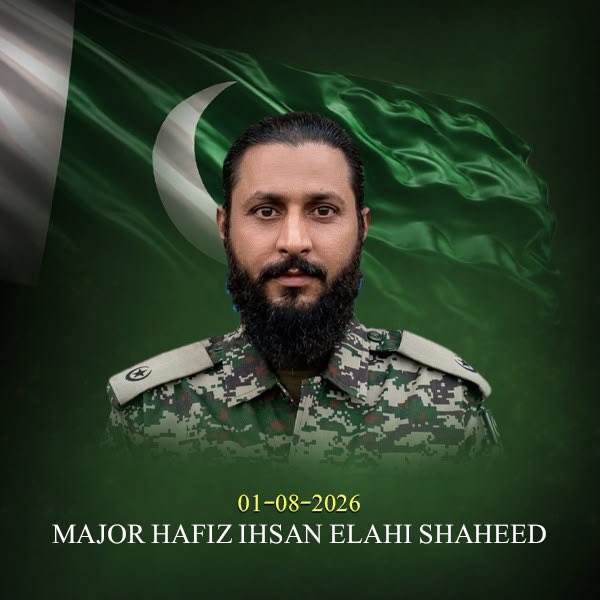
On 01 August 2026, Security Forces conducted an intelligence based operation in general area Razmak, North Waziristan District, on reported presence of Khwarij belonging to Indian Proxy, Fitna Al Khwarij.
During the conduct of operation, due to effective engagement by own troops, five Indian sponsored khwarij were sent to hell.
However, during the intense fire exchange, Major Hafiz Ihsan Elahi (age: 34 years, resident of District Mianwali), a brave officer who was leading his troops from the front, having fought gallantly, paid the ultimate sacrifice and embraced shahadat.
Weapons and ammunition were also recovered from the killed khwarij, who remained actively involved in numerous terrorist activities against the Security Forces and Law Enforcement Agencies as well as killing of innocent civilians.
Sanitization operation is being conducted to eliminate any other Indian sponsored Kharji found in the area, as the relentless Counter Terrorism campaign under vision “Azm-e-Istehkam” (as approved by the Federal Apex Committee on National Action Plan) by Security Forces and Law Enforcement Agencies of Pakistan will continue at full pace to wipe out the menace of foreign-sponsored and supported terrorism from the country and such sacrifices of our brave soldiers further reinforce our unwavering commitment of safeguarding our nation at all costs.
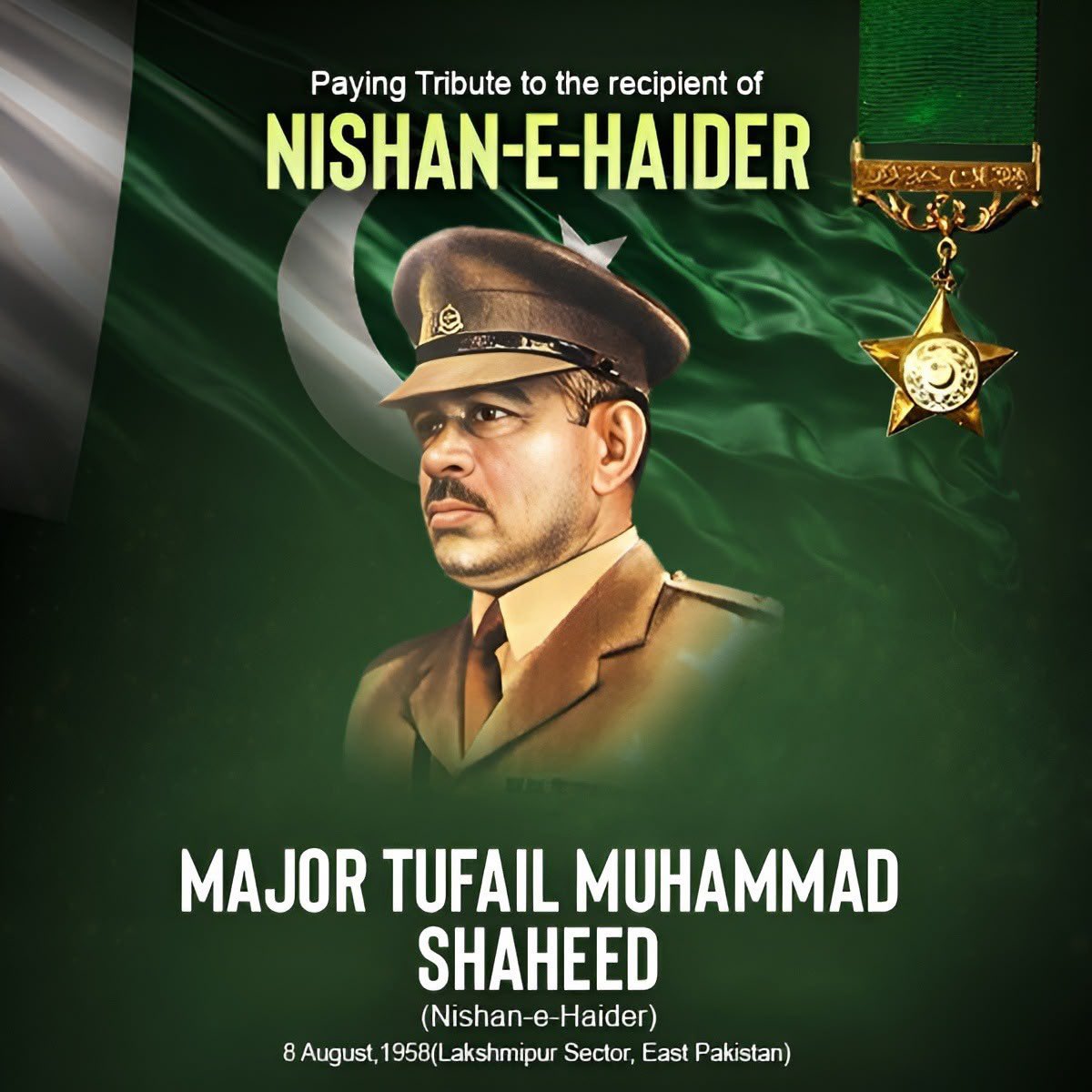
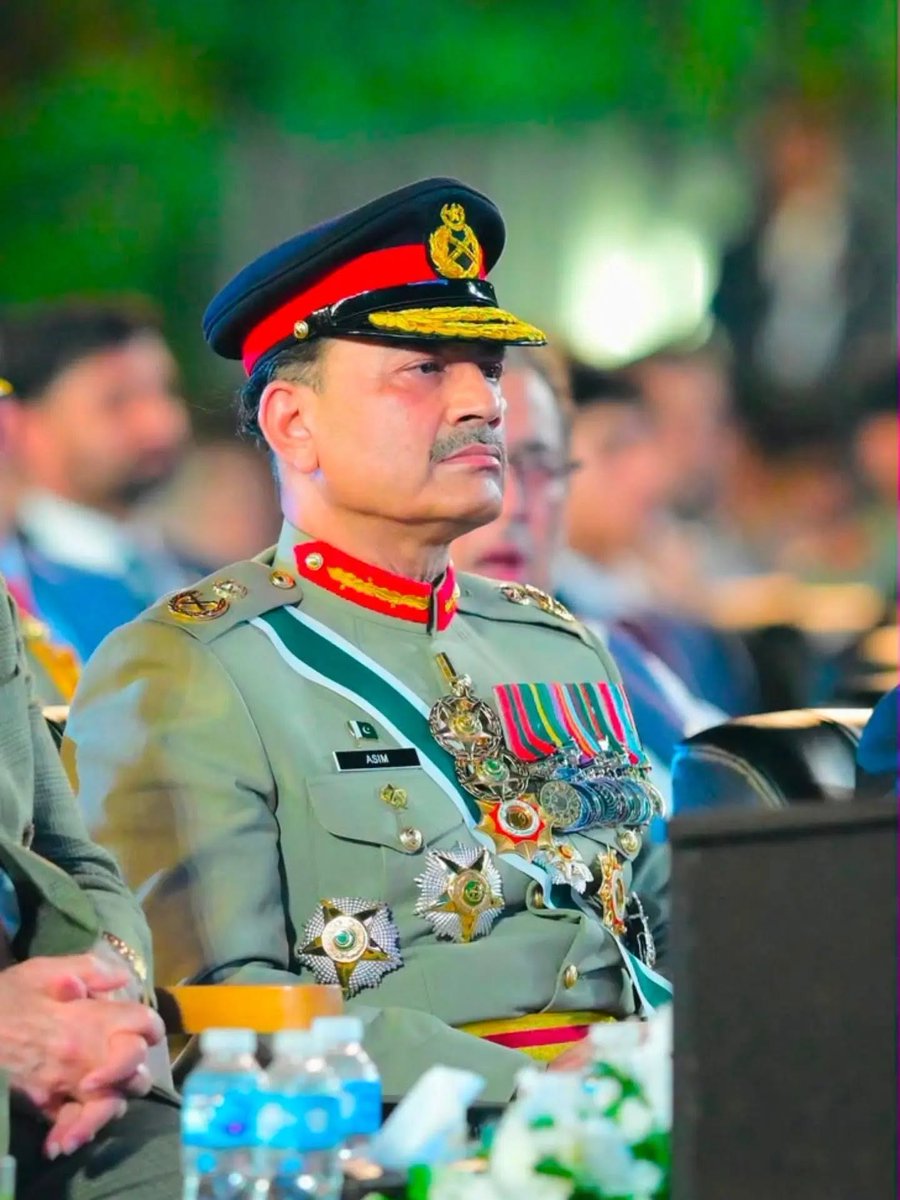
Field Marshal Syed Asim Munir, NI (M), HJ, Chief of the Army Staff & Chief of Defence Forces, Admiral Naveed Ashraf, NI, NI (M), T Bt, Chief of the Naval Staff, Air Chief Marshal Zaheer Ahmed Baber Sidhu, NI (M), HJ, Chief of the Air Staff and the Armed Forces of Pakistan solemnly commemorate the 68th martyrdom anniversary of Major Tufail Muhammad Shaheed, Nishan-e-Haider, paying profound tribute to his extraordinary bravery, unwavering devotion to duty and supreme sacrifice in safeguarding the nation.
Major Tufail Muhammad Shaheed displayed extraordinary bravery and unwavering resolve as he led his troops in a daring assault against enemy forces. Despite being critically wounded, he fought on with indomitable courage and steadfast determination, ensuring the successful completion of his mission. His conspicuous gallantry and supreme sacrifice earned him the Nishan-e-Haider, the nation's highest military honour and the ultimate symbol of valour.
On this solemn occasion, the people and Armed Forces of Pakistan pay glowing tribute to Major Tufail Muhammad Shaheed and to all martyrs who have laid down their lives in defence of the motherland. Their legacy of courage and patriotism continues to inspire generations and stands as a beacon for all defenders of the nation.
#Sindh's historical and cultural identity is not the same thing as its present administrative boundary. Sindh was administered as part of the #Bombay Presidency for nearly 90 years, was later restored as a separate #province, and its internal administrative boundaries have repeatedly been reorganized. Changing an administrative boundary does not automatically destroy Sindhi identity.
Mumhammad Ali #Jinnah 14Points
#Pakistan
Devolution Is Not the Enemy: Pakistan Must Evolve Beyond the Four-Province Model
The argument that Pakistan's existing four-province structure must remain untouched because of the country's troubled experience with One Unit and the eventual separation of East Pakistan is, in my view, an overly simplistic reading of history.
Pakistan's problems cannot be solved by preserving every existing institutional arrangement indefinitely. If the demographic, political and economic realities of the country have changed, then the administrative structure must be capable of evolving with them.
1. Pakistan's demographic reality has changed
The argument that Pakistan's provinces still correspond neatly to separate ethnic homelands is increasingly difficult to sustain.
Over the past several decades, large-scale internal migration has transformed Pakistan's demographic landscape. Hundreds of thousands, if not millions, of Pashtuns have established permanent communities in Punjab and Sindh. Punjabis, Sindhis, Baloch and other Pakistanis have likewise moved and settled outside their traditional provincial territories.
Karachi, Lahore, Islamabad, Rawalpindi, Peshawar and other major urban centres are now highly diverse societies. Pakistan today cannot simply be viewed through the demographic map of the 1950s or 1970s.
Nor should the disastrous experience of One Unit or the eventual separation of East Pakistan be treated as a permanent veto against any alteration of provincial boundaries.
The lesson of history should be that politically imposed and centralized restructuring is dangerous—not that every future restructuring of the federation is inherently dangerous.
One Unit was created in a very different political environment and for very different political purposes. Creating smaller provinces through constitutional, democratic and consensual means, with the objective of bringing government closer to citizens, would be fundamentally different.
The Pakistan of today is not the Pakistan of seventy years ago. Our institutions must respond to today's demographic and economic realities rather than remain frozen in the past.
2. We must strengthen Pakistani identity while bringing government closer to citizens
There is another paradox in Pakistan's ethnic politics.
Millions of Pakistanis have moved not only between provinces but across international borders. Punjabis, Sindhis, Pashtuns, Baloch and other Pakistanis now live permanently in the United States, United Kingdom, Australia, New Zealand, Europe and elsewhere.
They participate in societies where their political identity is primarily that of citizens of those countries. Yet when they return to Pakistan, ethnic political identities can again become powerful instruments of political mobilization.
Pakistan should not deny its cultural diversity. Punjabi, Sindhi, Pashtun, Baloch and other identities are legitimate cultural and historical identities. But cultural identity should not become a permanent instrument of political fragmentation.
We should instead strengthen a common political identity:
We may have different languages, cultures and histories, but we are all Pakistanis.
And this is precisely why devolution can strengthen national unity rather than weaken it.
A citizen is more likely to feel connected to the federation when government is accessible, development is visible and political power is not concentrated thousands of kilometres away in a distant provincial capital.
3. The failure of One Unit does not prove that devolution fails
The failure of One Unit to develop Pakistan's less-developed regions does not prove that smaller administrative units cannot promote development.
One Unit was not the same thing as genuine fiscal and administrative devolution.
The model Pakistan should consider today is almost the opposite:
Power should move downward, not upward.
If smaller provinces are created, they should receive meaningful political, administrative and fiscal authority. They should have their own development priorities, their own accountable political leadership and sufficient resources to pursue those priorities.
This is where fiscal decentralization becomes essential.
A provincial government responsible for an enormous territory and population can easily become distant from peripheral regions. Smaller provinces could bring political decision-making closer to the people who are actually affected by those decisions.
Each region would have a greater incentive to compete for investment, improve education, develop infrastructure, create employment and manage public resources responsibly.
Imagine provinces asking:
Who attracts more investment?
Who develops better infrastructure?
Who creates more jobs?
Who improves education faster?
Who manages public money better?
That kind of healthy competition could become a force for national development.
But creating smaller provinces alone is not enough. Devolution must be accompanied by fiscal decentralization and empowered local governments.
4. Pakistan cannot postpone structural reform indefinitely
Pakistan cannot continue indefinitely with the same concentration of political and economic power and expect fundamentally different results.
If power remains concentrated among a relatively small political and economic elite, the existing system can continue reproducing itself: centralized decision-making, weak accountability, uneven development, elite capture and persistent poverty.
Devolution offers an opportunity to break that cycle.
The question is therefore not simply:
"Should Pakistan create more provinces?"
The deeper question is:
"Should political and economic power remain concentrated in a few centres, or should it be distributed among more regions and brought closer to the citizens who actually live there?"
Pakistan is at a point where institutional evolution cannot be postponed indefinitely.
We should not fear reform simply because previous experiments failed. The failure of one model does not prove that every alternative model will fail.
Indeed, the greater danger may be refusing to evolve at all.
Pakistan does not need to choose between national unity and decentralization. A well-designed system can achieve both.
The goal should not be to create provinces for political convenience or to weaken the federation. It should be to create smaller, fiscally empowered, politically accountable and administratively capable units, while simultaneously strengthening local government.
The federation should remain strong—but its strength should come from citizens who feel represented, empowered and invested in every part of Pakistan.
Devolution should not be viewed as fragmentation. Done properly, it can be the means through which Pakistan finally turns federalism from a constitutional principle into a lived political reality.
پاک فوج کا افسر تھا غیرت مند تھا جس نے اپنے گھر کی خاتون کو تنگ کرنے پر اکیلے یہوتھیوں کو گھوڑے لگا دیا
اس کی جگہ یہوتھیا ہوتا تو اپنی بیگم کو نچواتا اور خوب انجوائے کرواتا عوام کو
You cannot demand justice for students while ignoring allegations of harassment and physical aggression against a female official or the officer who came to protect her.
Justice must be based on facts—not mob narratives.
#sarhaduniversity#Pakistan#PakistanArmy#Islamabad
If I were a hostile intelligence agency tasked with weakening Pakistan, I would see large, poorly governed administrative units as an opportunity—
not a problem.
— When government is distant, grievances deepen.
— When grievances deepen, divisions become easier to exploit.
— When divisions grow, instability follows.
Smaller provinces brings:
— Government closer to the people
— Stronger representation
— Greater accountability
— More effective administration
— More balanced development
“It’s a military operation in the hands of politicians”
The change MUST be made.
#Pakistan #Subay #Provinces FM #ASIM_MUNIR #ISPR
قائد جس نے خاک کو جیون
جسم دیا تعبیر کیا
ایک کرن سے چاند اچھالا
خاکے کو تصویر کیا
ٹھنڈے بجھتے سورج کو
گرما کے مہر منیر کیا
مٹی کو اکثیر کیا
ہر بوند کو جوئے شیر کیا
اپنی صبح ج��ال وہی۔
نسبتِ ماضی و حال وہی۔
جانِ استقبال وہی۔
روح کی چاہت ایک ہماری
شوق کا عالم ایک ہے۔
اپنا پرچم ایک ہے
قائد اپنا ایک ہے ۔
FM #AsimMunir
#Pakistan