The Special Immigrant Visa (SIV) Disaster: Why Afghan Allies Are Still Waiting
For thousands of Afghan allies who risked their lives working with the U.S. military, the Special Immigrant Visa (SIV) program was supposed to be a lifeline—a guarantee that those who stood alongside American forces would not be left behind. Instead, it has become a bureaucratic nightmare, trapping thousands in a seemingly endless cycle of paperwork, delays, and rejections. While American soldiers were able to leave the war behind, their Afghan interpreters, security contractors, intelligence operatives, and embassy staff were left navigating a labyrinthine system that often denies them the safety they were promised.
The SIV program was created in 2009 with the explicit purpose of providing a pathway to U.S. residency for Afghan allies who directly supported the U.S. military and government. The logic was clear: these individuals had placed themselves and their families in immense danger by working with U.S. forces, and their service made them prime targets for Taliban retribution. The program was intended to be fast-tracked, allowing those at immediate risk to be safely relocated before it was too late. In reality, the system has functioned as the opposite of what it was meant to be—a process so slow and dysfunctional that many applicants have been killed while waiting for approval.
The first major failure of the SIV program lies in its overwhelming bureaucracy. Applicants are required to submit extensive documentation, including letters of recommendation from former U.S. supervisors, proof of employment, security background checks, and personal identification records—many of which are nearly impossible to obtain in a collapsed state where the Taliban now control government records. A single missing or slightly incorrect document can result in an application being rejected or delayed indefinitely. For those in hiding, unable to safely retrieve employment records from now-defunct U.S. contractors or embassies, the process is nothing short of a death sentence.
Processing times for SIV applications are staggeringly long. While the U.S. government initially set a 9-month target for SIV processing, the reality is that many applicants have been waiting for years. Some have been in the system for more than a decade, stuck in bureaucratic purgatory while living in constant fear. Even after initial approval, applicants face further obstacles, including prolonged security vetting, interview scheduling difficulties, and administrative backlogs that seem to grow worse with each passing month. Many former Afghan soldiers and interpreters, already hunted by the Taliban, have had to move frequently to avoid detection while waiting for a decision that never seems to come.
The situation is even more dire for those whose supervisors were U.S. military personnel who have since left service. Because a letter of recommendation from a former supervisor is a crucial requirement for SIV approval, many applicants have found themselves stranded simply because their American counterparts have moved on with their lives. With no centralized database to track former service members, many Afghan allies have had to launch desperate social media campaigns to locate a soldier or officer who might remember them and be willing to vouch for their service. In many cases, by the time a connection is made, it is already too late.
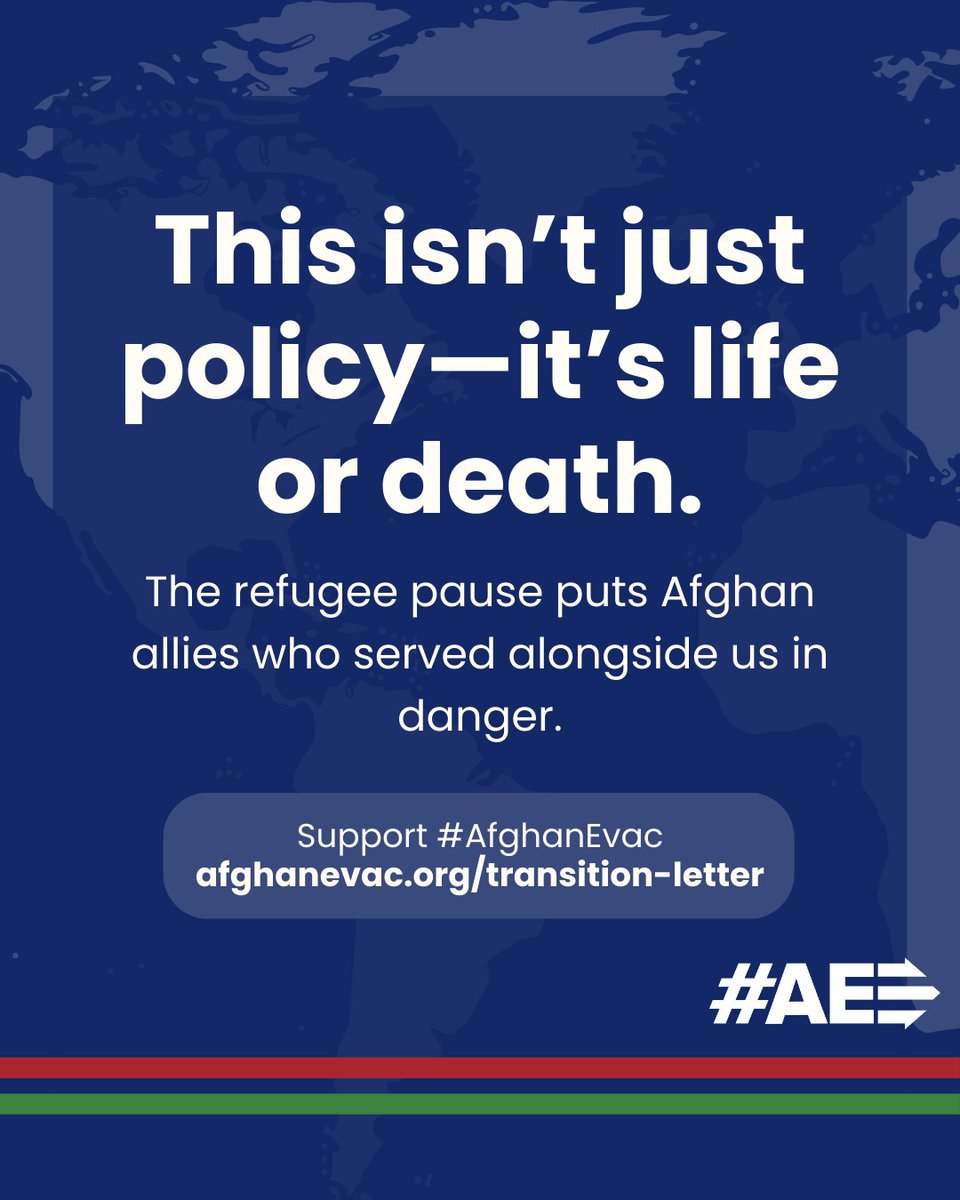
For those stuck in Pakistan, Iran, or other temporary host countries, the U.S. Refugee Admissions Program (USRAP) was supposed to provide an alternative pathway through the Priority 1 (P1) and Priority 2 (P2) categories. However, these programs have suffered from the same bureaucratic paralysis as the SIV process, with interview locations closed, backlogs piling up, and no clear strategy to prioritize Afghan cases. Worse still, the recent executive order suspending refugee admissions has all but sealed the fate of thousands who had pinned their hopes on these alternative pathways.
The consequences of these failures are catastrophic. The Taliban continue to hunt former Afghan military personnel, interpreters, and government workers, often executing them in public as a warning to others. Families of SIV applicants have been targeted, with women and children forced into hiding or killed in retaliation for their relatives’ past work with the U.S. military. Those who have fled to Pakistan or Iran face mass deportations, effectively handing them over to the Taliban. Meanwhile, in Washington, politicians debate immigration policy as though it is an abstract issue, ignoring the real human cost of their inaction.
Veterans’ advocacy groups have been among the few voices demanding urgent reform. Former U.S. soldiers who served alongside Afghan allies have testified before Congress, written open letters to lawmakers, and organized private evacuation efforts. Some veterans have even personally sponsored Afghan families, using their own resources to get them to safety. But these individual acts of heroism are not a substitute for a functioning system. The U.S. government must take immediate action to fix the SIV program before more lives are lost.
There are clear and achievable solutions to this crisis. First, the U.S. must remove unnecessary bureaucratic obstacles, such as requiring letters of recommendation from U.S. supervisors who may no longer be reachable. Instead, a centralized verification system should be established, using military and contractor employment records to confirm an applicant’s eligibility. Second, security vetting must be streamlined, with a clear timeline for completion. While vetting is necessary, it should not take years to confirm the identity of individuals who have already undergone extensive background checks while working for U.S. forces. Third, interview processing must resume immediately, either through virtual methods or by establishing third-country processing hubs in locations that are safe for Afghan refugees.
Congress must also step in to ensure that funding for SIV processing is not cut, and that additional staff are allocated to clear the backlog of pending applications. There is no excuse for allowing a life-or-death application to sit in limbo for years. The administration must also recognize that Afghan allies are in an emergency situation—each day of delay increases the likelihood that another applicant will be killed.
For those who served alongside U.S. forces, the message from the U.S. government has been painfully clear: their service was valued in war but forgotten in peace. The failure of the SIV program is not just an administrative failure—it is a moral failure, a betrayal of those who put their trust in America’s word.
History will judge the U.S. not by how it fought its wars, but by how it treated those who stood by its side. If Afghan allies are abandoned to die at the hands of the Taliban, the stain of that betrayal will never be erased. There is still time to fix this, but time is running out. Lives depend on immediate action, and the U.S. must honor its commitments—not just in words, but in deeds.
The pause on the U.S. Refugee Admissions Program (USRAP) isn’t just a bureaucratic delay—it’s a death sentence for Afghan women and girls.
Most female principal applicants are in the refugee track, which means they are disproportionately impacted. 🧵
A computer science graduate, father of two kids, a native of Khas Kunar district in Kunar province inside Taliban’s notorious intelligence service jail. “GDI detained Hezbullah from his home in Jalalabad city four days ago, Taliban punished him for celebrating the Independence Day with the national flag.” His relatives and friends tells me.
#BREAKING: Reports emerging of large scale violence, arson, clashes and rioting in many parts of Pakistan after Imran Khan’s arrest by Pakistan Rangers. Mob has attacked Pakistan Army’s Mardan Cantt. Corps Commander home in Lahore attacked and broken to pieces. Several memorials of Pakistan Army soldiers destroyed, burnt and broken. Public broke down Pakistan Army Memorials and Honours at Sargodha Cantt in Pakistan.
Nothing changed the Taliban in the past 24 yrs-an office and luxury life in #Qatar, businesses in Karachi, Peshawar, Iran, a meeting with Mike Pompeo signing agreement, and so on!
In 1998, the Taliban expelled the NGOs from Afghanistan in 24 hours.
Shame on us as Afghans give her voice value.
Pakistan destroy Afghanistan and took all opportunities from talented Afghan women
Now she talks about women of Afghanistan
I feel sick right now
shame to @SE_AfghanWGH for standing next to her. We have way well-educated and Passionate women to talk about us with a voice not her
🤬 @SR_Afghanistan@EU_UNGeneva@US4AfghanPeace@USAmbKabul@RitaAnwari