@stuartvyse Thank you for considering my piece. Extremely proud moment contributing to the special issue of Skeptical Inquirer. @FreeInquiry Rise of Ayurveda: A Dangerous Trend to Decolonize the Scientific Method https://t.co/pT78STTERe via @skeptinquirer
For the first time in history, the Prime Minister of India spoke about the Noakhali Hindu genocide. Please accept my respectful, bowed salutation, My dearest prime minister @narendramodi ji.❤️❤️❤️
Why the state was named as West Bengal ~
In 1947, the question arose whether the United Bengal Province would remain in India 🇮🇳 or become part of Pakistan 🇵🇰.
Three proposals were placed:
1. Bengal would remain undivided.
2. The whole of Bengal would go to Pakistan.
3. Bengal would be partitioned~ the Muslim-majority eastern part would go to Pakistan, while the Hindu-majority western part would remain in India.
Dr. Shyama Prasad Mukherjee led the movement in favour of keeping the western part of Bengal (later named as West Bengal) as a part of India. On the other hand, Huseyn Shaheed Suhrawardy proposed the plan for a United Bengal.
📌 In the historic vote held on 20 June 1946, the first vote was on whether Bengal should be divided or remain united, and which Constituent Assembly it would join.
Separate votes were then held.
📌 Second vote (Muslim-majority areas):
The members from East Bengal cast their votes.
Results:
106 votes in favour of keeping Bengal undivided
35 votes in favour of partition
This meant that a majority of the East Bengal members wanted the whole of Bengal to go towards Pakistan.
📌 Third vote (non-Muslim-majority areas):
The representatives of the western part voted in a separate session.
Results:
58 votes in favour of partitioning Bengal
21 votes against partition.
This meant that the representatives of the western region clearly decided in favour of dividing Bengal and becoming a part of India.
The question then arose: if the East Bengal members supported a united Bengal, while the representatives of the western part voted for partition, would Bengal be divided or not?
According to the Mountbatten Plan, if any one part of Bengal voted in favour of partition, Bengal would be divided.
Since the representatives of the western part voted 58–21 in favour of partition, the division of Bengal became certain.
Ultimately, this led to the creation of a Hindu majority western province within Bengal, which was named as ‘West Bengal,’ described here as the homeland of Bengali Hindus.
#poschimbongodibosh #westbengalday
Today on 20th June 2026, the first official Poschim Bongo Dibosh/West Bengal Day, as declared by our PM Modi ji, here’s a look back at the historic event of creation of West Bengal from an United Bengal.
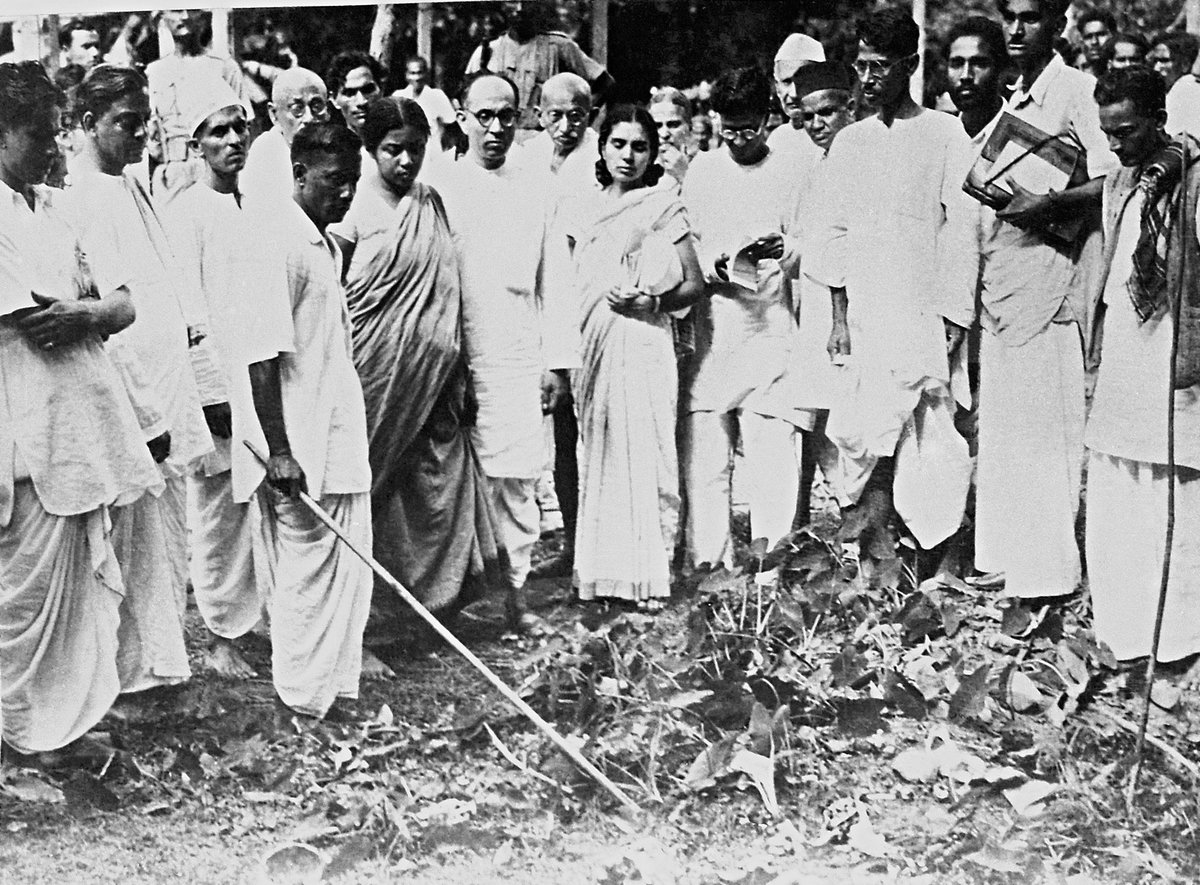
Unlike Netaji Subhas Chandra Bose’s elder brother Sarat Chandra Bose, who along with Suhrawardy, tried his level best to form an ‘United Bengal’ under Pakistan and ruled by a Muslim Prime Minister; Netaji’s eldest brother Satish Chandra Bose (seen here with Netaji) supported the creation of a separate West Bengal with Hindu majority.
Satish Chandra Bose stood with Shyama Prasad Mukherjee in this regard. On 15th April 1947, Shyama Prasad Mukherjee at the historic ‘Tarakeswar Hindu Mahasammelan’ had successfully authorized the partition of Bengal, ensuring Hindu-majority areas were carved out into a separate homeland (West Bengal) within the Indian Union.
On 20th June 1947, Satish Chandra Bose was among the Hindu members of the Bose family that voted in favour of dividing Bengal, and creating a Hindu homeland for the Bengalis.
[Image was shared by Somen Sengupta ]
@kamleshkhunti@docwas@docanoopmisra@BinayakSinha1 Screening for Hepatic Steatosis and Fibrosis Among Physicians Attending the Integrated Diabetes and Endocrine Academy Conference: A Cross-Sectional Study https://t.co/kP8j2W068e








![monidipadey's tweet photo. Today on 20th June 2026, the first official Poschim Bongo Dibosh/West Bengal Day, as declared by our PM Modi ji, here’s a look back at the historic event of creation of West Bengal from an United Bengal.
Unlike Netaji Subhas Chandra Bose’s elder brother Sarat Chandra Bose, who along with Suhrawardy, tried his level best to form an ‘United Bengal’ under Pakistan and ruled by a Muslim Prime Minister; Netaji’s eldest brother Satish Chandra Bose (seen here with Netaji) supported the creation of a separate West Bengal with Hindu majority.
Satish Chandra Bose stood with Shyama Prasad Mukherjee in this regard. On 15th April 1947, Shyama Prasad Mukherjee at the historic ‘Tarakeswar Hindu Mahasammelan’ had successfully authorized the partition of Bengal, ensuring Hindu-majority areas were carved out into a separate homeland (West Bengal) within the Indian Union.
On 20th June 1947, Satish Chandra Bose was among the Hindu members of the Bose family that voted in favour of dividing Bengal, and creating a Hindu homeland for the Bengalis.
[Image was shared by Somen Sengupta ]](https://pbs.twimg.com/media/HLOggO_awAAxidu.jpg)





