A non profit organisation started in 1987 with vision to facilitate organic process of change leading to empowerment and development marginalised communities.
Community Bio-Resource Center at Sampark: A Hub for Natural Farming 🌱
After the success of the community seed bank, Sampark’s Bio-Resource Center is emerging as a center of learning and innovation for farmers.
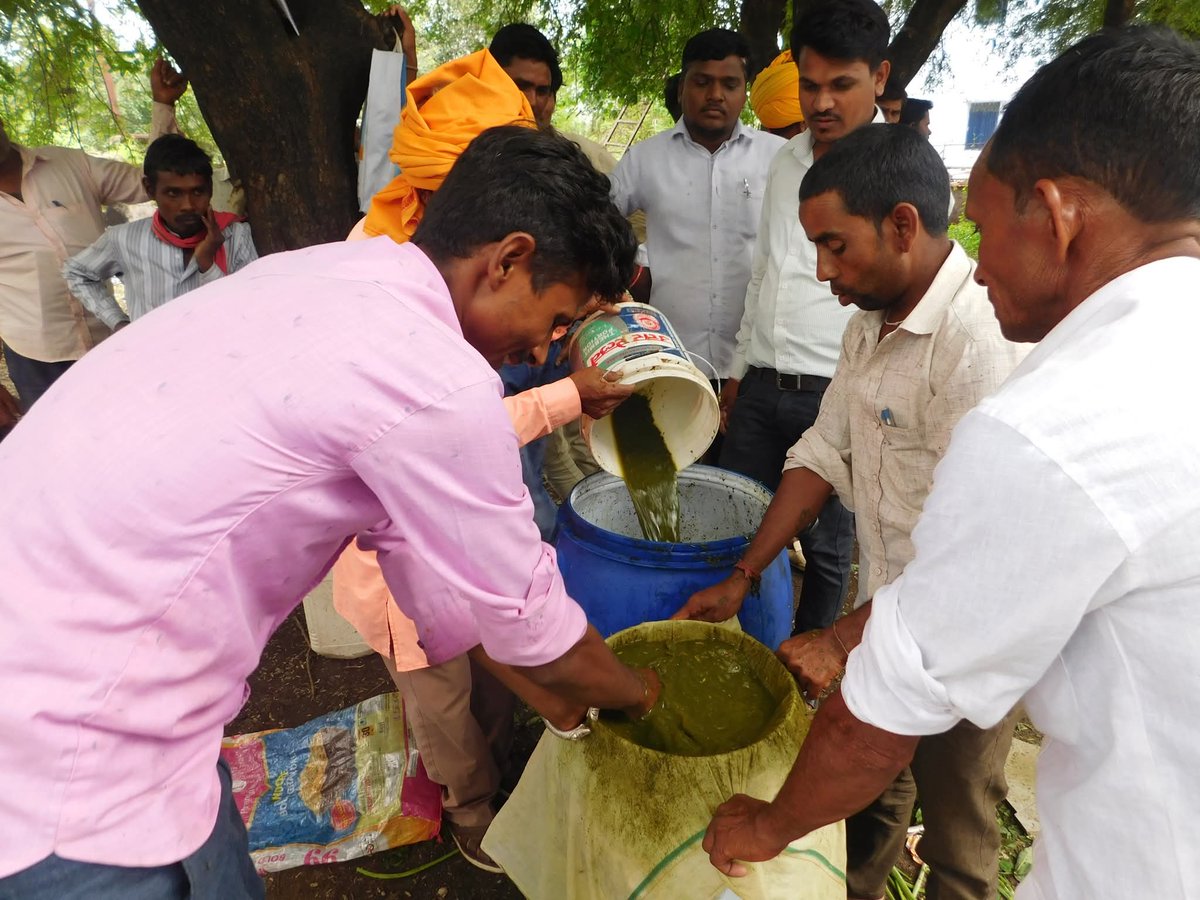
Over the last 3 days, a special training on natural farming was held, teaching farmers low-cost, eco-friendly techniques. They made their own organic solutions like *Jeevandravya*, *Soy & Mahua Tonics*, and *Panchpatti Swarasa*—proven to boost growth and fight pests naturally.
Farmers also received rare saplings like *Bael* and *Palash*, essential for organic pesticides and local biodiversity.
Most participating farmers have practiced natural farming with Sampark for 2+ years and now mentor others in their villages. We call them **"Krishi Mitra" (Champion Farmers)**.
This center has been active for 13 years and is now expanding to villages.
#NaturalFarming #SustainableAgriculture #OrganicIndia #ChampionFarmers #SamparkInitiative #SeedSovereignty #Biodiversity #FarmerTraining #BioResourceCenter #RegenerativeFarming #RuralInnovation #CommunityFarming #Agroecology #FarmersFirst
Sampark's Community Seed Bank: Paving the Way to Self-Reliance for Farmers
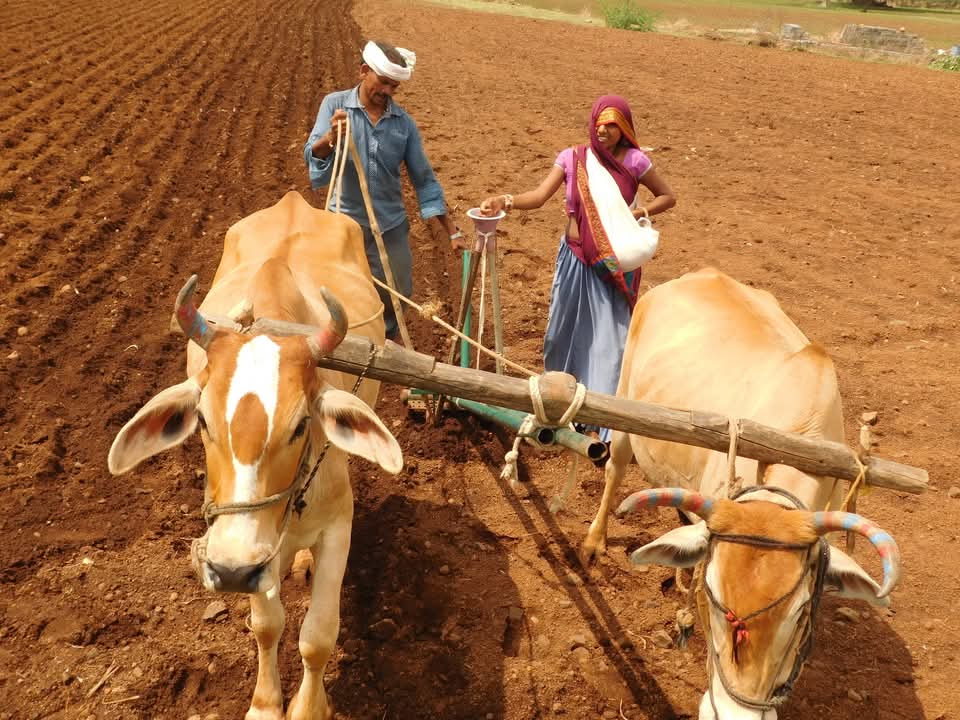
The *Community Seed Bank* run by *Sampark* has become a ray of hope for hundreds of farmers. As with every year, traditional and indigenous seeds such as **Saathi maize, peanuts, sesame, urad, moong, chawli, pigeon peas, sunflower, and castor** have been distributed for the current Kharif season.
But this is not just about handing out seeds—it's a **comprehensive training program**! Before distributing seeds, farmers are educated in detail about the importance of indigenous seeds in natural farming, the need for seed treatment before sowing, and methods of mixed cropping. They are also taught how mixed farming can protect them from challenges like climate change, and how beneficial this method is in today’s times.
Community Seed Bank: A New Chapter in Self-Reliance
Sampark’s Community Seed Bank has now become a vital resource for farmers in the region. Today, hundreds of farmers benefit from the **“Seed for Seed”** program, where they take indigenous seeds for their next crop in exchange for seeds from their previous harvest. Each year, thousands of farmers visit before the Kharif and Rabi sowing seasons to receive seeds from this initiative.
Farmers who receive seeds from the bank are also trained in **seed treatment** and **mixed farming** techniques. What sets this initiative apart is Sampark’s commitment to ensuring that farmers receive seeds only once. After that, they are encouraged to **save seeds at home** and **share them with their family and community**. The bank’s goal is to provide seeds to each family just once, so they learn to preserve seeds and keep this movement to protect indigenous varieties alive.
This initiative is not only making farmers **economically stronger**, but is also playing a key role in **preserving indigenous seeds and traditional farming methods**. Sampark’s efforts truly represent an inspiring step toward a **self-reliant India**.
#WorldBiodiversityDay #CommunitySeedBank #Sampark #SelfReliantFarmers #NaturalFarming #IndigenousSeeds #TraditionalAgriculture #FarmingAndFarmers #MadhyaPradesh #BiodiversityConservation
The growing conversation around approving "genome-edited rice varieties in India" deeply concerns me. While these technologies promise higher yields, I couldn't help but ask: Will this progress come at the cost of our natural farming movement, native seed purity, and biodiversity?
My article titled **"जीनोम संपादित चावल: प्राकृतिक खेती के लिए चुनोती?"** has been published in today’s edition of *Subah Savere* (9 May 2025). 🙏
This very question led me to write this article.
I have tried to explore the hidden risks:
🌾 Threat to traditional seed varieties through genetic contamination
🚫 Weakening of farmers' seed sovereignty
🧬 Loss of our rich agricultural biodiversity
⚠️ Potential dependency on corporations for seeds
In a time when India is promoting natural farming, shouldn’t we be protecting the very foundation it stands on—local seeds, biodiversity, and farmer freedom?
Please take a moment to read, reflect, and share your thoughts. Let’s keep the dialogue going for a more resilient and sustainable future. 🌱
#ArticlePublished #NaturalFarming #GenomeEditedRice #SeedSovereignty #Biodiversity #FarmersRights #SustainableAgriculture #IndianAgriculture #SubahSavere #naturalfarming #NaturalFarming #SeedSovereignty #IndianAgriculture #GenomeEditing #FarmersRights #Biodiversity #SustainableAgriculture #SaveOurSeeds #OrganicFarming #Agroecology #FoodSecurity #LocalSeeds #IndigenousSeeds #SayNoToGMO #FoodSovereignty
Genome edited rice: A challenge for natural farming?
There is a lot of discussion about approving genome edited varieties of rice in India. This new technology promises to increase crop yield, but will it pose a challenge to the natural farming scheme of the Government of India?
It is true that genome editing technology can prove to be helpful in increasing rice yield and developing certain special qualities. But, we have to pay attention to its other aspect as well, especially when it comes to our natural farming and indigenous seeds that have been in existence for centuries.
Imagine, what will happen if our indigenous seeds, which are perfect for our soil and climate, get contaminated by pollination of genome edited seeds? Their genetic purity will be in danger, and they will gradually lose their special characteristics. This will be a big loss to our agricultural heritage.
Not only this, intellectual property rights are often attached to genome edited seeds. This means that farmers will have to buy new seeds every year, making them dependent on companies for seeds. Our seed sovereignty will be weakened, and farmers will lose the freedom to save and use seeds as they please.
The biggest concern is the loss of our biodiversity. India is home to countless indigenous varieties of rice, which grow in different conditions and strengthen our food security. If we focus only on a select few genome edited seeds, these precious varieties will slowly disappear. Loss of biodiversity will make our agriculture weaker and more vulnerable to diseases.
We have to find a way that goes hand in hand with both production and environmental protection. Promoting natural farming and indigenous seeds is not only good for our soil and health, but it also helps maintain our economic self-reliance and cultural heritage.
#naturalfarming #nativeseeds #genomerice #farmers #biodiversity #seedsovereignty #sustainablefarming #indianagriculture
Today, on Majdoor Divas, we honor the strength, resilience, and dignity of every worker who builds our world with their hands and heart.
At Sampark, we stand in solidarity with our labor force—advocating for their rights, welfare, and a life of dignity.
#MajdoorDivas#LabourDay #WorkersRights #Sampark #SocialImpact #CommunityDevelopment #Empowerment #Nonprofit #SocialGood #SupportWorkers
#LaborDay
#Mazdoordiwas
This is what change looks like.
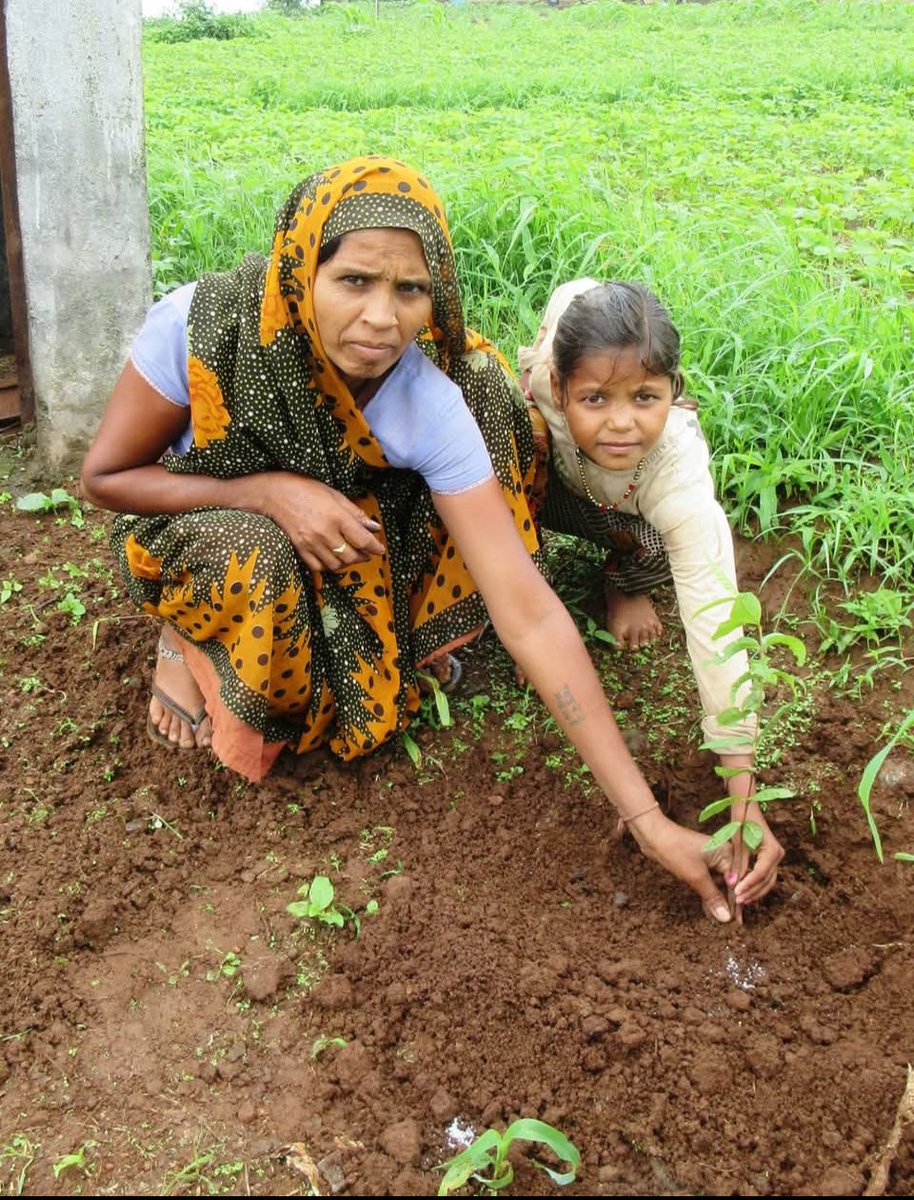
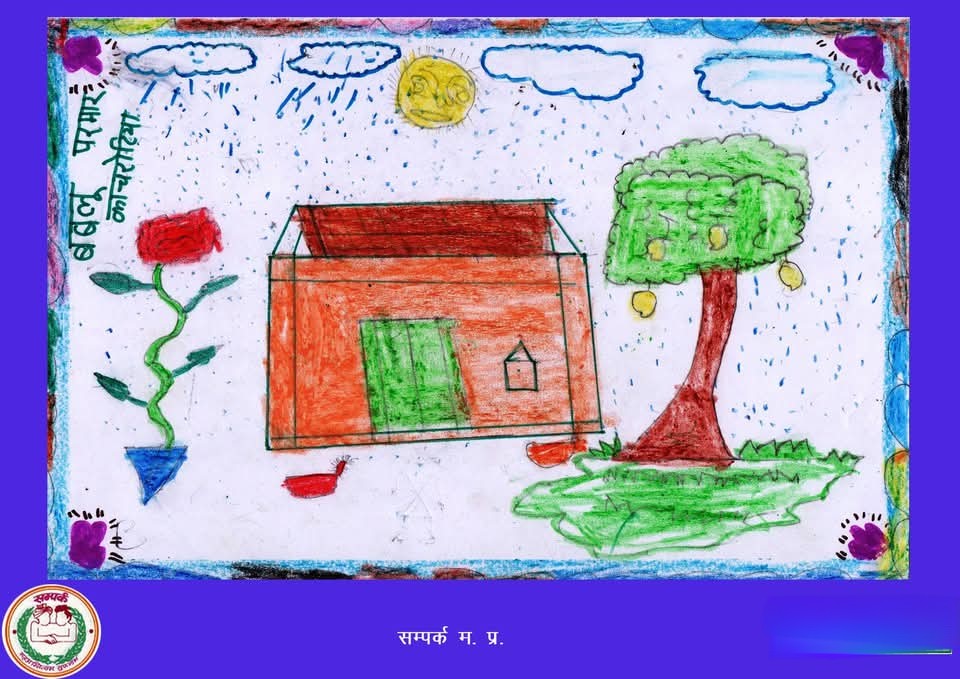
From nurturing roots to nurturing futures, women and children in our communities are leading the way—one sapling and one drawing at a time.
At Sampark, every plant we sow and every picture a child draws is a promise to the Earth.
This Earth Day, let’s grow, dream, and act together.
**"धरती माँ का आभार, पेड़ और प्यार दोनों जरूरी ह��ं।"**
#EarthDay2025 #SamparkForEarth #ClimateAction #WomenForNature #GreenFuture #ActForEarth #CommunityPower #ChildArtForEarth #WorldEnvironmentDay
#EnvironmentDay
#SaveEarth
#PlantTrees
#SustainableLiving
#Biodiversity
#Conservation
#EcoIndia
#SwachhBharat
#GreenIndia
Sharing the TED Talk by the Director of Sampark Social Organization , Sri Nilesh Desai , where he speaks about the journey that led to the founding of our organization. Through personal stories and deep insights, he highlights the early challenges, pivotal moments, and the vision that continues to shape our work today. This talk offers a meaningful look into what drives grassroots change and why community-centered approaches matter. https://t.co/BYwwg3yD80
#SamparkSocialOrganization #TEDTalk #SocialImpact #LeadershipJourney #CommunityChange #samparksocialorganization #TEDTalk #SocialImpact #LeadershipJourney #CommunityChange #DigitalIndia #SkillIndia #StartupIndia #TransformingIndia #MyGov #IndiaTogether #NITIayog #SocialEntrepreneurship #Empowerment #InclusiveGrowth
Sampark Social Organization – Water Conservation Efforts
Today, on World Water Day, we recognize the significant contributions of Nilesh Desai, Director of Sampark Social Organization, in water conservation efforts. Originally from Valsad, Nilesh’s early experiences living in Rajasthan’s water-scarce regions sparked his passion for water sustainability. He witnessed the severe challenges faced by communities and became committed to addressing these issues.
Under his leadership, Sampark has pioneered innovative water conservation projects, including the construction of large rainwater harvesting tanks in the organization’s building, capable of storing 300,000 liters of water, and a smaller system at his own home that collects 35,000 liters. Through recycling, the campus uses 22,000 liters of water daily, which is then reused for farming.
Nilesh has worked alongside tribal communities to restore traditional water structures, build check dams, and create water management systems over thousands of hectares. He has been instrumental in promoting community-based water policies as an active member of the **MP Jal Biradari**, alongside the "Water Man" Rajendra Singh, advocating for water conservation through education, awareness, and action.
His efforts extend beyond Sampark. Nilesh has also been a member of the Government of India’s Artificial Groundwater Conservation Advisory Committee and received the **Jalmitra Award** in 2024 for his dedicated work in water conservation.
At Sampark, we continue to focus on sustainable water use, educating communities, and building solutions that ensure water security for future generations.
#WorldWaterDay #WaterConservation #JalMitra #MPJalBiradari #SustainableWater #SaveWater #WaterAwareness @MoHFW_INDIA #RainwaterHarvesting @narendramodi #WaterManagement #NileshDesai #SamparkOrganization #ClimateAction #WaterForAll @EduMinOfIndia
🌸 Celebrating Women’s Day with Sampark 🌸
Empowered women empower the world! At Sampark, we believe in breaking barriers through education, financial independence, and equal opportunities for every woman. When women rise, communities thrive.
This #WomensDay, let’s commit to uplifting, supporting, and celebrating the strength of every woman.
#WomenEmpowerment #WomensDay #EmpowerHer
We are deeply honored to have been visited by Girish Bajwa, the director of Vanvasi Kalyan Ashram, along with Shri Akash Chauhan, the district director of Rashtriya Swayamsevak Sangh, and Dr. Uday Yarden from Ratlam. During their visit to Sampark, they learned about our initiatives and the impact of our work.
#VanvasiKalyanAshram #ruraldevelopment #EmpoweringIndia #sustainablefarming #SamparkSocialOrganization #humanitarian
@thebetterindia@the_hindu #Swayamsevak #swayamsevaksangh @BeerBicepsGuy
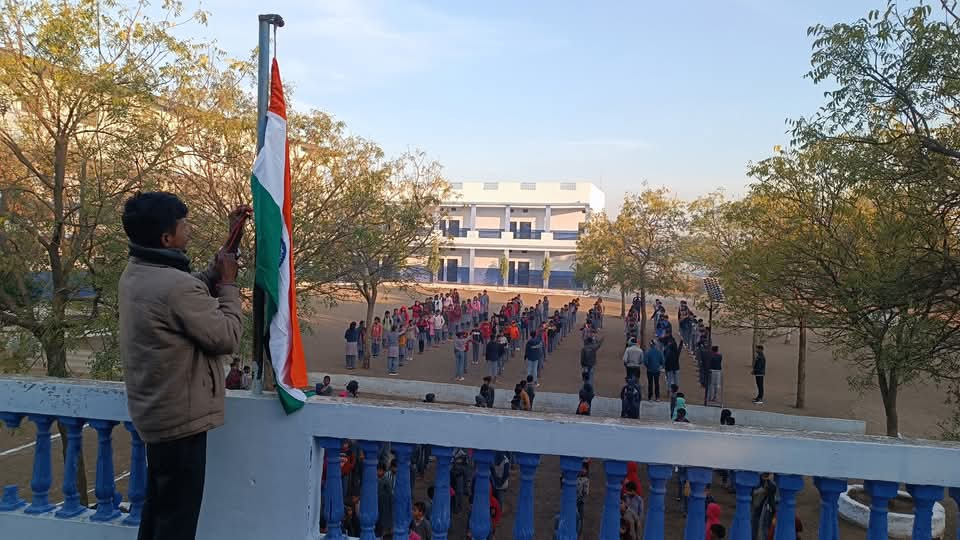
On this Republic Day, we celebrate the spirit of democracy, unity, and progress that defines our great nation. 🇮🇳 At Sampark, we remain committed to empowering communities in Jhabua, Madhya Pradesh, through education, health, and sustainable livelihoods. Together, let’s build a brighter future for all. Jai Hind! #RepublicDay #Sampark #EmpoweringIndia #ruraldevelopment
#RepublicDayIndia