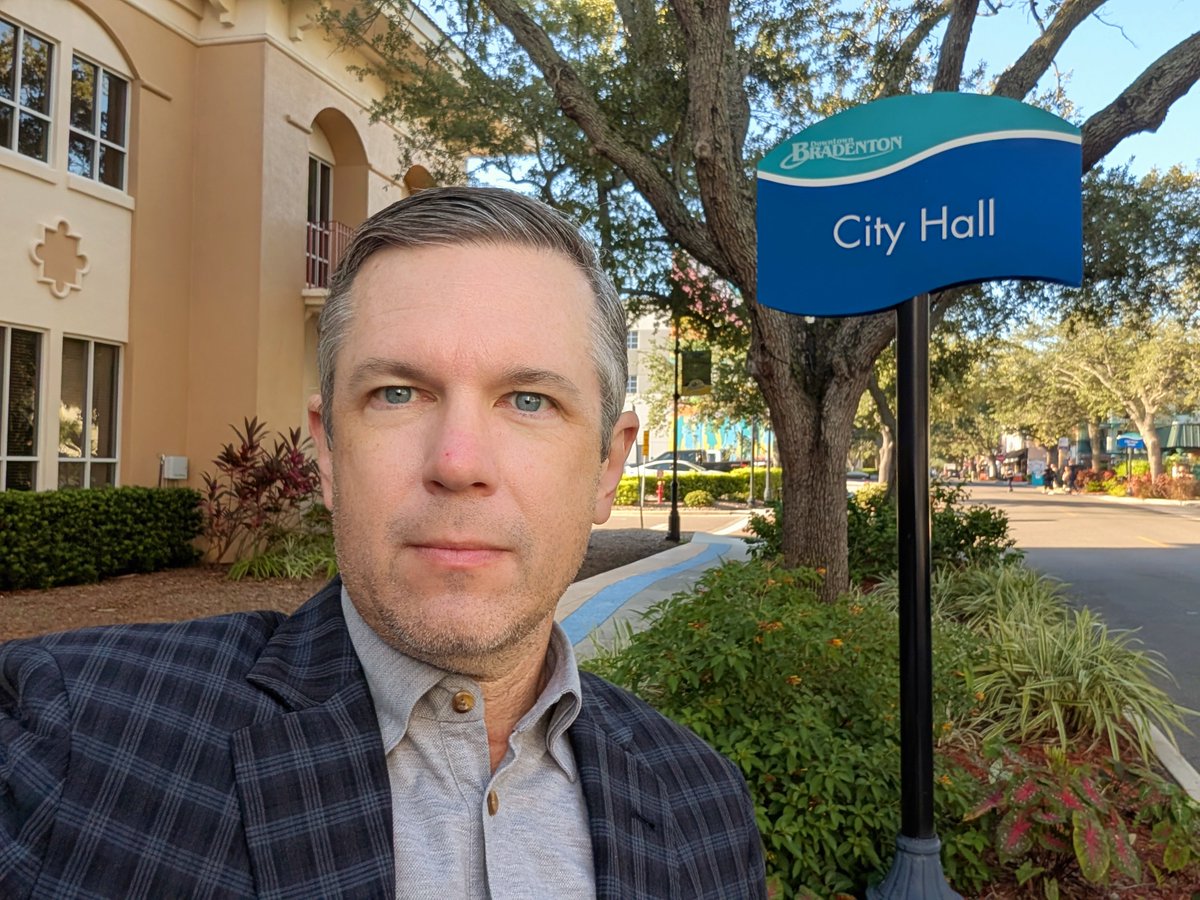
Always honored to lead the invocation for city council meetings. Join me in the following prayers for Bradenton and Manatee County (or your community):
-Teachers, educators, and students as school starts
-First responders and those on the front lines of emergencies
-City council and county commission members, and local elected officials
-Pastors and other faith leaders
Who are you praying for?
That's true, if they are independent contractors (1099), but many others are employees (W-2). Most pastors and churches have no idea what the difference means for copyright laws. If 1099, the pastor owns the sermon. If W-2, the church owns the sermon. They at least need to know, even if they don't care one way or the other.
A follow-up to yesterday's post: Many seem to believe they can preach a sermon without caring who uses it. “It belongs to God,” they say. Spiritually, yes. But not under U.S. law, and it’s important to know the law.
Preaching a sermon publicly does not automatically place it in the public domain. Public performance is not the same as surrendering copyright. Copyright generally arises automatically once the sermon is “fixed” in a tangible form, such as a manuscript, outline, audio recording, or video recording.
Who owns it legally depends primarily on the pastor’s employment relationship:
Employed pastor: If preparing and preaching sermons falls within the pastor’s normal duties, the sermon is likely a “work made for hire.” In that case, the church is ordinarily the initial copyright owner unless a written agreement says otherwise. 17 U.S.C. § 201
Guest preacher or independent minister: The preacher ordinarily owns the sermon unless copyright was transferred through a signed agreement. Merely paying an honorarium does not automatically transfer ownership.
Pastor writing outside church duties: A devotional, book, conference message, or other work created independently may belong to the pastor, depending on when, where, why, and with what resources it was created.
Recordings: The sermon manuscript and the church’s video or audio production can involve separate copyrights. The pastor or church may own the underlying sermon while the church owns the produced recording.
Here’s the important part for everyone saying, “It belongs to God, not me.” A sermon enters the public domain only if the author explicitly dedicates it to the public domain using a tool like Creative Commons CC0. If you REALLY believe what you’re saying, then please use this tool to release all your work. Otherwise, the law applies, and you’re just making empty arguments.
@ryancornettky That's great. Glad you are consistent. You've obviously thought through this issue. You and I will differ on putting everything in the public domain, but I admire your thoughtfulness. Respect.
@culperscanteen I'm just saying you're using AI slop to portray the Savior of the world. It's lazy and disrespectful. You can do better. Gotta love that paper money flying off the table Jesus turned! 🤣
@BPSteegstra Now, I completely agree with this! Yes, pastors should clarify as much on the front end as possible--one way or the other. And a church that tries to "own" the sermons is not a healthy one.
@BPSteegstra Copyright is just as much about control as it is monetization. If you give up the copyright, you can never use any part of a sermon (including illustrations) in any other venue. You leave it with the church where you preached the sermon. Every word belongs to the church, not you.
You're all over the place with your comments. Let me give you a real-world example: Retiring pastor wants to do interim work or pulpit supply. Some malcontent member makes it a point that he can't have the sermons he's preached for the last several decades because they technically belong to the church. So, now the retiring pastor must leave his church and never use any illustrations or notes from previous sermons.
That's not the argument I'm making. Copyright is just as much about control as it is monetization. Here's but one example: Retiring pastor wants to do interim work or pulpit supply. Some malcontent member makes it a point that he can't have the sermons he's preached for the last several decades because they technically belong to the church. So, now the retiring pastor must leave his church and never use any illustrations or notes from previous sermons. So, answer my question. What is in the copyright law the conflicts with God's Word?
I will admit a bias. I believe the pastor, not the church, should own the intellectual property of sermons. Most pastors assume they own their sermons. After all, they prayed over them, studied hours for them, wrote them, preached them, and refined the writing process over many years, if not decades. A sermon is deeply personal as an expression of a pastor’s calling, theology, voice, and labor. So, it comes as a surprise to many church leaders when they learn that, in many cases, they do not legally own the sermons they preach. The reason is simple: the law has a default setting, and that default setting often favors the employer. In the case of a pastor’s sermons, it’s the church. Here’s how you can fix this problem. [Paywall] https://t.co/FcXPLxogQ5