🚨 SCANDALE CENSURE : @andyyen le CEO de @ProtonPrivacy plie devant la pression de l’extrême-gauche !
« Proton ne veut pas que la confidentialité devienne controversée. » La confidentialité n’a pas d’opinion politique, @andyyen. Elle est neutre par définition. En censurant une voix qui dérange la bien-pensance, c’est vous qui la rendez controversée.
Les « défenseurs de la vie privée » qui se couchent devant l’extrême gauche, on aura tout vu. Soutien à @VincLapierre et à tous les créateurs de contenus confrontés à la censure d'extrême-gauche !
vous soutenez Barbara Butch contre des “attaques antisémites”. Très bien. Mais pourquoi ses spectacles LGBT doivent-ils absolument se faire dans des églises catholiques ? Qu’elle aille donc les donner dans des synagogues. Ou dans des mosquées. Ou dans des temples bouddhistes, hindous, jaïns. Vous verrez les réactions. Un peu de tenue, madame. Un peu de retenue. Arrêtez l’amalgame facile : les catholiques ne sont pas antisémites parce qu’ils refusent la profanation de leurs lieux de culte. C’est juste du respect élémentaire. Alors cessez d’emmerder le monde avec vos bonnes consciences militantes
Quand Karl Olive, outré, saisissait la présidente de l’assemblée (😳) pour le futal troué d’une députée et nous parlait d’exemplarité. Savoureux!
Il faut démissionner, @KARLOLIVE.
😉 @GG_RMC
Sont désormais d’extrême droite (et j’assume) :
Avoir des enfants
• Prendre l’avion
• Être blanc
• La liberté d’expression
• Le mérite
• L’histoire de France
• Les frontières
• Le nucléaire
• Le travail
• La propriété privée
Et en bonus : manger de la viande, dire Joyeux Noël, vouloir des rues sûres, l’assimilation et une France qui reste une nation.
@elonmusk@sergiodde Aucune remise en question de ces misérables qui refusent de voir la vérité en face.
Paris est tombé. Marseille se réveille au son des minarets.
Les villages suivent, contributions de l'état à l'appui.
Je ne veux pas quitter mon pays, perdre mon identité.
@elonmusk@sergiodde C'est aussi un paradoxe, beaucoup de Parisiens approuvent et contribuent à l'immigration de masse.
Les "bobos" gauchos sont pleins de bonnes intentions mais lorsque les arguments pleuvent à l'encontre de leurs idéologies ils n'ont en réponses qu'insultes, haines et violences.
Dans le manifeste "techno-optimiste" de Marc Andreessen, il y a une phrase qui m'a marqué :
"Our enemies are not bad people – but rather bad ideas."
Nos ennemis ne sont pas des mauvaises personnes. Ce sont des mauvaises idées.
Prenons Jancovici. L'homme est brillant, sincère, travailleur. Il ne se lève pas le matin en se disant qu'il va nuire à l'humanité. Mais l'idée qu'il porte la décroissance, le rationnement, la frugalité érigée en horizon civilisationnel est une idée profondément destructrice. Elle prend des esprits brillants et les transforme en commissaires politiques d'un futur appauvri.
Et le plus fascinant, c'est ce que cette idée fait aux gens qui l'adoptent.
Dans mon entourage, une grosse partie de mes amis est sur cette ligne décroissantiste, avec tout le package qui va avec. L'argent c'est mal mais ils en veulent. Il faut moins prendre l'avion mais ils rêvent de voyager partout. Il faut consommer moins mais ils ne renoncent à rien de ce qu'ils aiment vraiment.
Et tous ont un point commun : ils sont déprimés. L'un d'eux m'a même confié qu'il était sous antidépresseurs.
Ce n'est pas un hasard. C'est mécanique.
Quand tu crois que ton désir de vivre, de créer, de t'élever est moralement suspect tu te détruis de l'intérieur. Tu passes ta vie à t'excuser d'exister. Tu vis dans la dissonance permanente entre ce que ton corps veut (plus, mieux, plus loin) et ce que ton idéologie t'ordonne (moins, sobre, immobile).
D'où ma théorie :
Quand on pense quelque chose de fondamentalement faux décroissance, communisme, extrémisme religieux (de tout ordre) ce n'est qu'une question de temps avant que ça devienne vraiment destructeur.
D'abord pour soi. Puis pour les autres.
Les mauvaises idées tuent. Lentement chez ceux qui y croient, brutalement chez ceux qui les subissent.
C'est pour ça que la bataille des idées n'est pas un luxe d'intellectuel. C'est la bataille la plus importante de notre époque.
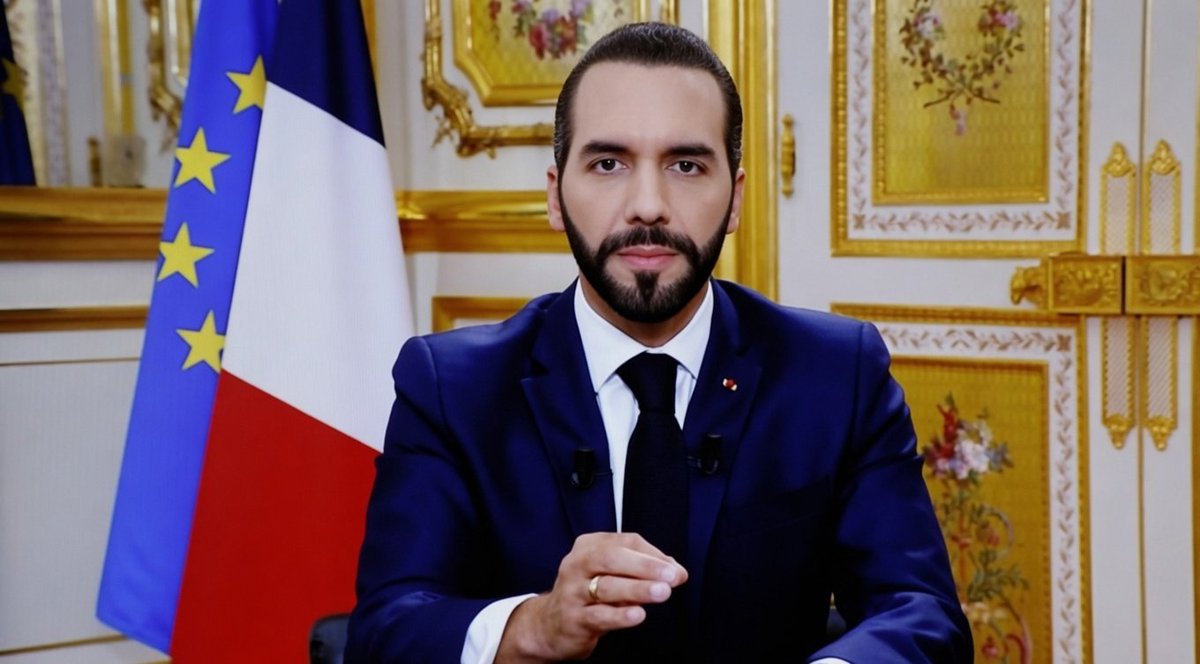
Mai 2027 : NAYIB BUKELE PREND LE CONTRÔLE DE LA FRANCE 🇫🇷🇸🇻 (fiction)
Le 16 mai 2027, le nouveau Président de la République avance sur le perron de l’Élysée. Pas de costard traditionnel, mais sa célèbre casquette blanche et une veste en cuir noir. Devant lui, les caméras du monde entier. Il sort son smartphone, prend un selfie avec la garde républicaine, le publie sur X : « La reconstruction commence maintenant. Dieu bénisse la France. »
J+1 : Le Plan de Contrôle Territorial (PCT) version XXL
Fini le temps des commissions parlementaires, des "plans banlieues" à coups de milliards volatilisés et des zones de non-droit. Bukele applique la méthode de tolérance zéro absolue qui a transformé le Salvador, pays le plus dangereux du monde, en havre de paix.
L'État d'Urgence National : voté par une Assemblée acquise à sa cause dès la première heure. L'armée française est déployée aux côtés de la police sur chaque point de deal recensé sur le territoire.
Le Grand Nettoyage : en 48 heures, les blindés légers de la gendarmerie bloquent les accès des cités de Marseille, Sevran, Roubaix et Grenoble. Les drones de surveillance thermique quadrillent le ciel. Plus personne ne sort sans un contrôle biométrique approfondi. Les appartements nourriciers sont perquisitionnés sans mandat lourd. Fini le business, place à la panique chez les trafiquants.
J+15 : Destitution des "Juges Rouges" et Tolérance Zéro
Pour Bukele, le principal obstacle à la sécurité d'une nation n'est pas le criminel, mais le magistrat idéologue qui lui trouve des excuses.
Le grand ménage judiciaire : par décret présidentiel d'urgence, le Syndicat de la Magistrature est dissous et les juges complaisants ou politisés sont destitués de leurs fonctions. Ils sont remplacés par des magistrats anonymes dits « juges sans visage » pour éviter les pressions et les menaces des cartels de la drogue.
La complicité politique punie : les politiciens d’extrême gauche qui tentent de bloquer les opérations ou de justifier les émeutes sont immédiatement poursuivis pour « complicité et apologie du terrorisme de gang ». Plusieurs figures de l'opposition radicale se retrouvent menottées en direct à la télévision, transférées vers des centres de détention provisoire.
"Quiconque protège, finance ou défend les monstres qui empoisonnent notre jeunesse est lui-même un monstre. En France, la récréation est terminée", poste @nayibbukele
J+45 : L'enfer vert du CECOT en Guyane
La pièce maîtresse du système Bukele voit le jour au cœur de la forêt amazonienne.
Le transfert du siècle : des dizaines de vols militaires stratégiques acheminent les hauts gradés du trafic de drogue, les chefs de gangs de banlieue et les criminels endurcis vers la Guyane française.
Les images choc : comme au Salvador, le monde entier découvre des images saisissantes. Des milliers de détenus, crânes rasés, en caleçon blanc, assis les uns derrière les autres, mains sur la tête, sous la garde de soldats lourdement armés. L'impunité à la française s'éteint dans l'humidité de la jungle.
J+100 : La France, pays le plus sûr d'Europe
Le changement est si radical que le taux de criminalité s'effondre : le nombre d'homicides, d'agressions et de vols à main armée chute de 92% sur l'ensemble du territoire. Les commerçants des quartiers autrefois dits "sensibles" rouvrent leurs portes sans crainte de racket. Les mères de famille laissent leurs enfants jouer dehors le soir.
Le retour de l'autorité : l'uniforme est obligatoire dans toutes les écoles, le drapeau tricolore est levé chaque matin, et le respect des forces de l'ordre est non négociable sous peine de travaux d'intérêt général immédiats.
Le Bilan : un pays souverain et nettoyé
Les ONG internationales hurlent au recul des libertés ? Bukele leur répond sur son fil X par des graphiques montrant le retour massif du tourisme à Paris et la réouverture des commerces de proximité. La France n'est plus la proie des bandes organisées, elle est redevenue sûre.
AI solved software creation.
Now comes the harder problem:
software distribution.
Today, deployment pipelines are still built on trust assumptions:
centralized infra, opaque rollbacks, fragmented governance, and invisible supply-chain risks.
That’s why Palantir’s Apollo matters.
Apollo introduces ontology primitives for software distribution:
deploy, patch, rollback, validate, govern.
But the really interesting question is this:
What happens when systems like Apollo are combined with blockchain infrastructure like @Polkadot ?
Not just “put on-chain.”
Actually architected around decentralized execution, shared security, and transparent governance.
Suddenly software distribution becomes:
→ Verifiable instead of opaque
→ Multi-chain and sovereign by design
→ Tamper-resistant deployment infrastructure
→ Cryptographically auditable rollback history
→ Autonomous machine-to-machine coordination
→ On-chain governance for mission-critical upgrades
→ Decentralized validation instead of blind CI/CD trust assumptions
Imagine AI agents deploying software across sovereign cloud environments, edge devices, robotics networks, and critical infrastructure…
…while Polkadot provides the coordination layer, interoperability, governance, and shared security underneath.
This is where the narrative changes.
AI solved code generation.
But Web3 may solve trust, coordination, and accountability for autonomous software systems.
The future stack may look like this:
AI → creates
Apollo-like systems → distribute
Polkadot → secures, coordinates, governs
That is not just DevOps evolution.
That is the beginning of autonomous digital infrastructure.
Polkadot sitting at **9,032 active developers** — almost matching Solana and Ethereum. While price has been quiet, the real builders never left.
Strong developer activity + solid fundamentals = the perfect setup for when the narrative finally flips 🔥
Still very bullish on $DOT long-term 💪
> be Macron
> France becomes the world’s #1 hotspot for crypto kidnappings
> 60 kidnappings in 2026 alone
> state employees selling crypto users’ personal data to organized crime
> accuse crypto holders of "financing terrorism"
> pass new laws forcing crypto exchanges to send even more user data to the government
🔴🇫🇷 𝗙𝗟𝗔𝗦𝗛 𝗜𝗡𝗙𝗢 — La statue floutée dans le JT de France 2 se nomme « Amour ». Datant de 1894, elle représente un couple d’amoureux.
Le choix de cacher cette statue étonne : elle est située dans un espace public, juste à côté d’une aire de jeux pour enfants, dans le square de Weiden à Issy-les-Moulineaux.
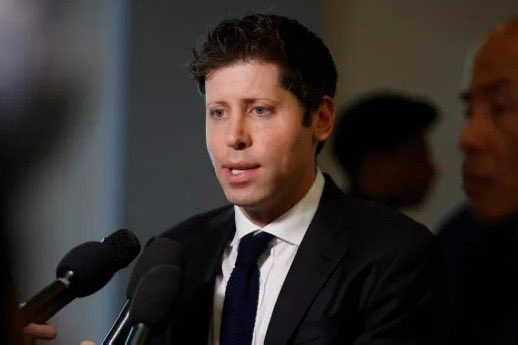
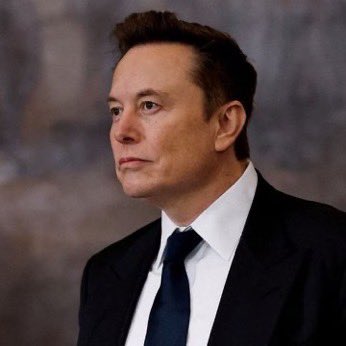
🚨💣⚖️JOUR 2 DU PROCÈS MUSK vs OPENAI : ELON LÂCHE DES BOMBES !
Pendant 3,5 heures de témoignage, Elon Musk balance tout sur ce qu’il considère comme une trahison d’OpenAI :
Il a injecté 38 millions de dollars dans ce qui devait rester une organisation non lucrative et open source. Ils lui avaient même promis des actions.
Mais il refusait : « Une œuvre de charité ne devrait pas distribuer des actions, ça sent le pot-de-vin. »
Quand Microsoft a injecté 10 milliards, Musk envoie un SMS à Sam Altman : « C’est quoi ce bordel ? D’où vient tout cet argent ? »
Réponse de Sam : « Ouais, ça a l’air vraiment mauvais… Mais si tu veux des parts , on te les donne. »
Résultat : Musk réalise qu’il a financé une « œuvre de charité » qui s’est transformée en machine à cash pour Sam Altman et ses associés, avec une introduction en bourse en ligne de mire.
Et cerise sur le gâteau : les avocats d’OpenAI ont tenté de rabaisser Grok en disant qu’il était loin derrière ChatGPT. Musk a répliqué cash : « Plus maintenant. »
Rendez-vous pour la suite demain.
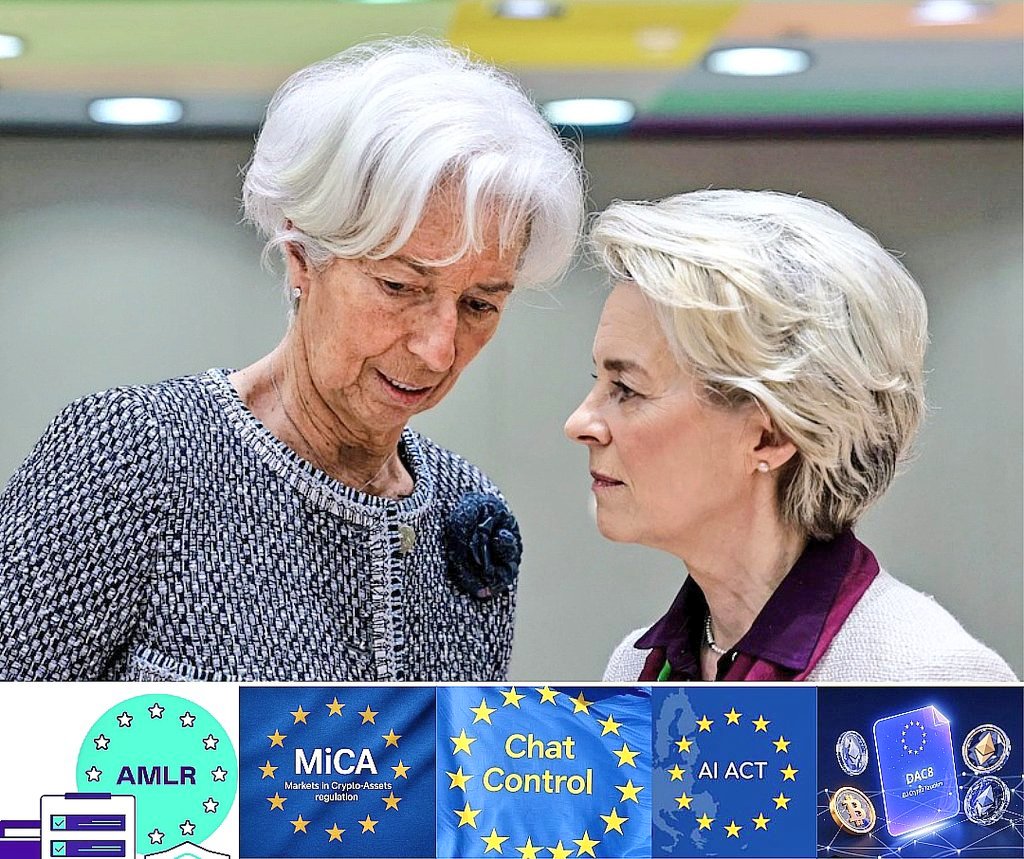
⚠️🇪🇺 L’UE DEVIENT VRAIMENT FLIPPANTE
Ce ne sont plus des projets ou des rumeurs : AMLR, DAC8, EUDI Wallet, Chat Control, DSA, MiCA et AI Act sont en train de s’imposer concrètement, souvent déjà en vigueur ou avec des deadlines très proches
😥 Personne ne les arrête vraiment :
- DAC8 (crypto taxes) : Actif depuis janvier 2026. Exchanges et wallets collectent déjà tes données KYC + TOUTES tes transactions crypto (achats, ventes, transferts). Premier reporting massif aux impôts en 2027. Fin de l’anonymat crypto en UE ✅
- AMLR (anti-blanchiment renforcé) : Toujours en préparation, entrée en vigueur juillet 2027. Seuils ultra-bas pour vérifier ton identité (quasi plus de cash anonyme), contrôles constants sur clients, audits massifs. Traçabilité totale des flux financiers ⏳
- EUDI Wallet (ID numérique UE) : Deadline fin décembre 2026. Chaque pays doit proposer une app pour stocker carte d’identité, permis, diplômes… Volontaire pour toi (comme le vaccin COVID au début puis obligatoire rapidement !), mais banques, administrations et services régulés devront l’accepter obligatoirement dès 2027 ! Vers un contrôle centralisé de ton identité numérique ⏳
- Chat Control (scan messages pour CSAM) : Toujours en négociation intense. Le Parlement a voté en mars 2026 pour prolonger la dérogation volontaire jusqu’à août 2027 (au lieu d’avril). Risque de scan obligatoire sur messageries chiffrées (WhatsApp, Signal…). Menace sérieuse sur le chiffrement et la vie privée ⏳
- DSA (contrôle plateformes) : Plein régime depuis 2024/2025. Gros acteurs (Meta, Google, TikTok…) obligés de modérer ultra-vite les contenus illégaux, transparence algos, audits forcés. Amendes jusqu’à 6% CA mondial + pouvoir de shutdown ✅
- MiCA (règles crypto) : En vigueur depuis fin 2024/2025. Licences obligatoires, réserves strictes, KYC renforcé. Couplé à AMLR/DAC8 = cryptos vraiment anonymes ou décentralisées quasi impossibles ✅
- AI Act : High-risk IA (crédit scoring, biométrie, etc.) obligations massives dès août 2026 : conformité, documentation, monitoring constant, audits. Amendes jusqu’à 7% CA mondial. Surveillance lourde sur l’IA ✅
En résumé : tes paiements/crypto tracés à vie, ID numérique quasi-obligatoire pour plein de trucs, scan potentiel de tes chats privés, plateformes et IA ultra-contrôlées...
Tout avance très vite en ce moment, souvent sans débat public massif. C’est normal, ça ? 🤔
Partage si tu trouves ça inquiétant et utile de faire savoir aux gens.
#UE #Privacy 🪦