Every new gamer can make the YOM network stronger.
More local demand means more regional nodes come online.
More nearby nodes means compute gets closer to players.
That is how YOM is designed to scale: not by adding friction, but by improving coverage and latency over time.
https://t.co/EvAydwgc0G
This week on YOM 🛠️
→ Why the hardware model is breaking and what replaces it
→ How publishers skip app stores with instant play (+1,316% DAU case study)
→ Heading to @developconf Brighton, July 14–17
→ Town Hall Ep. 80 Xbox layoffs and what it means for decentralized gaming
→ MiCA fully enforced $YOM was compliant from day one
→ The network loop: more gamers → more compute → more $YOM settlement
Building continues. 🫡
The YOM network runs on a simple loop.
More gamers using platform → more compute consumed → more network activity → more $YOM settlement on-chain → more operators joining to serve demand.
Token utility grows when the network grows.
That's the design.
NANO is the hardware that connects your gaming PC to the YOM network.
More robust design. Clearer setup. Plug and play.
No technical background required. No complicated configuration.
https://t.co/h3PT38qhPj
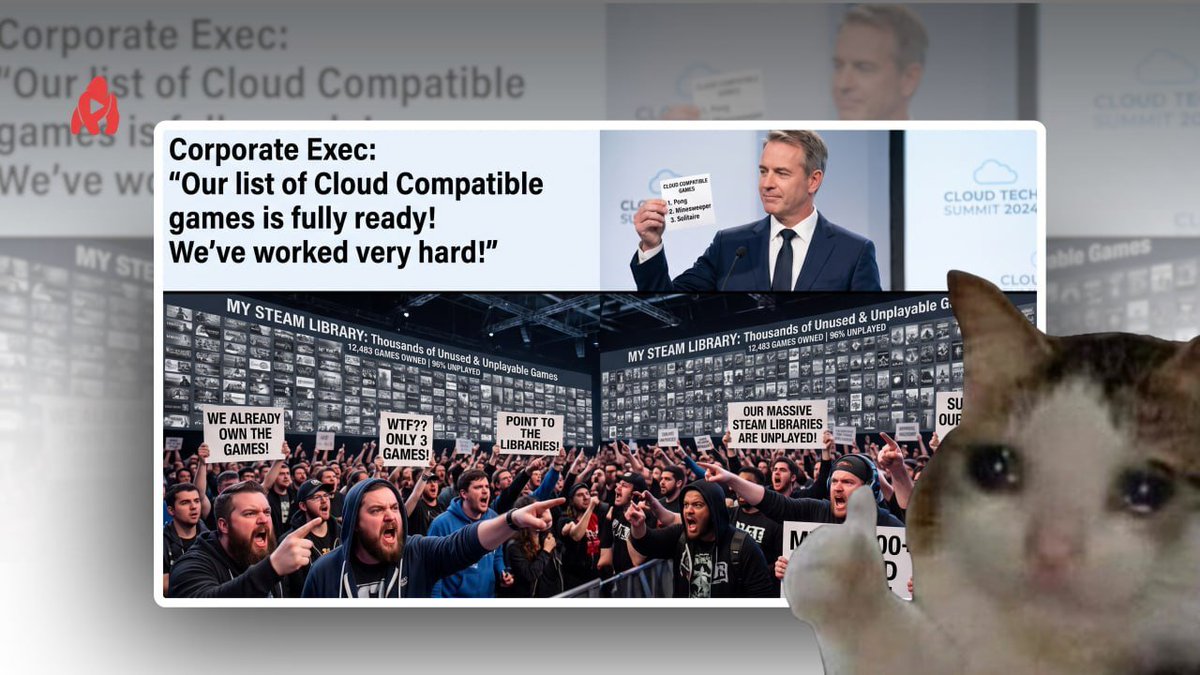
"We added three indie titles from 2019 to our service this month!"
Gamers with 300+ owned AAA games on Steam: 👁👄👁
The current cloud gaming model is fundamentally broken.
A gamer in Lagos, Nigeria. 🇳🇬
A gamer in Berlin, Germany. 🇩🇪
Same game. Same Steam purchase.
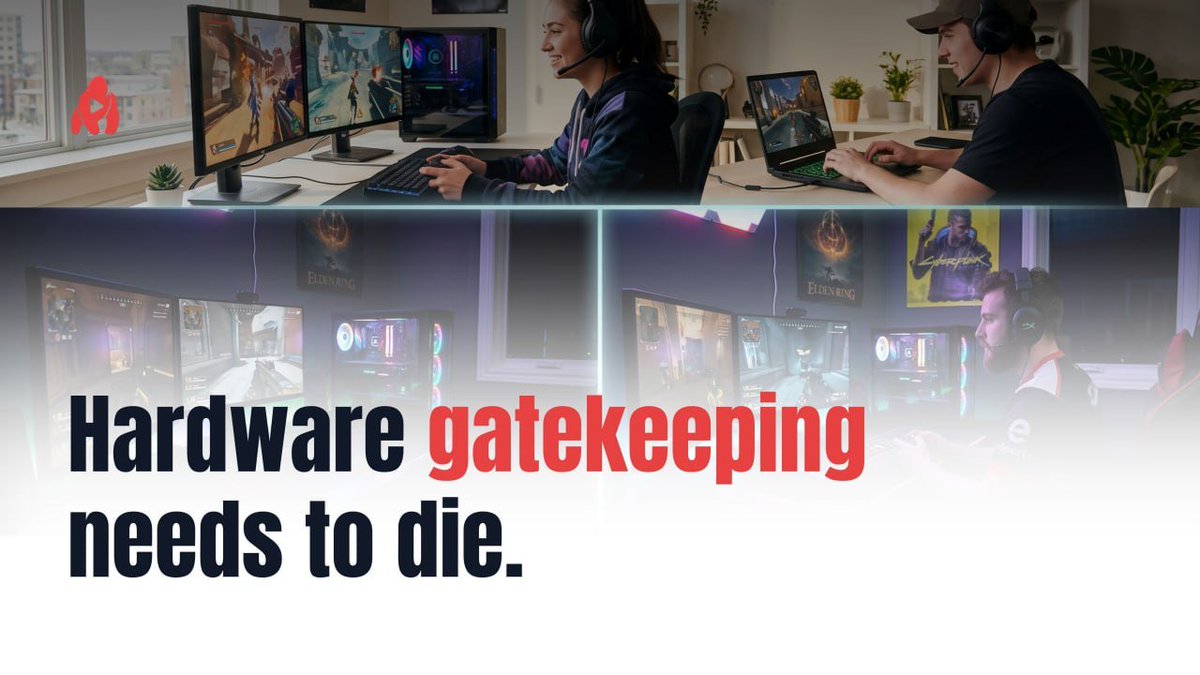
Why should one need a $3,000 PC for max settings while the other doesn't?
Gaming should be for everyone.
Hardware gatekeeping has to go.
For a decentralized network to work, nodes have to be reliable.
The YOM settlement contract meters every contribution uptime, region, demand served.
Rewards flow based on verified work. Not self-reported numbers.
On-chain. Transparent. Automatic.
https://t.co/fGVltFTpbR
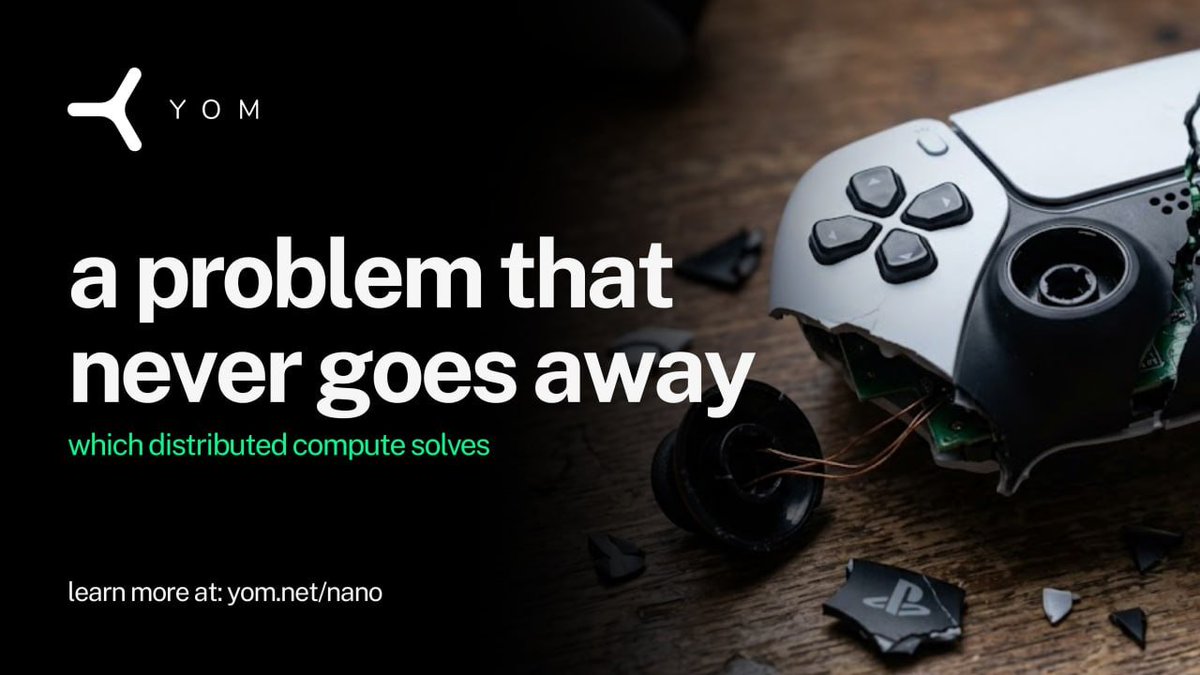
Traditional cloud gaming has one problem that never goes away.
Every new player adds to the infrastructure bill.
Centralized infrastructure punishes scale.
Distributed compute flips that math entirely.
https://t.co/fGVltFTpbR
When a player clicks play, the network finds the closest available node.
Not the most powerful. Not the cheapest. The closest.
Geography is the variable that matters most in real-time compute.
The player just sees the game.
https://t.co/fGVltFTpbR
Quick reality check for gamers in 2026:
Graphics cards: Priced like a used car.
Cloud gaming: Locked libraries of games you don't care about.
Consoles: Mid-generation upgrades that cost a fortune.
Why is playing your favorite titles still a luxury? Let’s talk in the replies.
This week we asked one question: why did cloud gaming fail?
The answer was simple. The hardware was too far away.
We covered the problem, the architecture, the operators, and the token.
https://t.co/fGVltFTpbR
NANO is YOM's dedicated hardware device.
Plug in. Connect to the network. Start serving compute to players in your region.
Built for one job. Does it well.
https://t.co/h3PT38pJZL
YOM 🤝 WALTER
YOM was built to power experiences not just infrastructure.
Today, we are taking a step closer as we announce a partnership with Walter.
To support Walter ;
Follow on X - @walter_onscreen
Like the tweets and Repost.
P.S Stay tuned for more Walter teasers 😎
Somewhere, a billion-dollar company built a data center to stream games to your city.
It still adds 80ms of latency because it's 3,000 miles away.
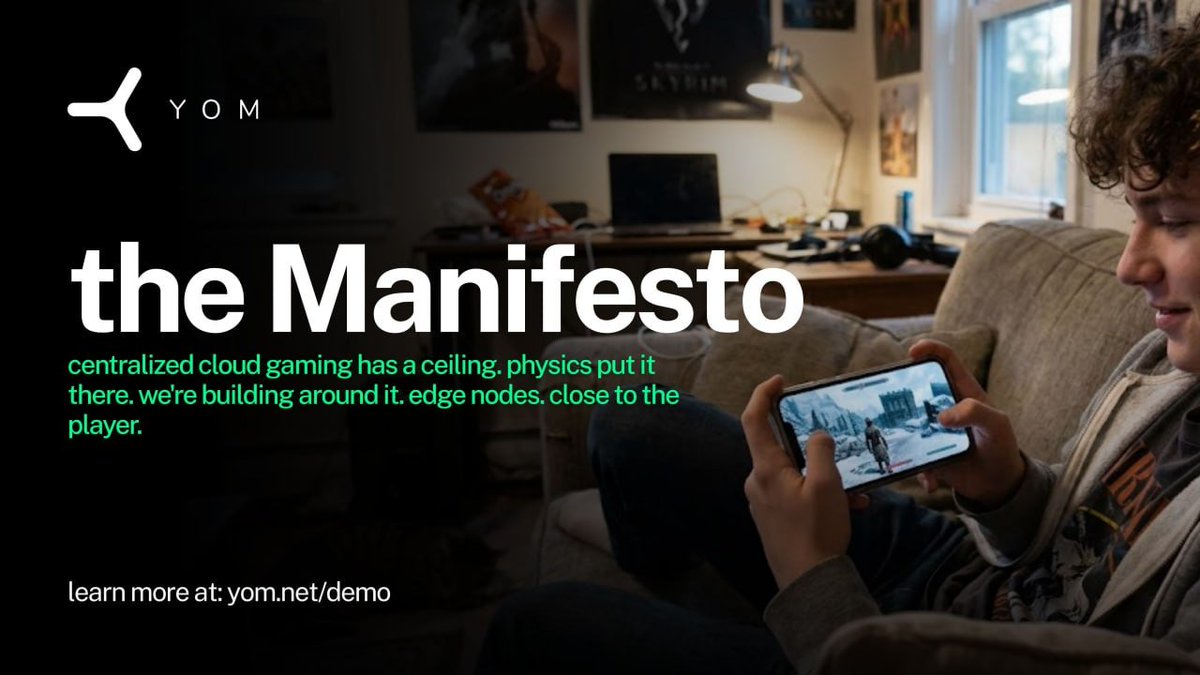
Centralized cloud gaming has a ceiling. Physics put it there.
We're building around it. Edge nodes. Close to the player.
Click. Play. That's it.
https://t.co/EvAydwgc0G
Some projects end at launch.
For YOM, TGE was Day 1.
The network is live. Nodes are serving. Sessions are streaming. And $YOM is doing what it was built for settling all of it.
For a decentralized network, this is just the beginning.
Cloud gaming has a problem nobody likes to talk about.
The data center serving your game session might be 500 miles away. Light itself can't move that distance fast enough for real-time interactive 3D.
It's not a software problem. It's a geography problem.
That's why YOM was built differently local nodes, real-time routing, sessions served from the closest available compute. Distance is the bottleneck. We removed it.
For a decentralized network, this is the starting point.