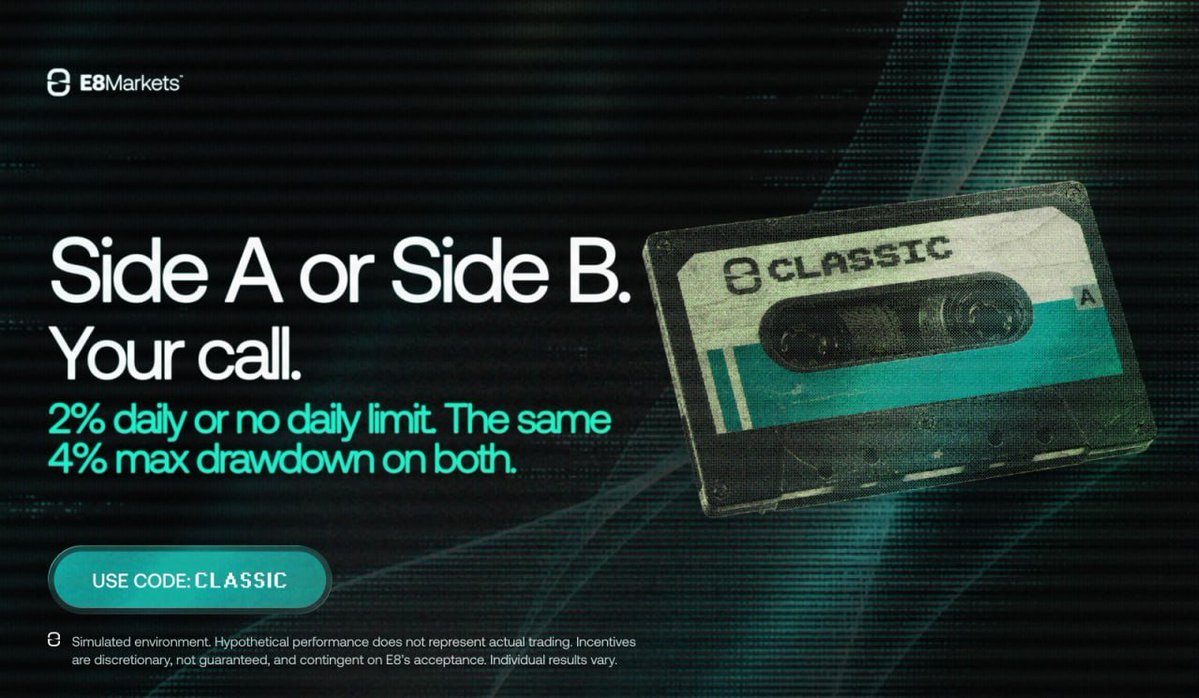
E8 Classic Forex.
Daily limit or no daily limit. You choose.
• 2% daily drawdown, or none
• Same 4% static max drawdown either way
• One step. 8% profit target.
Use code CLASSIC.
https://t.co/dczxsrHnDV
E8 Classic Forex.
• News trading allowed in both stages
• On a Performance Account, profit from trades within 5 minutes of high-impact news counts at 40%
• Static drawdown, even after payout
• No buffer. No consistency rule.
Use code CLASSIC.
https://t.co/dczxsrHnDV
THE NASDAQ HAS JUST HAD ITS WORST WEEK SINCE 2020.
THIS MORNING, NASDAQ FUTURES ARE SURGING ALMOST 3%.
GOLD IS RALLYING NEARLY 3% AFTER CRASHING TO A 14-MONTH LOW.
SOUTH KOREA'S STOCK MARKET PLUNGED ALMOST 6%, TRIGGERING EMERGENCY TRADING CURBS.
AND THE US TREASURY SECRETARY IS WARNING THAT THE FEDERAL RESERVE COULD BE MAKING A SERIOUS POLICY MISTAKE.
LET THAT SINK IN.
Because I think something VERY important is developing underneath these financial markets.
And most traders are completely missing it.
For months, I've been explaining how inflation, interest rates, Treasury yields and the US dollar are connected.
We've watched gold collapse.
Silver get absolutely hammered.
The Nasdaq suffer an enormous sell-off.
And technology stocks across Asia get demolished.
But look at what's happened over the weekend.
South Korea is preparing an approximately $8 BILLION stock market stabilisation fund.
China has announced measures to make leveraged stock purchases easier.
And US Treasury Secretary Scott Bessent has warned about the dangers of the Federal Reserve overtightening monetary policy.
THINK ABOUT WHAT THAT MEANS.
The same inflation problem that has forced central banks to become increasingly aggressive is now creating serious concerns about the DAMAGE that aggressive monetary policy could cause.
That's the contradiction I want traders to understand.
HIGH INFLATION IS A PROBLEM.
But raising interest rates too aggressively to fight that inflation can create an entirely different problem.
A GROWTH SHOCK.
Higher borrowing costs.
Pressure on company valuations.
More expensive financing.
Reduced investment.
And potentially serious stress across financial markets.
NOW LOOK AT GOLD.
Last week, gold was getting absolutely demolished alongside equities.
Many traders couldn't understand why the supposed safe-haven asset was falling during a stock market crash.
But gold doesn't simply trade on fear.
It trades on the opportunity cost of holding it.
Real interest rates.
The US dollar.
Liquidity conditions.
And expectations about what the Federal Reserve will do NEXT.
When investors expect rates to remain elevated, gold can struggle.
When investors urgently need cash, even gold can get sold.
But here's where things become REALLY interesting.
What happens if the economic damage from high interest rates becomes so severe that markets begin anticipating a LESS aggressive Federal Reserve?
Potentially lower bond yields.
Lower real yields.
A weaker US dollar.
And an environment that could eventually become much more supportive for gold.
THIS IS WHY TODAY'S REVERSAL MATTERS.
Gold is rebounding.
Nasdaq futures are rebounding.
And policymakers are beginning to acknowledge the risks developing across financial markets.
But I'm NOT calling the bottom.
Not even close.
A violent rally after an enormous sell-off is NOT necessarily the beginning of a new bull market.
Sometimes it's simply short covering.
Sometimes it's investors unwinding defensive positions.
And sometimes it's the first indication that expectations are genuinely changing.
The challenge is identifying WHICH ONE.
For gold, I'm watching whether the dollar and REAL Treasury yields begin to retreat sustainably.
For the Nasdaq, I'm watching whether this rebound develops into genuine buying demand or simply creates another opportunity for sellers.
And for BOTH markets, the next US inflation data and the Federal Reserve's December decision could be absolutely crucial.
Remember what I've been saying about gold.
$3,500.
AND THEN $3,300.
Those downside areas remain relevant if the bearish macroeconomic environment persists.
But if the conditions driving that sell-off begin to reverse, the entire picture changes.
Markets don't wait for the economy to recover.
They start moving when EXPECTATIONS change.
And right now, we could be entering a period where expectations become incredibly volatile.
TRADERS....THOUGHTS??
IS THIS THE BEGINNING OF A MAJOR RECOVERY IN GOLD AND THE NASDAQ?
OR ARE WE WATCHING A MASSIVE RELIEF RALLY BEFORE THE NEXT WAVE OF SELLING?
Because I think the answer could define how these markets trade into the end of 2026.