Our new Gemma 4 12B model hits a sweet spot between size + performance: it can run locally on a laptop, while enabling powerful multi-step reasoning and agentic workflows. Can’t wait to see what the community does with this one!
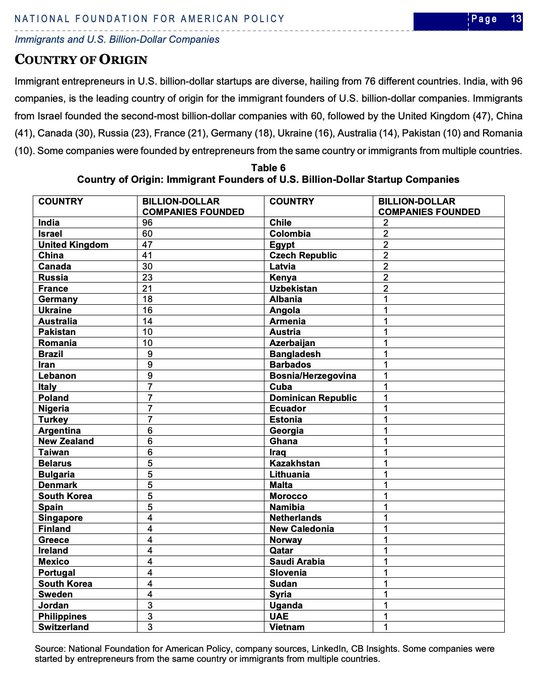
India has sent 96 people to America who started billion dollar companies. No one else is even close.
There's only about 5 million Indians in America. Almost one in 50,000 of them is a unicorn founder!
What a holy, special, beautiful people.
I will always fight for them.
Humbled to share that we successfully test fired 4 semi-cryogenic rocket engines simultaneously, as a cluster.
All the 4 engines are 3d printed as single pieces of hardware - designed and manufactured in-house at AgniKul Cosmos Rocket Factory - 1. As with all our propulsion systems, these 4 engines are also powered by electric motor driven pumps.
This test involved calibrating 8 pumps, 8 motors and tuning 8 speed control algorithms to work together in perfect sync to achieve uniform startup, steady state and shutdown performance across the entire system. As with the last cluster test, to the best of our knowledge, this is the first time such a test has been performed in India with semi cryogenic engines.
We are extremely grateful to have the opportunity to be building world class, original space technology from India, for the world with the support of @iitmadras@isro and @INSPACeIND
From here on, the addition of engines to our clusters will likely increase non-linearly. #Agnibaan #RocketEngineCluster #ElectricPumpFedEngines #Agnilet #SinglePieceEngine #3dprinting #RocketEngineTest #AdditiveManufacturing #Agnikul #AgnikulCosmos #StartupIndia #MakeinIndia #madeinIndiaForTheWorld
@srinathr155@moin_spm@satchakra_iitm@iitmadras@iitmrp@IITMIC@tdbgoi@IndiaDST@ANRFIndia@TIDCO_1965@startupindia@TheStartupTN@Guidance_TN@startup_mission@SIPCOTTN
My boyfriend and I sat every evening for over a month at Manikarnika Ghat in Varanasi.
Night after night, we watched the funeral fires burn.
Skulls cracked.
Arms fell from the pyres.
Death wasn’t something to avoid.
It was something to witness.
My lesson:
When impermanence is visible, life becomes sacred.
Check out my latest article: From MBA Classroom to AI Systems: Why Agent2Agent Feels Like Organization Design (BADM 509 in Action) https://t.co/l7k1Swfkrr via @LinkedIn
🚨 The most sacred relic in Christianity might have been woven 4,000 miles from Jerusalem.
New genetic analysis of the Shroud of Turin reveals DNA signatures that trace back to the Indian subcontinent. Pollen grains embedded in the fabric match species native to the Kashmir region. The linen itself carries molecular markers consistent with flax grown in areas spanning modern day Pakistan and northern India.
Every Christian scholar who built their career defending the Shroud’s authenticity as the burial cloth of Christ is now staring at evidence that completely reshapes the narrative.
But the implications run deeper than authentication debates.
What we’re looking at could be the smoking gun for first century trade networks that medieval historians claimed didn’t exist yet. The idea that fine Indian textiles reached Palestine 2,000 years ago contradicted everything we thought we knew about early commerce patterns. The Silk Road wasn’t supposed to be fully operational. Maritime trade between India and the Mediterranean was considered marginal.
The DNA evidence suggests otherwise.
If the Shroud originated in India, it means luxury textile production and long distance commerce were far more sophisticated in the first century than any textbook admits. Indian weavers were already creating fabrics so extraordinary that they traveled thousands of miles to reach the most important burial sites in the ancient world.
Think about what that required. Quality control systems to maintain fabric integrity across months of transport. Financial instruments sophisticated enough to handle payments across multiple currencies and kingdoms. Cultural exchange networks deep enough that Indian craftsmen understood and catered to specific burial customs in distant lands.
The genetic markers tell a story of globalization that predates our supposed “global” era by two millennia.
Archaeological orthodoxy just took a massive hit.
The traditional timeline puts sophisticated Indian Ocean commerce centuries later. The standard model claims the Roman Empire was insular, dependent on local production with minimal eastern trade. Economic historians built entire theories around the idea that complex international supply chains were modern inventions.
DNA doesn’t lie about geography.
Those pollen grains traveled from Kashmir valleys to a tomb in Jerusalem through human networks that were supposed to be impossible in 30 AD. Either the dating is wrong, or our entire understanding of ancient economic systems is incomplete.
The religious angle creates its own earthquake.
If the Shroud is authentic but Indian, it means the burial cloths of Christ were luxury imports, not local Palestinian linen. The man Christians worship was laid to rest in fabric that cost the equivalent of a house, shipped from craftsmen who never heard his name but whose work became the most venerated textile in human history.
That detail rewrites crucifixion accounts. Someone with access to international luxury goods provided the burial materials. The narrative of Christ dying poor and abandoned doesn’t align with being wrapped in premium Indian textiles.
The forensic anthropology adds another layer.
DNA analysis also found genetic material from individuals with South Asian ancestry who handled the cloth. Multiple handlers across centuries left traces. But the original genetic signatures point toward the Indian subcontinent as the fabric’s birthplace, not just its journey.
What emerges is a picture of the first century world that’s far more connected, sophisticated, and globally integrated than academic consensus admits.
The Shroud might force a complete revision of ancient trade histories, early Christian economics, and our assumptions about technological capabilities in the Roman world.
DNA evidence rarely lies.
But it frequently demolishes the stories we built around artifacts we thought we understood.
India ran the most important cardiovascular study of the 20th century by accident, and then immediately forgot about it.
In 1967, Dr. S.L. Malhotra published a study in the British Heart Journal examining heart disease rates among 1.5 million Indian railway employees. The population was extraordinarily useful for research purposes: same employer, same healthcare access, comparable income and working conditions, spread across the entire country.
The only meaningful variable was geography. Which meant diet.
North Indian railway workers: Punjab, Rajasthan, UP, ate a diet built around ghee and dairy fat. They consumed up to 19 times more fat than their southern counterparts. The fat was primarily saturated: clarified butter, milk fat, the short-chain saturated fatty acids that Ancel Keys had recently been telling the Western world were arterial death.
South Indian railway workers ate a diet based on rice, sambar, and seed oils: groundnut oil and sesame oil, primarily. They ate considerably less fat overall. By the standards of dietary advice being formulated in the 1960s, they should have been the healthy ones.
Heart disease mortality in South India: 135 per 100,000.
Heart disease mortality in North India: 20 per 100,000.
Seven times higher in the population eating seed oils.
Among railway sweepers specifically, the lowest-paid, most physically active workers, the gap was even wider. Heart disease was fifteen times more common in the South Indian sweeper population than in the North Indian sweeper population.
Malhotra controlled for everything he could reach: smoking, where Northerners actually smoked more. Activity levels, where the relationship was inconsistent. Socioeconomic status, where executives died more often than sweepers regardless of region. He found no variable that explained the gap except the type of fat in the diet.
He published the data. In a peer-reviewed journal. In 1967.
The study was cited periodically, acknowledged as methodologically interesting, and then set aside.
The decade in which Malhotra published was the decade in which Ancel Keys's fat hypothesis was being converted into policy. The American Heart Association was issuing guidance recommending polyunsaturated vegetable oils as replacements for saturated animal fats. The food industry was producing seed oils at industrial scale. The infrastructure of seed oil promotion was being built, expensively and with great institutional momentum.
A study showing that populations eating animal fat had a fraction of the heart disease of populations eating seed oils was not, in that context, a study that anyone particularly wanted to follow up.
Nobody followed up.
Almost sixty years later, the finding stands unrefuted in the literature.
It is not in the dietary guidelines.
My dear front-end developers (and anyone who’s interested in the future of interfaces):
I have crawled through depths of hell to bring you, for the foreseeable years, one of the more important foundational pieces of UI engineering (if not in implementation then certainly at least in concept):
Fast, accurate and comprehensive userland text measurement algorithm in pure TypeScript, usable for laying out entire web pages without CSS, bypassing DOM measurements and reflow
So a Japanese scientist explains what happens when the body doesn’t get food… and suddenly the world is amazed.
Meanwhile, Nirjala fasting — practiced by Hindus twice a month for centuries — was dismissed as andha-vishwas.
Old wisdom: ignored.
Rebranded science: Nobel Prize.
History has a strange sense of humor.
BREAKING: Massive Adulterated Milk Racket Busted in Rajasthan; Congress leader role alleged.
Tonk police raided a factory in Diggi, seizing ~5,500 litres of synthetic milk, vehicles, and chemicals like soybean oil, vanaspati ghee, caustic soda & more.
The unit allegedly produced ~80,000 litres/day of fake milk supplied to Jaipur, Ajmer & Tonk markets. 5 arrested; main accused still absconding.
Operated under a chilling plant license but misused for large-scale adulteration.
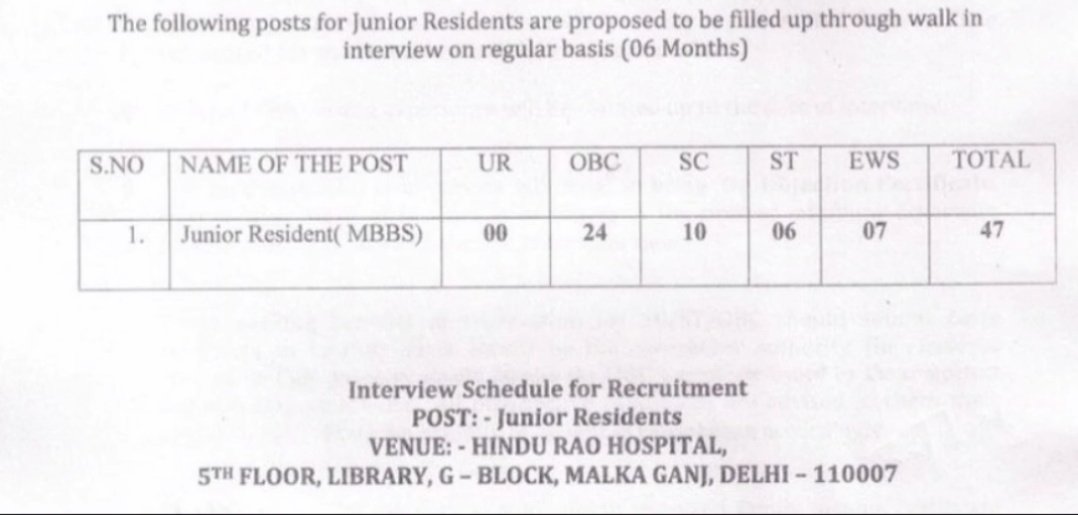
Total Vacancies – 47
Seats for General Category – 0
Now I have a few questions for the General Category:
Do you have Indian citizenship ? – Yes.
Do you pay taxes ? – Yes.
Do you vote ? – Yes.
Then why are you not allowed to write the exam in a democratic nation like India?