Instagram analytics are tricky. This post is super helpful to understand what matters + what metrics mean. Ex: what's the big difference between shares and saves? https://t.co/RBaC0aheoy via @latermedia
63 realistic writing hacks to build a writing career in 12 months or less (that pays your bills):
• Write where the eyeballs are. Don’t pick small platforms to write on that make you jump through hoops & have less than 100m users.
• The worst way to make money as a writer is by selling your writing. Think of writing as a business. The writing leads to something else.
• Get good at copywriting or you’ll persuade no one to read or engage with your work.
• The best-selling books have a clickbait title.
• To “sell out” is to make money as a writer, because if you’re not selling you’re being romantic. Romantic writers are $0 hobby writers.
• Writing a book to start with is the worst idea. Audience building should always come first.
• If you hate the owner of X and refuse to write there, you’re leaving a lot of opportunities on the table. Bill Gates did some bad stuff, yet we all use Microsoft in our day jobs. Grow up.
• Stop censoring yourself when you write.
• Stop self-rejecting your writing.
• The best writers never start with a blank page. They write headlines with dot points during off days. Then they fill in the outline on their writing days.
• Most writers don’t have original thoughts. Just borrow ideas from others and they’ll naturally become yours as you write about them.
• Writing makes all your communication better. People who can communicate clearly tend to make more money in all areas of life.
• Choose one social media app, and one newsletter platform. Then go deep. Being everywhere is the same as being nowhere.
• Everyone wants to invest hundreds in their writing career and make millions. Life doesn’t work like that. Spend money to make money.
• Successful writers never write alone. They write together in packs like wolves.
• Joining a group of writers helps you to instantly have a distribution network for every new piece of content. Then the law of reciprocity takes over if you’re generous.
• Own your audience with an email list, or run on a hamster wheel full of frustration and regrets.
• An audience is a one-way conversation. A community is two-way. Build a community.
• Stream of consciousness writing produces some of the most emotive and powerful words on the internet.
• Platforms come and go. Be loyal to yourself.
• Take your best short-form posts and use them as headlines for essays.
• Build the email list, email the email list weekly.
• Storytelling will always produce better results than informational writing.
• Give information away for free. Sell the implementation.
• All writing is an energy transfer from you to the reader. Write in high-energy states to reach and move more people.
• Writers who look original just pull borrowed ideas from bizarre sources.
• Write to express instead of be read. Less ego.
• Capture people with a headline and get them to stay in the intro, or your work will never get read.
• Readers have better things to do than read your writing. You must try way harder to help them than you think.
• Offering strategies is overrated. Offering inspiration is underrated.
• Writing about everyday life makes you more relatable.
• Evergreen content will always outlast newsworthy content.
• Social media is the new digital society. Embrace it or get left behind pitching book ideas to insolvent book publishers.
• Be repetitive to be remembered. Write about the same ideas over and over, but make them better and clearer each time until they resonate.
• Writing online leads to paid speaking opportunities, consulting gigs, and coaching. Make money outside of writing.
• Use newsletter recommendations on Beehiiv, $ubstack, and ConvertKit to grow your audience on auto-pilot.
• Guest-post in other people’s newsletters to reach new audiences
• Stories are more persuasive than advice.
• Write content that makes your readers look good if they share it. If you do, they’ll share it to show off and you’ll get views.
• Write once, repurpose multiple times.
• Publish once, publish the same thing again in 6 months.
• Build a daily writing habit or you’ll never be a writer.
• The writers who use AI will legitimately steal money from those who don’t.
• Use intros to tell short stories instead of providing caveats.
• Being slightly controversial attracts readers faster.
• Firsthand experiences will always outrank quotes you borrowed from books found in college libraries.
• Trying to sound smart makes readers feel dumb, so they click away.
• Writers are paid to think, not write.
• The best writing ideas come to you during downtime.
• Remove your filter like Charles Bukowski did, and readers will stand up and applaud you for reasons they can’t explain.
• Study successful writers to become successful. Ignore amateurs.
• A writer’s voice is what readers remember. And that’s what persuades them to come back for more.
• Once you’ve built a small audience, you can just sell a paid newsletter subscription to dabble in monetization, then pivot later. The first $20 inspires the next $100,000.
• If 5% of your audience is willing to pay you, you probably have a full-time income. Sell to a small few rather than everyone.
• You can’t write too many words but you can be too boring.
• Real online attention comes from value, not vanity.
• Write about what people are afraid to talk about to be interesting.
• Writing isn’t about what you can get but what you can give. Give enough and you’ll never starve.
• Quantity of writing leads to quality.
• Understand readers instead of lecturing them.
• Writing is how you have good ideas.
• Readers buy your view of the world, not your words.
• Starving artists exist because they refuse to change.
Final Thought
The best writers aren’t smart.
•They just hang in packs, aren’t ashamed to get paid for their work, and ask a small percentage of people to upgrade to a paid offering.
Use writing to find creative ways to pay your bills.
30 short habits with massive return on life:
1. Create a system for capturing thoughts—your brain is for having ideas, not holding them.
2. Swap your phone for a Kindle at bedtime (this fixed 90% of my sleep problems)
3. Read something every day. Even just 1 page.
4. Write something every day. Even just 1 paragraph.
5. Automate small decisions/tasks. Save your brain power for bigger things.
6. Write a 5 item to-do list each morning. Prioritize it by importance.
7. Learn to use body scan meditation to fall asleep quickly.
8. Go to bed 30 minutes earlier.
9. If you want something—ask for it. Closed mouths don't get fed.
10. Keep a swipe file of things that resonate with you.
11. Break down problems into the smallest possible action steps.
12. Write down 1 story-worthy moment each day. In a month, you'll have 30 stories to tell.
13. Double down on creative activities that make you lose track of time.
14. Put your phone out of reach while you're working.
15. Track every minute of your day for a week. See where your time is actually going.
16. Be bored more often. Give your brain space to be creative.
17. Listen more than you speak.
18. Create more than you consume.
19. Compliment more than you complain.
20. Delete apps you don’t need.
21. Donate clothes you don’t wear.
22. Make a habit of reaching out to old friends.
23. Never say “yes” out of obligation.
24. Take care of your information diet—Junk info hurts our brains like junk food hurts our bodies.
25. Never do an activity just so you can tell others about it.
26. Revisit things that have brought you joy in the past. They'll do it again.
27. Stop comparing your behind-the-scenes to every one else’s highlight reel.
28. "Read what you love, until you love to read" - Naval Ravikant
29. Take care of your body, you only get one.
30. Leave it better than you found it.
Lesson #6: Learn to write
There is no better skill for marketing yourself and your business than writing.
Write every single day.
Don't even worry about if it's good. Just do it.
If you do, you'll look back one day and realize just how much better you've become.
"At the end of each day ... you lie there and think, Well, I’ll be damned, I did this today... At the end of the week you’ll have a certain amount of accumulation. At the end of a year, you look back and say, I’ll be damned, it’s been a good year." - Ray Bradbury 🫶
Education provider @Tech_Elevator opened a new campus in Jersey City, which will allow students to connect with its instructors through the online bootcamp with locally focused career and placement support. https://t.co/ys9w4AMd0p
"It only takes 5 minutes to break the cycle.
5 minutes of exercise and you are back on the path. 5 minutes of writing and the manuscript is moving forward again. 5 minutes of conversation and the relationship is restored. It doesn't take much to feel good again." - James Clear
Master Leadership with Anthony Hughes (CEO of @Tech_elevator ) as he talks about leadership responsibility in growing companies and more...Full Episode on https://t.co/JH7XrS1jXi
#tech#leadership#masterleadership
📣 @Tech_Elevator is partnering with @NianticLabs for a scholarship program that will provide 20 underrepresented individuals the opportunity to transform their careers and land a job as software engineers, tuition-free! Learn more: https://t.co/F03ZD4fW7P
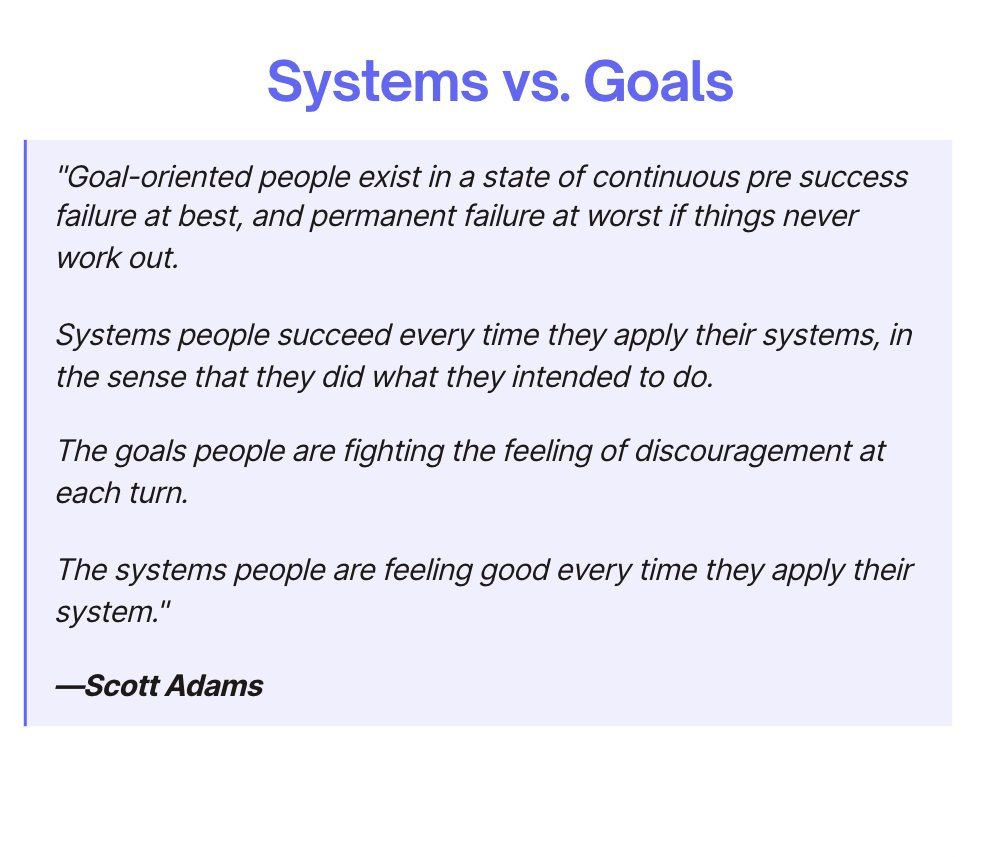
Systems vs. Goals
To achieve more, focus on the process first—the system—that will get you to the goal.
Doing something every day is a system—like writing for 1 hour.
Writing a book is a goal.
"Goals determine your direction. Systems determine your progress.”
—James Clear