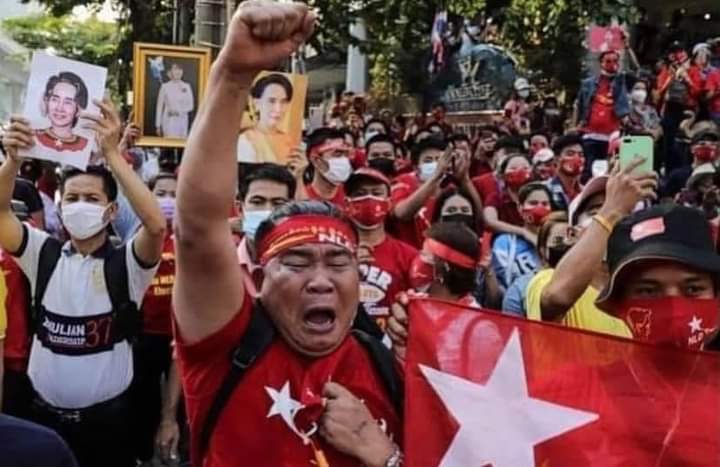
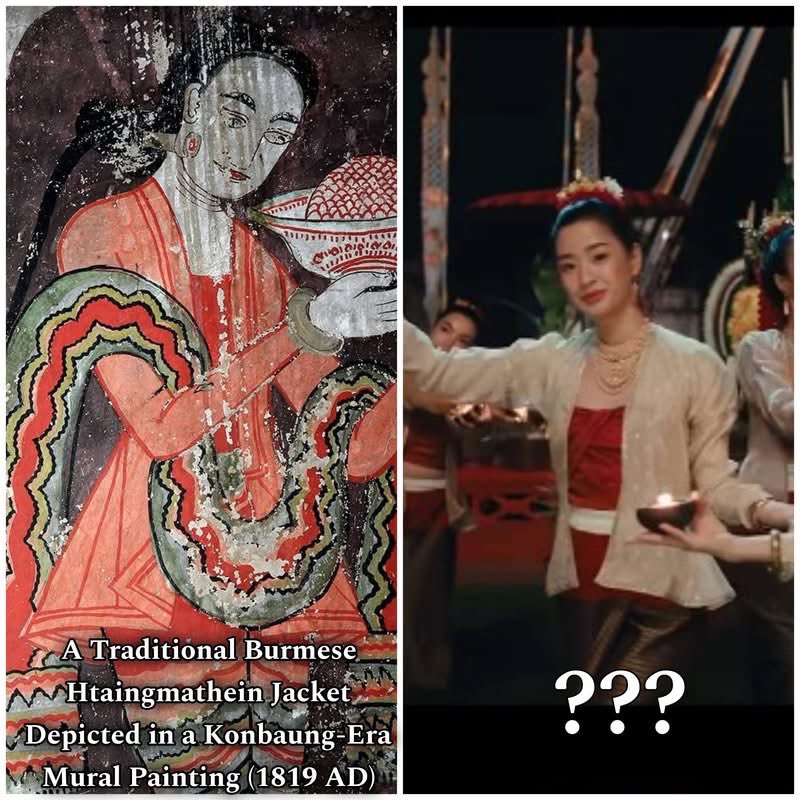
@GMMTV@ScarletHeartTH Inspiration is ok but u don’t give any credit for this. Someone’s heritage can not be another’s copy cat. Plz respect another one’s. Even if u don’t wanna delete this series , u should add credit title in every episodes , write credit synopsis on Wikipedia.
Inspiration is ok but u don’t give any credit for this. Someone’s heritage can not be another’s copy cat. Plz respect another one’s. Even if u don’t wanna delete this series , u should add credit title in every episodes,write credit synopsis on Wikipedia
#RespectMyanmarCulture
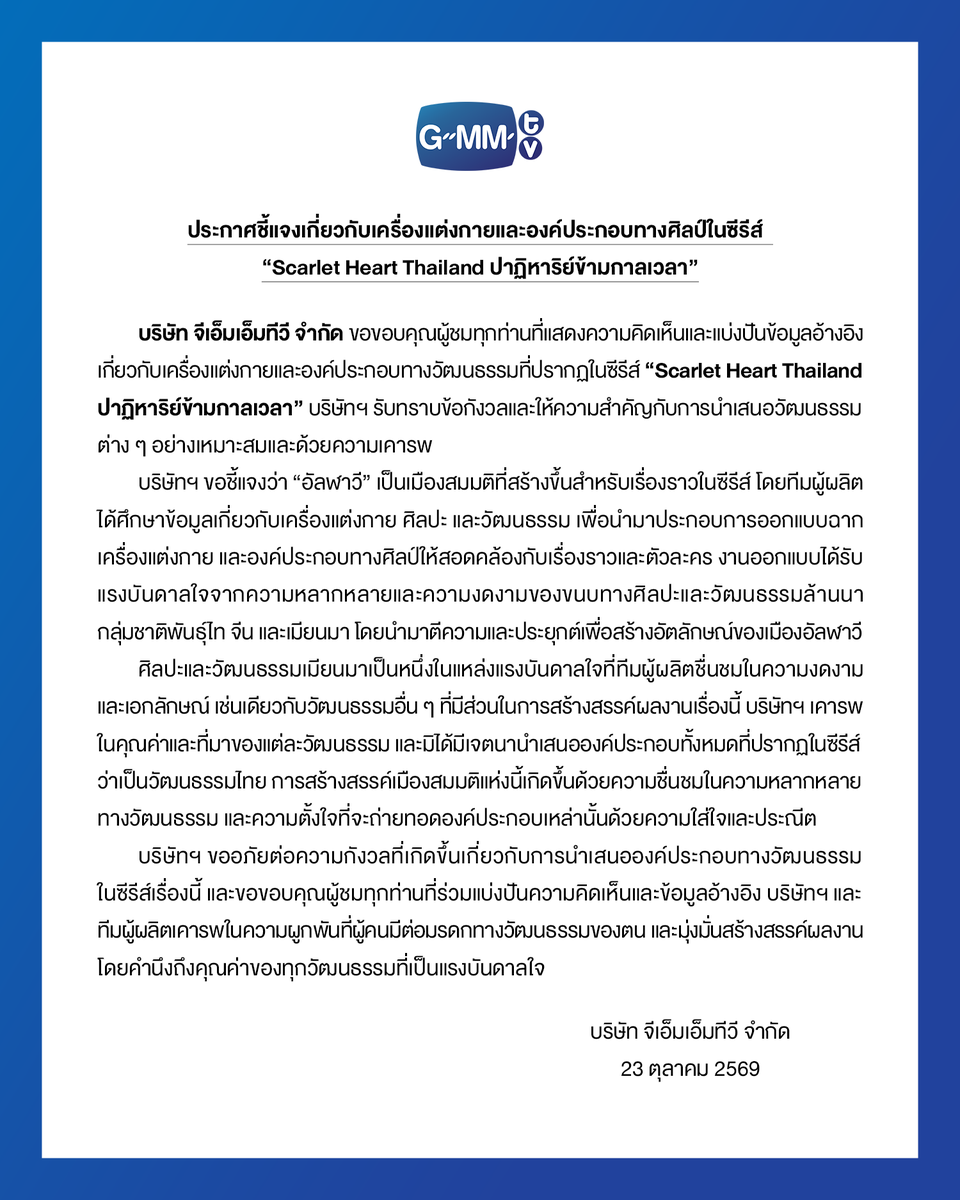
ประกาศชี้แจงเกี่ยวกับเครื่องแต่งกายและองค์ประกอบทางศิลป์ในซีรีส์ “Scarlet Heart Thailand ปาฏิหาริย์ข้ามกาลเวลา”
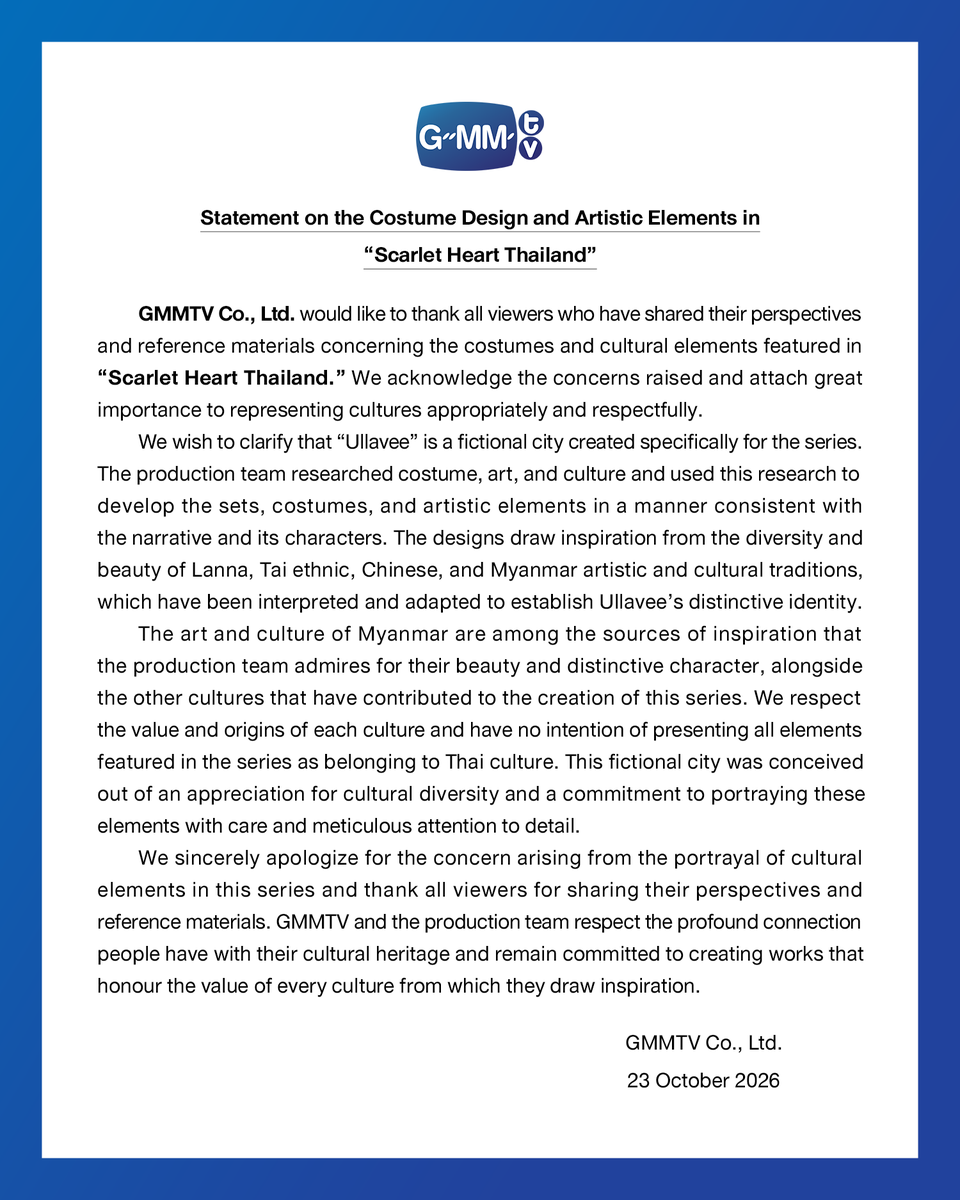
Statement on the Costume Design and Artistic Elements in “Scarlet Heart Thailand”
#ScarletHeartTH@ScarletHeartTH#GMMTV
ဒီဇာတ်လမ်းတွဲအတွက် ပြင်ဆင်ဖို့ သူတို့မှာ အချိန် ၃ နှစ်အပြည့် ရှိခဲ့ပါတယ်။ ဒါဟာ တကယ့် ထိုင်းယဉ်ကျေးမှုကို ပြသဖို့ အခွင့်အရေးကောင်းတစ်ခုပါပဲ။ ဒါပေမဲ့ ဇာတ်လမ်းခေါင်းစဉ်က "ထိုင်းဗားရှင်း" လို့ တိတိကျကျ ဖော်ပြထားလျက်နဲ့ ဘာကြောင့် မြန်မာ့ယဉ်ကျေးမှုကို ခိုးယူသုံးစွဲရတာလဲဆိုတာ ကျွန်ုပ် နားမလည်နိုင်ပါဘူး။ ဘာလို့ ဒီလိုလုပ်ရတာလဲ ဒီလုပ်ရပ်က ထုတ်လုပ်ရေးကုမ္ပဏီနဲ့ ထုတ်လုပ်သူတွေအနေနဲ့ တခြားယဉ်ကျေးမှုတွေကို လုံးဝ ဂရုမစိုက်ဘူး၊ လေးစားမှုလည်း မရှိဘူးဆိုတာကို ပြသနေပါတယ်။ @GMMTV@Giggoo_@ScarletHeartTH
They had a full 3 years to prepare for this series. It was a great opportunity to show authentic Thai culture. But I can't understand why they had to steal and use Myanmar culture when the title clearly states 'Thai version'. Why did they do this??? This action shows that the production company and producers completely do not care about or respect other cultures
พวกเขามีเวลาเตรียมตัวเต็มๆ ถึง 3 ปีสำหรับซีรีส์เรื่องนี้ นี่เป็นโอกาสที่ดีมากในการเผยแพร่วัฒนธรรมไทยที่แท้จริง แต่ฉันไม่เข้าใจเลยว่า ทำไม���ั้งๆ ที่ชื่อเรื่องก็ระบุไว้อย่างชัดเจนว่าเป็น 'เวอร์ชันไทย' แต่กลับต้องไปขโมยเอาวัฒนธรรมพม่ามาใช้? ทำไมถึงทำแบบนี้??? การกระทำนี้แสดงให้เห็นว่า บริษัทผู้ผลิตและโปรดิวเซอร์ไม่ได้ใส่ใจหรือเคารพวัฒนธรรมอื่นๆ เลยแม้แต่น้อย
GMMTV RESPECT OUR CULTURE
#RespectMyanmarCulture
#CreditOurHeritage
#ScarletHeartTH
Myanmar viewers question costumes in Thai series ‘Scarlet Heart Thailand’
The upcoming Thai historical fantasy series Scarlet Heart Thailand has sparked online debate after some Myanmar viewers said costumes and accessories featured in its teaser resemble those worn at the Myanmar royal court, particularly during the Konbaung dynasty.
Produced by GMMTV, the series stars Win Metawin, Tu Tontawan, Nanon Korapat, Tay Tawan, Fourth Nattawat, Phuwin Tangsakyuen, Perth Tanapon and Force Jiratchapong.
Adapted from the popular Chinese novel Bu Bu Jing Xin, the Thai version follows a modern woman who travels back in time and finds herself in the body of Fong Nuan, a woman from the fictional city of Wang Nam Lin. She becomes entangled in a struggle for power among seven princes, alongside a story of love and fate. Some Myanmar viewers have called on the production team to explain the historical and cultural references behind the costumes and accessories. An online petition campaign was launched on 20 October, urging the company to verify its historical research, clarify the sources of its designs and provide appropriate cultural credit.
The claims and demands have so far come from some viewers, and further clarification and historical evidence from the production team are awaited.
#ThailandNews #Myanmar
Thailand: “This is not Cambodia… now it’s Myanmar?!” 😂
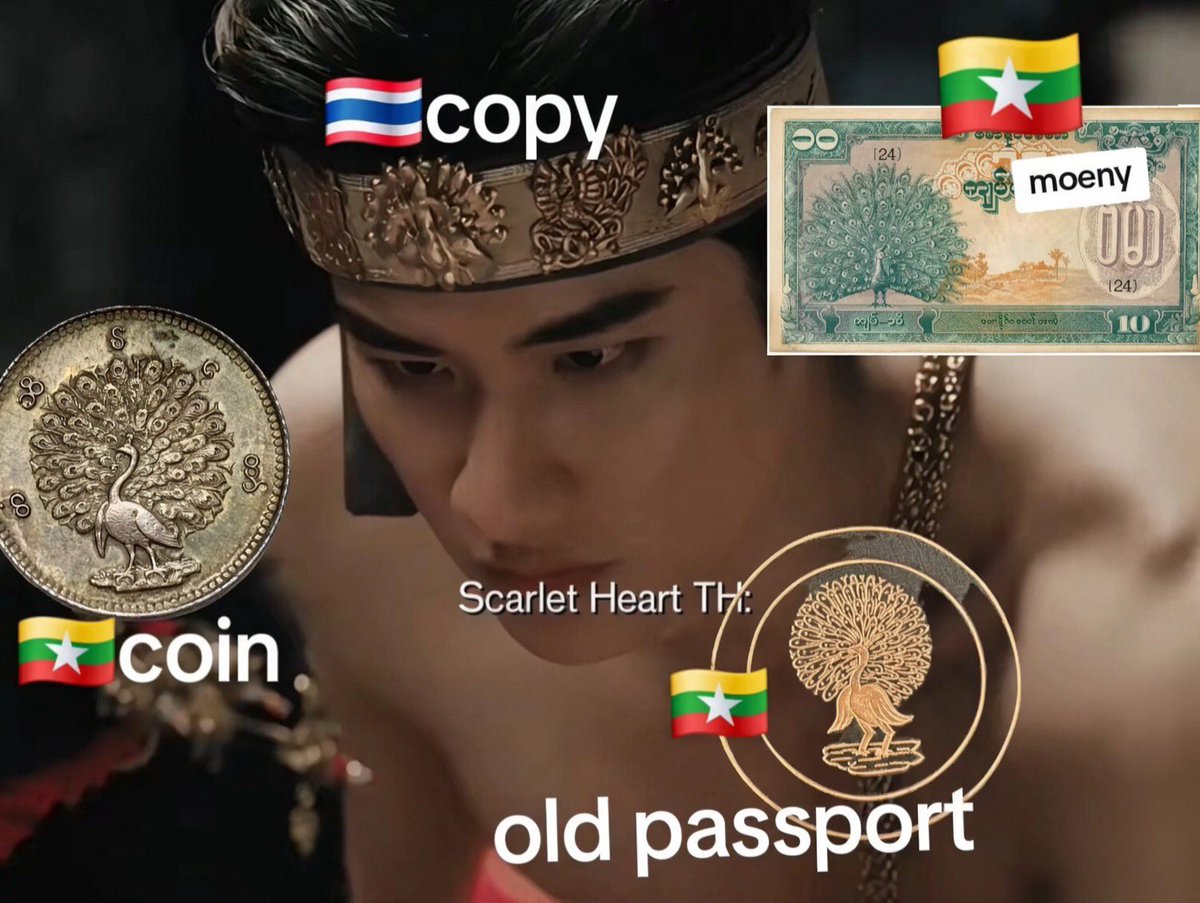
Bro, the peacock on the Scarlet Heart TH headpiece looks exactly like Myanmar’s old coins, banknotes, and historical symbols.
Cambodia been saying it for years… turns out Cambodia weren’t lying. 🔥
No hate to the actors. Just tag @GMMTV and say:
Respect the culture. Give proper credit.
Simple.
#RespectMyanmarCulture #CreditOurHeritage #GMMTVACCOUNTABILITY
Who else sees it? Drop a 🦚 if you agree! 👇
I’ve carefully examined the images you shared, and I want to clarify one thing: this is not about denying Lanna’s history, culture, or traditional clothing. The real question is whether the costumes in Scarlet Heart Thailand are historically accurate for the period portrayed and what evidence supports their designs.
The images you presented include historical murals, modern costume reconstructions, and contemporary ethnic clothing. While these references may demonstrate aspects of Lanna dress traditions, they do not automatically establish the historical accuracy of the costumes used in the series.
Let’s examine the costumes themselves.
The layered necklaces, large pendants, chest ornaments, elaborate headdresses, earrings, shawls, chest coverings, waist arrangements, and patterned fabrics raise questions about their historical basis. The issue is not whether Lanna people wore jewelry or traditional clothing, but whether these specific designs, combinations, and wearing styles correspond to the period represented.
Elaborate jewelry and layered necklaces were also part of Myanmar’s royal dress traditions during the Konbaung period. This does not prove that the series’ jewelry originated in Myanmar, just as presenting Lanna jewelry does not prove that these designs are exclusively Lanna. Historical origins must be established through evidence, not assumptions.
The same standard applies to clothing. A shawl draped over a shoulder, a particular chest covering, or a patterned lower garment cannot establish cultural origin or historical accuracy alone. We must examine construction, arrangement, materials, and decorative details against reliable sources from the relevant period.
The sources must also be examined critically. Historical murals, modern reconstructions, and clothing worn by ethnic communities today are different types of references, each with its own historical context and evidentiary value. Without identifying their dates, origins, and relevance to the period depicted, these images cannot conclusively establish the costumes’ historical accuracy.
I do not deny the historical and cultural connections between Lanna and Myanmar. These connections may have involved cultural exchange and mutual influence. However, shared history does not determine the origin of a particular design or eliminate the need for evidence.
We are not asking anyone to erase Lanna culture or favor one culture over another. We are asking for Myanmar’s cultural heritage to receive equal consideration and respect. Historical productions reaching international audiences have a responsibility to research and represent cultural traditions carefully. Calling a production fictional does not exempt its historical and cultural references from legitimate scrutiny.
Please address these specific questions:
1. What original historical sources informed the costume designs in Scarlet Heart Thailand?
2. What are the dates, origins, and historical contexts of the murals and costume images you presented?
3. How do these references correspond to the exact period represented in the series?
4. What evidence supports the specific jewelry, headdresses, garment arrangements, and textile patterns shown on screen?
Repeating that Lanna had its own traditional clothing does not answer these questions. That was never the point in dispute.
Lanna’s distinct cultural identity and the historical accuracy of the series’ costumes are two separate issues. One does not automatically prove the other. If these costumes are historically accurate, the supporting evidence should be identifiable and open to examination.
Respecting cultural heritage means more than defending one interpretation of history. It means supporting historical claims with credible evidence and addressing legitimate questions directly.
GMMTV ACCOUNTABILITY
#RespectMyanmarCulture #CreditOurHeritage
# ScရarletHeartTH
@RRRRRRJ13 The dress is upgraded step by step since 1752. How they upgraded is the length of upper clothes is shorter and shorter. U can compare the photos .At 1819 , the painting said a little longer. But 1859-1889 dress is the woman in B&W photo.
@RRRRRRJ13 First one is when Burma ruled Lanna , these dress are not created, The dress is developed step by step since 1752 and is fully advanced style (1859-1885), I searched the Lanna painting is painted about at 1874 after combined with Siam.
Why are Myanmar’s traditional costumes being used in a series with no clear connection to our history?Was permission even obtained?Our traditional costumes are more than just outfits.They are part of our identity.Please respect our culture and be more responsible @GMMTV