How Qatar played its strongest cards to help secure US-Iran deal
"Qatari mediation resisted pressure from those who wanted to see it sever its relations with Iran and pursue military options"
✍️Opinion by Sansom Milton
Despite facing direct attacks on its own energy infrastructure during the #conflict, #Qatar returned to the negotiating table to help broker the landmark US-Iran deal.
New op-ed by Sansom Milton @SansomMilton via @MiddleEastEye: 👇 https://t.co/9LZIM40fyM
📚 New Research Alert
✍ In his latest article, “Academic freedom after genocide: The politics of rebuilding higher education in Gaza,” @SansomMilton explores how the destruction of universities in Gaza is part of a broader pattern of scholasticide��the systematic erasure of education and knowledge.
📖 Read more: https://t.co/v1DnIuKluE
#AcademicFreedom #Gaza #HigherEducation #Scholasticide #Palestine
Drop whatever you're doing and read this @newlinesmag article by the political scientist Hussein Banai, which is the single most incisive — and chilling — piece of analysis I believe has been published, anywhere, on this subject of ultimate urgency.
https://t.co/S5pR8ESBYL
Absolutely the best, most thorough and professional analysis of Trump's "Board of Peace" for Gaza, its complete lack of fiduciary accountability, and murkiness about its future once Trump leaves the U.S. presidency, by @zahahassan and Charles H. Johnson:
https://t.co/kP8noOtwGZ
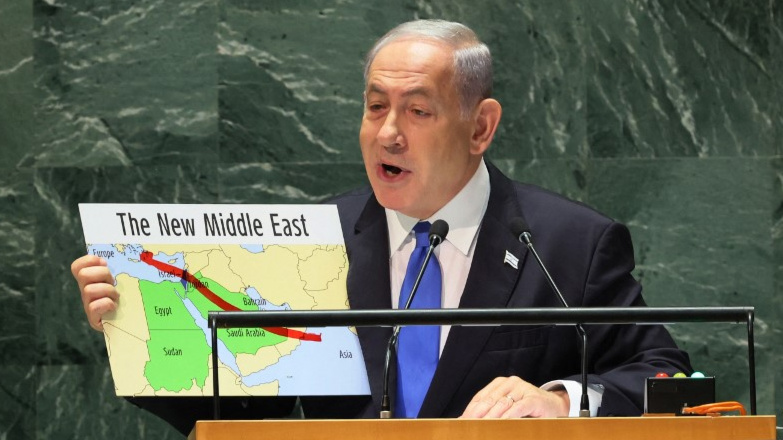
Iran’s strategy is simple and straightforward: continuously demonstrate that it is ready, willing, and able to act just as crazy and reckless as the United States and Israel, with similar disregard for the regional or global consequences, and see who blinks first.
Can the #GCC states do something completely unpredictable to stop this war? Highly unlikely but it maybe good to consider this option at certain point
Neither the U.S. nor Israel will stop this war as long as the costs remain minimal, especially for Israel, which dragged the #US into fighting on its behalf.
The #Iranians may also aim for a long-term war of attrition to weaken both countries. #Iran might increasingly target critical infrastructure in neighboring countries, primarily the GCC.
The GCC states are pressured to either absorb the losses or join the conflict. Either way, it is very bad for them.
In this context, a radical, unconventional, and painful decision to end the war could come from the GCC countries if they fully consider it.
A rational, deliberate, and collective decision by the GCC states to halt all #oil and #gas exports to the world would compel everyone to reconsider their stance in this conflict and stop the war.
They have both the right and justification to take such action. Their facilities are already being targeted slowly and painfully without any benefits.
Costs are rising, and pressure is mounting. They are being dragged into the war by the U.S., paying more for defense and security while being forced to endure Iranian attacks.
So, why not initiate a decision that shifts the game in their favor, grants them control, and demonstrates non-military solidarity with significant outcomes?
Yes, there will be costs, but if you analyze the current expenses in light of the ongoing dynamics, the difference may not be substantial—especially considering they are currently caught between two sides.
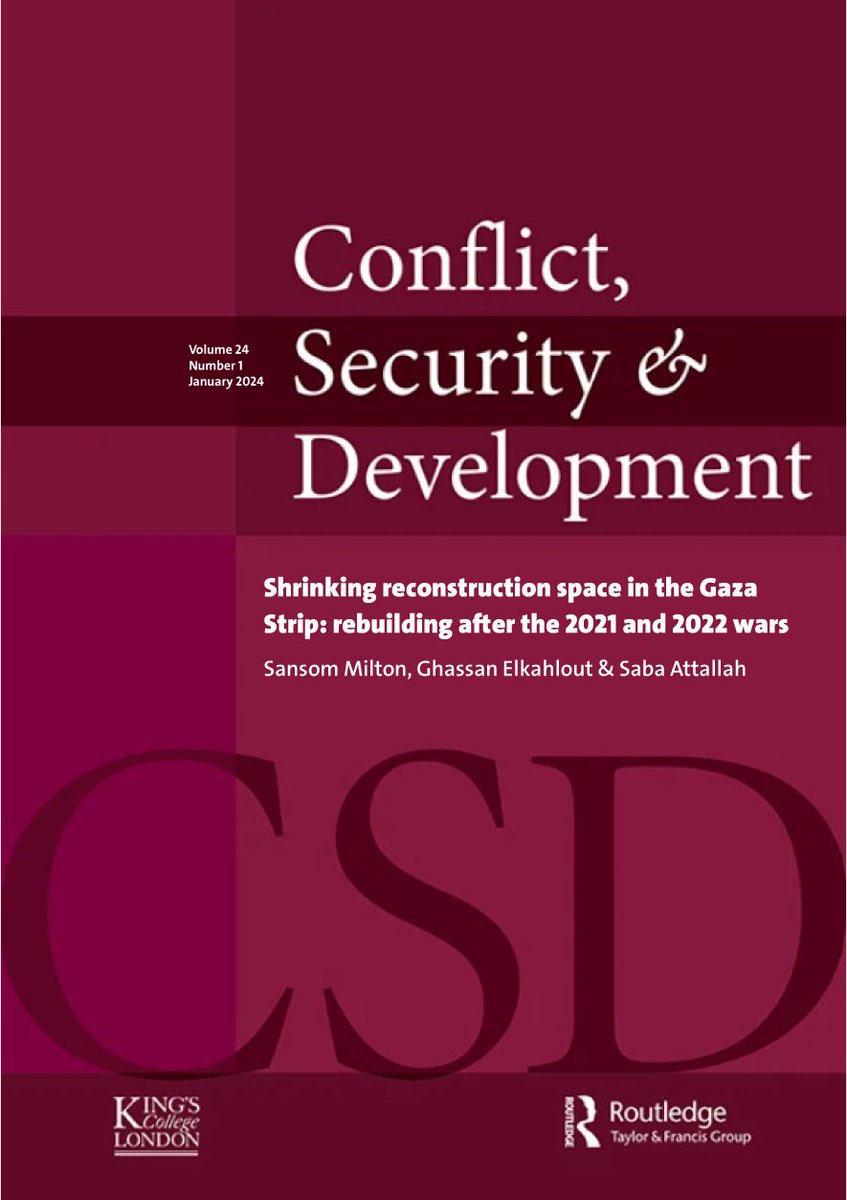
"#Qatar has long played an indispensable role in brokering negotiations and leading multiple rounds of #reconstruction in the #GazaStrip and will likely continue to do so for the foreseeable future." Says @SansomMilton in his latest op-ed.
Read the full opinion👉: https://t.co/cxd9nH5iAL
My short contribution, "Delusions of Unchallenged Empire" to the @OnlineCHS_en roundtable, "Escalating Region-Wide Crisis: CHS Perspectives on the US-Israeli War on Iran":
"That the U.S. and Israel enjoy overwhelming military superiority is beyond doubt. But as we have learned in so many other conflicts, most recently Iraq and Afghanistan, such matters are not decided by the power of arsenals alone, nor do conflicts end once the guns fall silent. In other words, the military balance of power and disposition of forces once the war ends will tell us little about its impact on regional stability and security."
https://t.co/XdOw3MaVrs
This book will become the go-to account for Qatar and conflict mediation. It's superbly researched and meticulous in its coverage. Such a timely publication.
Gulf to Global by @SansomMilton & Ghassan Elkahlout is available now!
‘Balanced, thoroughly researched, & offers a rare glimpse of the inner workings of Qatar’s mediation efforts.’ @MehranKamrava
Pick up your copy at 35% discount w/promo code QATAR35 👉 https://t.co/nKmYL2us4Y
The first panel at #QMF2025, Peace Mediation in a Transforming Order, has just concluded. Moderated by Mohamad Elmasry @elmasry_mohamad, the discussion brought together Richard Atwood @atwoodr, Alex de Waal, Pierre Krahenbühl @PKraehenbuehl, and Erin McCandless @McCandlessErin. Several key themes emerged:
- The global landscape of peacemaking is shifting, driven by fragmented geopolitical dynamics, divergent agendas, and conflict volatility. Long-term, comprehensive resolutions are becoming harder to achieve, with many not addressing the root causes of conflict.
- There is a need to reinvest in mediation capacity, strengthen humanitarian diplomacy, and maintain pressure to uphold international law amidst growing double standards and the regression of humanitarian standards.
- Mediation is vital because it facilitates communication channels and supports confidence-building when formal mechanisms are limited—paving the way for durable resolutions.
#QMF2025 #QatarMediationForum #Doha_Forum
@DohaForum
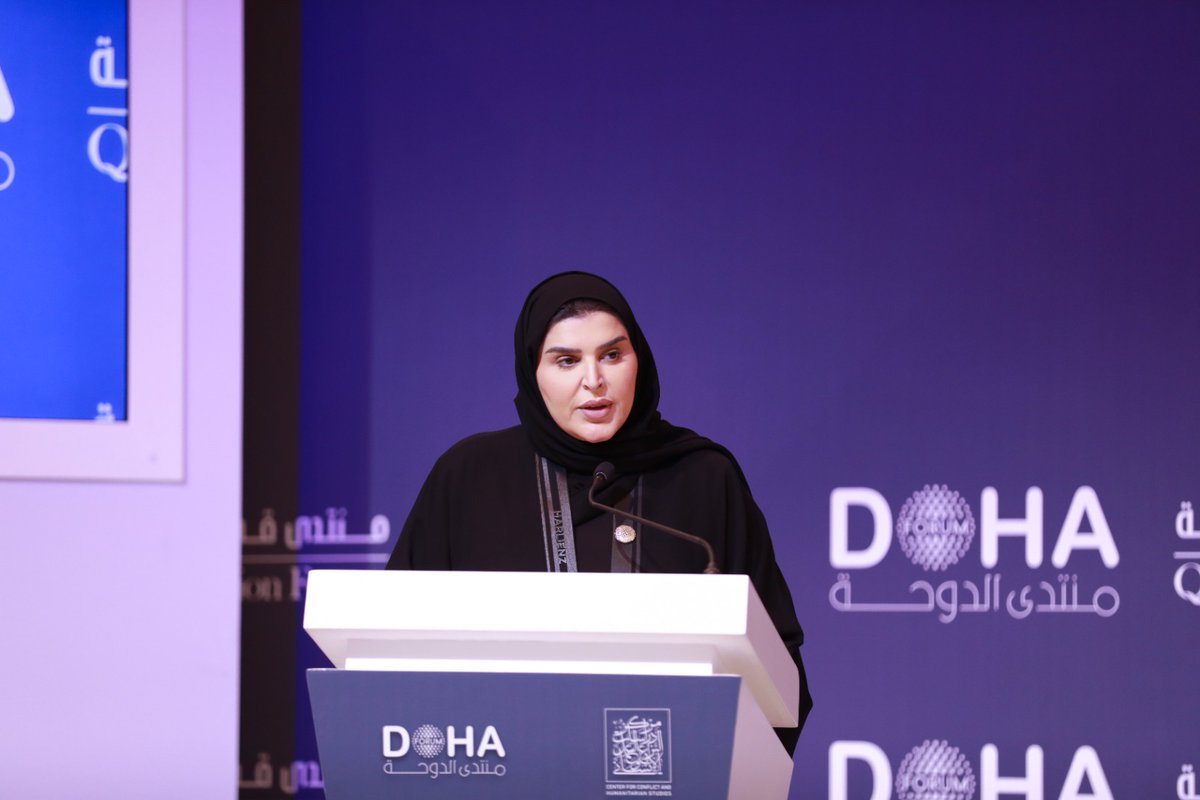
The Qatar Mediation Forum 2025 is now underway!
The opening session of #QMF2025 began with welcoming remarks by Dr. Ghassan Elkahlout, Director of CHS, in which he set out the challenges to peacemaking in today's conflicts.
This was followed by a keynote speech from H.E. Dr. Maryam Al-Misnad @MANAlMisned, Minister of State for International Cooperation. She emphasised the importance of dialogue for humanitarian diplomacy, the multiple pathways to peace, and the need to focus on mediation practice.
#QMF2025 #QatarMediationForum #Doha_Forum
Amidst the genocide and educide and in coordination with Gaza’s Universities. #BZU is launching a campaign to ensure that #Gaza students can continue their studies remotely and their resilience is strengthened.
https://t.co/vvmqrNBtJw
@DrHananAshrawi@hzomlot@tshahwan10