Many tokens in crypto don’t fail because the idea is bad.
They fail because they launch without proper planning.
Tokenomics are rushed, funding has no clear structure, liquidity is thin, and on-chain execution is messy. This has been repeating for years.
Most projects jump straight to launching a ticker and opening a liquidity pool. They skip the important steps that should happen before anything goes live.
The result is usually the same. A short pump driven by hype, followed by a sharp drop once people realize there’s no solid foundation behind the token.
@ONVORA_Fi is trying to address this problem.
Instead of just creating another token, they are building infrastructure to help Web3 projects prepare their token launches more carefully. Their focus is simple: Model. Fund. Launch.
In short, they want to connect three important stages into one clearer workflow: modeling launch economics, structuring funding conditions, and preparing for on-chain execution.
This is different from the usual approach where projects only care about the ticker and the liquidity pool. ONVORA emphasizes that there should be a proper planning process before a token actually launches.
The project is still very early. Their account is only a few days old, and they are still in the process of building and communicating their vision. But the direction is clear: improve how token launches are prepared.
The best way to understand AI Agents? Build one yourself.
On Friday, October 16, HeLa AI Hour took place in Mathura, India, with a hands-on workshop that introduced participants to building their first AI Agent with HeLaSyn.
What participants explored:
- AI Agent fundamentals: Understanding how AI Agents work.
- Agent design: Learning how to structure an agent.
- Capabilities & actions: Exploring how agents can do more than respond to prompts.
- Live building: Creating a first AI Agent with HeLaSyn.
But the goal goes beyond one workshop. We want more people to experience building with AI in their own communities.
Want to bring a hands-on AI workshop to your city?
Through the HeLa Ambassador Program, you can organize local workshops, meetups, and community events, with HeLa support to help bring your ideas to life.
📍 Build your local community.
🤝 Connect with fellow AI and Web3 builders.
🚀 Help more people get hands-on with AI.
Mathura was one stop. Your city could be next.
Join the HeLa Ambassador Program:
https://t.co/jNyRDTyvX5
@ONVORA_Fi Appreciate the direction @ONVORA_Fi is taking with Model. Fund. Launch. It’s refreshing to see a project focused on the planning side. 🚀
Shared my full thoughts in this thread:
Many tokens in crypto don’t fail because the idea is bad.
They fail because they launch without proper planning.
Tokenomics are rushed, funding has no clear structure, liquidity is thin, and on-chain execution is messy. This has been repeating for years.
Most projects jump straight to launching a ticker and opening a liquidity pool. They skip the important steps that should happen before anything goes live.
The result is usually the same. A short pump driven by hype, followed by a sharp drop once people realize there’s no solid foundation behind the token.
@ONVORA_Fi is trying to address this problem.
Instead of just creating another token, they are building infrastructure to help Web3 projects prepare their token launches more carefully. Their focus is simple: Model. Fund. Launch.
In short, they want to connect three important stages into one clearer workflow: modeling launch economics, structuring funding conditions, and preparing for on-chain execution.
This is different from the usual approach where projects only care about the ticker and the liquidity pool. ONVORA emphasizes that there should be a proper planning process before a token actually launches.
The project is still very early. Their account is only a few days old, and they are still in the process of building and communicating their vision. But the direction is clear: improve how token launches are prepared.
Let’s break down what Model. Fund. Launch. actually means.
Model means thinking about token economics before launch. Many teams still create their tokenomics by guessing. They set supply, allocation, and vesting without proper simulation or scenario planning. ONVORA wants to help teams model their launch economics first so decisions are more calculated.
Fund refers to how capital is raised and structured. In crypto, funding is often unclear. Some projects run private sales with no clear rules, while others open liquidity without any structure. ONVORA aims to bring a more organized approach to funding conditions before on-chain execution happens.
Launch is the final stage. Many projects have plans on paper, but things become chaotic once they go on-chain. There’s usually a gap between planning and actual execution. ONVORA wants to reduce that gap by making the three stages more connected.
Why does this approach matter?
Right now, the crypto space still rewards projects that launch fast and hype hard, rather than projects that take time to plan properly. Many founders feel pressured to launch quickly even though they are not ready from a tokenomics and funding perspective.
If there are tools or systems that help teams plan better before launching, it could reduce the common mistakes that happen due to lack of preparation. It doesn’t guarantee success, but it gives projects a better foundation.
This is what makes ONVORA interesting to watch. They’re not just talking about a token. They’re talking about the process behind a token launch.
At the moment, ONVORA is still in its very early stage. Their token $ONVORA is planned to launch on Robinhood Chain via Pons. This could be an early milestone for them.
However, the more important thing to observe going forward is whether they can actually build the infrastructure they’re talking about, or if it stays at the narrative level.
If they manage to deliver tools or a system that genuinely helps founders go through the Model → Fund → Launch process, then ONVORA could become relevant in this niche.
I personally prefer projects that focus on improving processes instead of just chasing trends. The “plan before launch” approach they are pushing makes sense, especially in a market full of tokens that launch without enough preparation.
It’s still too early to judge whether ONVORA will succeed or not. Everything depends on their execution going forward. But from a vision standpoint, the direction they are taking is reasonable.
If you’re interested in projects focused on token launch infrastructure, you can follow @ONVORA_Fi and join their Telegram community.
Model. Fund. Launch. #Onvora
Many tokens in crypto don’t fail because the idea is bad.
They fail because they launch without proper planning.
Tokenomics are rushed, funding has no clear structure, liquidity is thin, and on-chain execution is messy. This has been repeating for years.
Most projects jump straight to launching a ticker and opening a liquidity pool. They skip the important steps that should happen before anything goes live.
The result is usually the same. A short pump driven by hype, followed by a sharp drop once people realize there’s no solid foundation behind the token.
@ONVORA_Fi is trying to address this problem.
Instead of just creating another token, they are building infrastructure to help Web3 projects prepare their token launches more carefully. Their focus is simple: Model. Fund. Launch.
In short, they want to connect three important stages into one clearer workflow: modeling launch economics, structuring funding conditions, and preparing for on-chain execution.
This is different from the usual approach where projects only care about the ticker and the liquidity pool. ONVORA emphasizes that there should be a proper planning process before a token actually launches.
The project is still very early. Their account is only a few days old, and they are still in the process of building and communicating their vision. But the direction is clear: improve how token launches are prepared.
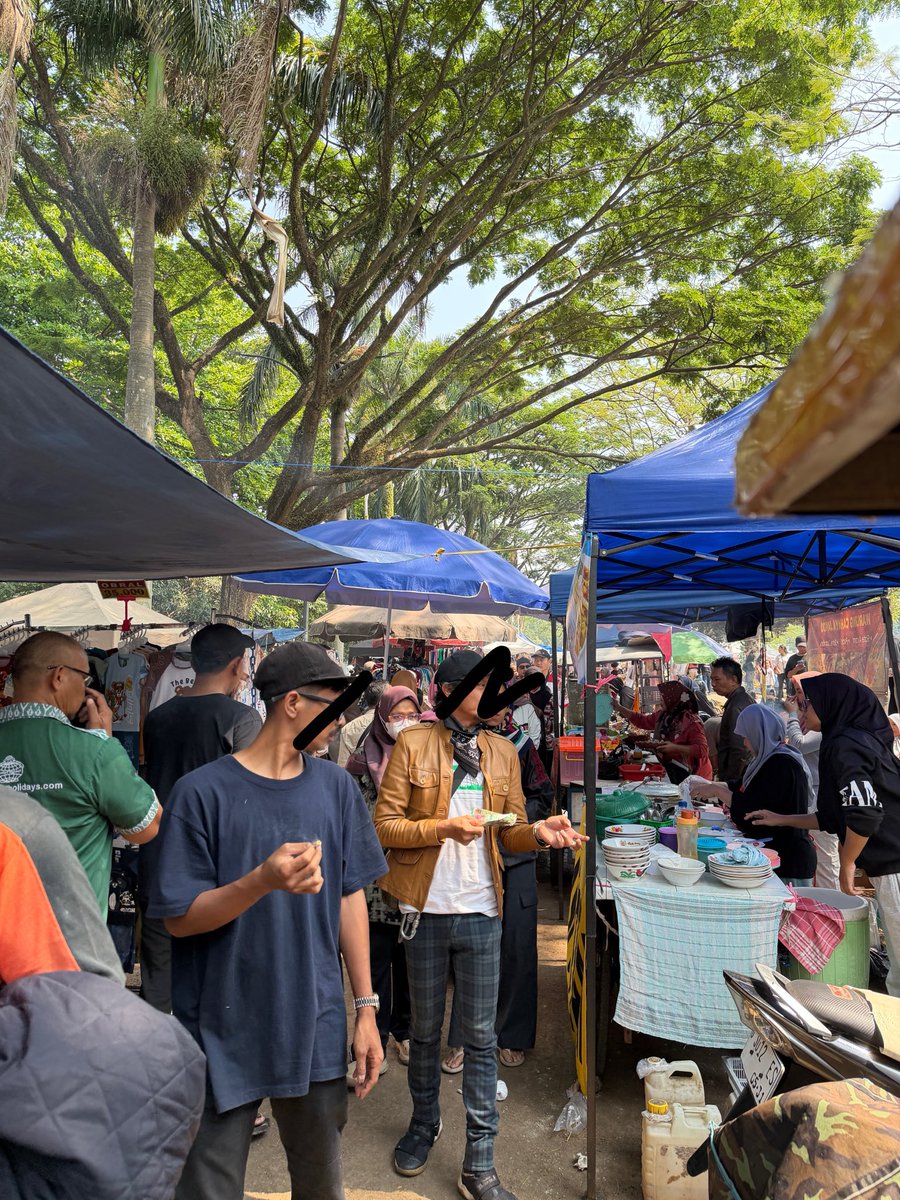
Pagi tadi tumben bangun diajak my girl buat jalan ke gasibu. Bukan lari, tapi jajan🤣🙏
Waktu lagi asik keliling ngga sengaja pas-pasan ama sekelompok bapak-bapak yang lagi mintain uang ke pedagang. Katanya sih uang kebersihan dan keamanan, tapi kok kesannya malah jadi premanisme ya?
Tiap pedagang dia mintain 5-10rb, nggak konsisten mungkin mereka ngukur dari seberapa rame orang beli dagangannya, beberapa pedagang keliatan cukup risih bahkan kebanyakan kayanya terpaksa karena keliatan dari gestur cuman bisa pasrah tanpa mengelak.
Cukup miris, waktu mereka samperin salah satu stand perempuan sendiri jualan parfum, karena mungkin dagangannya sepi dia beralasan “belum ngelarisin pak” (belum ada yang beli). Tanpa toleransi, justru mereka tetep ngotot harus setor. Salah satu diantaranya malah bilang “yaudah, buat skrng kita ambil parfum aja ya”. Kakaknya ga bisa ngelak, akhirnya mereka ambil 2 botol.
Bayangin, pedagang yang bela-belaian bangun lebih pagi untuk ikhtiar, pasang stand, bawa modal dagangan berharap untuk dapat sedikit keuntungan. Udah duluan di rampok sama orang yang nggak bertanggung jawab? Miris sekali.
Cerita lain datang, ketika mereka menghampiri ibuk-ibuk pedagang baju. Dengan muka agak heran ibu nya bilang “saya sudah setor ke rombongan tadi, yang pake tatto saya bayar 10rb”. Salah satu temanya tetep ngotot harus bayar karena kelompok mereka ngga merasa nerima. Cukup ribut sampe nada tinggi pengunjung jadi pada fokus ke keributan. Akhirnya mungkin yang tertua langsung bilang “wahhh salah, iya tadi saya sempet liat pake tatto, tapi dia bukan keamanan disini soalnya kita minta cuman 5rb bukan 10rb. Nah pastiin nanti lagi kalo jualan setornya ke kita aja ya, itu mah ilegal. Nipu, kita yang bener. Dan dengan segala cingcongnya… tetep si ibu harus bayar lagi 5rb. Lalu pergi.
Wedannn, ga habis thinking. Belum lagi soal parkir, tapi ya sudahlah. Cuman miris aja gitu liat pungli sebrutal itu, udah budaya dan kayanya gabisa dihilangin.