Dry or humid, the body seems to adapt to heat in much the same way. McDonald and colleagues found similar acclimation and cross-acclimation benefits in trained cyclists, a useful note for anyone weighing Finnish-style sauna against steam.
This recent study by Peter McDonald (@UC_RISE) and colleagues observed that dry and humid #heat acclimation induces similar #adaptations and cross-acclimation benefits in trained male cyclists ☀️🌡️
Read the article 👇️
🔗 https://t.co/Rr1CIVWiH0
How does the brain hold up under heat? This Experimental Physiology study uses EEG to look at how hyperthermia and low oxygen shape cerebral blood flow and cognition, helpful context for understanding the brain's response to heat stress.
Hiroki Nakata et al. (@NaraWomensUniv, @Toyo_Univ_PR) explore modulation of cerebral blood flow and cognition by hyperthermia and hypoxia: An electroencephalographic event-related potentials perspective
📖 https://t.co/MYrWFvJ9Iq
In a small trial, a single session of fever-range whole-body heating eased symptoms of major depression for weeks. It's a promising adjunct to care, not a replacement, and larger controlled trials are the next step.
Deliberate heat exposure using sauna and hot tubs is a potent tool for mood and depression symptoms.
In people with major depressive disorder, a single session of raising core body temperature by 2.6–3.7℉ (a mild "fever-range" heat stimulus) produced an antidepressant effect that lasted 6–8 weeks.
Follow-up work with infrared heat bed protocols has shown similar mood benefits with multiple sessions, and results appear even stronger when heat exposure is paired with cognitive behavioral therapy (CBT).
To put the magnitude in context, on a common depression rating scale, a 3-point shift is often considered clinically meaningful—this combined approach was associated with about a 16-point improvement!
Heat isn’t a replacement for mental health care, but it is a compelling, physiology-based adjunct worth paying attention to.
Clip from my recent appearance on @PBDsPodcast.
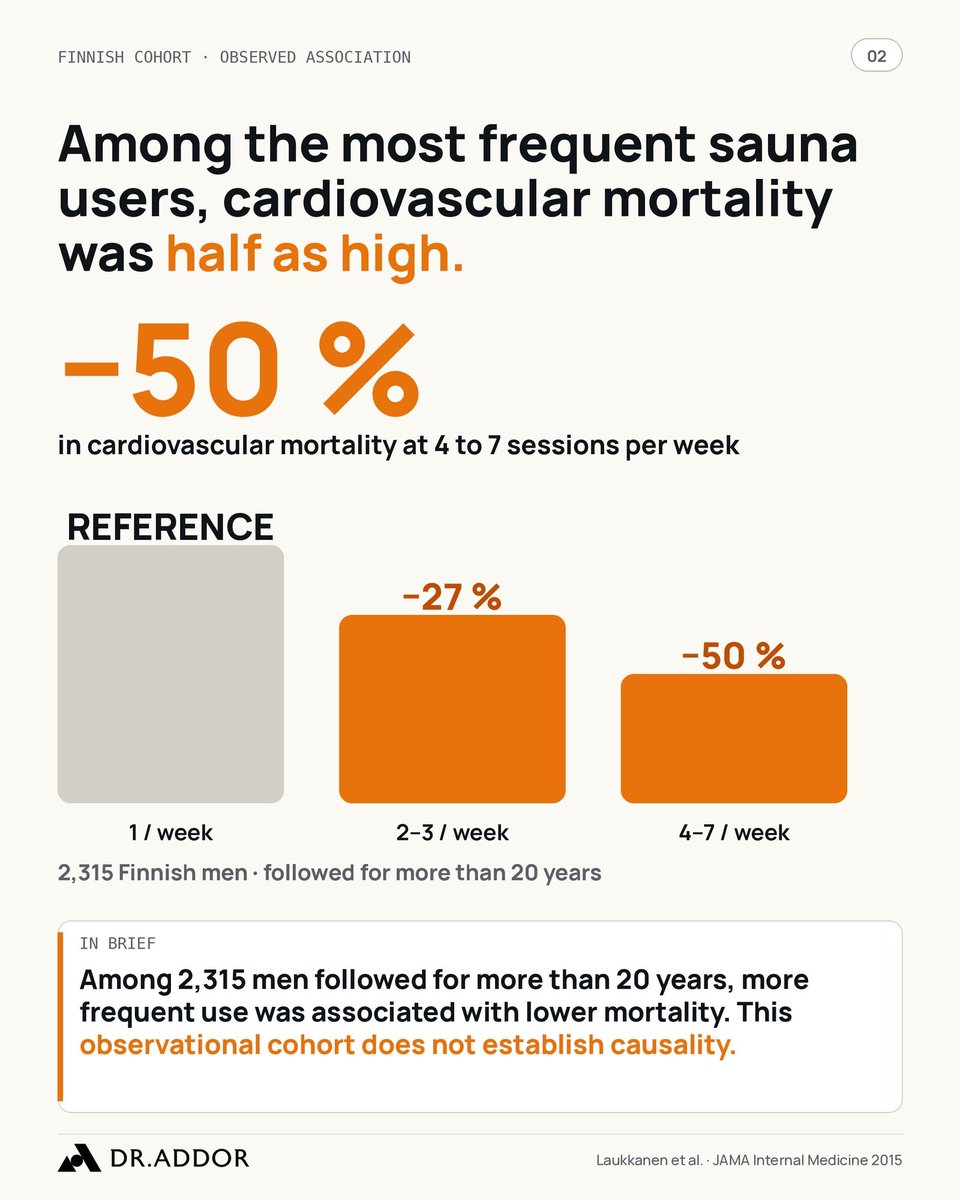
The Finnish KIHD cohort, 2,315 men followed for 20+ years, is still the cornerstone of sauna research, linking frequent sessions with lower cardiovascular mortality. It shows an association, not cause, which is why well-designed trials matter.
Heat can challenge the heart and blood vessels while leaving major parts of exercise biology untouched.
The long-term Finnish data are the best-known part of the sauna story. Among 2,315 men followed for more than 20 years, sauna use 4 to 7 times per week was associated with cardiovascular mortality that was half the level seen among men using it once per week. Sudden cardiac death was 63% lower, and all-cause mortality was 40% lower.
These were observational findings. Sauna habits were reported at the start, and the results cannot prove that frequent use caused the lower mortality.
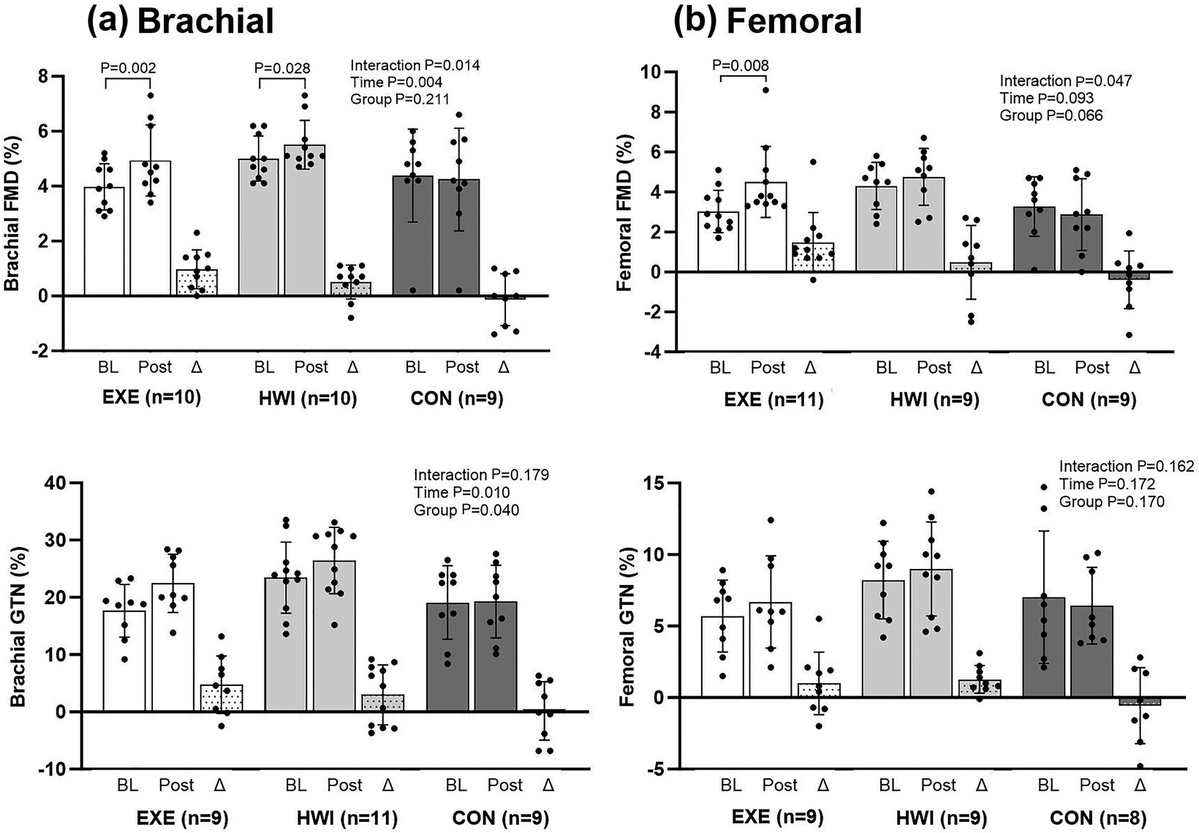
Randomized trials reveal where the effects may begin and end. In a study of 31 inactive adults, average age 58, participants completed either cycling, 40 °C hot-water immersion or no change for 12 weeks. Cycling and hot water improved arterial function at the arm. At the thigh, only cycling produced a measurable improvement. Neither intervention changed resting blood pressure or aortic stiffness during that trial.
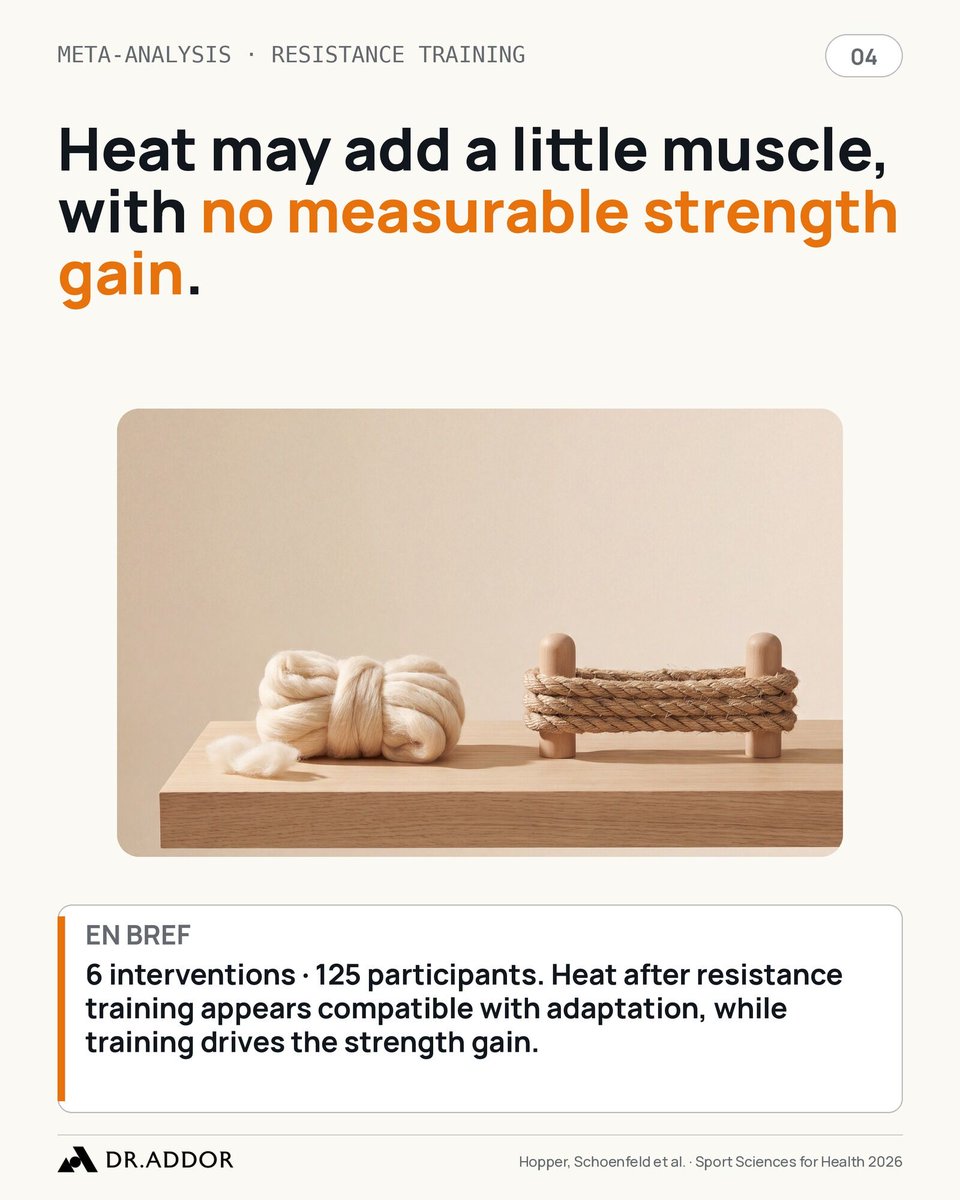
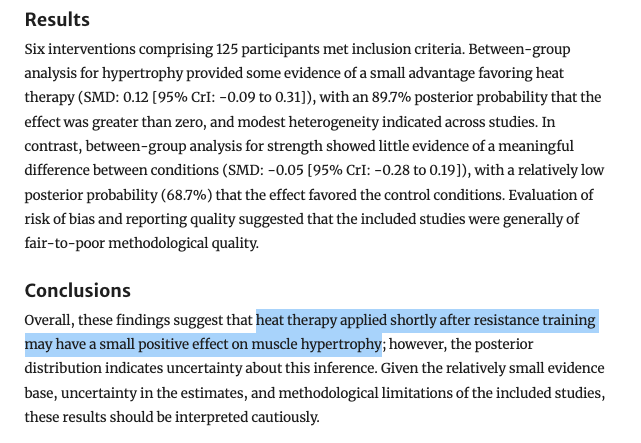
The muscle evidence draws another boundary. A meta-analysis combined 6 interventions and 125 healthy young adults. Heat applied after resistance training produced a modest and uncertain signal for muscle mass, with no measurable additional gain in strength. Everyone became stronger through training.
Heat raises heart rate, redirects blood toward the skin and increases shear stress along vessel walls. Exercise also creates muscle contraction, bone loading, coordination demands and the intensity needed to build aerobic capacity.
I would place heat after exercise. It may extend part of the vascular stimulus and can serve as a medically supervised bridge when activity is temporarily limited. It does not count toward the 150 minutes of weekly activity.
Sauna never replaces physical activity, and frequent use does not remove the need to treat hypertension. The evidence becomes most useful when each result keeps its population, duration and endpoint.
A new meta-analysis suggests heat after resistance training may modestly support muscle growth, though it didn't improve strength and the evidence is still early. A promising lead that deserves larger trials.
Passive heat exposure after resistance training may lead to greater muscle hypertrophy.
There's not yet conclusive evidence, but this new meta-analysis by @BradSchoenfeld suggests there may be some benefit!
Heat itself is a cellular stressor, and research has shown that adding whole-body heat after exercise can increase heat-shock protein expression and activate mTOR signaling. That provides a plausible mechanism.
My protocol lately has been about 20 minutes in a 180-degree F sauna after lifting. I do it for the muscle adaptations along with the well-evidenced cardiovascular and brain health benefits.
A thoughtful conversation with Bill Gifford, author of HotWired, on how heat can support performance and recovery. A good listen for anyone curious about the science behind a regular sauna habit.
At some point during this pod it dawned on me that I should have been interviewing Dan Riley about how *he* uses heat for performance and two kinds of recovery:
Episode 157: Bill Gifford - How Heat Heals https://t.co/1TDm7Rq04S via @YouTube
At-home heat on the lower legs is being tested as a simple way to help postmenopausal women with high blood pressure. Akins and colleagues report the blood pressure results in Part I, a practical approach worth following.
Research Article by JD Akins et al. Home-based lower leg heat therapy in postmenopausal women with hypertension. I. Effects on blood pressure
https://t.co/PLafiMrwUE
Regular sauna users seem to get fewer respiratory infections, and this study offers one possible reason: a single 30-minute session moved neutrophils and lymphocytes into circulation. It's an early clue, not proof of a long-term immune benefit.
Regular sauna users appear to develop fewer respiratory illnesses.
A new study offers a clue as to why.
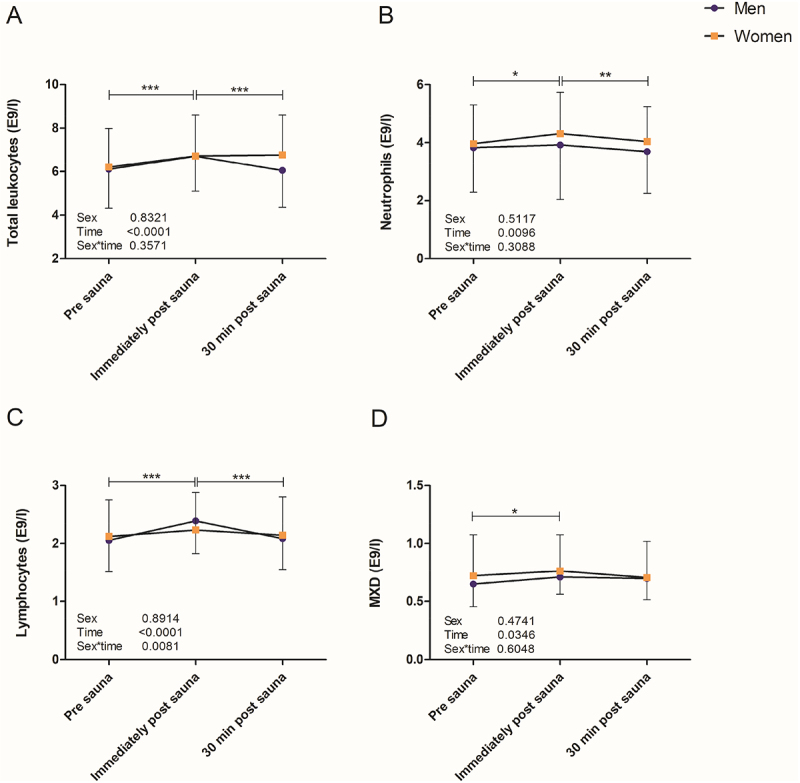
After a single 30-minute sauna, several white blood cell populations, including neutrophils and lymphocytes, moved into circulation, and the response was similar regardless of participants’ usual sauna habits.
One session cannot establish a long-term immune benefit. But in a long-running Finnish study, men using a sauna two to three times weekly had a 27 percent lower risk of pneumonia, asthma, or chronic obstructive pulmonary disease. Among those using one at least four times weekly, the risk was 41 percent lower. A small controlled trial also found roughly half as many common colds among regular sauna users during the final three months of a six-month study.
This all suggests that repeated heat exposure may promote immune resilience by briefly mobilizing immune cells while supporting a less inflammatory resting environment over time.
Heat therapy is being studied as a possible aid in heart failure with preserved ejection fraction. Calvo and colleagues at Purdue look at how it may influence oxygen delivery in skeletal muscle, early mechanistic work worth following.
Edward T. N. Calvo et al. (@LifeAtPurdue) examine noradrenergic regulation of skeletal muscle oxygen pressures and the impact of heart failure with preserved ejection fraction and heat therapy
📖 https://t.co/WUSypgFsUn
Heat may help when movement isn't possible. In a small human study, daily local heating of an immobilized leg helped preserve the muscle, an early but encouraging lead for recovery after injury.
The boots are ready by the bed. The immobilized leg cannot follow them yet.
That forced pause reveals one of the most clinically relevant uses of heat.
In a small human study, researchers applied local heating every day to an immobilized leg. The treatment preserved mitochondrial function and attenuated muscle loss in that limb. During disuse, the immediate problem is the decline produced by inactivity, so limiting that decline can matter.
The finding needs to remain attached to its setting. This was local heating of an immobilized limb. It does not show that a whole-body sauna builds muscle in healthy people who can train.
The post-training evidence is more restrained. A meta-analysis combined 6 interventions involving 125 healthy young adults. The programmes lasted at least 4 weeks, and heat was applied after resistance exercise using different methods. The signal for extra muscle mass was modest and uncertain. There was no measurable additional gain in strength. Training carried the strength adaptation.
These 2 lines of evidence answer different questions. After ordinary resistance training, heat appears compatible with adaptation and may add a small muscle-mass signal. During immobilization, local heat may help preserve mitochondrial function and attenuate atrophy while movement is restricted.
A fracture, severe joint problem or period of convalescence can place someone in that second situation. Heat may then fit inside a supervised plan to reduce deconditioning and prepare the return to activity. The goal should remain explicit: restore safe movement, then rebuild walking and training progressively.
Whether heat is appropriate depends on the injury, cardiovascular status, medication and rehabilitation plan. That decision belongs with the treating clinician.
I would use heat as part of the bridge back to movement. Once loading becomes possible, rehabilitation and exercise provide the mechanical stimulus required for strength and function.
Older adults are often the most vulnerable in the heat. Deshayes and colleagues found that heat acclimation improved neural control of body temperature during heat stress in older adults, a promising lead worth building on.
Research by Thomas A. Deshayes (@ICMtl) and colleagues finds that heat acclimation improves the #neural control of body #temperature during heat stress in older adults 🌡️ 🧠
Read the study 👇️
https://t.co/akfDjd2QnX
A 12-week trial found that 40°C hot-water immersion three times a week improved vascular function about as much as moderate aerobic exercise. It's not a replacement for exercise, but it's a promising option for people who find exercise hard.
Hot water immersion improved vascular function as effectively as zone 2 aerobic exercise.
Participants completed three weekly sessions of either 40-minutes in 104°F (40°C) water or 40 minutes of moderate-intensity aerobic exercise. After 12 weeks, both groups showed comparable improvements in flow-mediated dilation (a measure of how effectively blood vessels widen in response to increased blood flow).
Research supports similar benefits for other passive heat modalities such as sauna. Neither is a replacement for exercise, but their ability to produce similar improvements in endothelial function is remarkable.
Well put, Rhonda. The long-term outcome data comes almost entirely from traditional Finnish saunas, and nobody has shown an infrared dose that matches it. That open question is exactly why we exist. Head-to-head trials measuring core temperature, heart rate and long-term outcomes would settle it, and we'd love to see them happen.
As heat waves become more common, this J Appl Physiol spotlight asks whether regular passive heating could help prepare the people most at risk. A thoughtful idea that deserves careful trials.
Teams from @ICMtl and @i-med.ac.at worked together to put together this great spotlight piece, Passive #heat#therapy: a promising preventive measure for people at risk of adverse health outcomes during heat extremes (Patrick Rodrigues et al.):
https://t.co/Twj0QclhiO
A balanced take on infrared versus traditional sauna. Infrared can deliver real heat stress, but most of the long-term evidence comes from Finnish-style sauna, so whether the benefits match is still an open research question.
Infrared vs. traditional sauna. Are the benefits really the same?
I get asked this question constantly! My take is that infrared saunas can absolutely produce meaningful heat stress, but they're not necessarily equivalent to traditional Finnish saunas.
Traditional saunas heat the surrounding air, typically around 175-195°F, whereas infrared saunas use radiant heat and generally operate at lower temperatures (110-150°F).
The important question is how much thermal stress you're actually generating.
I personally prefer traditional Finnish saunas. Most of the compelling long-term evidence linking sauna use to lower cardiovascular mortality and dementia risk comes from traditional Finnish sauna studies.
But if infrared is what you have access to, I wouldn't dismiss it!
My recommendation would be to fully preheat the sauna and recognize that you may need a longer exposure to generate comparable heat stress. Importantly, there's no established temperature-duration formula that makes infrared equivalent to traditional sauna.
Infrared saunas can deliver substantial heat stress, but whether they produce the same long-term health benefits as traditional saunas remains an open question.
On the other hand, there is a growing body of evidence that IR saunas, as part of a clinical hyperthermia protocol, can have substantial antidepressant effects in people with major depressive disorder!
At the end of the day, it seems deliberate heat exposure (up to a point) is broadly beneficial however we get there.
A randomized UCSF trial is testing whether adding at-home sauna blanket sessions to digital CBT-I helps adults who have trouble falling asleep. It's still recruiting, and we look forward to what it finds.
UCSF free digital CBT-I study (still recruiting)
Fit: adult, hard falling asleep, continental US, mail + internet, remote OK.
Not a fit if insomnia caused by another medical/mental health condition.
All get digital CBT-I. Half get a sauna blanket too.
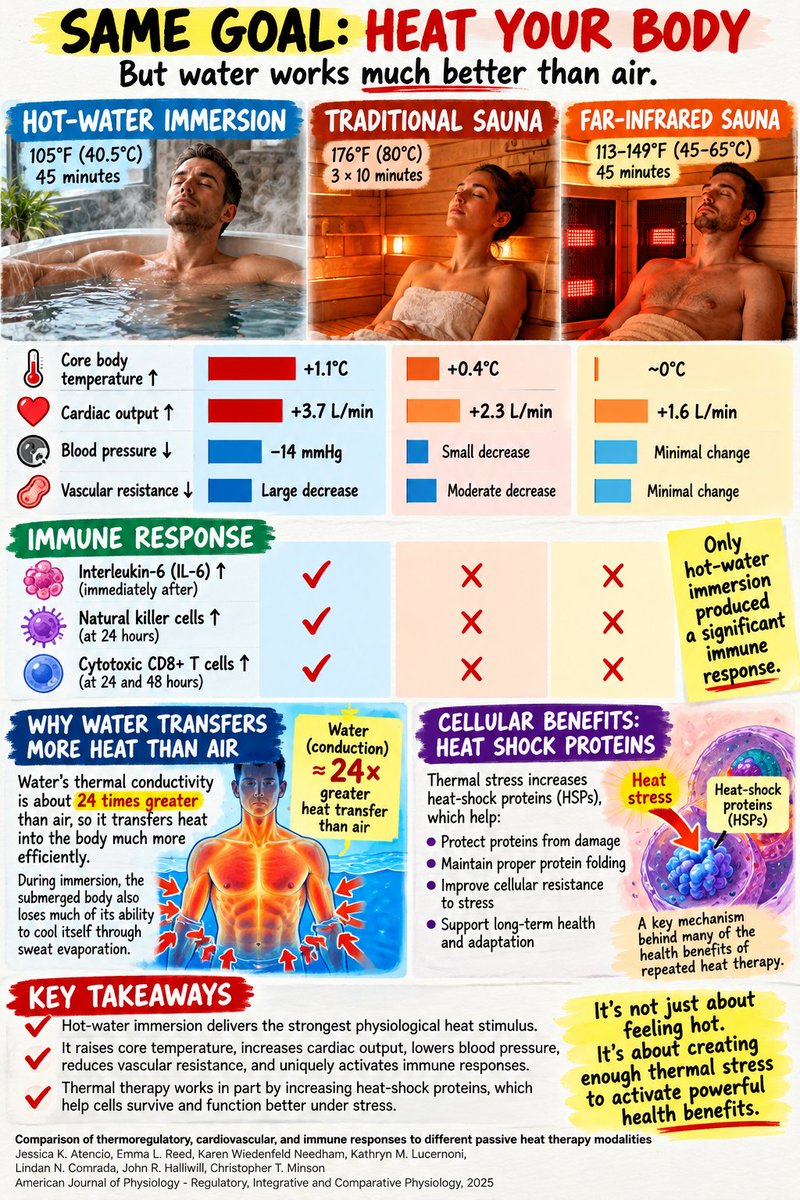
A useful head-to-head from the University of Oregon: in 20 healthy adults, hot-water immersion raised core temperature more than traditional or infrared sauna and drew stronger cardiovascular and immune responses. The heat dose seems to matter more than the method.
Comparison of Thermoregulatory, Cardiovascular, and Immune Responses to Different Passive Heat Therapy Modalities
Authors: Jessica K. Atencio, Emma L. Reed, Karen Wiedenfeld Needham, Kathryn M. Lucernoni, Lindan N. Comrada, John R. Halliwill, Christopher T. Minson
Heat therapy is essentially controlled physiological stress. Raise body temperature sufficiently and the body responds by increasing skin blood flow, heart rate and cardiac output while reducing vascular resistance—responses that share important characteristics with moderate aerobic exercise. Repeated exposure to passive heat has been studied for potential cardiovascular, metabolic and anti-inflammatory benefits.
In this University of Oregon study, 20 healthy adults underwent hot-water immersion, traditional sauna and far-infrared sauna. Hot-water immersion produced the strongest thermal response. Core temperature increased about 1.1°C, compared with 0.4°C during traditional sauna and essentially no increase during the infrared-sauna protocol.
That greater thermal load translated into a stronger cardiovascular response. Hot-water immersion increased cardiac output by about 3.7 L/min and produced the largest reductions in blood pressure and systemic vascular resistance. It was also the only treatment to significantly increase IL-6 immediately afterward, followed by increases in natural killer cells at 24 hours and cytotoxic CD8+ T cells at 24 and 48 hours.
Water is particularly effective because its thermal conductivity is approximately 24 times greater than that of air, allowing heat to transfer into the body much more efficiently. During immersion, the submerged body also loses much of its ability to cool itself through sweat evaporation. The result is a much stronger increase in core temperature even though sauna air is considerably hotter.
Another important component of thermal therapy is the cellular heat-stress response. Sufficient heat exposure can increase heat-shock proteins—molecular chaperones that help protect proteins, maintain protein folding and improve cellular resistance to stress. This mechanism is part of the broader scientific rationale for repeated heat therapy, although heat-shock proteins were not measured in this particular experiment.
The important message is that thermal therapy is not simply about feeling hot. The biological stimulus comes from creating enough controlled thermal stress to activate cardiovascular, immune and cellular stress-response systems.
In this head-to-head experiment, hot-water immersion delivered the strongest physiological heat stimulus of the three methods tested.
A randomized trial, not just an association. Adding sauna after training improved fitness and blood pressure more than exercise alone in at-risk adults, and it's worth replicating in larger groups.
Adding sauna after training improved VO2max and systolic blood pressure compared with exercise alone in one randomized trial.
Researchers in Finland followed 47 sedentary adults with at least one cardiovascular risk factor. Their average age was 49. For 8 weeks, participants completed 3 exercise sessions per week. One group stopped after exercise; the other added 15 minutes of sauna after each session.
The comparison gives us a useful measure of the additional effect. The exercise-plus-sauna group gained 2.7 mL/kg/min more VO2max than the exercise-only group. Its systolic blood pressure fell by an additional 8 mmHg, and total cholesterol also decreased.
Those results fit the physiology. Heat sends more blood toward the skin. The increased flow creates shear stress along the vessel wall, which stimulates the endothelium. Exercise uses that same vascular pathway while also loading muscles, bones, balance, coordination and aerobic capacity.
In daily life, exercise supplies the broad training stimulus, and heat may then extend part of the haemodynamic work. Before training, heat can cause dehydration and fatigue, which may lower the quality of the session.
This trial also has clear boundaries. It included 47 people and measured changes over 8 weeks. It cannot tell us what happens over 20 years, and it does not turn sauna into a treatment for every person with high blood pressure.
The observational Finnish data require the same restraint. Frequent sauna use was associated with lower cardiovascular mortality over more than 20 years, but those cohorts do not establish causality.
In practice, complete the exercise first, then consider heat if it suits your health and schedule. Sauna never replaces physical activity, does not count toward the 150 weekly minutes, and does not remove the need to treat hypertension. Anyone with heart disease should discuss regular heat exposure with a doctor.
Proud to have been part of the first heat therapy research symposium in Oslo. The goal is rigorous science on sauna and heat exposure, not hype. Next up is agreeing on what the evidence shows and where the gaps are.
Sauna science is growing up. Our research partner Ashley Mason of UCSF helped organize the first heat therapy research symposium.
Her goal: "not something fringy, or woo-woo."
Next: researchers aim to agree on what we know, and what we don't. Via NPR:
https://t.co/rzShGVt9dU