Have you noticed the price of tomatoes lately? 🍅📈
In many cities, they’ve become a luxury item—sometimes costing more than chicken or avocados. This is the direct result of a 17% tariff tied to a trade dispute from 1996.
A lot has changed since the '90s. Today, modern greenhouse producers deliver the high-quality, vine-ripened varieties consumers prefer. Yet, this outdated policy continues to drive up grocery bills and punish families for choosing fresh food.
It's time to prioritize the American table and make healthy eating affordable again. Watch the video below for the full story. 👇
#FoodInflation #SupplyChain #TradePolicy #HealthyEating #SaveMyTomato
Have you looked at tomato prices lately?
They have become a luxury. In some places they are even more expensive than chicken and avocados.
Experts agree this is the direct result of a 17% tariff imposed on Mexican tomatoes.
It is a tax on American families, a penalty for those who choose to include delicious and nutritious tomatoes on their diets.
We have an opportunity to end this, to eliminate the tax for good, and hit the brakes on food inflation.
Retailers, restaurant operators, and millions of American consumers call for an end to a trade dispute that dates back 30 years.
It’s time to bring back the flavor, variety, and nutrition we deserve at a price we can all afford.
Save My Tomato
#FoodInflation #TradePolicy #HealthyEating #FreedomOfChoice
Americans are paying more for less flavor: The hidden cost of tomato tariffs.
A compelling piece by Rachel Sugar in The Atlantic reminds us why the upcoming U.S. International Trade Commission (USITC) sunset review is critical for every American household, restaurant, and retailer.
As the article points out, out-of-season agricultural restrictions don't make produce better, they just make it more expensive. In 2026, with grocery inflation squeezing family budgets and tomato prices reaching unusual highs across the country, continuing a 1996 trade dispute is a recipe for economic strain.
A 17.25% anti-dumping duty directly penalizes hardworking American families, particularly those striving to maintain healthy, nutritious diets.
The market in 2026 looks nothing like it did in 1996. Mexican exporters have heavily invested in high-tech, sustainable protected agriculture. They don't compete directly with Florida’s green-harvested, gas-matured crop. Mexican tomatoes are vine-ripened, natural, and diverse, offering the quality, taste, and specialty options that U.S. consumers demand.
It’s time for policymakers to favor free trade, protect the American pocket, and support retailers and restaurant operators nationwide.
Let’s protect flavor and affordability.
🔗 Read the full analysis by Rachel Sugar in The Atlantic: https://t.co/iBy0MLQvAK
#InternationalTrade #USITC #SupplyChain #FoodInflation #Agriculture #SaveMyTomato #FreeTrade #EconomicPolicy
It is eggs all over again
The latest analysis from The Economist confirms what American families are going through every time they walk into a grocery store: Tomato prices are nearly 25% higher than last year.
While global energy costs and supply chain pressures play a role, The Economist points to a specific, self-inflicted wound: The 2025 decision to withdraw from the Tomato Suspension Agreement and impose a 17.09% levy on Mexican tomato imports.
In an environment where food prices are already 33% higher than pre-pandemic levels, this tariff isn't just a trade statistic, it's a direct driver of the "grocery-price shock" hitting every household.
There is a way to hit the brakes and provide immediate relief. While there are certainly many factors to blame, from fertilizer producers to meatpackers, we can put an end to this outdated 1996 dispute and eliminate the tax that is fueling this crisis.
Retailers, restaurant operators and millions of consumers are calling for a return to common sense. It’s time to prioritize the American dinner table over taxes.
Let’s make healthy eating affordable again.
https://t.co/E2AGrGhJQ5
#SaveMyTomato #TheEconomist #FoodInflation #TradePolicy #HealthyEating #FreedomOfChoice
When shoppers pick up a pound of tomatoes and see a price tag of $6 - $8, the tomato is no longer just a vegetable. It becomes a proxy for consumer trust and a clear signal for the "Polycrisis Shopper."
As Philip Lempert breaks down, today's price volatility is the result of a perfect storm driven by four converging forces that are shifting consumer behavior across the nation: Severe weather conditions, global energy premiums tied to the conflict with Iran, labor disruption, and a 17% tariff on tomato imports.
While weather conditions are not in anyone’s control, the other three factors are human-created and can be fixed through policy changes.
At Save My Tomato we want to focus on the opportunity of ending the outdated trade dispute that is pushing tomato prices to rise above food inflation and even gas prices. The tomato supply chain built in North America over three decades cannot be replaced overnight.
If managing food inflation is a national priority, it is time to look at the full picture, and ensure consumers have access to affordable healthy tomatoes year-round.
https://t.co/ZdxXuLX1aG
#SaveMyTomato #FoodInflation #TradePolicy #SupplyChain #RetailIndustry #ConsumerTrust #Agriculture
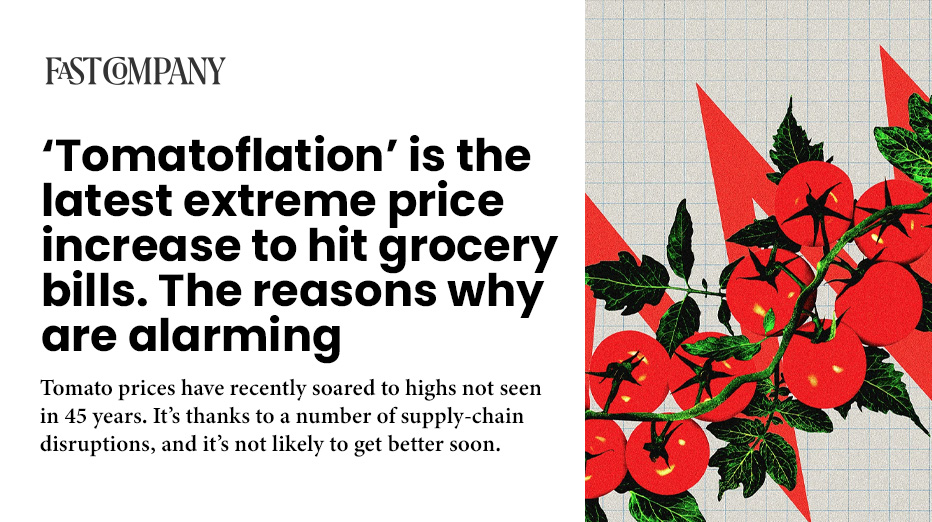
"Tomatoflation" is officially here, and it’s a policy-driven penalty on the American table.
Fast Company deep-dives into why one of America’s kitchen staples has now entered the luxury category. The phenomenon called #Tomatoflation is forcing local businesses, grocers, and families to make hard choices as tomato prices exceed those of proteins like chicken.
While climate variables always play a role, Fast Company highlights the immense pressure caused by a 17.09% tariff that dates back to 1996, ignoring how much agriculture has evolved over the last 30 years:
• 1996 was an era of standardized, regional open-field farming.
• 30 years later there is a highly integrated, North American powerhouse driven by high-technology greenhouses. Today’s consumers demand premium, naturally vine-ripened varieties that offer superior flavor, safety, and nutrition.
At Save My Tomato, we believe it’s time to call this what it is: a tax on healthy eating and a direct hit to small business and American consumers.
The path forward should be clear: In a climate where controlling food inflation is a top priority for families and businesses alike, maintaining restrictive barriers is counterproductive.
Let's put an end to 1990s protectionism and make nutritious, high-quality eating affordable again.
https://t.co/kkIhU0AZX6
#SaveMyTomato #Tomatoflation #FoodInflation #TradePolicy #SupplyChain #SmallBusiness #HealthyEating
This is no longer a prediction.
Back in May 2025, The Washington Post warned that tariffs on Mexican tomatoes would lead to "higher prices and lower quality." One year later, that warning is a reality for millions of American families that want to include tomatoes as part of their healthy diets.
Tomatoes are now a luxury, with prices even higher than those of chicken and avocados, driven mostly by a 17% tariff that penalizes consumers for choosing healthy, vine-ripened produce.
America has a historic opportunity to eliminate the tax that is fueling food inflation. Retailers, food service professionals, restaurant operators, and millions of consumers call for an end to an outdated trade dispute that dates back to 1996, and that doesn’t acknowledge the evolution of the industry in the last 30 years.
Let’s make healthy eating affordable again.
https://t.co/avFVo8rFoS
#SaveMyTomato #FoodInflation #TradePolicy #HealthyEating #FreedomOfChoice
It’s official: Tomatoes are Luxury Items
Just published on May 29th, Newser highlights a grim reality: tomatoes have officially become the ultimate symbol of America's affordability squeeze. A sandwich shop in Janesville made headlines for warning its customers that tomato prices have eclipsed the cost of chicken.
Although many factors are behind the tomato inflation, it is mostly driven by an outdated 17% tariff that punishes consumers that want to eat healthily.
The market today is completely different from that of 1996, when the trade dispute started. Over the last three decades, North America’s agriculture has transformed into a powerhouse of high-technology greenhouse production, supplying premium, vine-ripened varieties that have captured the taste of the American consumer, offering a level of quality, nutrition, and rich flavor that gassed green tomatoes simply cannot deliver.
America has a historic opportunity right now to eliminate the trade barriers fueling this food inflation. It is the perfect moment to review these restrictive policies for the benefit of families, grocers, and millions of restaurant operators.
Let’s put outdated protectionism aside, protect the American consumer, and make healthy eating affordable again.
https://t.co/43uwwC1TFb
#SaveMyTomato #FoodInflation #TradePolicy #HealthyEating #RestaurantIndustry #BreakingNews
Americans want great taste, nutrition and value.
Say YES to a wide variety of truly delicious tomatoes for our supermarkets, restaurants and kitchens 🍅
#SaveMyTomato#FreedomOfChoice
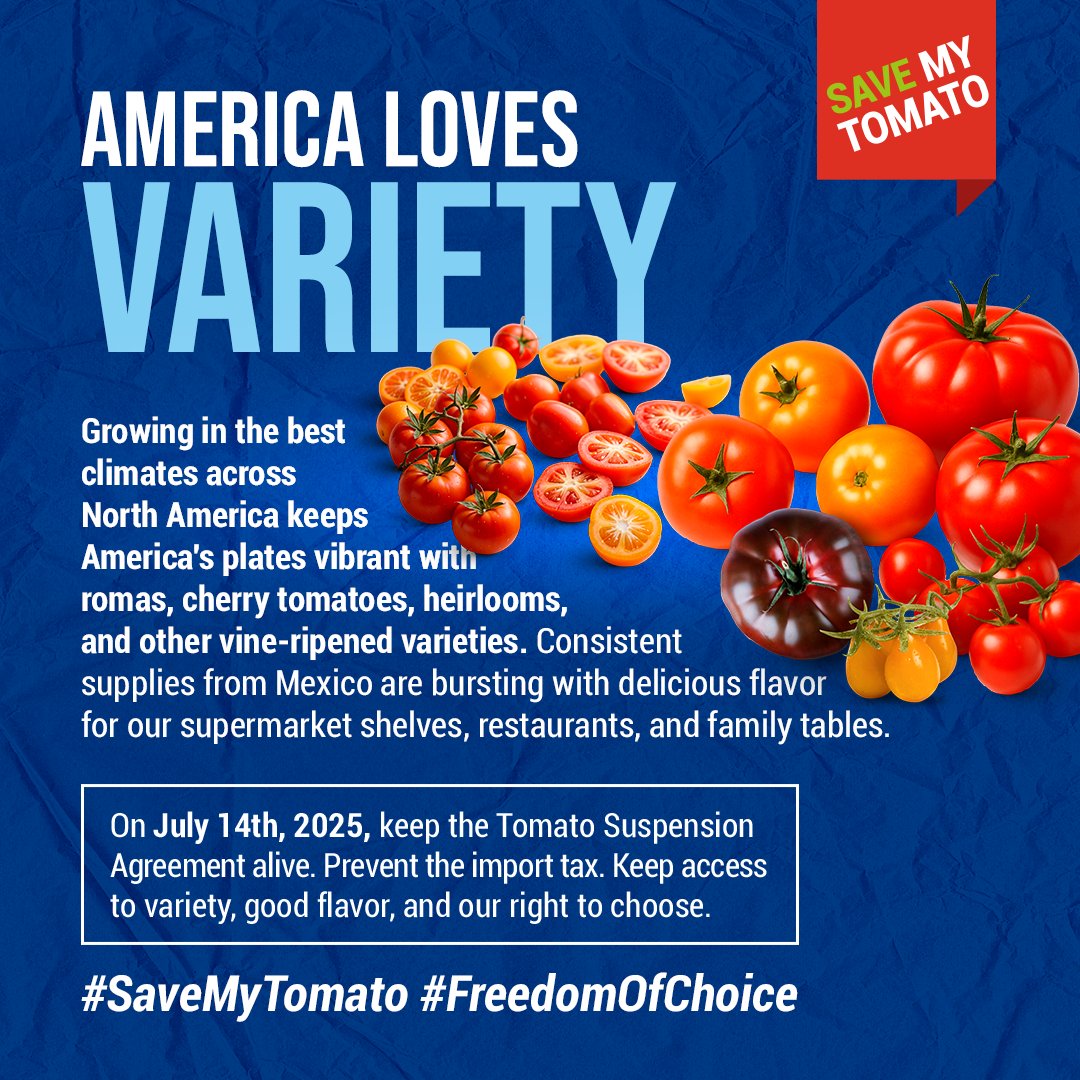
From sun-lit greenhouses to North American kitchens, all these tomato varieties deliver the flavor, color and nutrition we love!❤️🍅
#SaveMyTomato#FreedomOfChoice
Americans have already chosen taste, nutrition and value. Let's keep fair tomato trade across borders and say yes to our freedom to choose from a diverse assortment of truly flavorful tomatoes.🍅
#SaveMyTomato#FreedomOfChoice
Tom Stenzel reminds us: the last 5 Tomato Suspension Agreements did not fail—they worked to keep unfairly priced imports in check. 🍅🛡️
If we want flavor, variety & fair trade, we must stick with proven solutions—not risky new ideas.
#SaveMyTomato #FairTrade
https://t.co/LKnNHi62yh
🇲🇽🍅 The Mexican tomato industry is stepping up!
With high-tech greenhouses, grafted varieties, and sustainable methods, growers are meeting consumer demand year-round.
A model of innovation and resilience.
https://t.co/JH2uzbYLBf
If I can’t import tomatoes, I can’t keep my team.
No sales. No trucks. No jobs.
This isn’t just about tomatoes—it’s about people.
We all depend on each other.
🗓️ July 14, keep the Tomato Suspension Agreement alive.
#SaveMyTomato 🍅
North America’s best climates = vibrant romas, cherries, heirlooms & more 🍅
Let’s keep the flavor flowing to shelves, restaurants & tables across the US.
#SaveMyTomato#FreshTradeOurChoice
Snacking, pasta, salads & salsas need tomatoes. 🍅
No supply = empty shelves, shrinking menus, lost flavor at home.
Bananas don’t make marinara. Apples aren’t caprese.
📢 On July 14, keep the Tomato Suspension Agreement alive.
👉 https://t.co/OijSMXWl6F
“Punitive tariffs would create confusion, slow U.S. greenhouse investment, and do nothing to improve flavor.” – Blue Book Services
https://t.co/JKX6H2K9M6
Backyard burgers. Five-star plates.
Great meals start with great tomatoes.
Import taxes don’t add flavor—only take it away.
#SaveMyTomato#FreshTradeOurChoice
One state shouldn't decide what 330 million Americans eat.
Keep vine-ripened tomatoes on the menu.
Stop the import tax.
#FreshTrade#FreshTradeOurChoice