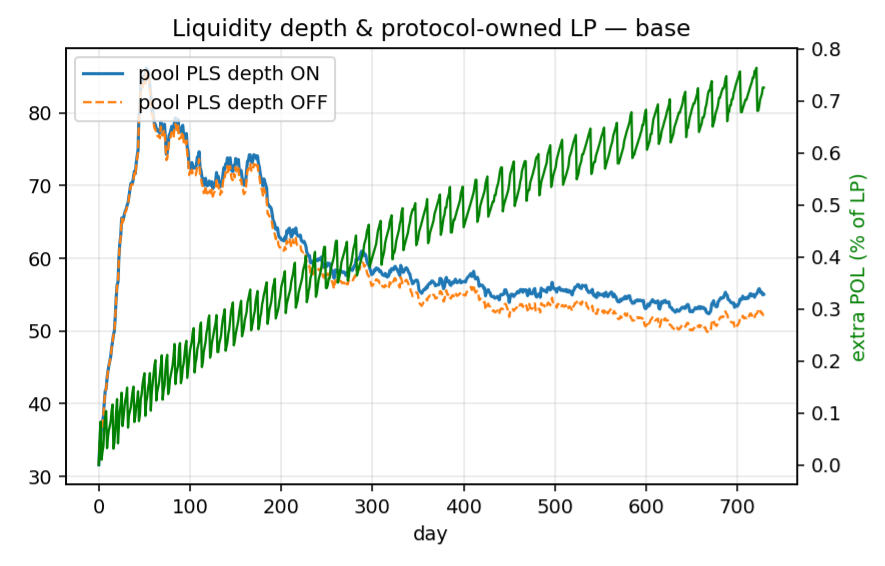
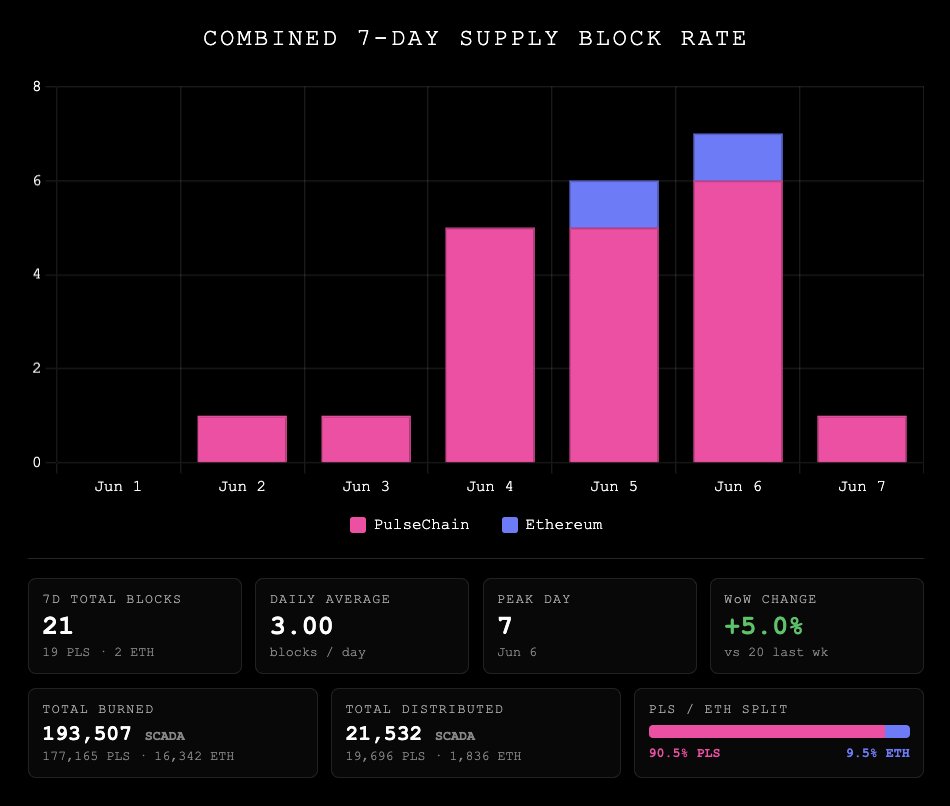
I have given Fable 5 (Mythos 5 but with safeguards) $SCADA smart contracts and told it to do an economic audit, but without all the jargon, written in pleb-talk.
It's quite long so here are the best parts:
(...)
"After 233 days of real-world operation, our analysis estimates this machine is responsible for roughly 10× of the token's price — the rest came from people actually wanting to buy it."
(...)
"A concrete example: Someone buys $1,000 of SCADA into the launch-sized pool, then sells everything back, and a supply block fires. Result: 1.4 million tokens burned, and the price ends 3.7% higher than where it started — even though the trader sold every coin they bought. The same round trip without the mechanism would have left the price only 0.3% higher. There's even a hidden bonus: because the buyback happens after trades settle, it tends to fire when the price has just dropped — meaning the machine buys cheap and burns more during dips. It's mildly contrarian by accident, which is exactly what you want."
(...)
"We rebuilt the simulation around the real data, and it reproduces all three observed numbers (block count, burn total, price range) simultaneously. The corrected estimate of the mechanism's contribution: comparing against a simulated twin world where the same money flowed in but no mechanism existed, SCADA's price is roughly 9 to 12 times higher because the machine exists. The remaining ~200× came from genuine demand."
(...)
"After 233 days on-chain: ~1,080 supply blocks executed, ~7% of all supply already burned, and a price around $0.0025 — roughly 2,100× the launch price measured in PLS (and that's while PLS itself dropped about 80%, so none of this was the network carrying it)."
(...)
"The machine is real, it's well-built, and it's been proven in production: roughly 81 cents of every fee dollar reaches the shredder, almost nothing leaks, anyone can run it, nobody can rob it, and 233 days of on-chain data say it has multiplied the token's price several times over versus a world without it.
The permissionless, self-contained design — where even the volume that feeds it is partly created by its own operation — is, as far as we can determine, genuinely novel."