Big upgrade for our engineering org: Tomas Eminger just joined Staking Facilities as CTO 🎊
We’re building infrastructure for Internet Capital Markets. Tomas is here to help us ship it 🚢
He's at @SolanaEvents Accelerate in Miami all week. DM @EmiT87 to grab time!
Wondering which epochs you actually paid @doublezero fees for?
You could parse that CSV… or check it instantly here
👇
🔗 https://t.co/GGWhUlNAXv
💾 Open source — just clone & open index.html in your browser:
https://t.co/YjjQhbNuwp
Remember the hate Figma got from crypto people for their IPO?
Watching the @doublezero token launch yesterday reminded me that launching a token is often more extractive, opaque, and less fair than an IPO. It’s embarrassing for an industry that claims to stand for transparency and fairness
DZ ran a $30M sale a few months ago at $400M. Now it’s trading at $5,5B. That’s ~ $400M left on the table. Enriching a few instead of capturing the value themselves & giving the broader ecosystem a chance to be part of the journey
It boggles my mind that teams still default to these playbooks after all these years. Look at what @pumpdotfun pulled off 👏
To be clear, @Austin_Federa and team should do whatever they want. But I’m convinced they left a huge amount of money on the table and missed the chance to recruit an army of enthusiasts who would be pushing networks onto DZ, growing their stake pool, amplifying the L0 narrative. In my view, that’s just dumb and bad business 🤷♂️
Remember the hate Figma got from crypto people for their IPO?
Watching the @doublezero token launch yesterday reminded me that launching a token is often more extractive, opaque, and less fair than an IPO. It’s embarrassing for an industry that claims to stand for transparency and fairness
DZ ran a $30M sale a few months ago at $400M. Now it’s trading at $5,5B. That’s ~ $400M left on the table. Enriching a few instead of capturing the value themselves & giving the broader ecosystem a chance to be part of the journey
It boggles my mind that teams still default to these playbooks after all these years. Look at what @pumpdotfun pulled off 👏
To be clear, @Austin_Federa and team should do whatever they want. But I’m convinced they left a huge amount of money on the table and missed the chance to recruit an army of enthusiasts who would be pushing networks onto DZ, growing their stake pool, amplifying the L0 narrative. In my view, that’s just dumb and bad business 🤷♂️
Bare metal you can stake on - now with 0% inflation & MEV commission fees on our main Solana validator
tl;dr: when staking with us, you receive 100% inflation and MEV rewards 🧵👇
We’re thrilled to welcome @StakingFac as a network contributor to @DoubleZero.
Staking Facilities will be deploying DoubleZero Devices across 7 European cities to deliver dedicated bandwidth and low latency for @Solana and beyond.
In Amsterdam + Marseille, they’ll also run DoubleZero Exchanges (DZX), boosting resilience for validator traffic, further reducing latency and improving redundancy across the network.
Like us, Staking Facilities is obsessed with reliability. Their belief in rock-solid infrastructure makes them an ideal partner to work with on the DoubleZero project.
This addition brings us one step closer toward building a faster, more performant connectivity layer leading into mainnet-beta.
Welcome aboard, @StakingFac.
ILRB I guess?
the top five slowest solana validators, that intentionally delaying their blocktimes, stealing rewards from the next leaders and slowing down the entire chain
nearly 1 second of average block times at its worst
@anza_xyz please fix this. it’s getting out of hands
Why We Voted “FOR” the Cetus Hack Recovery Proposal on Sui - Official Statement 👇
What happened: The Cetus DEX on Sui was hacked in May 2025 due to a math overflow bug, letting the attacker drain ~$223M in assets. Validators quickly froze ~$162M of that on-chain; ~$60M had already been bridged out.
The proposal: Enables a one-time protocol upgrade to transfer the frozen funds from the attacker’s wallets back to Cetus via a multisig (with Cetus, Sui Foundation, and OtterSec). Validators should verify and switch to the new version
Why we support it:
• Victims deserve justice. Without this, users lose millions. With it and the additional secured loan from Sui, 100% of users can be reimbursed.
• Decentralisation ≠ inaction. When there’s clear consensus that a malicious act occurred, the community should be able to reverse it.
• Validators acted responsibly. They froze the attacker’s wallets quickly. Now it’s time to finish the job.
• This rebuilds trust in Sui. It shows the network protects its users and deters future attackers.
Even though we voted YES and support this fully, we recognised some concerns:
• We worry that if a handful of validators (or the core team) can coordinate to freeze or alter funds, it undermines decentralisation. Indeed, in the Cetus incident, it took only >1/3 of stake, potentially controlled by a few large validators (only 19 validators in the worst case), to censor the attacker’s transactions and lock up funds . This demonstrates that a coordinated validator action can override a single user’s property rights, which is unsettling if one imagines this power abused. However, context matters: the validators’ action was voluntary, transparent, and clearly in service of the community interest during an emergency. This wasn’t a case of arbitrary censorship or political targeting; it was stopping an active crime in progress. This must remain a rare, transparent action, not a habit.
• Impact on Immutability and “Code is Law”:
Philosophically, while reverting the Cetus hack may seem justified, it sets a dangerous precedent. Blockchains derive their credibility from the immutability of their ledger—once transactions are , they are meant to be permanent. By choosing to roll back this transaction, we risk lowering the threshold for altering the ledger based on subjective judgment.
That’s a valid concern and one worth serious debate. However, it’s important to recognize that social consensus has always been an implicit part of blockchain governance. Immutability is not absolute—it exists until the community, through overwhelming consensus, decides to make an exception in extraordinary circumstances. The principle of “code is law” is foundational, but it doesn’t mean the code should be interpreted literally in all cases. Just as judges interpret legal texts by weighing intent, context, and societal values, so too must we occasionally interpret smart contract behavior through a broader lens. In the Mango Markets case (https://t.co/xoCZ9B6MMz…), the rigid application of “code is law” allowed an exploiter to legally walk away with $100M, leaving users and courts powerless to uphold the spirit of the platform. A community-led rollback, with near-unanimous consent, can be seen not as undermining immutability but as enforcing the true intent of the code, what was meant, not just what was written. That said, we must tread carefully. The danger lies in normalizing reversions in cases where the intent is ambiguous or where there are competing interpretations. As in legal theory: in dubio pro scripto—in doubt, we default to the text. Exceptions must remain truly exceptional.
Next Steps
In order of the whole ecosystem to learn from this and grow, we see some potential improvements that could be implemented by collaborating together with the foundation, other validators, protocol teams and delegators.
• Strengthen validator representation in public discourse
• Establish a validator working group to coordinate views, draft joint statements, and surface shared concerns on governance matters.
• Encourage more validators to actively participate in Sui events (e.g., Builder Houses, Sui Basecamp) and share operational insights, security practices, and ecosystem feedback with the broader community.
• Enable structured communication between validators and delegators.
• Introduce lightweight signalling tools (e.g., Snapshot polls or on-chain pre-vote indicators) that allow delegators to express preferences before validators cast binding votes.
• Add a dedicated discussion section under governance proposal pages where validators can publicly share their reasoning. Currently, most discussion happens on X, which lacks context, permanence, and visibility for many stakeholders.
@SuiFoundation@kostascrypto@b1ackd0g
Ready to join the party? 🕺
Here is our full guide on how to switch from Agave/Jito to Frankendancer 👇
Why Frankendancer?
➡️ greater throughput
➡️ higher efficiency
➡️ better resilience
https://t.co/3wW8iWn1ui
Last epoch was one for the books: we switched the “@SuperteamDe x @StakingFac | Public Goods Validator” from running on the @jito_labs client to @jump_'s #Frankendancer, live on mainnet - no more training wheels.
🪱🕳️🪱🕳️🪱🕳️🪱🕳️🪱🕳️🪱🕳️🪱🕳️🪱🕳️🪱🕳️
As the leading interoperability platform for #multichain bridges and applications, @wormhole connects data and assets across disparate blockchains.
🪱🕳️🪱🕳️🪱🕳️🪱🕳️🪱🕳️🪱🕳️🪱🕳️🪱🕳️🪱🕳️
By enabling seamless communication between networks, Wormhole sets the stage for a truly interconnected multichain ecosystem. Rather than a bridge, Wormhole is a crosschain messaging layer. #BetterTogether
❓Why does this matter❓
Well, interoperability is key to unlocking vast new possibilities in crypto - from enhanced liquidity to innovative cross-chain applications. Interoperability is a preset for mass adoption. #BeyondTribalism
👉 Let’s get together, discuss, innovate, and build! We’re thrilled to co-host an exclusive #Wormhole community event on May 23rd together w/ the @WormholeFdn and great support from @SuperteamDE & @tbc_munich.
Whether you’re a developer, investor, buildoor, or enthusiast, don’t miss this opportunity to connect with like-minded pioneers and learn more about Wormhole’s role in fostering a multichain future.
#ARisingTideLiftsAllBoats
👉 Spots are limited - register for free: https://t.co/3C3Gn1lysZ
In one of the latest @thebellcurvepod episodes, @MikeIppolito_ & @hal2001 dive into the ‘multichain endgame of crypto’ - as always, a great listen w/ lots to unpack & stimulating concepts to wrap your head around 🤯
We also believe that the future is multichain. We also foresee a world in which a few blockchains coexist and cross pollinate.
For that to work though, these chains need to talk to each other, exchange data and value - they interoperability.
We think that @wormhole’s modular suite of open source, permissionless protocols and tools is fertile ground for interoperability.
This is why we’re co-hosting a Wormhole community event together with the @WormholeFdn during @BerBlockWeek with great support from @tbc_munich & @SuperteamDE.
For more info as well as registration, check out our Luma event page:
https://t.co/3C3Gn1lysZ
🔥 @stakingfac Co-Founder & CEO @schmidtjulius1
“I truly believe in the power of blockchain & its socio-economics. That's why I love Superteam - it shows how a community can come together in order to tackle the problems we're facing on a global scale and create positive change.”
💥 @solana PSA: COMMISSION FEE REDUCTION 💥
In the past few weeks, we've optimized the traffic management for our #solana validator. This enhancement benefits not only the overall network’s performance and security but also your staking rewards. W for everyone. 🤝
We do not subscribe to black & white thinking, so our TPU filter only rate-limits non-gossip traffic instead of blocking it entirely 👆
Running high-quality, bare-metal infrastructure comes at a cost, but we believe that sharing is caring 🩵
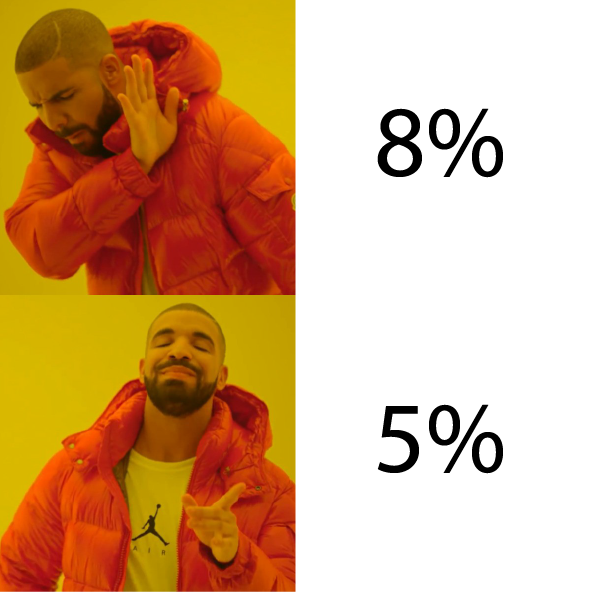
➡️Therefore, we're lowering our commission fee from 8% to 5%, effective as of the next epoch, 613—further increasing the APY of our validator.
On that note, delegations are always highly appreciated and support us in remaining independent & bootstrapped 🙃
Huge shoutout to @triton_one for their classifiers, constantly eating glass, and pushing boundaries 🫡