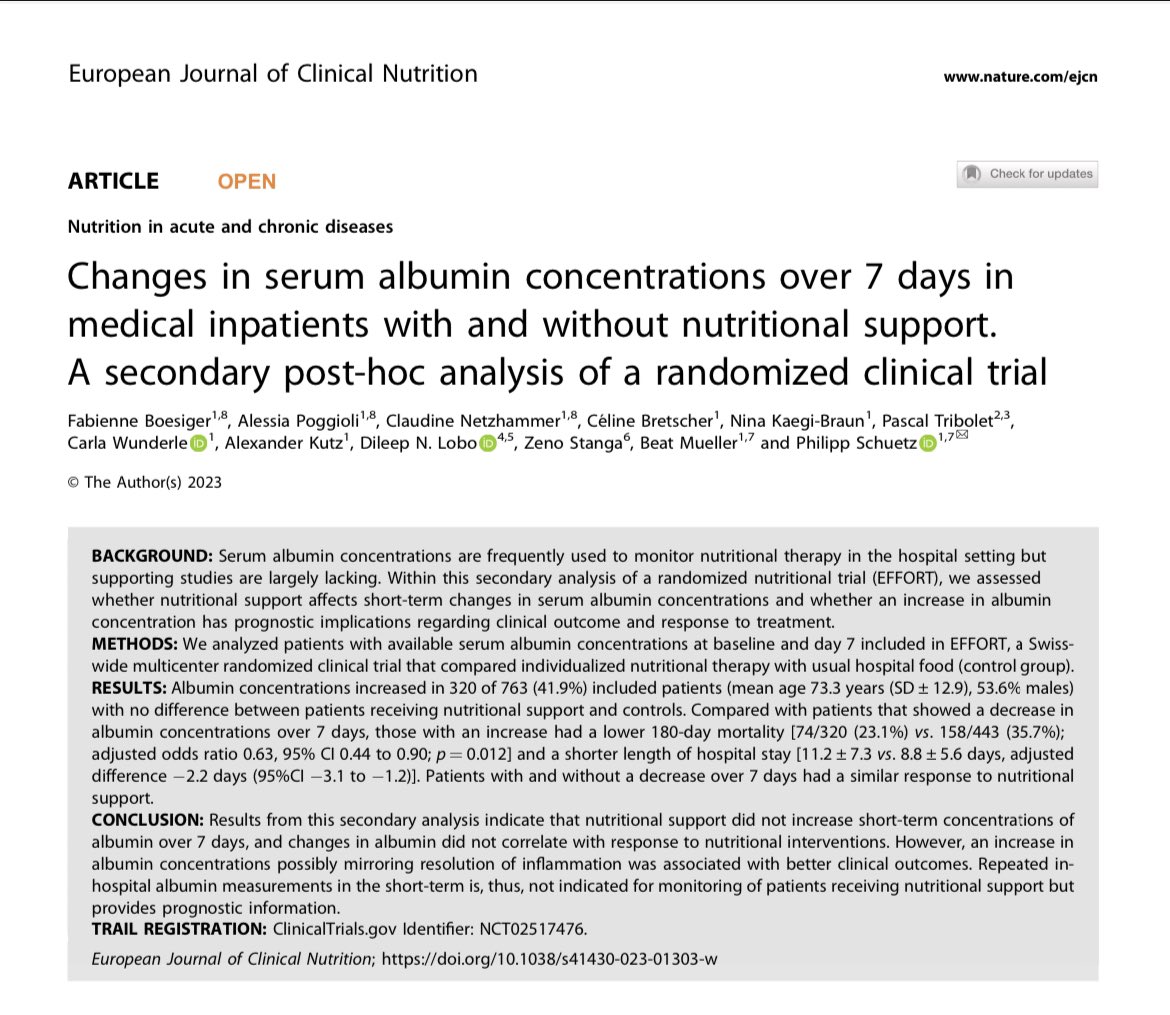
https://t.co/IDA8ZAdMuq @SchuetzphS@ESPENorg@ErasSociety Nutritional support did not increase short-term concentrations of albumin over 7 days. However, an increase in albumin concentrations possibly mirroring resolution of inflammation was associated with better outcomes
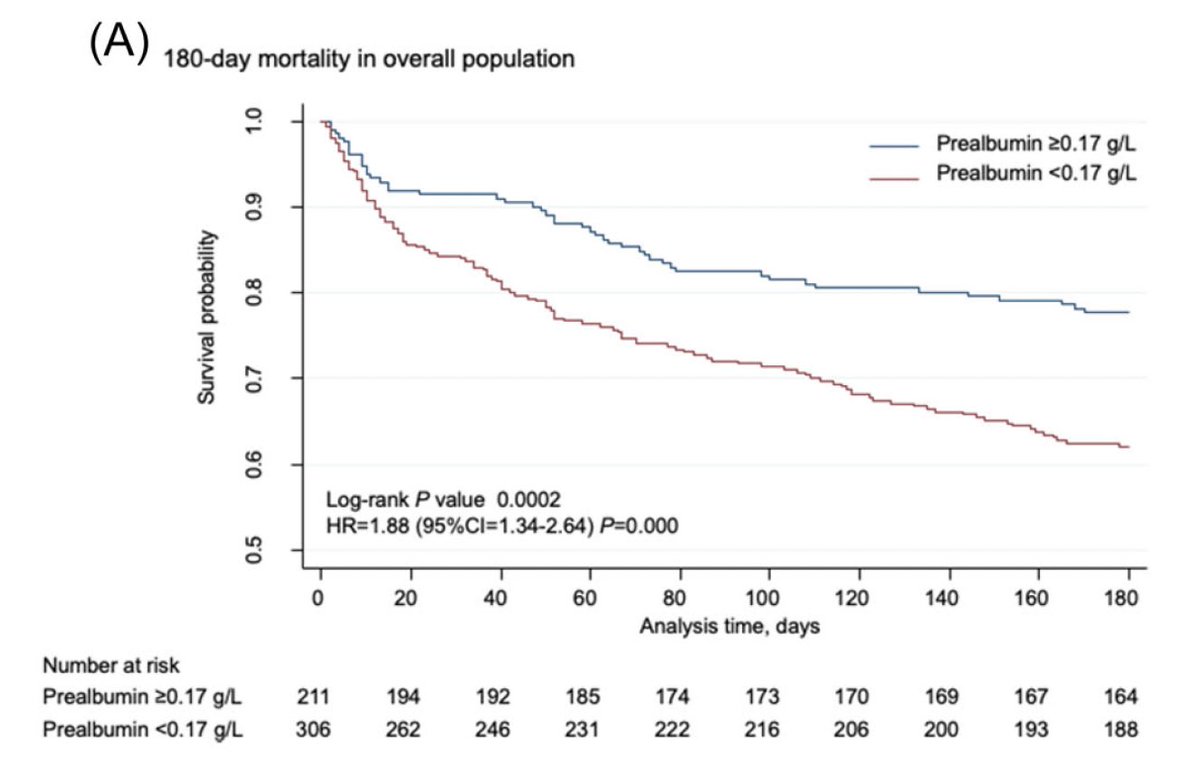
Association between prealbumin, all‐cause mortality, and response to nutrition treatment in patients at nutrition risk. Secondary analysis of a randomized controlled trial https://t.co/cEQ4tCgAh4
Association between prealbumin, all‐cause mortality, and response to nutrition treatment in patients at nutrition risk. https://t.co/GRUJkFMsZl Low admission prealbumin correlated with higher mortality risk, but did not predict benefit from nutrition support. @SchuetzphS
«Für die Spitäler bestehen klare ökonomische Anreize, an dieser lukrativen Patientenklasse stationäre Eingriffe vorzunehmen, anstatt darauf zu verzichten oder sie ambulant durchzuführen», sagt Dr. Philipp Schütz @SchuetzphS, Professor @DKFBasel@unibasel. 6/9
We should make better use of routine CT scans in the clinic, since the information they contain on muscles and muscle fat allows important statements to be made about the state of health.
A new study from the EFFORT cohort shows that in patients at nutritional risk, CT-based sarcopenia and muscle wasting were associated with multiple nutritional parameters and accurately predicted adverse clinical outcomes. https://t.co/G9gGlzQJ4t
@Leicnut@DL08OMD@DariushKamali true! but it seems that some populations do not respond well such as px with cachexia or high inflammation. see https://t.co/R6PYhz8AP2
@DL08OMD@SchuetzphS Thanks Prof. Interesting to read: a marker which stratifies risk but doesn't predict response to treatment. Possibly there is another candidate marker in a related pathway that could do both?
@RealDanAshmore worth a read.
#surgicalresearch
@DL08OMD@SchuetzphS Isn’t prealbumin subject to the same problems of albumin…ie it is not a marker of nutritional stare & merely identifies the sick patient…thus mortality is bound to be higher??
@DariushKamali@DL08OMD@SchuetzphS Factors influencing prealbumin levels are legion thus despite its shorter half life probably not that useful for malnutrition identification. IMO this study confirms sick people are sick and calories don’t improve outcomes unless underlying causes addressed 🤷♂️
https://t.co/80VFSahuJB Low admission prealbumin concentrations correlated with higher mortality risk; but did not predict benefit from nutritional support. @SchuetzphS
Herzliche Gratulation an die DKF Forschungsgruppe von Philipp Schütz (@SchuetzphS) vom @ksaarau zum @snf_ch Projektförderung Grant. Die EFFORT II Studie geht der Frage nach, ob eine Ernährungstherapie auch im ambulanten post-stationären Setting nützt. https://t.co/Wjt6WOr2eq
The Global Leadership Initiative on Malnutrition (GLIM) criteria not only predict clinical outcomes- but are also helpful in identifying patients at risk of malnutrition who most likely benefit from nutritional treatment.
https://t.co/JFaRgjO76B
Albumin is definitely not a reliable nutritional marker for guiding nutritional support interventions in hospitalized patients … read our secondary analysis of the EFFORT trial in Lancet open https://t.co/gdoRG4TQqA
Effect of micronutrient supplementation in addition to nutritional therapy on clinical outcomes of medical inpatients: results of an updated systematic review and meta-analysis https://t.co/zIrMlja4fk