Just completed a couple of hours of driving with @Tesla FSD V14 Lite in my HW3 Model Y. Here are some thoughts:
• Much improved smoothness and intelligence overall.
• Starting from park, reversing, and parking at destinations is a game changer.
• Steering and acceleration are way smoother than before.
• Parking lot performance is miles better. It reverses for pedestrians and other cars if you are in the way.
• Lane changes, especially on highways, are way more fluid.
• The ability to park at a Supercharger is a game changer for road trips.
• Parking performance and accuracy were great.
• It parked on my driveway PERFECTLY multiple times.
Since it’s an early build, it is very cautious, especially in busy parking lots. On the road it feels relaxed, avoids frequent lane changes, and simply takes its time. I suspect speed and assertiveness will ramp up quickly as V14 Lite scales. In Hurry Mode, the car maxed out at 76 mph on the highway for me. I did some testing at Costco, and was honestly shocked how well it handled the mayhem. It was able to park and all handle crowds better than HW3 ever could.
How does it compare to HW4?
It feels exactly how Tesla describes it: a distilled version of HW4 V14. HW4 thinks quicker, reacts quicker, and feels more locked in. It wouldn’t be fair to say they’re on the same level, because they’re not. It’s distilled. The core functionality of V14 is there (starting from park, destination options, reinforced learning, etc.). Remember, Tesla accomplished this on ~7 year old hardware. The way they achieved this performance on it is absolutely incredible.
Coming from FSD V12, you will be so happy. It makes the car feel new. Before this, I would always choose my Model 3 with AI4 for road trips or long drives. Moving forward, I will have no problem taking my Model Y with V14 Lite, even on a road trip. That says a lot.
I can’t wait for HW3 owners to get this update! It’ll change your ownership experience.
Feel free to ask any questions in the comments. I’ll do my best to answer.
Congratulations to all HW3 Tesla owners!
Today marks the end of a journey that began back in 2019.
Tesla sold HW3 with the promise that it had the hardware needed for Full Self-Driving. Many owners believed in that vision early, purchasing FSD outright for $8,000-$15,000, years before it could deliver its full potential. Those purchases helped fund the continued development of Tesla’s FSD program.
As AI models rapidly evolved, HW3’s limited memory bandwidth became a real engineering challenge. Millions of owners watched HW4 continue advancing while their cars remained on FSD v12.6.4 for more than 15 months.
Instead of abandoning roughly 3-4 million HW3 vehicles, Tesla built a new solution.
Using model distillation, Tesla compressed the intelligence of FSD v14 into a purpose-built model optimized specifically for HW3.
Today, FSD v14 Lite officially began rolling out to early-access HW3 (AI3) owners.
The result:
• Near-feature parity with FSD v14 in supervised driving
• Smoother, more responsive driving
• Parking, reversing, and arrival options
• Improved comfort and safety
• Wider rollout over the coming weeks
This timeline I made tells the story of one of Tesla’s biggest software engineering challenges - from an ambitious promise, through hardware limitations and years of development, to delivering a meaningful upgrade that will impact 4+ million legacy Tesla vehicles.
Major win for the @Tesla_AI team! 👏
FSD V14 Lite is truly an engineering wonder in reality AI as Elon Musk noted that AI3 possesses only ~15% (roughly one-eighth) of HW4’s memory bandwidth, highlighting a classic engineering hurdle in modern AI: the memory wall.
Tesla's V13 and V14 architectures rely heavily on large, end-to-end neural networks (specifically Transformer models). These models are notoriously "memory-bound."
This means the system's performance isn't just limited by its raw processing math (TOPS), but by how fast it can shuttle massive amounts of visual data and neural weights from RAM into the processor cores.
While AI4 uses high-speed GDDR6 memory, pushing hundreds of gigabytes per second to feed hungry, high-parameter AI models in real time, AI3 relies on older LPDDR4 memory.
Its data pipeline is simply too narrow to process the uncompressed V14 neural nets without introducing unacceptable—and potentially dangerous—latency at driving speeds.
💡 The engineering feat: model distillation
To get V14 running on a computer with an 85% bandwidth deficit, Tesla’s AI team couldn't just "turn off" features. They had to fundamentally alter how the model computes.
Through distillation, instead of giving HW3 a generic, rules-based substitute, Tesla "distilled" the driving behavior from HW4’s massive V14 model into a highly compressed neural network. HW3 acts as a student running a streamlined model that learned its behavior from the HW4 "teacher" model.
To squeeze this intelligence through HW3’s narrow memory pipeline, Tesla engineered the model to run on a smaller footprint through compression and quantization—likely by reducing the precision of the mathematical weights (quantization) and stripping away redundant parameters so it can calculate steering and acceleration inputs fast enough.
🚀 What this means for HW3 owners
Despite the severe hardware constraints, the V14 Lite rollout achieves near feature-parity for the roughly four million HW3 vehicles on the road, while cementing a hard boundary for the future.
Early real-world feedback confirms it represents a big leap in capability and feature set compared to v12.6.4.
In terms of generational feature parity, HW3 users are finally getting the major behavioral upgrades previously exclusive to HW4, including Start from Park, Automatic Shifting/Reverse, and updated, smoother speed profiles.
While HW3 is battling tighter compute margins, its current driving profile is intentionally tuned for safety. Instead of feeling strictly limited, early impressions show the vehicle taking things slow and smoothly in urban environments, while delivering notably great performance on the highway.
Finally, there is an unsupervised ceiling. The ~15% memory bandwidth reality establishes a permanent physical limit.
No software update can widen a hardware pipeline, officially confirming that HW3 will never achieve Unsupervised FSD (Robotaxi capability).
However, V14 Lite maximizes the hardware's remaining potential, cementing it as a highly advanced, but strictly supervised, Level 2 system.
Following future rollout of FSD V14 Lite for HW3 vehicles in the US, we plan on expanding V14 Lite to additional international markets.
This update ensures that HW3 vehicle owners will continue to benefit from ongoing software updates.
Since international rollout is subject to several factors (completion of technical verification, regional adaptation & relevant regulatory approvals), we can't provide definitive dates at the moment, but will provide updates on a rolling basis
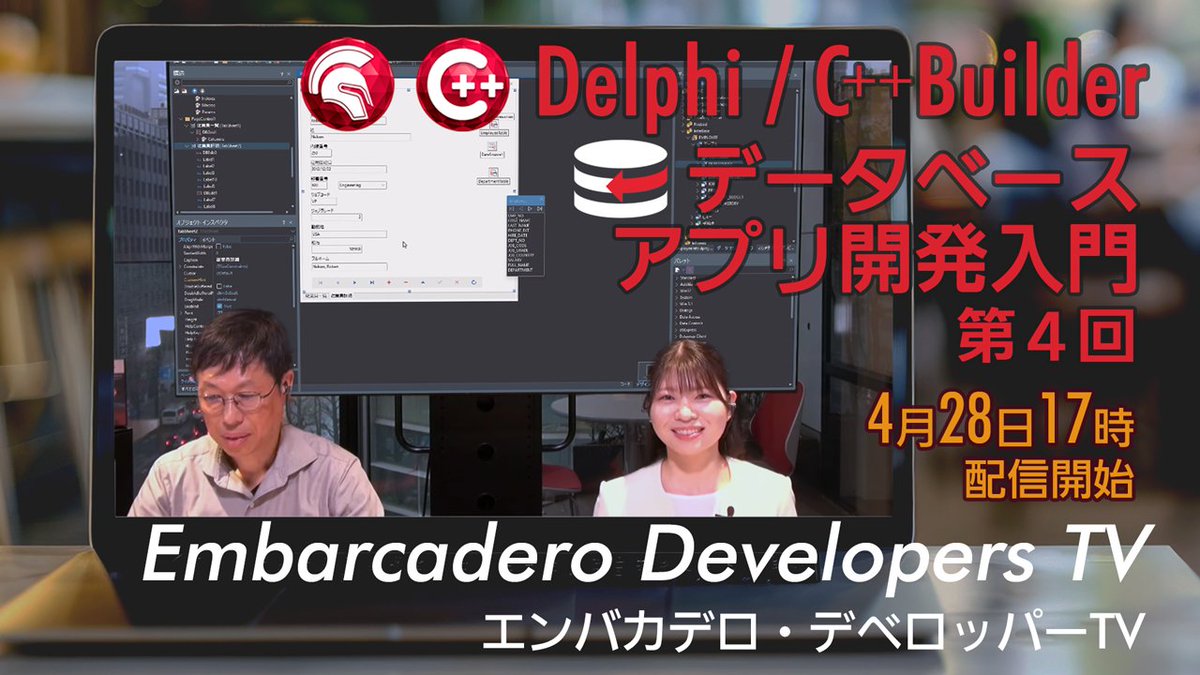
本日4月28日17時よりYouTubeライブ「エンバカデロ・デベロッパーTV」。
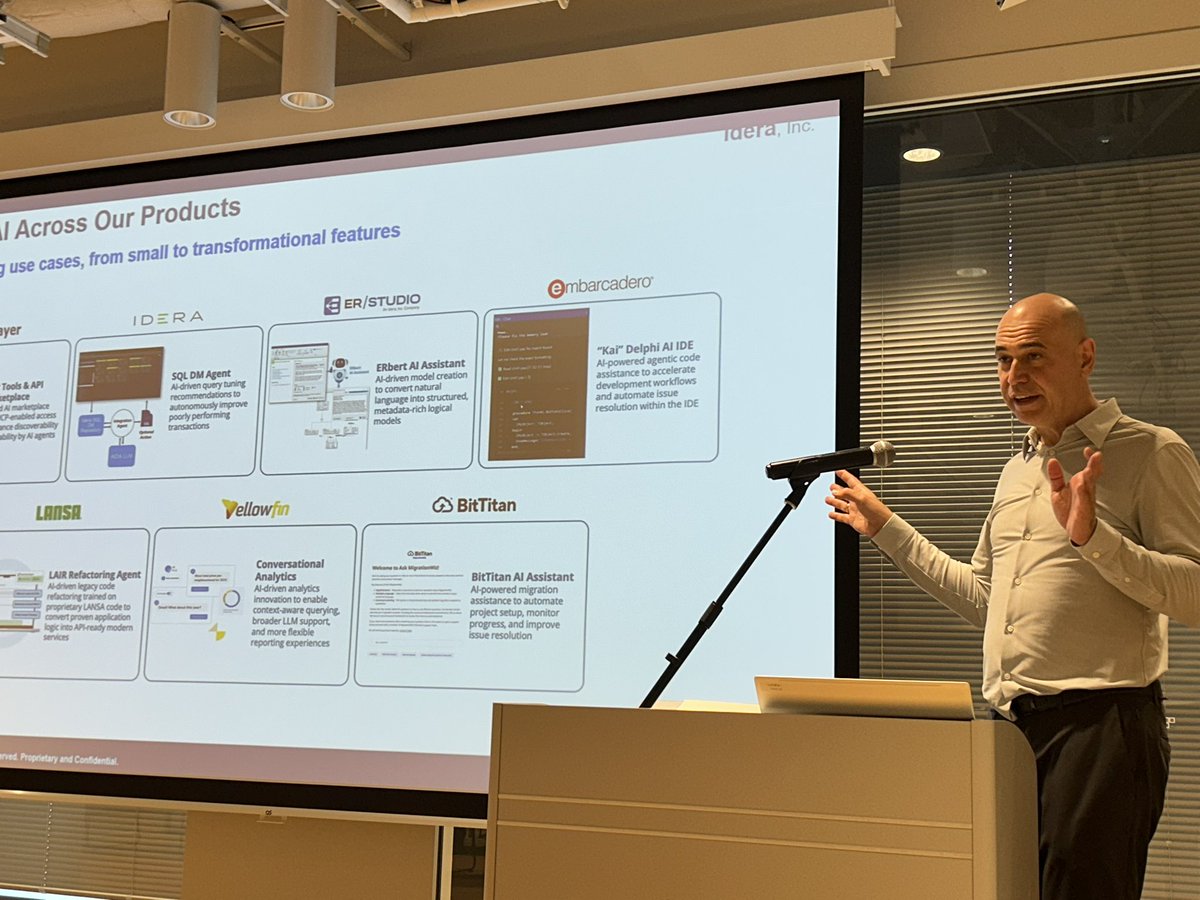
今回は「データベースアプリ開発入門」の第4回。項目編集用フォームの作成にチャレンジします。4月22日に開催された「Idera Group Meetup」の様子もレポート。新しいAI機能についても言及します。
https://t.co/44mk0MAEMn
We now have more confirmation that Full Self-Driving (Supervised) in Netherlands is for AI4 vehicles only at this time.
This means that HW3 vehicles in the European Union will either have to wait for the release of V14 Lite or a future hardware upgrade to access FSD.
De toekomst van mobiliteit is aangebroken
FSD Supervised has been approved in the Netherlands 🇳🇱 & will begin rolling out in the country shortly!
Trained on billions of kilometers of real-world driving data, it can drive you almost anywhere under your supervision – from residential roads to city streets & highways
No other vehicle can do this.
We're excited to bring FSD Supervised to more European countries soon