On my birthday, I turn colors (numbers are so over-used) . This year, Yellow and Blue for Ukraine. I'm very pleased with our work with young storytellers in Poland, capturing the story of two new Ukrainian classmates. See their prototype film here:https://t.co/ZHu4xdAHZh
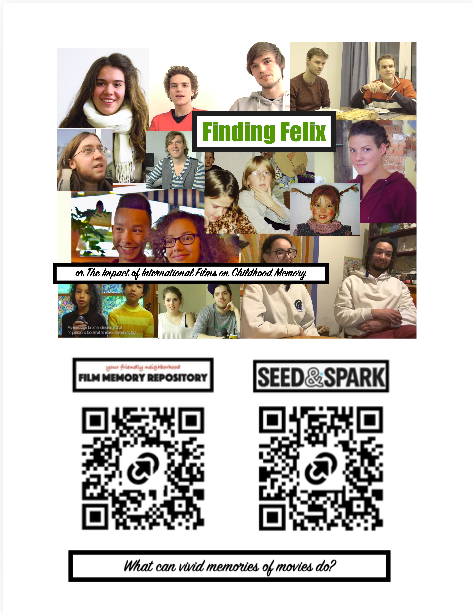
FINDING FELIX LIVE at the Hollywood Theater, May 17, 2026 https://t.co/cedbocSLsg via @YouTube
Contribute, Follow, Share to release the research on Seed&Spark https://t.co/Pq69LCcwek
April 27, Live 10am PT / 1900 CET FINDING FELIX "Depaysement" a French concept with no English translation and a FINDING FELIX Character Profile: Animator Michel Ocelot https://t.co/PAEdCEmxOm via @YouTube
10-year-old “Sean the Science Kid” stole the show with Dr. Sanjay Gupta, calling memories a superpower and naming the hippocampus his favorite brain part. 🧠 The future of science is bright and young minds are already leading the way.
🎥: CNN
Socratic Seed #75: Culture has five components: values and beliefs, norms, symbols, language, and rituals. How can teachers employ culturally responsive teaching – utilizing student customs for cohesion & innovation? [image: Poetry (Dir. Chang-dong, South Korea, 2010)]. @NSF@NPR
Socratic Seed #74: How does a director view a film as a recipe, building a production from scratch with ingredients skillfully blended to draw a memorable audience discussion? How is a teacher crafting lessons to address students’ needs? [image: Matilda (Dir. DeVito, US, 1996)].
Socratic Seed #73: Our team completed an NSF Learning and Cognitive Technology study using international films to simulate travel. After five short international film sessions, it drew a 30% increase in "interest in other cultures.” [image: Eternity (Dir. Catacora, Peru, 2017)].
Socratic Seed #72: Modern “pop-up” retail took shape in the late 1990s in LA (https://t.co/5oZmTAtprc). https://t.co/fRuCHEZfwj is adopting the “pop-up” with free sessions in 2025. How else are you innovating your classroom in 2025? [image: Metropolis (Dir. Lang, Germany, 1927)].
Socratic Seed #71: Soda, love or hate it, has an invaluable impact on pop culture—its place in restaurants seems universal and everlasting. How does the sense of taste play a satisfying role in film? [image: Life, and Nothing More… (Dir. Kiarostami, Gilan Province, 1992)].
Socratic Seed #70: A kiln chemically changes clay to make pottery. How can classroom discussion have the same effect on learning? Do specific teaching tactics, perhaps a curated film, solidify a lesson more than others? [image: Heart of Glass (Dir. Herzog, Bavaria, 1976)].
Socratic Seed #69: Black History Month is a valuable month each year to commemorate African culture in America. Which of the month’s colors (black, red, yellow, or green) resonates most with you, and why? [image: The Boy Who Harnessed the Wind (Dir. Ejiofor, Malawi, 2019)].
Socratic Seed #68: Saint Valentine was a Roman saint of lovers, epilepsy, and beekeepers. As we celebrate Valentine's Day, think about how love is portrayed in film. How can love stories affect us throughout our lives? [image: Le Bonheur (Dir. Varda, Avenue de Verdun, 1965)].
Socratic Seed #67: James Baldwin likens the responsibility to educate children properly to the utmost morality. https://t.co/fRuCHEZfwj holds to this standard. How does the topic of morality show up in your classroom? [image: Dark (Dir. Odar, Germany, 2020)].
@MilkenInstitute
Socratic Seed #66: As we celebrate Martin Luther King today, consider how educators can champion social justice using film. What film prompted you to further action—discuss, research, march, seek vocation—for a vital cause? [image: Selma (Dir. DuVernay, US, 2014)].
@NSF@NPR


![Screen360tv's tweet photo. Socratic Seed #75: Culture has five components: values and beliefs, norms, symbols, language, and rituals. How can teachers employ culturally responsive teaching – utilizing student customs for cohesion & innovation? [image: Poetry (Dir. Chang-dong, South Korea, 2010)]. @NSF @NPR https://t.co/ZDpNn5iuHP](https://pbs.twimg.com/media/Gp3YeeMb0AERQV0.jpg)
![Screen360tv's tweet photo. Socratic Seed #72: Modern “pop-up” retail took shape in the late 1990s in LA (https://t.co/5oZmTAtprc). https://t.co/fRuCHEZfwj is adopting the “pop-up” with free sessions in 2025. How else are you innovating your classroom in 2025? [image: Metropolis (Dir. Lang, Germany, 1927)]. https://t.co/wUoiwkE3Fb](https://pbs.twimg.com/media/GlxJzKdbgAAUDqI.jpg)
![Screen360tv's tweet photo. Socratic Seed #66: As we celebrate Martin Luther King today, consider how educators can champion social justice using film. What film prompted you to further action—discuss, research, march, seek vocation—for a vital cause? [image: Selma (Dir. DuVernay, US, 2014)].
@NSF
@NPR https://t.co/v8Rz230Krs](https://pbs.twimg.com/media/Ghv_ZMiaAAARJce.jpg)








![Screen360tv's tweet photo. Socratic Seed #74: How does a director view a film as a recipe, building a production from scratch with ingredients skillfully blended to draw a memorable audience discussion? How is a teacher crafting lessons to address students’ needs? [image: Matilda (Dir. DeVito, US, 1996)]. https://t.co/oTuiaeiHMV](https://pbs.twimg.com/media/GoQh13fbIAA_AeM.jpg)
![Screen360tv's tweet photo. Socratic Seed #73: Our team completed an NSF Learning and Cognitive Technology study using international films to simulate travel. After five short international film sessions, it drew a 30% increase in "interest in other cultures.” [image: Eternity (Dir. Catacora, Peru, 2017)]. https://t.co/dhLTkAwBOi](https://pbs.twimg.com/media/Gm5Si6Ya4AActni.jpg)
![Screen360tv's tweet photo. Socratic Seed #72: Modern “pop-up” retail took shape in the late 1990s in LA (https://t.co/5oZmTAtprc). https://t.co/fRuCHEZfwj is adopting the “pop-up” with free sessions in 2025. How else are you innovating your classroom in 2025? [image: Metropolis (Dir. Lang, Germany, 1927)]. https://t.co/wUoiwkE3Fb](https://pbs.twimg.com/media/GlxJzKna0AEkaKf.jpg)
![Screen360tv's tweet photo. Socratic Seed #71: Soda, love or hate it, has an invaluable impact on pop culture—its place in restaurants seems universal and everlasting. How does the sense of taste play a satisfying role in film? [image: Life, and Nothing More… (Dir. Kiarostami, Gilan Province, 1992)]. https://t.co/yaMHtWb4xi](https://pbs.twimg.com/media/GlSkMSqa4AM0u1Q.jpg)
![Screen360tv's tweet photo. Socratic Seed #70: A kiln chemically changes clay to make pottery. How can classroom discussion have the same effect on learning? Do specific teaching tactics, perhaps a curated film, solidify a lesson more than others? [image: Heart of Glass (Dir. Herzog, Bavaria, 1976)]. https://t.co/YEi18voVOk](https://pbs.twimg.com/media/GkpU6MvbgAAx75B.jpg)
![Screen360tv's tweet photo. Socratic Seed #69: Black History Month is a valuable month each year to commemorate African culture in America. Which of the month’s colors (black, red, yellow, or green) resonates most with you, and why? [image: The Boy Who Harnessed the Wind (Dir. Ejiofor, Malawi, 2019)]. https://t.co/Gaj4wip7iZ](https://pbs.twimg.com/media/GkFOb_iXoAAyIFD.jpg)
![Screen360tv's tweet photo. Socratic Seed #68: Saint Valentine was a Roman saint of lovers, epilepsy, and beekeepers. As we celebrate Valentine's Day, think about how love is portrayed in film. How can love stories affect us throughout our lives? [image: Le Bonheur (Dir. Varda, Avenue de Verdun, 1965)]. https://t.co/3LlKSoeu9t](https://pbs.twimg.com/media/GjhPy1aagAAGTuM.jpg)
![Screen360tv's tweet photo. Socratic Seed #67: James Baldwin likens the responsibility to educate children properly to the utmost morality. https://t.co/fRuCHEZfwj holds to this standard. How does the topic of morality show up in your classroom? [image: Dark (Dir. Odar, Germany, 2020)].
@MilkenInstitute https://t.co/OujntiBWh4](https://pbs.twimg.com/media/Gi96HOHW8AAldDS.jpg)


