San Diego County commercial real estate broker. I provide leasing, sales and development analysis of commercial and investment properties. And #CRE news!
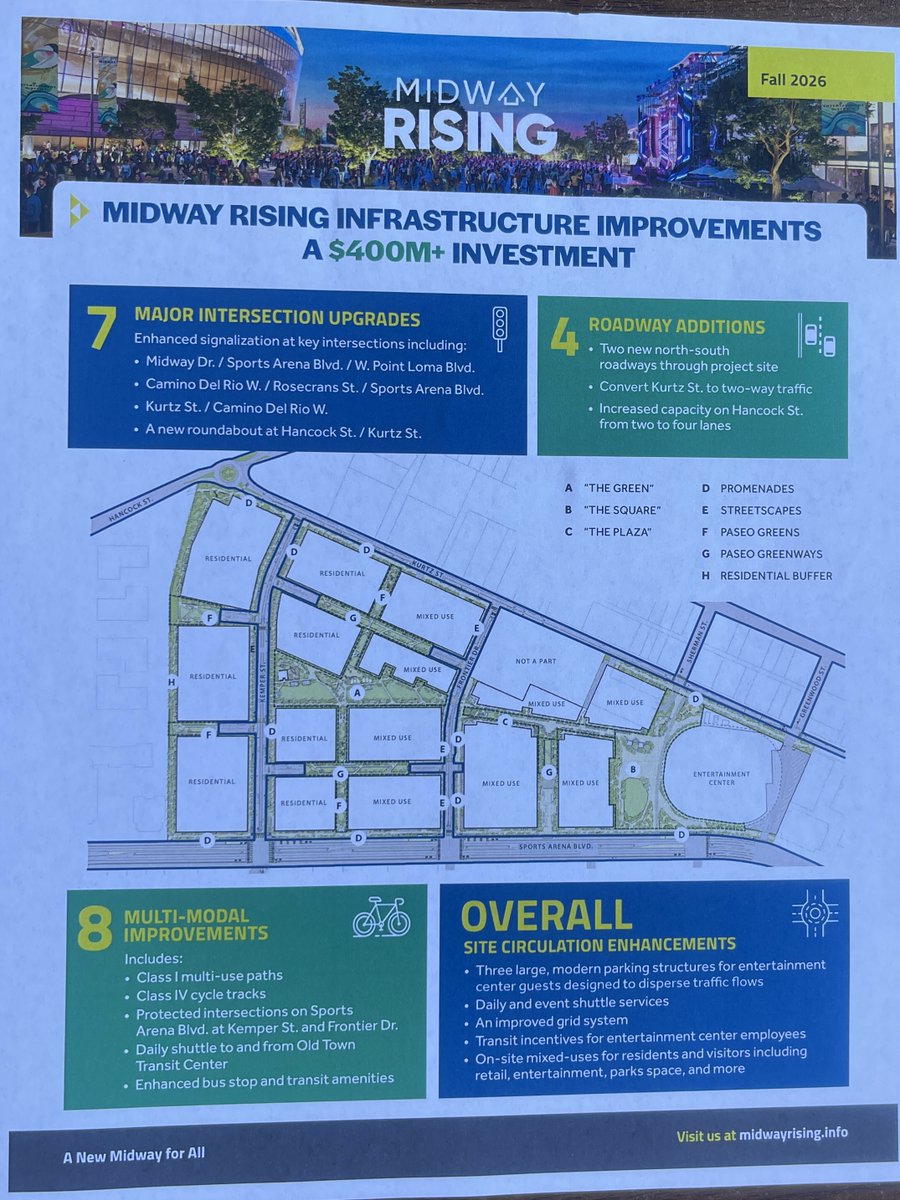
Marc Frederick’s Comments on @MidwayRising Item at @CityofSanDiego Council – November 9, 2026
Good afternoon. My name is Marc Frederick. I'm a San Diego native, and I've been a commercial real estate broker here in town for over twenty years. I also previously served as the program manager for real estate dispositions for the City of San Diego for three years from 2023 until June of this year.
My comment today is not against the Midway Rising project itself. However, I do have some comments pertaining to the agreement that has been negotiated between the developer and the city.
The agreement has been described as fair and reasonable by the independent budget analyst, but clearly it is not. Real estate agreements in general should be logical, clear, and concise. This agreement is the opposite of that.
It is nearly 700 pages long. It is convoluted and confusing, and parts of it are incomplete. It sets up for failure future generations of City Council and City staff who will not be able to decipher or reconcile the various terms and collect the rent that is due to the City. And the terms that one can understand are bad for the city.
Consider this. The sports arena property is worth $75,000,000 as it sits today, according to the city's own appraisal from 2025. A fair and reasonable return on a $75,000,000 investment is about 6% annually or $4,500,000 per year. However, this agreement calls for the developer to pay the city a $100,000 a year for the first fifteen years of the lease. That's basically a 0% return on a $75,000,000 investment for fifteen years. That's clearly not fair and reasonable.
The lease does contain provisions for the rent to increase through a percentage of profit sharing in later years. However, the thresholds to meet for this profit sharing to kick in are so high, and the shared percentages are so low that it is highly doubtful that this will ever result in any meaningful increase to the rent, and none of the additional rent is guaranteed. Even if the rent increased to $500,000 per year, the city would still be getting less than 1% return on its $75,000,000 investment.
So you start with this very low rent schedule, and then you layer on top of it the enhanced infrastructure financing district, which in plain English is a roughly $500,000,000 tax credit that the city is giving back to the developer with interest, and what you have is a deal that has been structured in a way that has the city paying more to the developer in tax subsidies than the developer is paying to the city in rent.
That structure is backwards, and no informed real estate owner would ever agree to something like that. During the Land Use and Housing Committee presentation, a statement was made saying the deal does not pencil without the Enhanced Infrastructure Financing District. But that’s very misleading. A more honest and accurate way of putting it would be to say that the deal does not pencil without more cash, But there's nothing to say that that cash needs to come in the form of a $500,000,000 tax subsidy from the citizens of San Diego. The developer is the one who will gain the most financially from this project. If more cash is needed for the project, then that cash should rightly come from the developer. The Enhanced Infrastructure Financing District is too large of a concession for the city to give, and there is no justification for it. It should be removed from the agreement.
The bottom line is this. The city and the citizens of San Diego were poorly represented in these negotiations, and this council is getting very bad real estate investment advice. If you want to move forward with this project, then there are ways to make it work, but the city should not be so eager to reach an agreement that is willing to accept what is clearly a bad deal. You can still build the affordable housing, and you can still do a deal that is favorable to the labor unions, but the citizens of San Diego shouldn't be left holding the bag.
.@CityofSanDiego OKs $4.2B Midway Rising project
It's a 105-year lease and redevelopment deal for the 48.5-acre sports area property with master developer @MidwayRising
The net present value of the rental payments, or the current value of future dollars, is $23.2 million.
Marc Frederick, a former city of San Diego program manager who worked in the real estate division until June, said during public comment that San Diegans were getting a bad deal. “The bottom line is this: The city and the citizens of San Diego were poorly represented in these negotiations, and this council is getting very bad real estate investment advice.”
https://t.co/euvxBbg3Q8 by @jbruin via @SDUT
The San Diego County Water Authority needed to move their operations center. So, they ended up purchasing a 88,552 SF building about two years ago on 9.5 acres at 1960 Citracado Parkway, Escondido.
Strangely, the property is not zoned for outside storage, so they have to store all their equipment and material inside. Also, it is built for distribution, with dock high positions on both ends of the building, which is not practical.
At the end of the day, they will have at least $70 Million into the property after tenant improvements. 🤑 #SMH
https://t.co/H5O8WX2x1J
City prepares eviction of Mission Bay Sports Center over sublets
Longtime tenant has until Friday to pay past due rent of nearly $1M
The leaseholder said it will fight eviction, adding that the city is to blame for the unresolved contract dispute.
https://t.co/uR25U1e4Hu
Terms of Midway District project released
Focus is on public benefits over cash for sports arena acreage
The documents, reveal the fine print of the negotiated deal with master developer @MidwayRising LLC that has been in the works for more than four years.
https://t.co/5KxPsTSARZ by @jbruin via @SDUT
Wow, Barnes Tennis Center pays just $50 month and has made more than $20M over the past five years!
Management of its real estate, leases is costing @CityofSanDiego millions.
History of lopsided deals, below-market rents dogs city amid budget shortfall.
https://t.co/WBD62tZNX2
Otay Mesa Warehouse Project Among Biggest in California
Elevation Land Company https://t.co/HzmOJJyGoq Crow Holdings Capital https://t.co/wAiDhfsgTY have completed the first phase of the Otay Business Park with 612,240 square feet of warehouse space in four buildings on a 119-acre site at the border with Mexico.
“It’s the largest ground-up industrial development going on in San Diego County and it’s one of the largest in Southern California right now by square footage,” said Brig Black, Elevation Land Company founder and principal.
“At full build-out, Otay Business Park will provide 1.8 million square feet of industrial space in a location that’s hard to beat for logistics efficiency,” Black said, adding that the final project will have up to nine buildings.
“We have the flexibility to lease the buildings, we can sell the buildings, we can build-to-suit or we can sell lots,” Black said.
The completed first phase of the project includes a 202,200-square-foot building with 197 parking stalls, 50 trailer stalls, 36 loading docks and two grade level doors; a 233,880-square-foot building with 220 parking stalls, 52 trailer stalls, 37 loading docks and two grade-level doors: a 95,400-square-foot building with 104 parking stalls, 22 loading docks and two grade level doors, and a 79,760-square-foot building with 87 parking stalls, 20 loading docks, and two-grade-level doors.
“One of the things we designed into the buildings was a significant amount of trailer storage, onsite trailer storage,” Black said.
Black said construction costs for the first phase were about $50 million, not including the cost of infrastructure and providing land elsewhere in Otay Mesa and Ramona to offset the environmental effect of the project.
A second phase 2 will tentatively include 650,000 square feet of warehouse space in three buildings, one of which would be 320,000 square feet, Black said, adding that a possible third phase would have 400,000 square feet of warehouse space in two buildings.
All of the buildings in the first phase have 32-foot clear height, and each one has 3,000 square feet of glassed-in office space on a corner of the building.
“The office space includes cutting edge conference rooms, lobbies and private offices, bright, airy break rooms with windows to the exterior, rest rooms, and all the things an office needs,’ Black said.
Each of the larger buildings has skylights to flood the warehouse with natural light, with more than 400 skylights among the four buildings, Black said.
“During the day, you don’t need to even turn the lights on,” Black said. “We wanted to be very robust with the light that comes in.”
The project also has a concrete apron in the loading area, ESFR sprinkler systems and extra electrical power
“Users want a lot of power, more than they ever have in the past,” Black said. “That allows the buildings to serve as manufacturing hubs.”
Preparing for Improved Commercial Trade at Border
Black said he is in discussions with several potential tenants, adding that the warehouses are drawing interest because of their proximity to the new Otay Mesa East border crossing, their extensive trailer parking and a ready labor pool of workers north and south of the border.
The first phase of the new border crossing is expected to open in late 2027.
Uncertainty over tariffs prompted some companies to put off making any commitments to lease warehouse space, but he said that their concern is waning.
“People are feeling they have a better handle on the tariff issues with Mexico,” Black said. “There’s just more certainty about what that landscape looks like.”
CBRE reported that the overall vacancy rate for industrial property throughout San Diego dropped to 6.5% in the first quarter of 2026 and absorption of vacant space rose to 132,000 square feet, which CBRE said was “a vast improvement” over the previous quarter.
“The supply side has bottomed out now,” Black said, adding that, “It’s going to be an environment where we are looking for the overall economy and the markets to continue to improve, the regulatory environment, the tariffs, everything is going to continue to improve.”
“We’re going to need more capacity at the border for commercial trade. I think that trade will thrive in the future.,” Black said.
Dempsey Construction was the general contractor on the business park and @WareMalcomb was the architect.
https://t.co/KrfbUi8Mht via @SDbusiness
The biggest share — 30% — of the portfolio is located in San Diego.
@BlackRock’s $1.6 billion apartment bet signals return of big multifamily deals
Investor acquires Camden Property Trust's 11-property Southern California portfolio
One of the nation’s largest apartment owners has exited California with a portfolio sale to a BlackRock-managed investment vehicle.
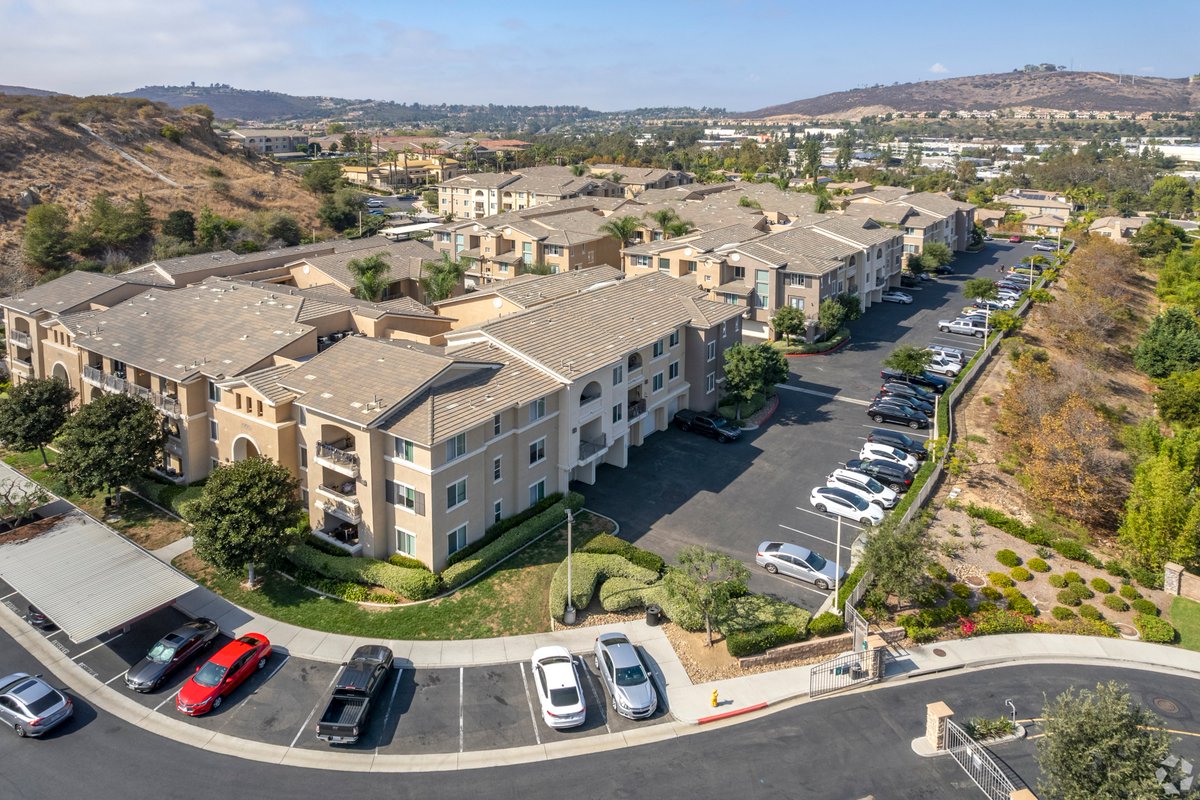
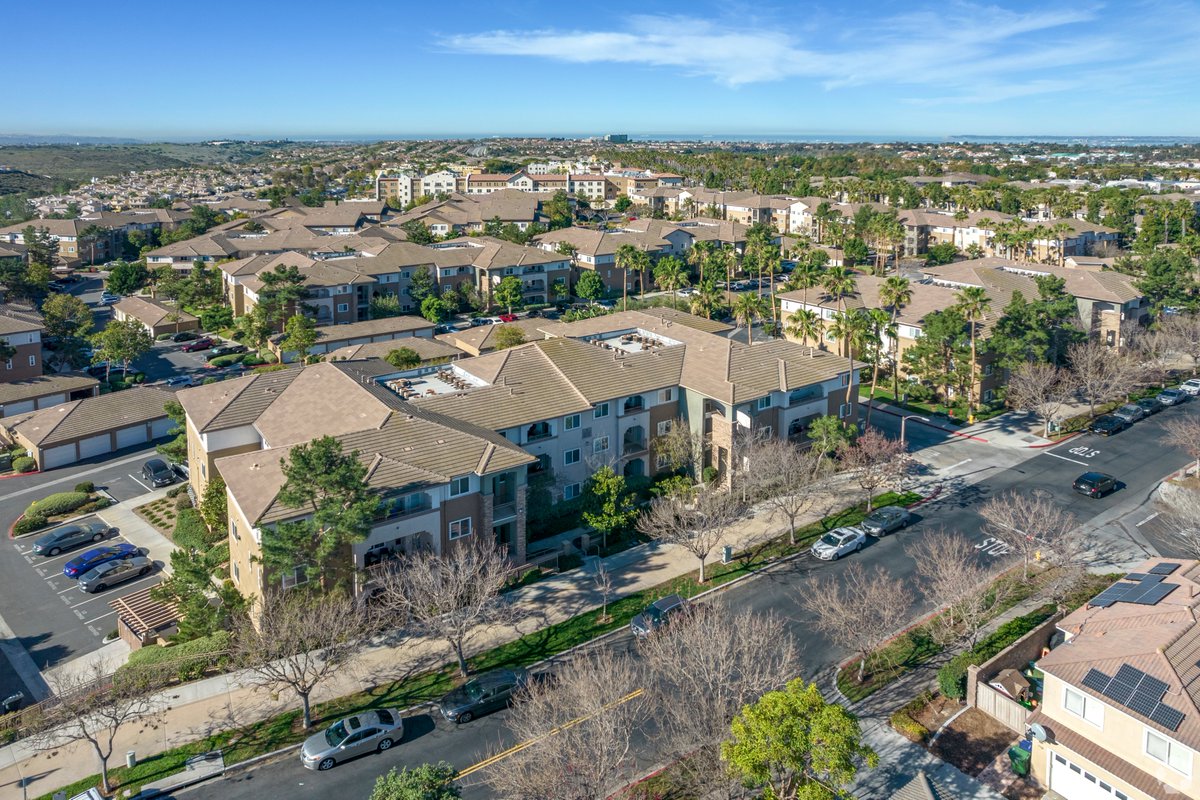
Houston-based real estate investment trust Camden Property Trust sold 11 Southern California properties totaling 3,620 apartments for $1.625 billion, or about $449,000 per unit.
The sale provides Camden with fresh capital to buy back its stock and double down on faster-growing Sun Belt markets. On the buyer side, the deal adds to growing confidence among apartment investors as property values and rents climb.
The portfolio stretches across Los Angeles, Orange, San Diego and San Bernardino counties, giving BlackRock immediate scale in some of Southern California’s most supply-constrained rental markets. The properties were 96% occupied over the past year, with limited concessions and average household incomes of about $134,000 within a mile of the complexes, according to JLL, which represented the seller in the deal.
“The significant investor demand for these best-in-class assets in supply-constrained markets underscores the strength of Southern California fundamentals, leading to significant liquidity at scale,” JLL Senior Managing Director Blake Rogers said in a statement.
The transaction is the largest U.S. apartment portfolio sale since Blackstone's approximately $10 billion acquisition of Apartment Income REIT in June 2024 and offers one of the clearest signs yet that institutional investors are growing more willing to place large bets on multifamily real estate.
National apartment sales volume is up about 20% from a year ago as pricing stabilizes, lending markets improve and a slowdown in construction raises expectations that today’s excess supply will gradually be absorbed, according to CoStar National Director of Multifamily Analytics Grant Montgomery.
BlackRock is betting that Southern California’s barriers to new construction, high homeownership costs and concentration of major employment centers will support apartment demand over the long term. The investment manager also secured financing that allows the properties to be sold or refinanced individually, preserving flexibility as market conditions change.
Camden, meanwhile, is using the sale to unlock capital tied up in California and redirect it toward debt repayment, stock repurchases and acquisitions in its core Sun Belt markets. The REIT said roughly $900 million of the proceeds would retire balances on its revolving credit facility and commercial paper program after it spent about $423 million repurchasing shares during the first half of the year.
Supply-constrained region
The sale represents about 16.5% of Southern California’s average annual apartment transaction volume over the past five years based on unit count, an unusually large transfer in a region where institutional-quality properties tend to remain under the same ownership for extended periods. Ten of the 11 properties were developed by Camden and had never previously been publicly marketed.
The biggest share — 30% — of the portfolio is located in San Diego.
Among the properties is The Camden, a 287-unit Hollywood complex with nearly 39,000 square feet of Equinox-anchored retail, and the 380-unit Camden Crown Valley in Mission Viejo. The portfolio also includes the 469-unit Camden Landmark, accounting for about 5% of Ontario’s market-rate apartment inventory in properties with more than 100 units.
The transaction illustrates the contrasting strategies emerging among the apartment sector’s largest investors: BlackRock is acquiring a difficult-to-replicate coastal portfolio, while Camden is concentrating its capital in faster-growing Sun Belt markets. Camden has acquired seven apartment properties for about $645 million in those regions through July.
Even so, JLL's Rogers said, “Southern California remains one of the most supply-constrained and institutionally sought-after rental markets in the country, and we expect that dynamic to continue to drive long-term value creation."
https://t.co/PNcjUIR5Mm via @CoStarNews
Interesting business @warespaceco | https://t.co/uVdvUW38VH
Vacant Carlsbad Building Reimagined as Flexible Warehouse
A Maryland company that specializes in building warehouses for small businesses, WareSpace, is opening its first San Diego County operation in Carlsbad.
“We take large, outdated buildings, whether its industrial, office or retail and we convert them to these small business hubs,” said co-founder Levi Cohen. “We are in the business of helping small businesses.”
https://t.co/hwSPcz1sNG via @SDbusiness
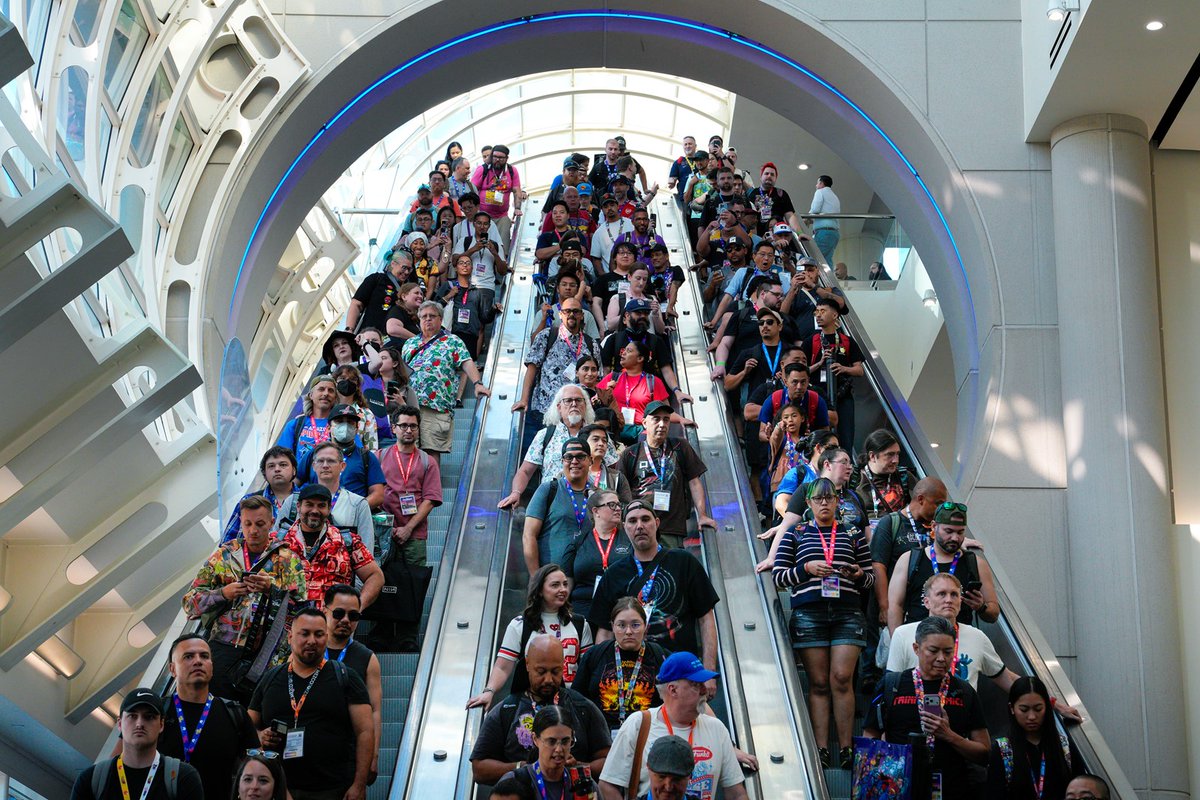
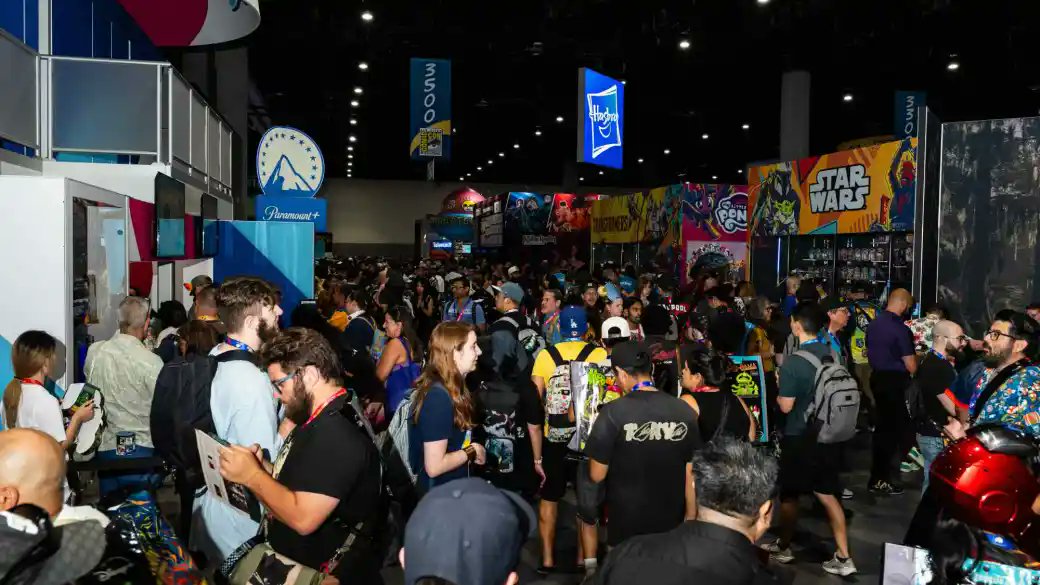
.@ComicCon agrees to stay in San Diego through 2030
Around 60 hotels, mostly in downtown and Mission Valley, agreed to providing 14,000 discounted rooms over the peak nights of the convention. Attendees receive hundreds of dollars off hotel rooms, but costs still vary from property to property — with hotels closest to the convention typically being the most expensive.
https://t.co/jITQaeZDLn by @PhillipMolnar via @SDUT #SDCC2026
It's that time again in San Diego!
Colorful (and illegal) building wraps take over for @Comic_Con 🦹
@CityofSanDiego inspectors can fine hotels and businesses up to $10,000 a day, but such high sanctions are rare. It is more common for the city to give out warnings or a $1,000-per-day citation. It issued $19,000 in citations last year.
https://t.co/GCNARUzlLm b y @PhillipMolnar via @SDUT #SDCC2026
Why this Los Angeles neighborhood fought to save a water bottling plant
Former Sparkletts property awaits a second act
A Los Angeles neighborhood has won a fight to ensure one of its most recognizable landmarks isn't replaced by a data center or apartment complex.
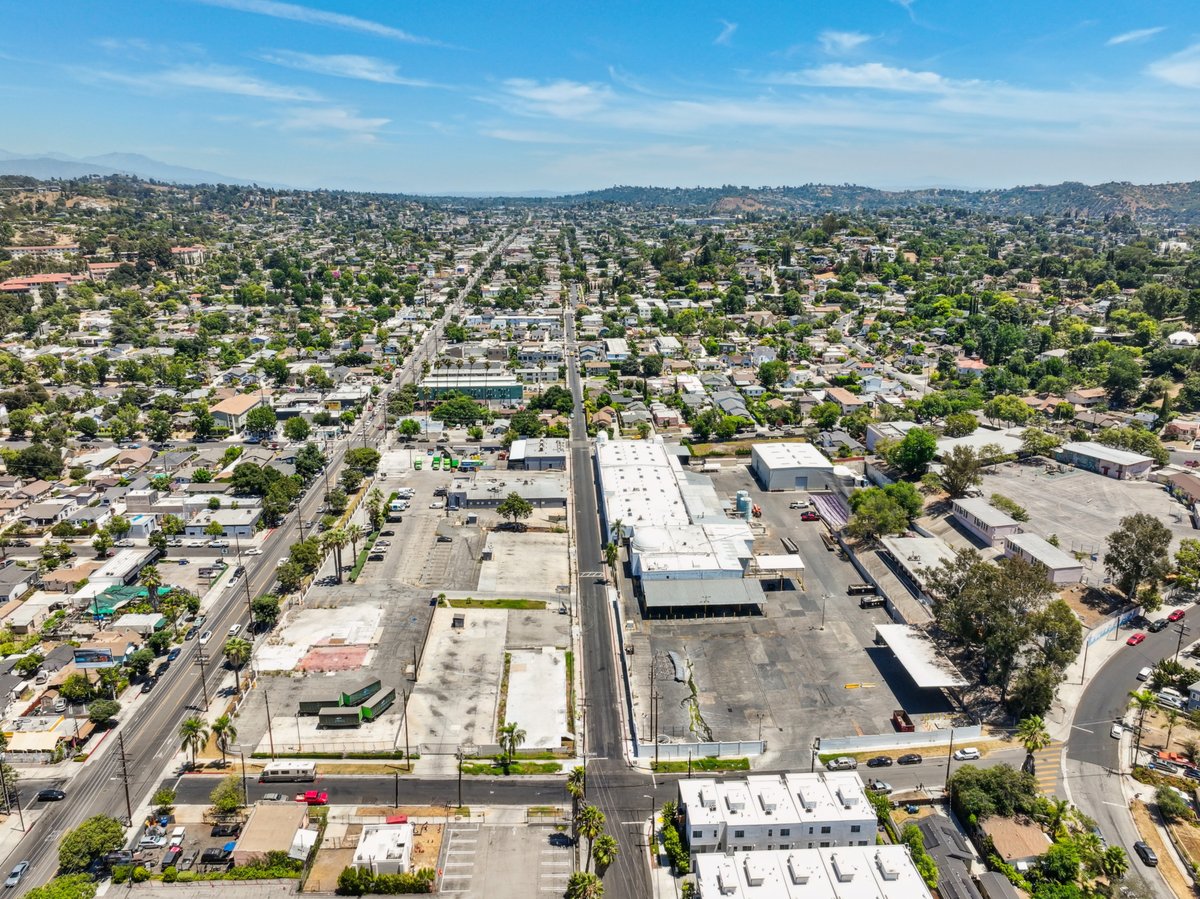
The @LACityCouncil is designating the former Sparkletts Bottling Plant property at 4500 E. Lincoln Ave. as a historic-cultural monument, protecting the 1929-built complex after the water company ceased operations there in 2025.
Parent firm and property owner Primo Water has since marketed the 8-acre property for redevelopment, but any project will need to preserve the site's defining historic features and navigate additional review requirements tied to the designation. That creates an unusual redevelopment challenge: finding a new use for an aging industrial property while retaining the architecture that made it worth saving.
The former bottling plant bears little resemblance to a typical factory. Designed by architect Richard D. King in the Moorish Revival style, its domes, decorative tilework, wrought-iron detailing and minaret-inspired elements make it one of Los Angeles' rare surviving examples of industrial architecture from that tradition.
The designation comes as aging industrial properties across Los Angeles face mounting pressure to find new uses while data center developers face community opposition over climbing power costs and other issues.
Adaptive reuse has become an increasingly attractive option for older industrial sites that no longer fit the needs of modern logistics or advanced manufacturing, according to Patrick Barnes, managing director at @AvisonYoung , who works with industrial property investors across the region.
Industrial buildings in Los Angeles more often become flashpoints over truck traffic, pollution and land-use conflicts than preservation campaigns. Sparkletts instead drew support from neighbors, historians and preservation advocates who argued the site’s historic character should become an asset for its next owner rather than an obstacle to redevelopment.
“From an industrial perspective, it’s somewhat of an outlier because of its historic character and the market that it’s in,” Barnes told CoStar News.
Community victory
The property sits along the Arroyo Seco corridor between Highland Park and Eagle Rock, where former industrial districts have steadily evolved into neighborhoods filled with housing, restaurants, creative businesses and mixed-use projects. As the area changed, residents increasingly came to see the former bottling plant less as an industrial facility than as a defining neighborhood landmark.
“We’ve always had an eye on the building because it’s such an icon in the community,” Frank Parrello, landmarks and advocacy chair for the Eagle Rock Valley Historical Society, said during a public hearing. “We want to make sure that whatever happens in the future, the building is considered.”
Supporters argued that preserving the landmark need not prevent redevelopment. In comments submitted to the city, the Eagle Rock Valley Historical Society said the site could accommodate housing, recreation, commercial space or light industrial uses while keeping the historic design intact.
“The retention of the historic headquarters adds to that potential,” the group wrote.
Second act
A CoStar analysis underscores the pressures facing older industrial properties. Less than 5% of Los Angeles County’s industrial inventory has been built over the past decade, compared with 18% nationally. Over the same period, 50.8 million square feet of industrial space was completed while 34.6 million square feet was demolished, leaving the county with less than 2% net inventory growth.
Barnes said companies increasingly find it more economical to manufacture products outside California and ship them into Los Angeles than to produce them locally, making it harder for older industrial buildings to compete with modern facilities designed for logistics and advanced manufacturing.
Sparkletts began as the Sparkling Artesian Water Co. in 1925, helping popularize home and office water delivery decades before bottled water became a national consumer staple. Four years later, the company opened its nearly 150,000-square-foot headquarters and bottling plant, which served as the company’s headquarters until 1991 and continued bottling water through multiple ownership changes before production ceased in 2025.
The @LAConservancy a supporter of the historic designation, described the complex as an outstanding example of Moorish Revival industrial architecture. City planners concluded the property qualified for landmark protection not only for its architecture but also for its association with the rise of bottled water as an important Southern California industry.
“I think it’s maybe flex industrial, creative R&D or adaptive reuse,” Barnes said of the property’s future.
https://t.co/HiUyLztCyx via @CoStarNews