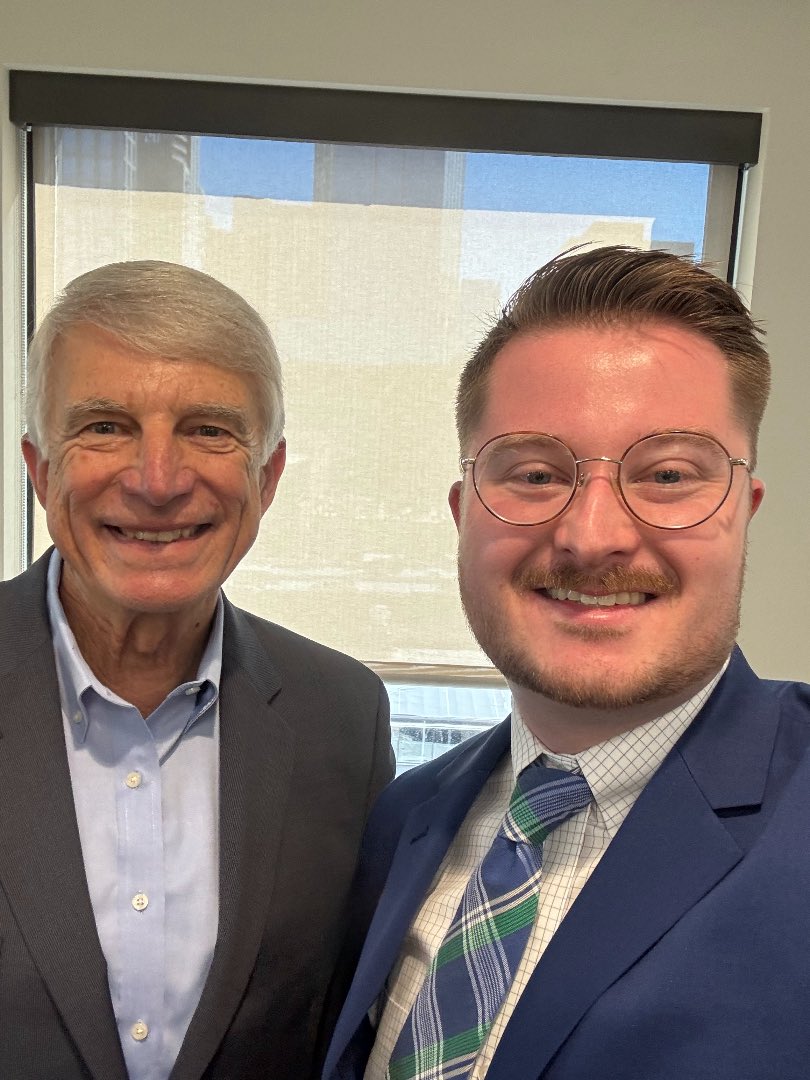
Space Debris Foundation is proud to be the newest member of the Colorado Space Coalition chaired by Astronaut Ron Sega (pictured).
Thank you to the Office of Lt. Governor Dianne Primavera and @MetroDenverEDC for your collaboration, and to @DenChamber for your hospitality.
On May 29, 2026, the Space Debris Foundation was recommended by the General Counsel of the International Astronautical Federation (IAF) for approval of membership to be formally considered at the IAF General Assembly in Antalya, Türkiye in October.
See you there!
The Space Debris Foundation is proud to announce that we have formally submitted our application to be considered as a Permanent Observer to the United Nations Committee on the Peaceful Uses of Outer Space (UNCOPUOS) and have now been published by the UN Office of Outer Space Affairs to be considered.
This milestone underscores our mission to advance global awareness, responsibility, and action around space debris mitigation, space situational awareness, space traffic management, and the long-term sustainability of outer space activities. We are excited about the opportunity to contribute our perspective to international discussions shaping the future of space.
Together, we can help ensure space remains accessible, safe, and sustainable for generations to come 🌍✨
Our founder, Tate Few, has been invited by the Department of State to participate in the Space Resource Activities (SRA) Discussion Group to advise the U.S.-delegation to UNCOPUOS. We are very excited for this opportunity and to have a platform that will help us work towards our goal of ensuring the long-term sustainability of outer space.
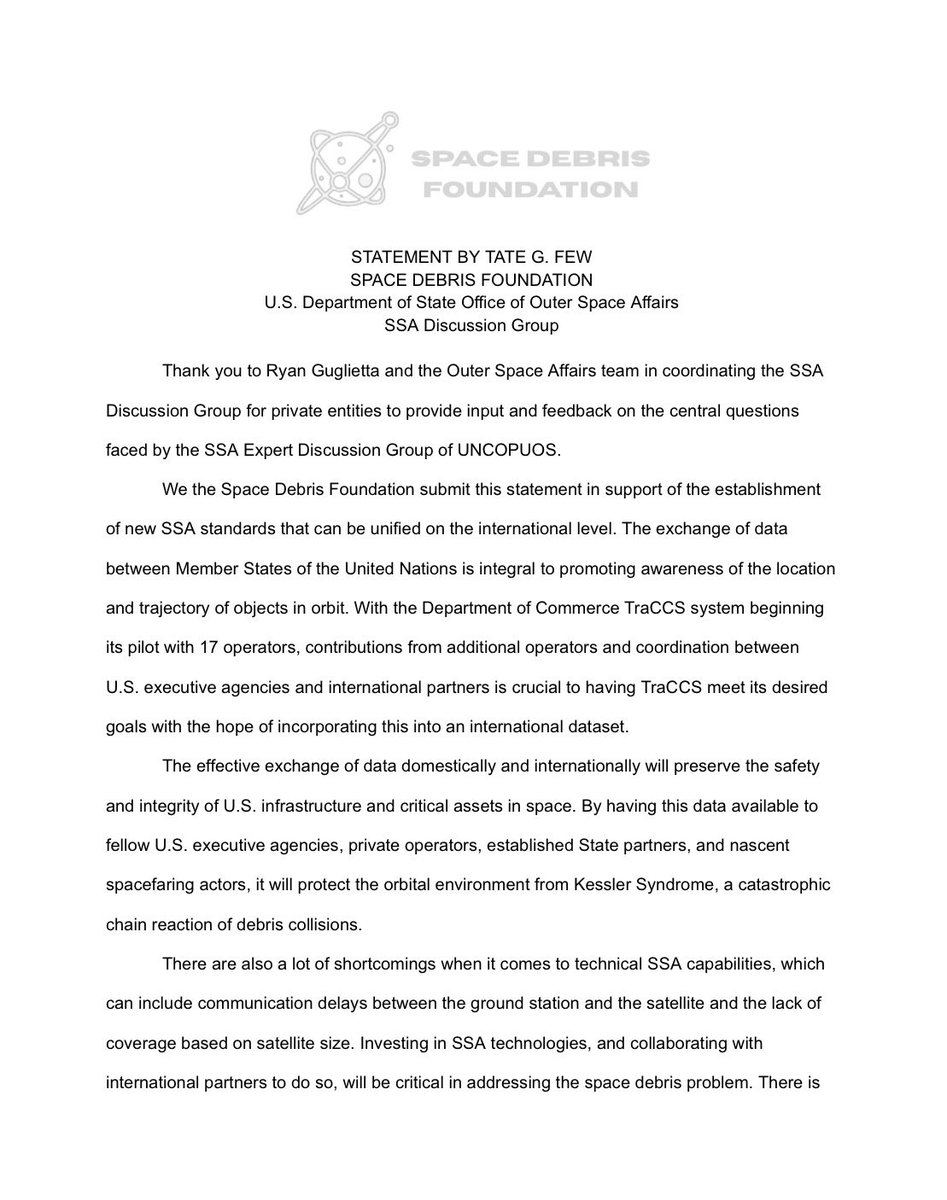
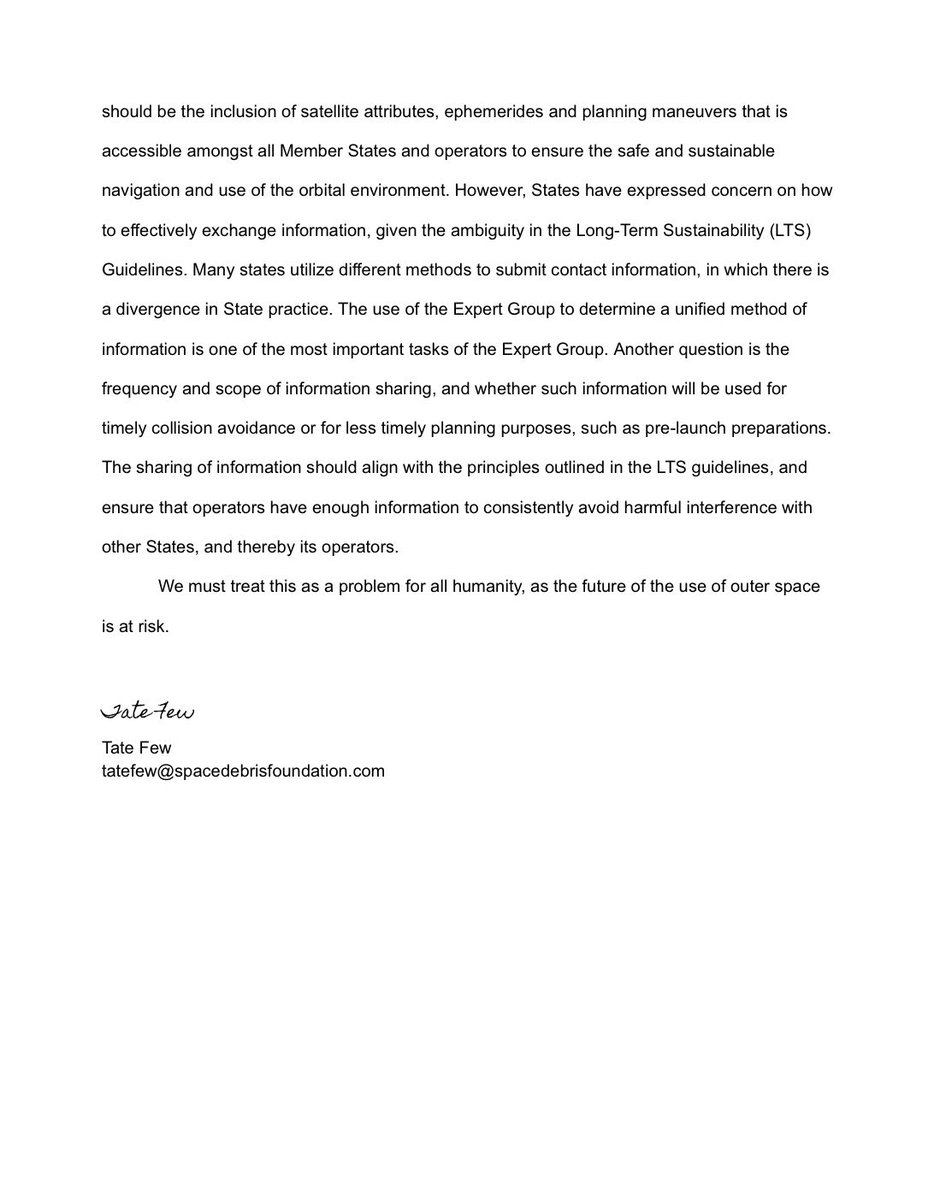
Is space situational awareness important to you? If so, please see our self-prepared statement regarding our thoughts on the content of the SSA Expert Group meeting at the United Nations.
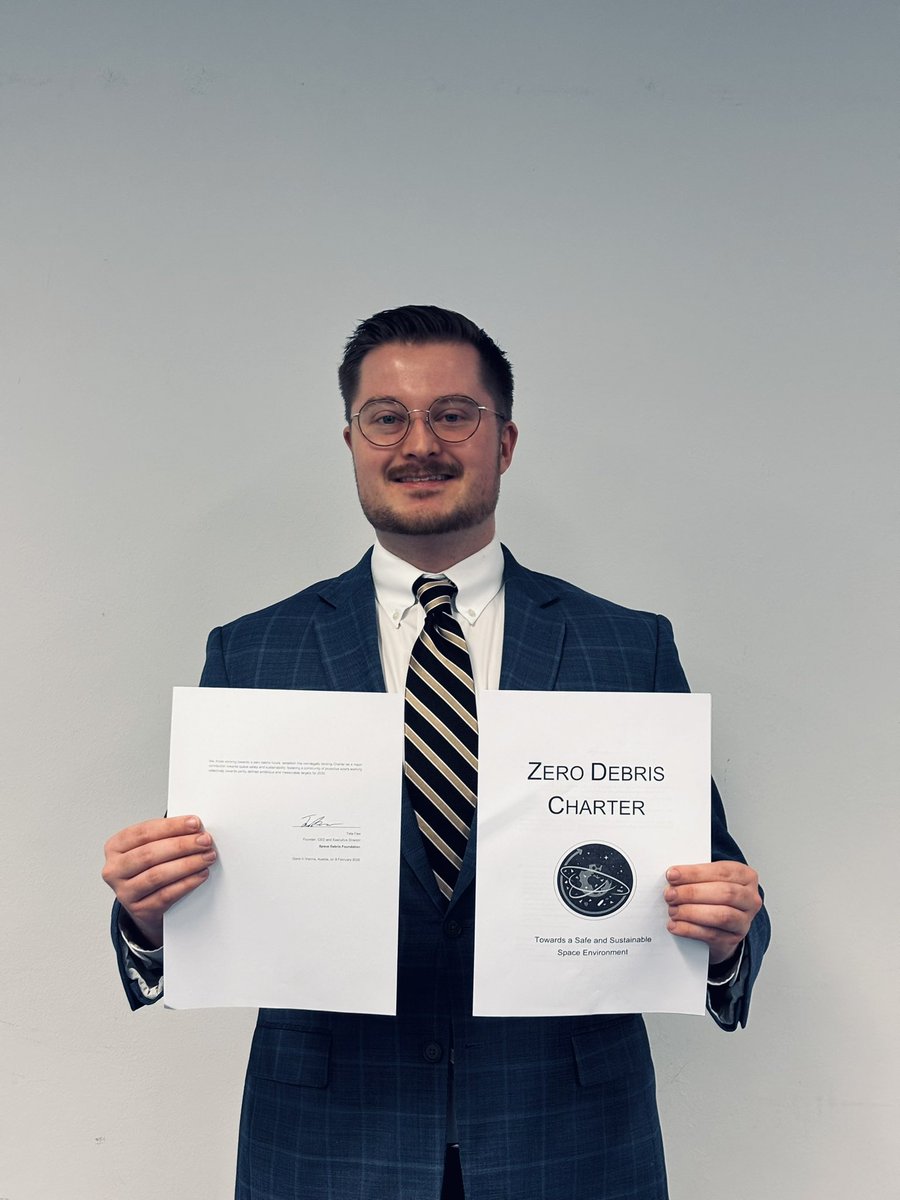
Our organization signed the Zero Debris Charter in Vienna, Austria at the United Nations on 9 February, 2026. Our organization believes the Charter is a starting point for effective debris mitigation, building off the IADC Guidelines. The goal to prevent the production of further debris in orbit is of utmost importance. By collaborating internationally via this Charter, it moves us all closer to unified standards to address the space debris issue.
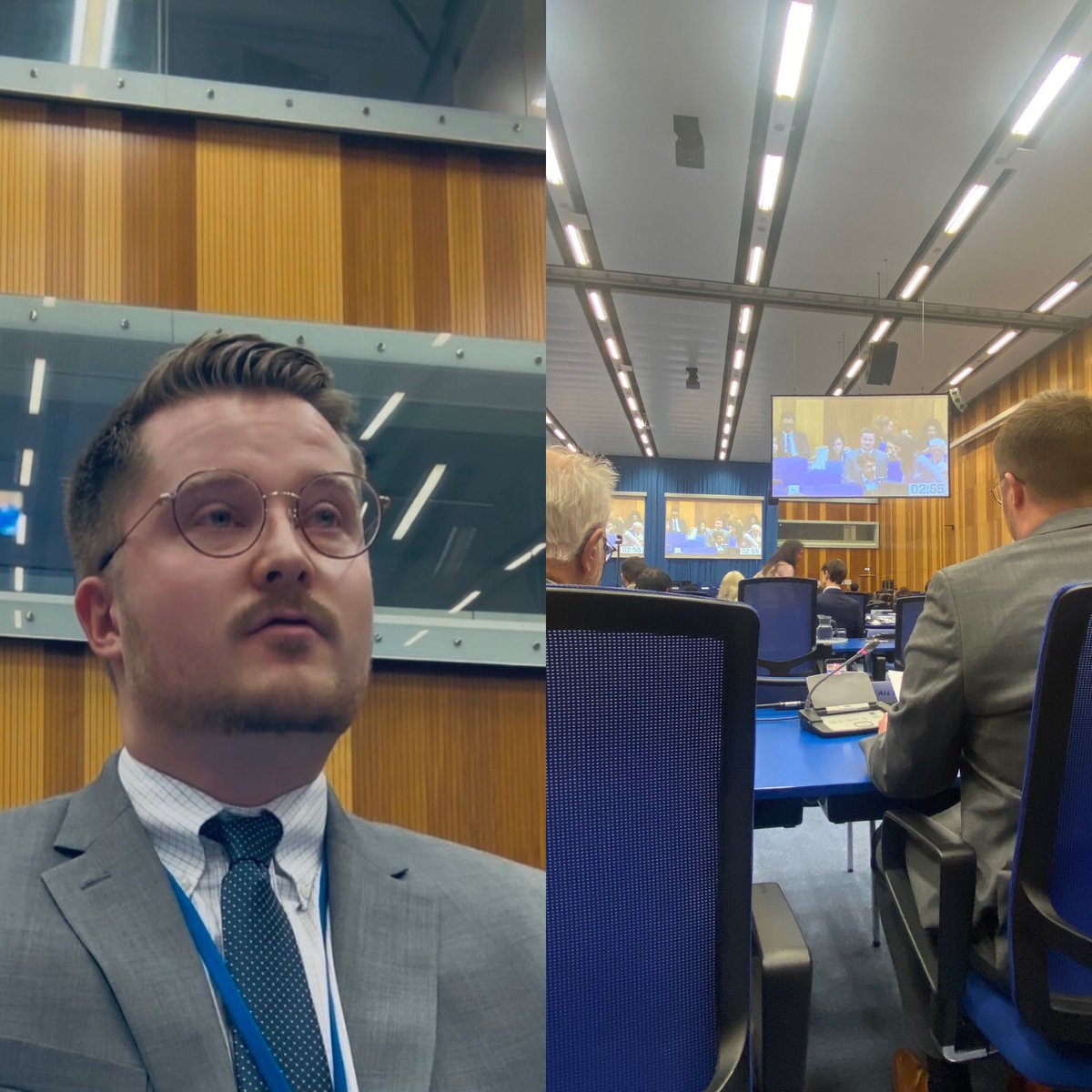
Our Founder, CEO, and Executive Director Tate Few attended the 63rd Scientific and Technical Subcommittee (STSC) of the United Nations Committee on the Peaceful Uses of Outer Space (UNCOPUOS) in Vienna, Austria, in addition to the space situational awareness discussion group that focused on data sharing, international collaboration, and collision avoidance.
Our founder, Tate Few, has been invited by the Department of State to participate in the SSA Discussion Group to advise the U.S.-delegation to UNCOPUOS. We are very excited for this opportunity and to have a platform that will help us work towards our goal of a safe, sustainable, and navigable orbital environment.
Amazon Wants FCC to Drop Five-Year Rule on De-Orbiting Satellites
In 2022, the FCC instituted the requirement for satellites operating in low-Earth orbit (LEO) to deorbit their satellite within 5 years of completing their mission. However, Amazon has spoken out against this rule, stating that they want to see the rule scrapped in light of Project Kuiper.
More specifically, Amazon met with the FCC Space Bureau Chief Jay Schwarz, according to a letter dated September 12, where they discussed reforms to the rule "that better accommodates the realities of space operations while maintaining robust safety standards." They believe it imposes an artificial and rigid timeline that does not clearly and meaningfully increase space safety, and that a satellite failure that violates the rule is "not entirely within the operators control."
We disagree. The 5 year rule is necessary to ensuring a safe and sustainable space environment. Our goal as the Space Debris Foundation is to advocate for rules like this and to push for a Zero Debris approach, especially with the rapid congestion of protected orbital regions.
We want to make this clear. Amazon's proposal reduces accountability for them and other operators. Operators need to make end-of-life plans before launching, and incorporate that within their budget. Amazon attempting to add this loophole of "under nominal conditions" for disposal within 5 years allows for operators to hide behind external factors. This is unacceptable and not supported by our organization.
See Amazon's letter here:
https://t.co/MB5sAdYDdB
We are proud to share an educational video that we have put a lot of work into creating. The importance of space, and the risk that space debris poses to our ability to operate in the domain, should be better understood. We aim to bolster relatability with the issue of space debris mitigation and to spread awareness of what space provides humanity in the function of our daily lives.
Enjoy the show!
You can play a big part in the success of our programs by subscribing to our newsletter and making a contribution to our organization. You can select which program you would like to support. Help us build a more sustainable future.
https://t.co/8OSztWswX7
https://t.co/OagwDJty9m
There is an increasing risk of space debris to our astronauts, satellites, and stations. We have seen multiple instances of ISS astronauts having to shelter in place because of a potential debris impact. This is why our mission is so important.