@musique_sympa I’ve been writing a lot about goldenrod recently. It can be used for a variety of ailments. Here is a start and I made more posts recently discussing the multitude of uses for this marvelous plant
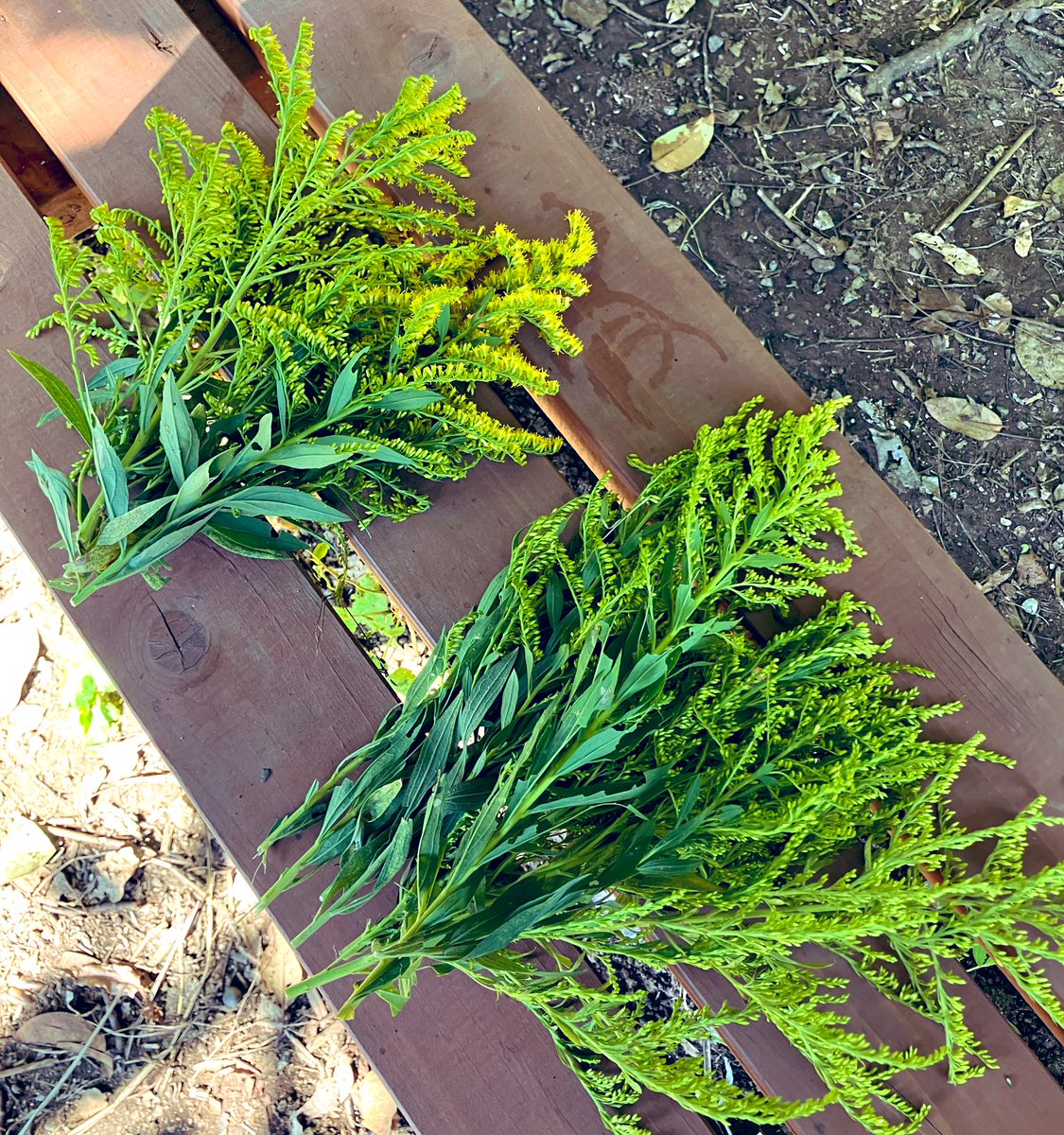
If you look closely at this photo, this is the stage of growth we would want to harvest Goldenrod for drying the herb, later used for tea or other remedies.
In this way, the flowers will bloom while drying.
If you harvest while they are already in bloom, you’ll just get “poofs” as they go to seed.
The name Solidago comes from Latin roots meaning “to make whole” or “to make solid”. This is a fitting description for a plant whose main gift is strengthening and restoring tone to mucous membranes and tissues that have become lax, inflamed, or overly reactive.
Goldenrod is blooming this time of year. Belonging to the Asteraceae family, it is a late-summer perennial with tall spikes of bright yellow flowers.
I spoke in my earlier post about its ability to stabilize immune response by quieting mast cells and reducing unnecessary histamine release- mainly through a compound called Quercetin.
There I also discussed it being Saponin-rich and how that helps break waste up and get things moving out of the way.
Goldenrod works primarily as a trophorestorative for mucous membranes, especially in the upper respiratory tract and urinary system. It is astringent, mildly diuretic, anti-inflammatory, antiseptic, antispasmodic, vulnerary, and antifungal.
On the tongue it is mildly bitter, astringent, and slightly soapy or sticky. The astringency produces a tightening, drying sensation that is the sensory signature of its tissue-toning action. Flavonoids contribute to that same tightening effect.
Concerning the urinary tract, it is valued for cystitis, urethritis, irritation with burning sensations, and support around kidney stones. It acts as a non-irritating diuretic that helps move fluids while its antispasmodic and anti-inflammatory qualities ease pain and spasm. It is often paired with demulcents such as marshmallow for stones and pain during urination.
Besides the respiratory tract and urinary system, Goldenrod has two more organ affinities: integumentary (skin and mucous membranes) and musculoskeletal.
Topically it is a vulnerary meaning it heals wounds and makes tissues “whole”, used for all kind of open wounds that need closing up. A tea, made into a compress would be most effective.
For chronic fungal issues (especially where moisture and tissue breakdown are factors), Goldenrod as a tincture or vinegar work well because of its astringent and antifungal actions. The vinegar is even better because of that pH influence for this purpose.
As far as the musculoskeletal system: the same antispasmodic and healing qualities make it useful as a topical application for muscle or joint discomfort. Here again an oil or tea as a compress would work well. You could even use a tincture as a lineament for topical support.
I have a friend who even uses a goldenrod salve on her womb area to reduce camping pain during menstruation with great success.
As with many Asteraceae plants, start with a small amount if you have known sensitivities in that family. It is generally well-tolerated, but individual responses vary.
It moves stagnation and strengthens without being stimulating for most people, though very dry or tightly wound constitutions may find it too drying if used alone.
Green blessings!