HSI remains bearish below 25.25K. The post-holiday gap lower extended the decline after another failed recovery. China's September manufacturing surveys improved, but the strength in production and exports is still running ahead of domestic demand. I continue to watch 22.55K on the downside.
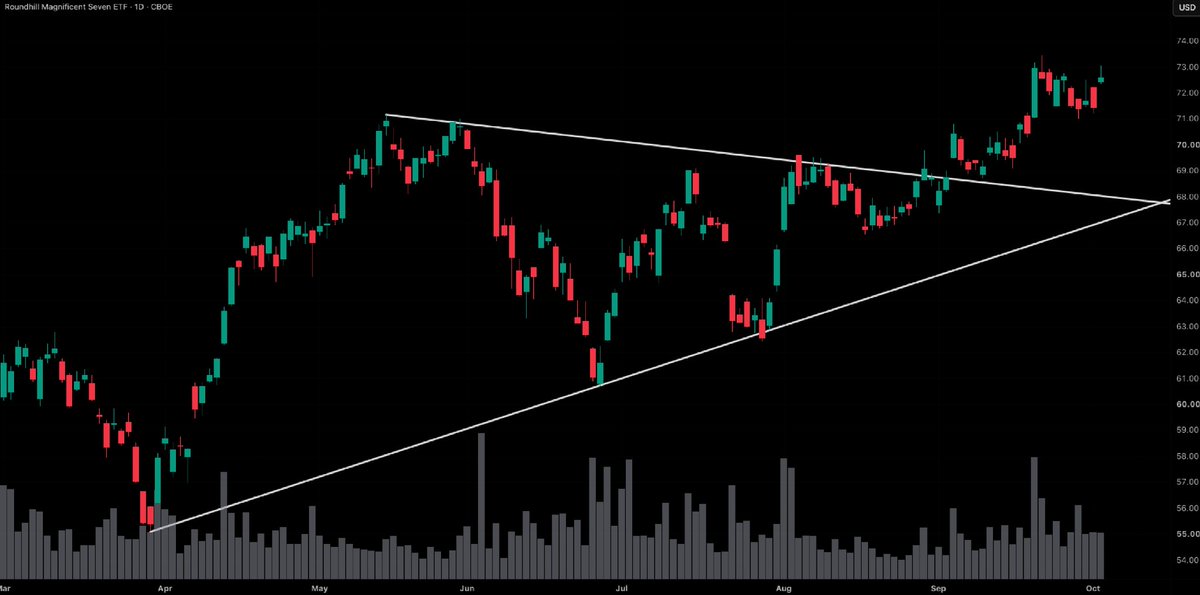
MAGS continues to support the tactical bullish case. The financing test extends beyond the hyperscalers. Owners of data centers and other digital infrastructure have to turn demand into cash returns after construction, operating and funding costs.
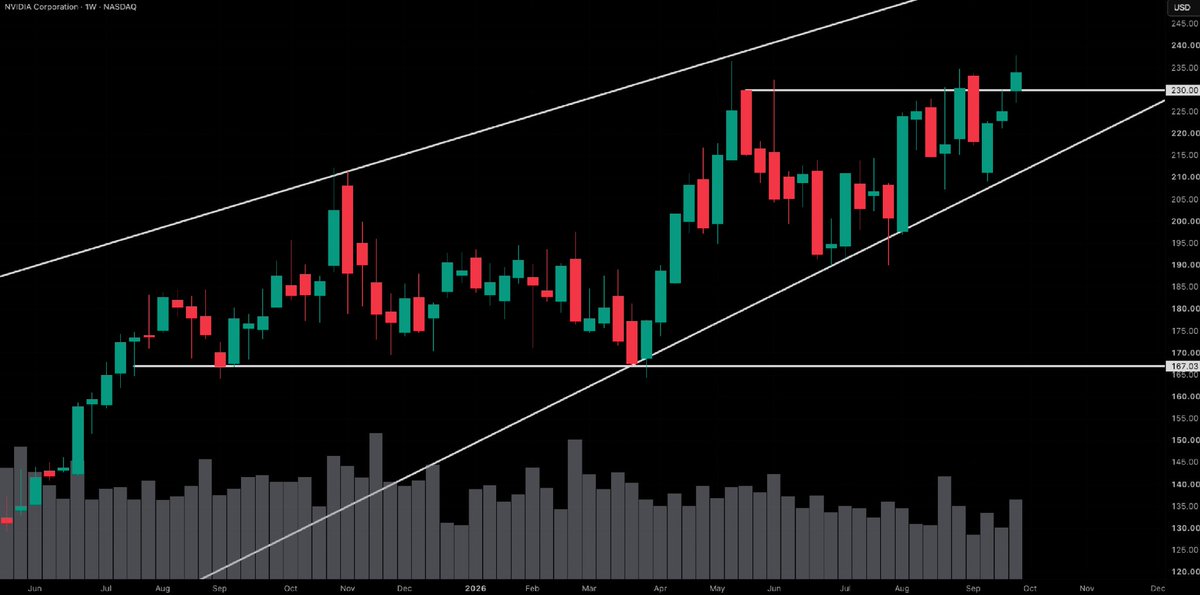
NVDA closed the week above 230. The additional $150B buyback authorization reinforces its ability to invest and return capital. The longer-term AI risk still sits with the customers funding the buildout and the returns they earn on it.
I still expect a major swing high. The dot-com comparison I first showed around the June peak remains central to that view. Strong supplier earnings can coexist with a speculative capex boom while customer returns remain the weak point in the funding story.
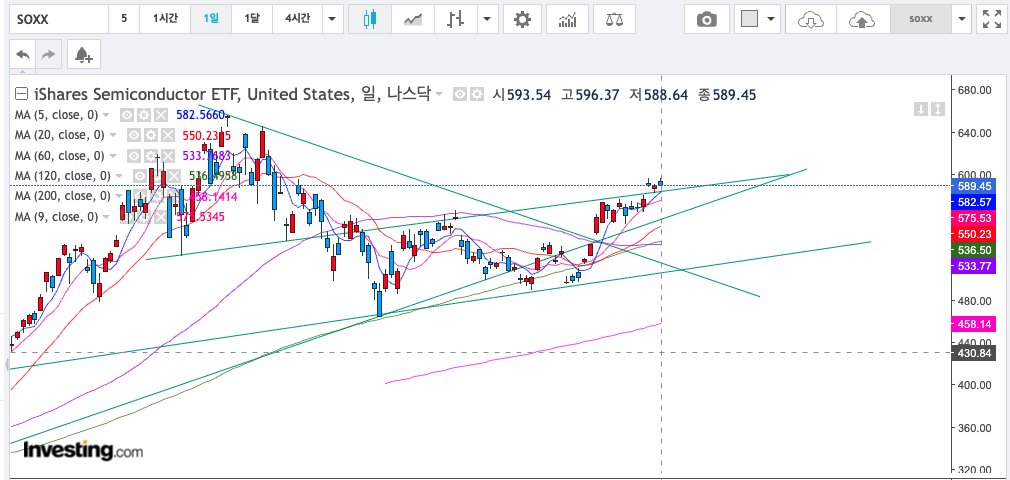
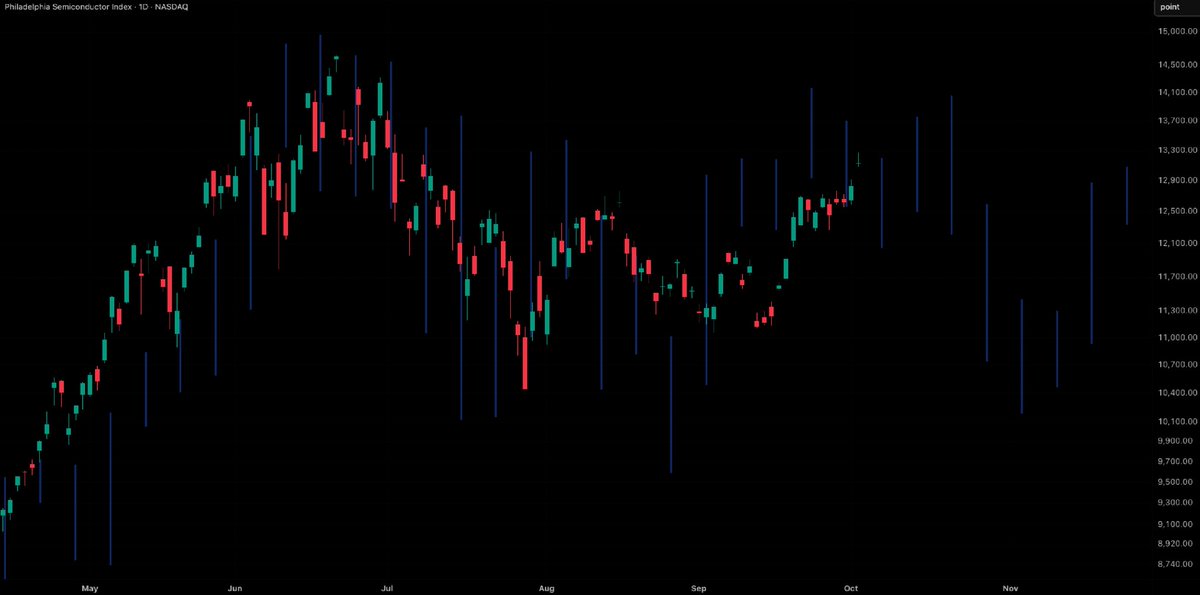
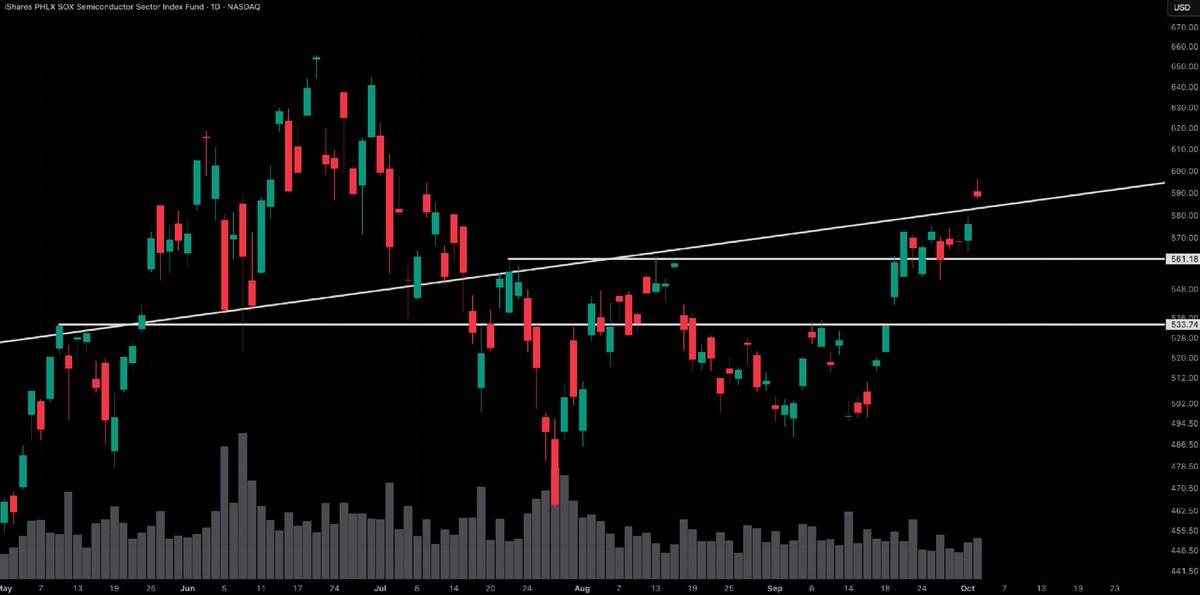
SOXX reclaiming its long-term trendline and NVDA breaking above 230 are challenging the timing of that call. If the breakouts hold and leadership strengthens, the bearish timing moves back. Failed breakouts would bring the topping risk straight back into focus.
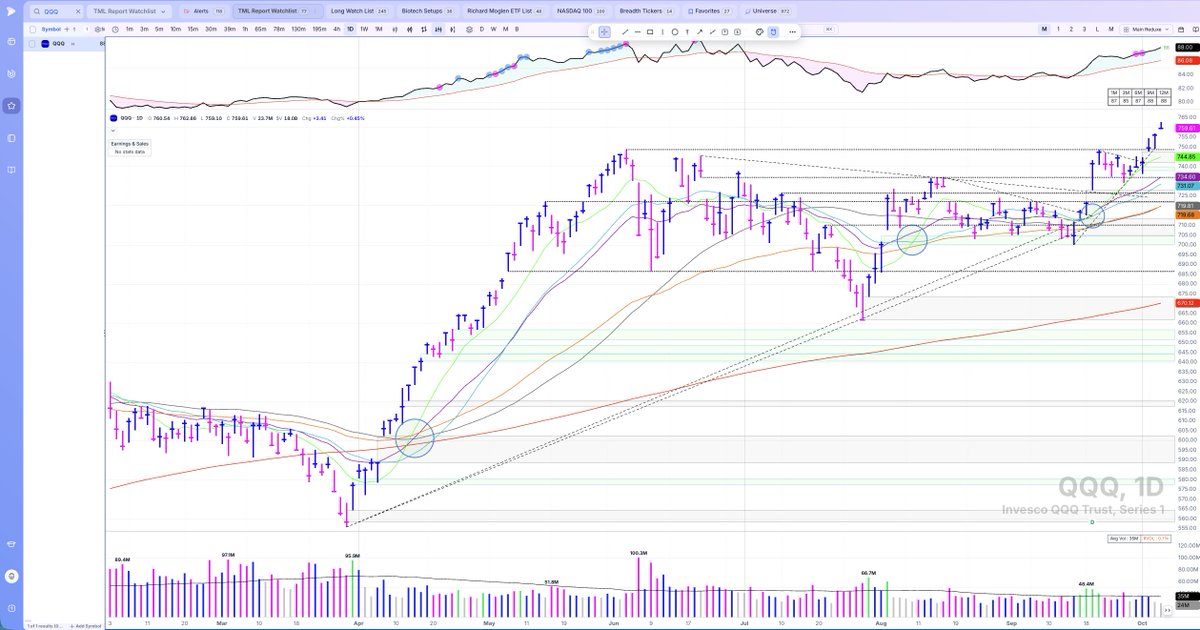
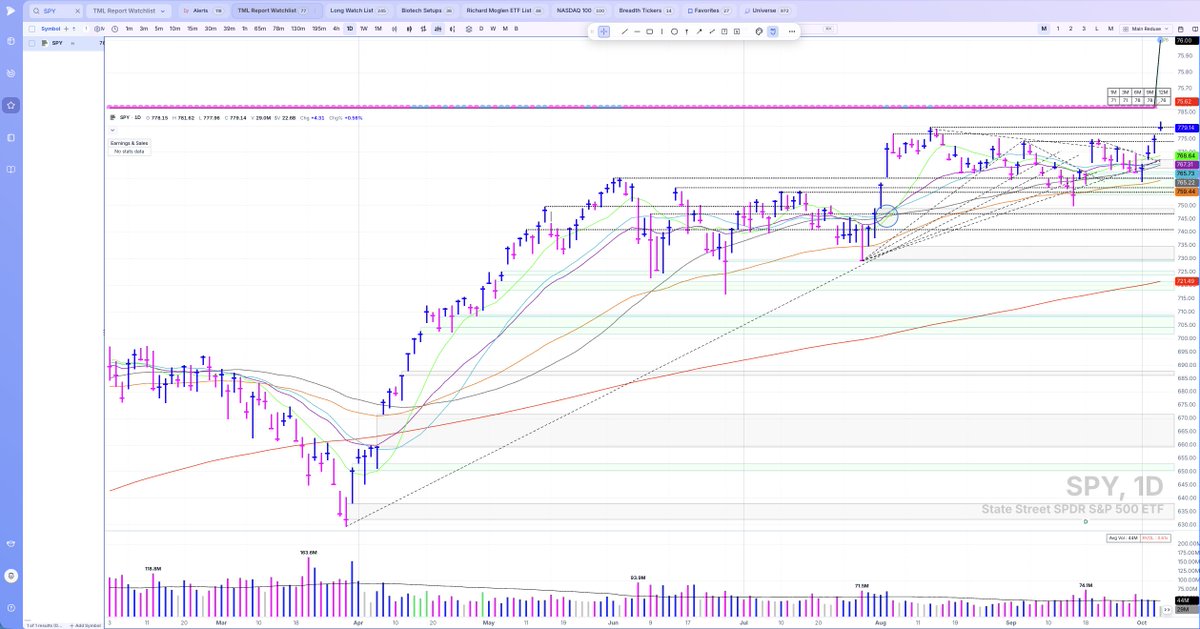
The S&P 500 broke out to a new all-time high this afternoon, confirming the Nasdaq’s strength. The Nasdaq has now posted new all-time highs in each of the last three sessions since breaking out last Friday. The Russell 2000 and Dow have also rallied over the past few sessions, but both remain just below significant overhead resistance.
New highs versus new lows remain a concern, but my universe of traditional growth stocks continues to look healthy and broad on a relative basis. Aside from the memory stocks—which are late-stage and therefore more failure-prone at current levels—leading growth stocks continue to act well.
Biotech and genomics stocks were hit hard across the board today, although the pullback isn’t surprising given how far many of these names have moved in a short period. More importantly, there is no shortage of institutional-quality leaders in semiconductors and software that continue to build sound bases and make constructive progress.
So, while it’s difficult to consider the deck hot with the Russell 2000 still below major resistance and diverging sharply from the Nasdaq and S&P 500, plenty of high-quality leaders are setting up in early-stage bases with the potential to move significantly higher.
I still haven’t added exposure, but I plan to do so as conditions warrant. Until I see evidence that the Russell 2000 is making meaningful upside progress and confirming the strength in the other major indexes, I’ll keep my maximum exposure capped at 70%.
For now, there’s no need to force the issue. Stay patient, let the market prove itself, and put capital to work as the evidence improves.
장이 강한 순서가
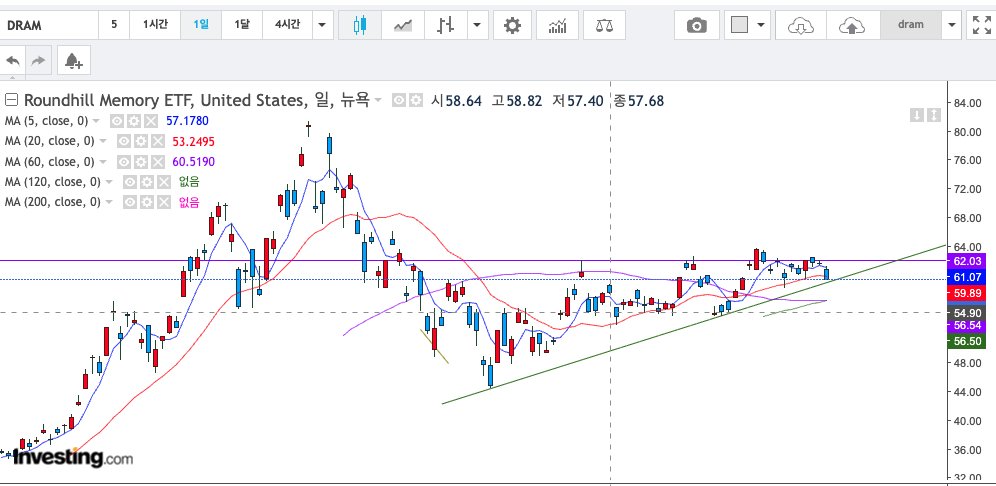
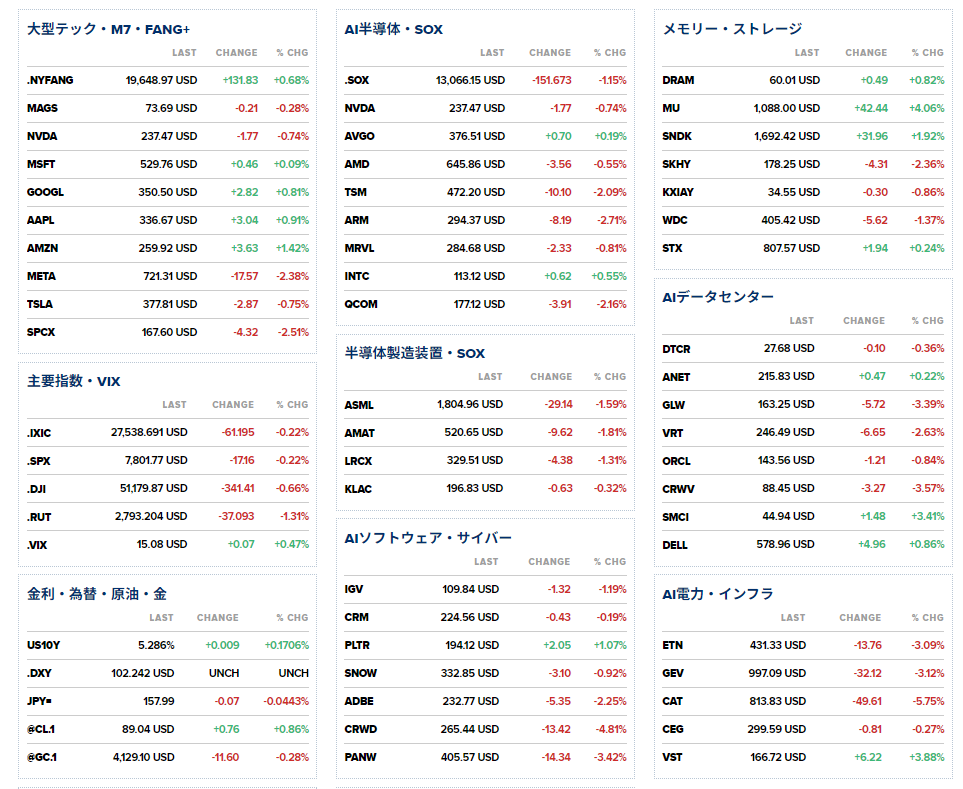
에센피 > 나스닥 > 반도체 > 디램 순입니다
원래는 반대거든요
아예 한쪽은 음봉이 긴게 나오고
에센피는 양봉마감했을정도로 방향이 다릅니다
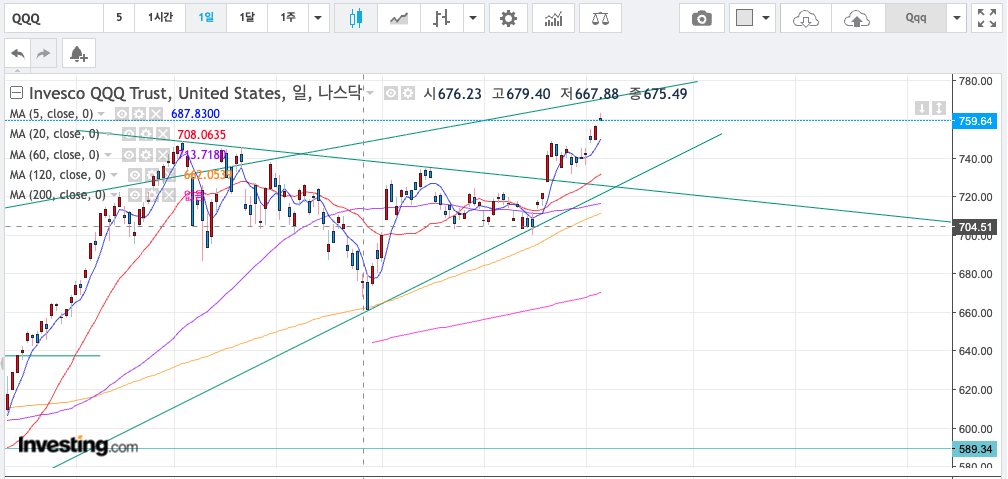
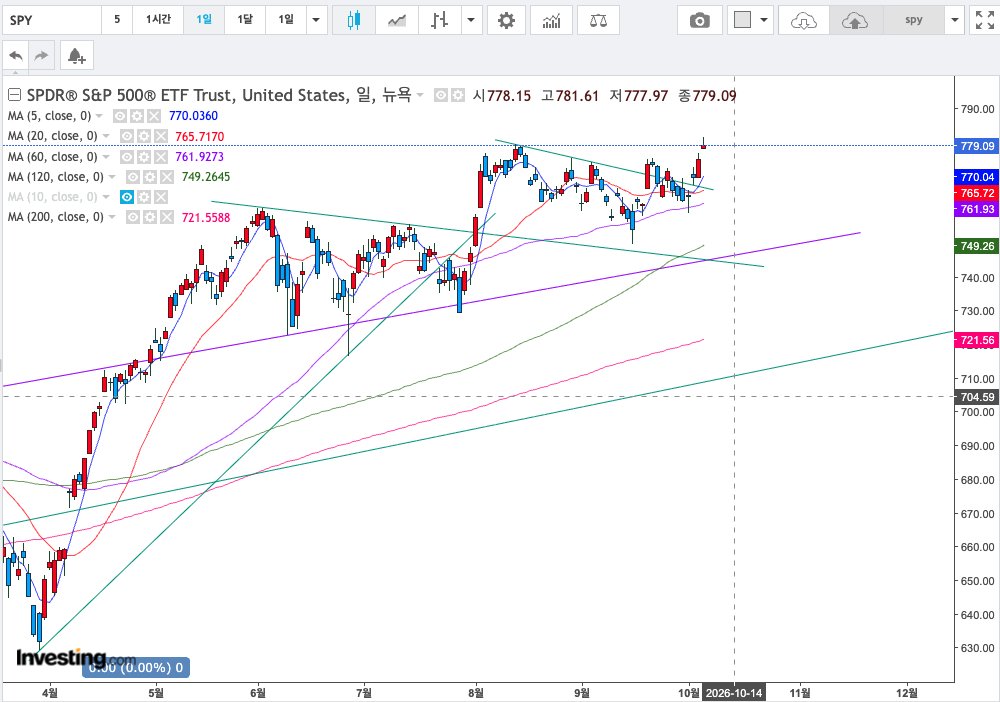
에센피 나스닥 반도체만 보자면 차트상에서 문제는 없습니다
여전히 음봉이 많다고 생각하지만 오늘 내일 횡보하고 금요일날 쏘면 착실히 주봉상 상승이 완성될수 있는 형태입니다
qqq 770 까지 갈수 있는 여력이 있습니다
다만 dram은 59.2 자리 이탈해서 마감���면
하방으로 열립니다🤷♀️
나스닥이나 에센피가 신고가를 갈때
반도체가 넘지 못하는지 보는것도 좋을것 같아요
그렇다면 원래 강했던 순서가 역순이 된다는 뜻이니까요
오늘 soxx 주요 지지는 584입니다
Shanghai Composite remains capped by its descending trendline, with 3.8K holding underneath. September's official manufacturing PMI returned to expansion at 50.1, but uneven demand and rising input costs continue to hold back the recovery.
Mainland trading resumes on October 8. Holding 3.8K leaves room for another attempt at the descending trendline. A break below support extends the bearish path, while a sustained trendline breakout would turn the setup higher.
Capital is voting with its feet.
South Korea stocks are up 97% in 2026.
Taiwan stocks are up 86%.
China stocks are down 12%.
One of the widest performance gaps we've ever seen.
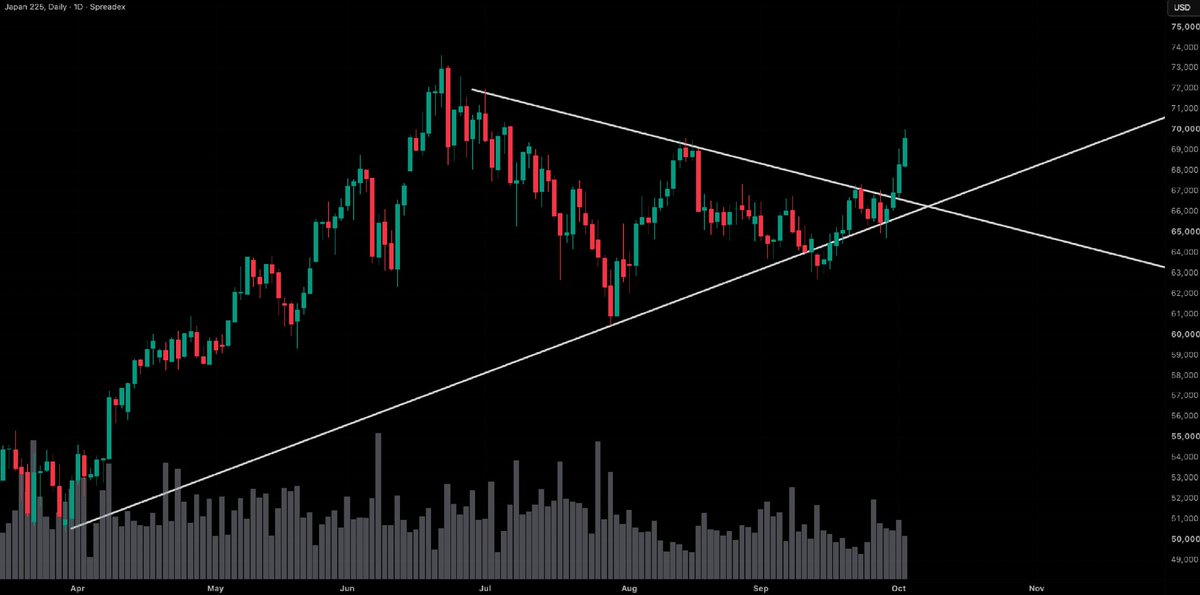
Nikkei resolved higher as the wedge compressed. The latest prime-broker flows show renewed buying in Japanese semiconductors and AI infrastructure, even as overall risk appetite remains restrained, in line with the U.S. equity market.
FTSE keeps moving lower after failing to reclaim its ascending trendline. Selective buying of UK domestic and consumer stocks in the latest prime-broker flows has done little for the broader index.
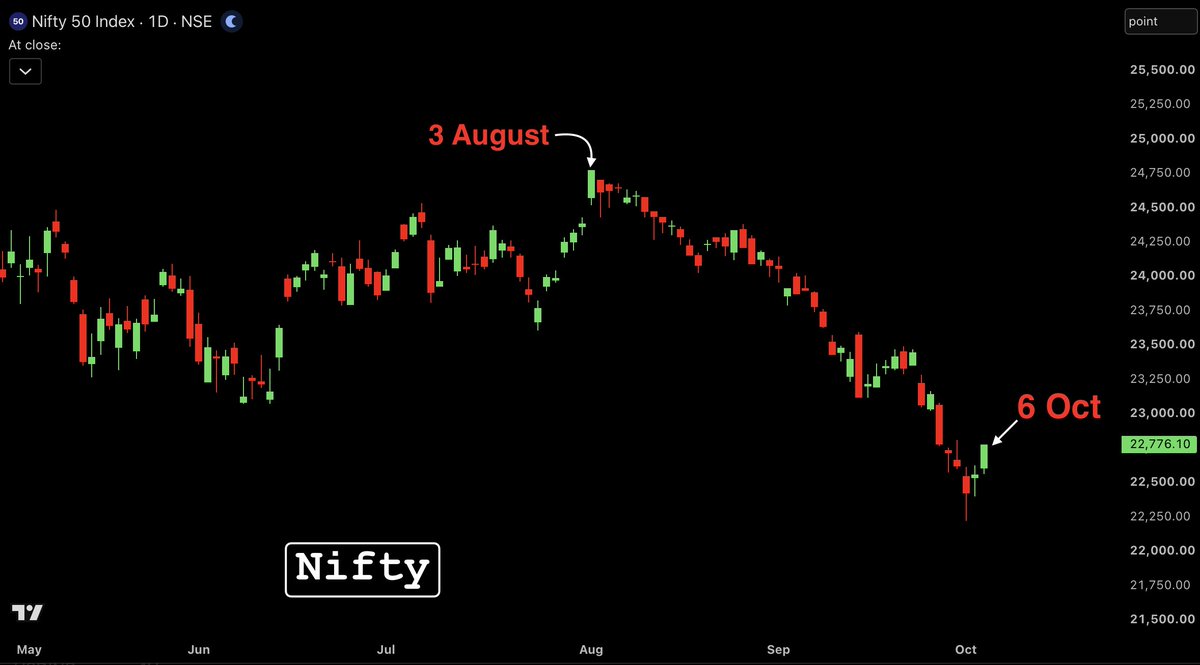
As I have warned since the war began and repeatedly over the past few months, India is particularly exposed to the Iran war's energy and inflation shock. With nearly 90% of its crude imported, higher oil prices pressure the rupee and feed inflation. September manufacturing PMI recovered to 55.1, but input-cost inflation also accelerated. Better factory activity has not removed those headwinds.
NIFTY has followed the downside path towards 21.97K-22.10K after losing 24.34K and its ascending trendline. A sustained break opens further downside.
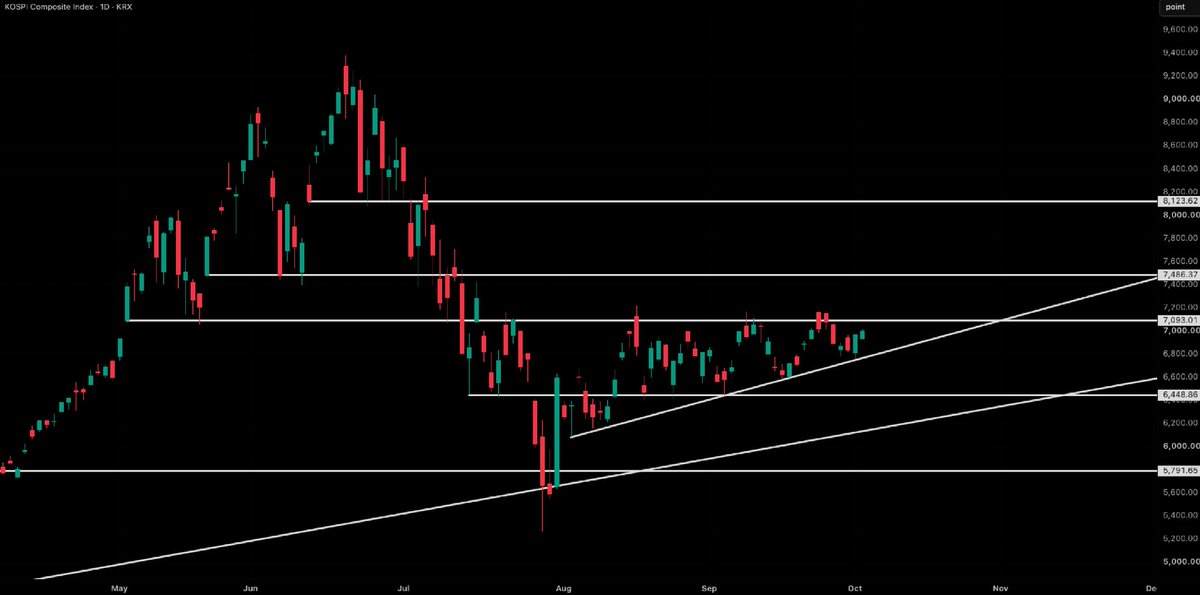
September semiconductor shipments reached a record US$60.3bn, confirming the strength in the early-month data. KOSPI still has to convert that strength into a sustained break above 7.1K. It remains the missing confirmation among the three bellwethers I have been tracking. The rising trendline continues to support higher lows.
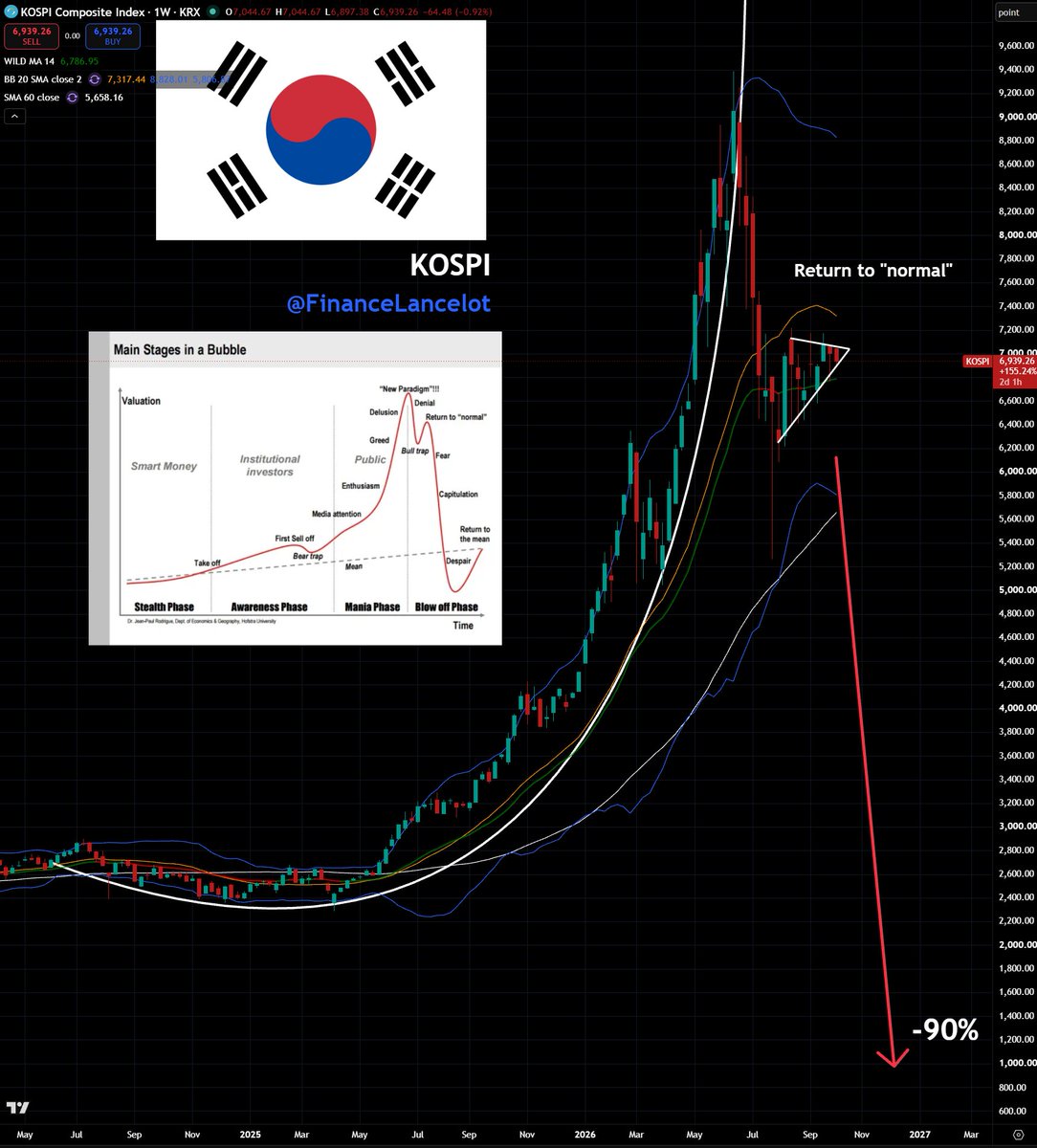
The South Korean KOSPI index is looking scary.
Is it about to finish the "Return to normal" phase of the market cycle?
The SK KOSPI is highly concentrated in 2 memory manufacturers SK Hynix and Samsung, which account for 54% of the total index.
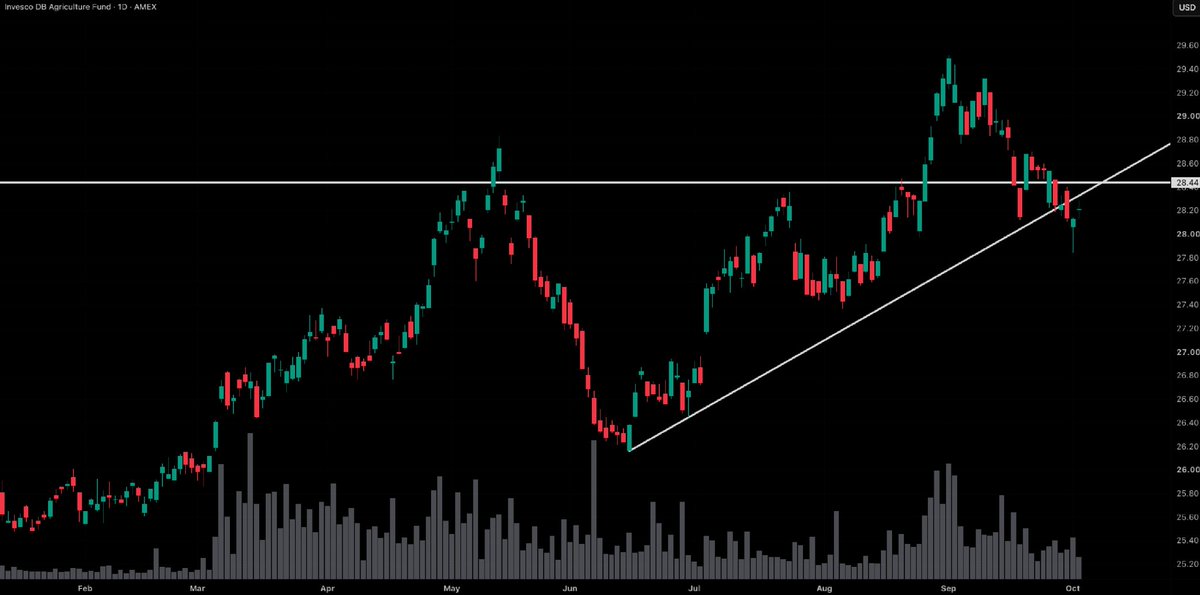
DBA remains weak below 28.44 and its rising trendline. Crop supply is offsetting part of the energy shock. The September 30 USDA report showed corn stocks up 35% from a year earlier, while soybean and wheat stocks were lower. Weather pressure on sugar adds to that divergence. My concern about delayed food-cost inflation remains. For now, the futures basket is being held back by ample supply in some crops. Reclaiming 28.44 would put another leg higher back in play.
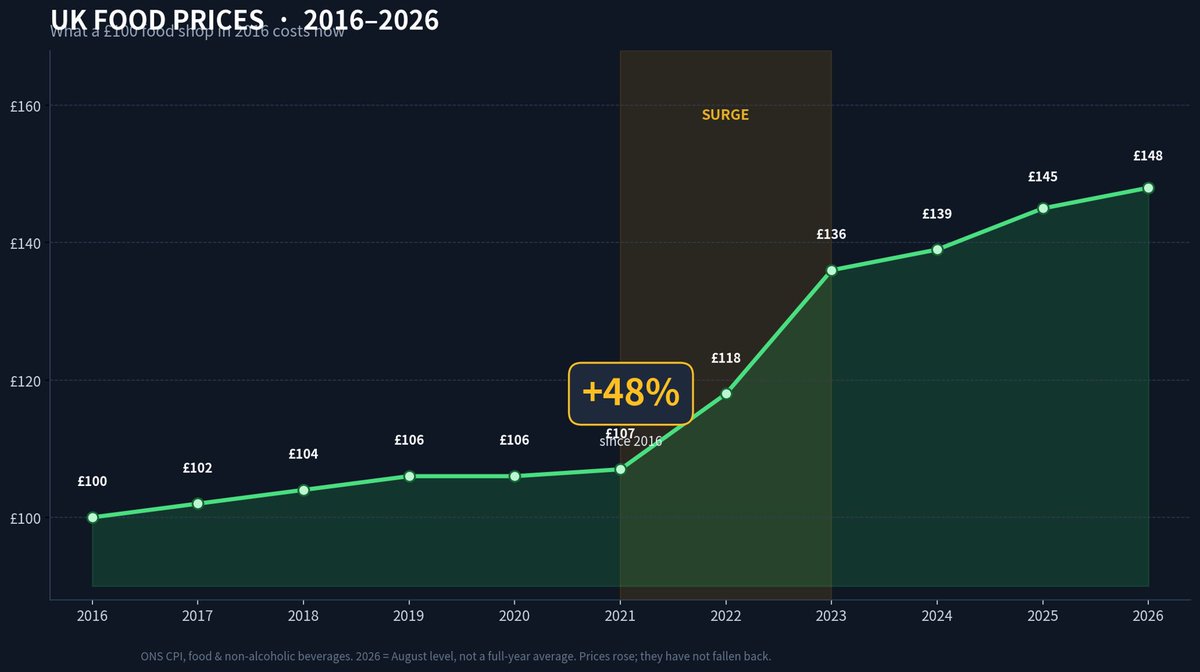
UK food prices:
A standard basket of UK food items that cost £100 in 2016 costs about £148 now. Huge post Covid supply crunch jump from 2021-2023 and then continued upward curve of food inflation.
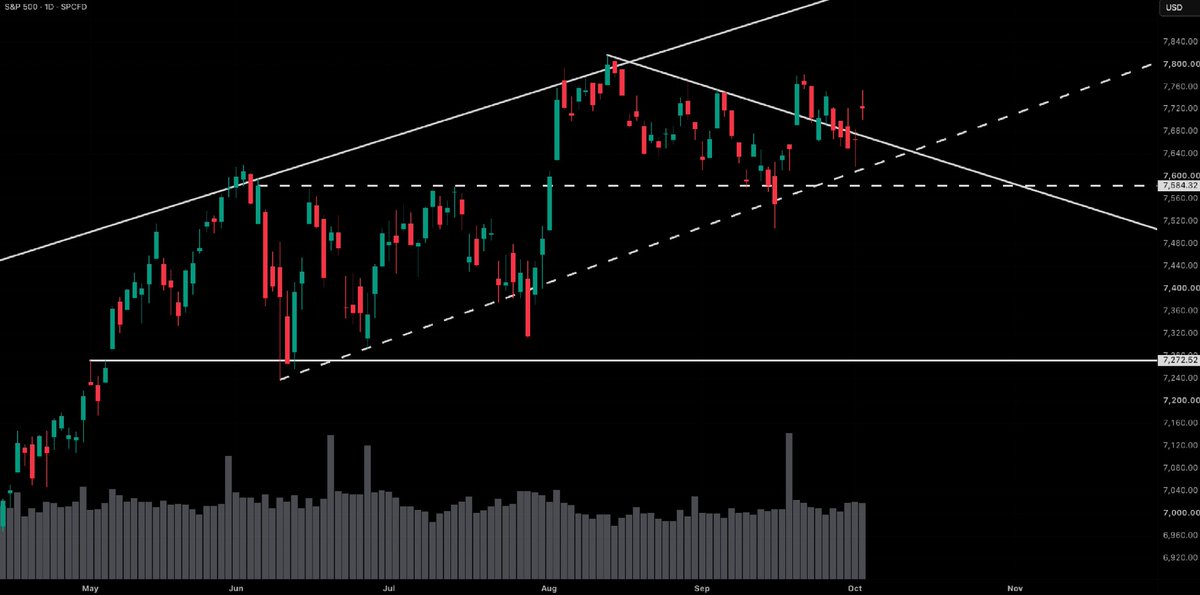
The tactical upside path from the FOMC low continues. NDX/NQ have made new highs. ES and SPX have bounced from their respective support levels, keeping the uptrend intact. RUT and DJI continue to lag, leaving the rally concentrated in technology. My long-term macro view remains bearish. I still expect a major swing high followed by a sizable decline in the months that follow.
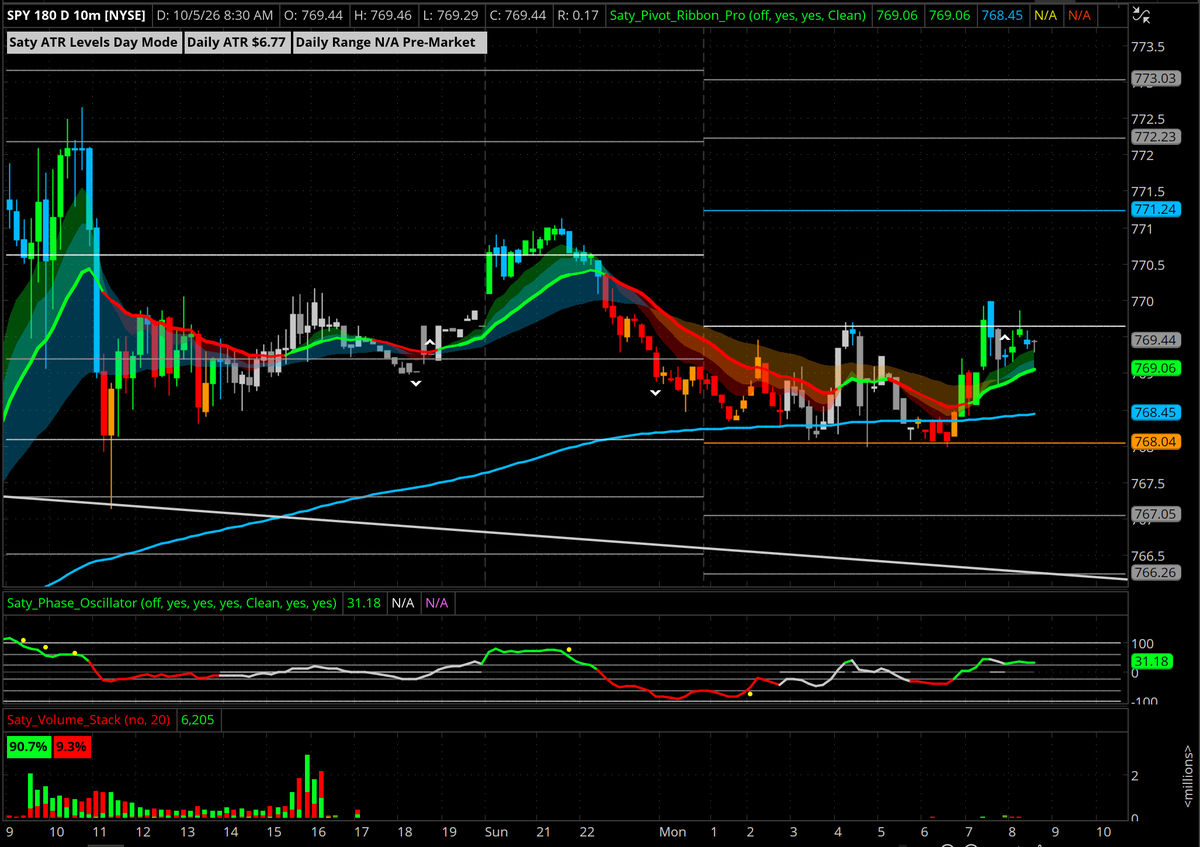
Choppy range on $SPX & $SPY overnight and pre-market in the lower half of the trigger box. Will wait until 10am and then go from there. Have a nice day.
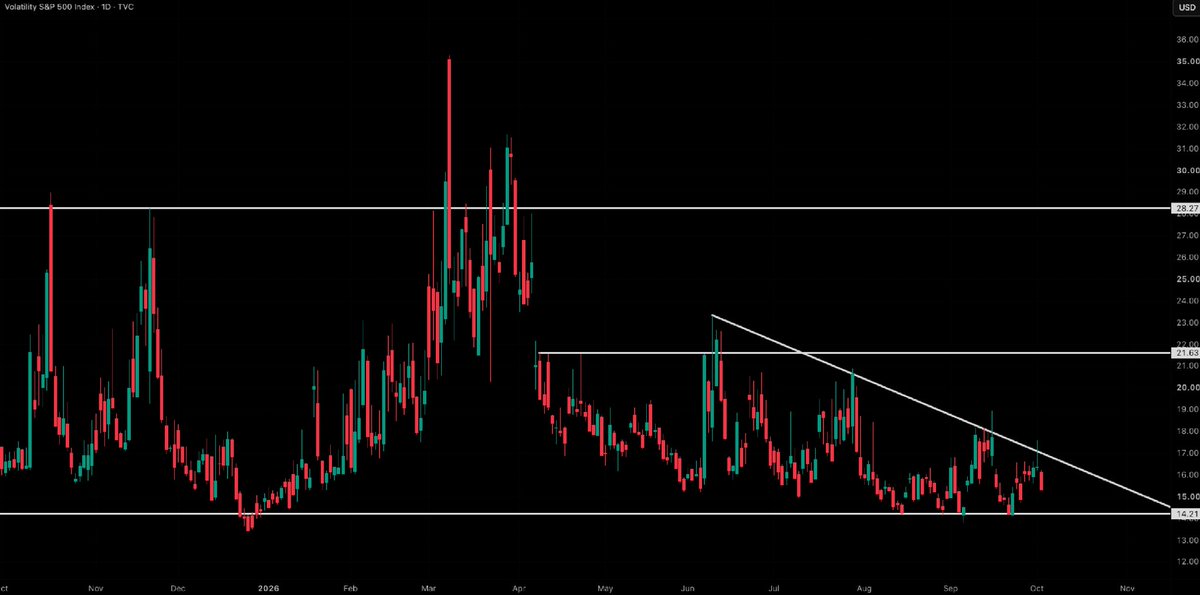
Positioning estimates show elevated systematic equity exposure while discretionary positioning has weakened. That leaves the market vulnerable to an unwind if volatility turns higher.
The data are giving the Fed room to slow the pace of tightening. Weak hiring, downward payroll revisions and softer core PCE have reduced the urgency of another hike. Even without these data, I doubt Warsh will deliver a hike at the October FOMC meeting. He will play the obedient little puppet Trump wants him to be. The two-year yield has pulled back after approaching 5%, as we expected last week. The energy shock is still feeding through the economy. My concern remains that inflation will keep the Fed under pressure.
SOFR Swaps Say the Fed Will Cut.
When Will the Bond Vigilantes Notice?
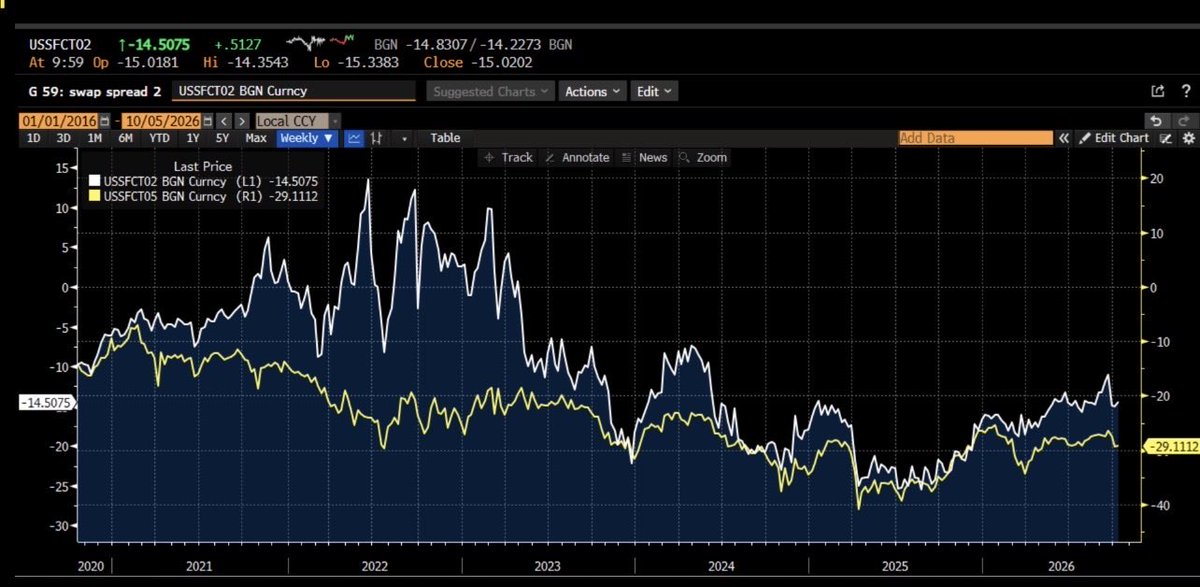
The swap market has been signaling Fed cuts, not a durable higher-for-longer regime. A swap spread is simply the difference between the fixed rate in a SOFR interest-rate swap and the yield on a same-maturity Treasury.
With the 2-year SOFR swap spread at minus 14.55 basis points and the 5-year spread at minus 29.10 basis points, swap fixed rates sit below Treasury yields, reinforcing the market’s expectation of lower future overnight rates.
The 5-year SOFR swap market never substantiated the higher-for-longer narrative. It has instead priced a Fed that cuts rates and keeps the average policy rate lower over the next five years than Treasury yields alone imply.
When will the bond vigilantes look at the swaps market?
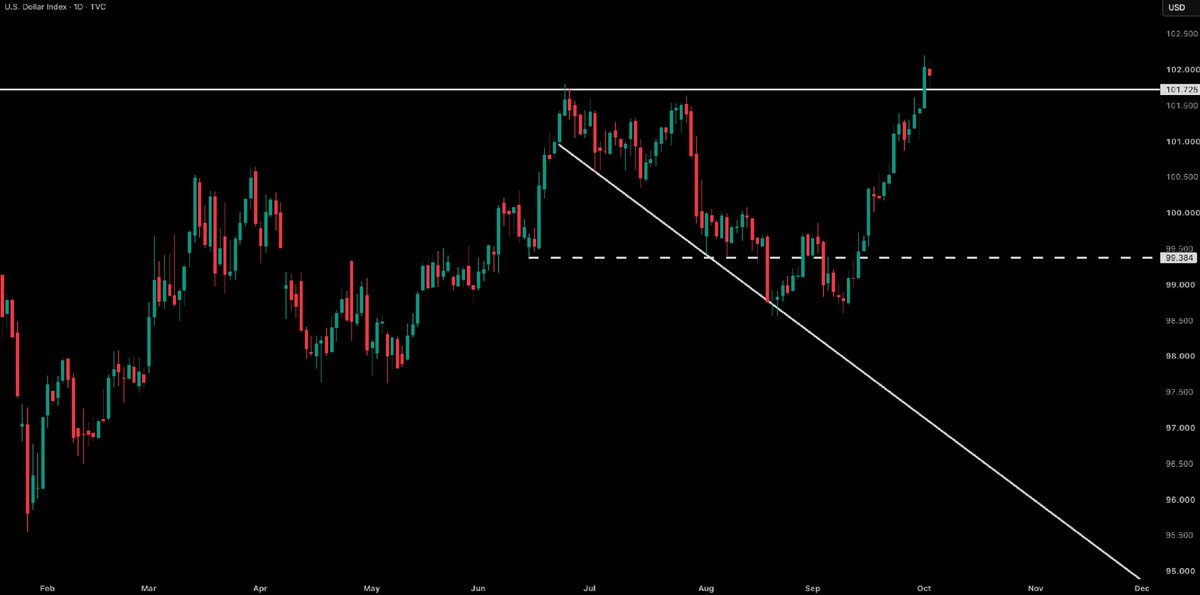
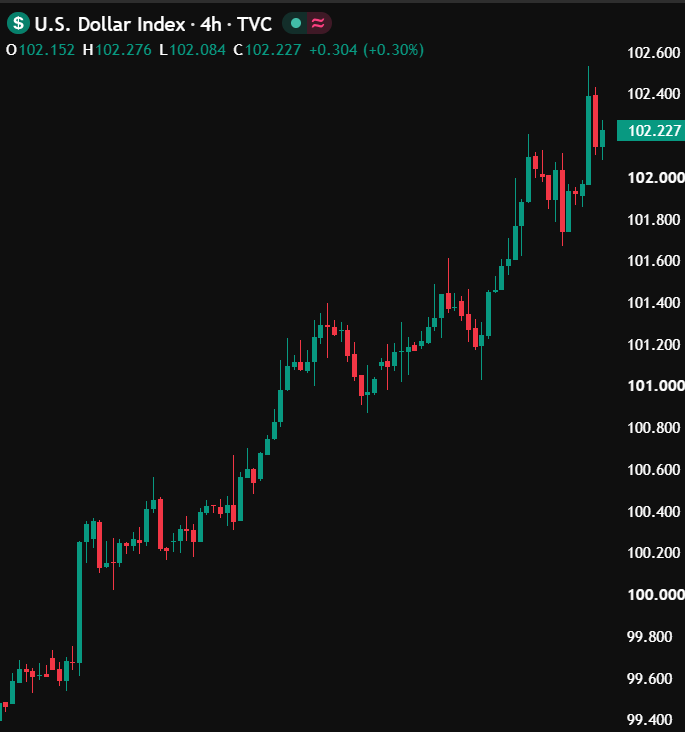
Long-end yields remain firm and the war continues to raise energy costs abroad. DXY has pushed through 101.725 despite the weaker jobs report. My view remains constructive while that breakout holds.
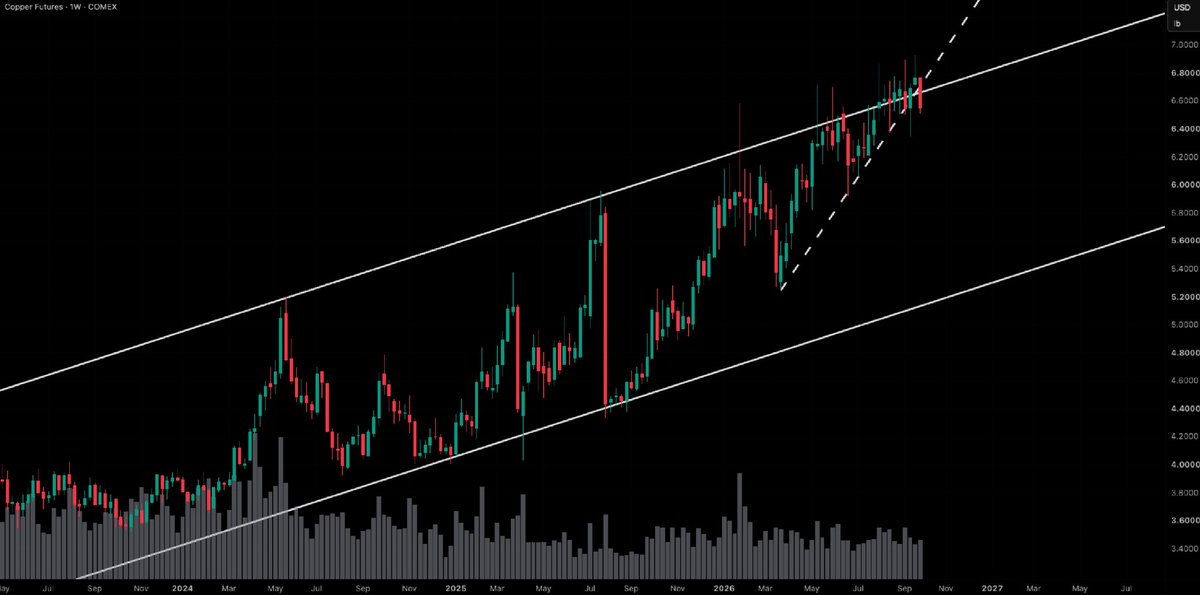
Copper's physical supply remains tight. Chile's August production fell sharply, and Chinese exchange inventories declined further ahead of the holiday. That has helped copper hold near its highs despite the stronger dollar and higher yields. Physical buying on the pullback would support another attempt higher. Weaker premiums and rebuilding inventories would challenge that supply case. In the meantime, copper remains exposed to a positioning unwind while the dollar and yields stay firm.
⚡🇨🇳China refines more copper than the next 9 countries combined!
Among the world's 21 largest copper refineries, Chinese plants hold 6,350 kt a year of capacity.
That's 56% of the 11,396 kt total.
More than 🇮🇳India, 🇨🇱Chile, 🇮🇩Indonesia, 🇷🇺Russia, 🇯🇵Japan, 🇺🇸US, 🇨🇩DR Congo, 🇰🇷South Korea and 🇩🇪Germany together.
Copper is the metal AI runs on.
🔹 A data centre uses about 27 to 33 tonnes of copper per MW of capacity.
🔹 A 1 GW AI campus therefore needs roughly 30,000 tonnes, before you count the grid connection.
🔹 Every new transmission line, transformer and substation is mostly copper.
Demand is catching up with that.
Copper demand expect to rise from 28.3M tonnes in 2025 to 42.4M by 2040, while mine supply peaks around 2030.
LME copper hit a record $14,672 a tonne on 9 September.
The mines are spread out, in Chile, Peru, DR Congo and Indonesia.
Turning their concentrate into cathode, the metal that grids and data centres actually use, mostly happens in China.
So whoever controls refining has leverage over the AI build-out and the grid upgrade at the same time.
The West has spent billions moving chip production home.
Copper refining hasn't had the same attention, even though data centres, power lines and transformers all depend on it.
The dependence runs both ways, though.
China doesn't mine enough copper for its own smelters and needs concentrate from Chile, Peru and Africa.
Supply is also getting tighter at the mine.
Chile's output fell 9.4% year on year in July and Escondida, the world's largest copper mine, was down 22%.
Should the West treat copper refining as strategic infrastructure, the way it treats chip fabs?
image source: Mining Visual
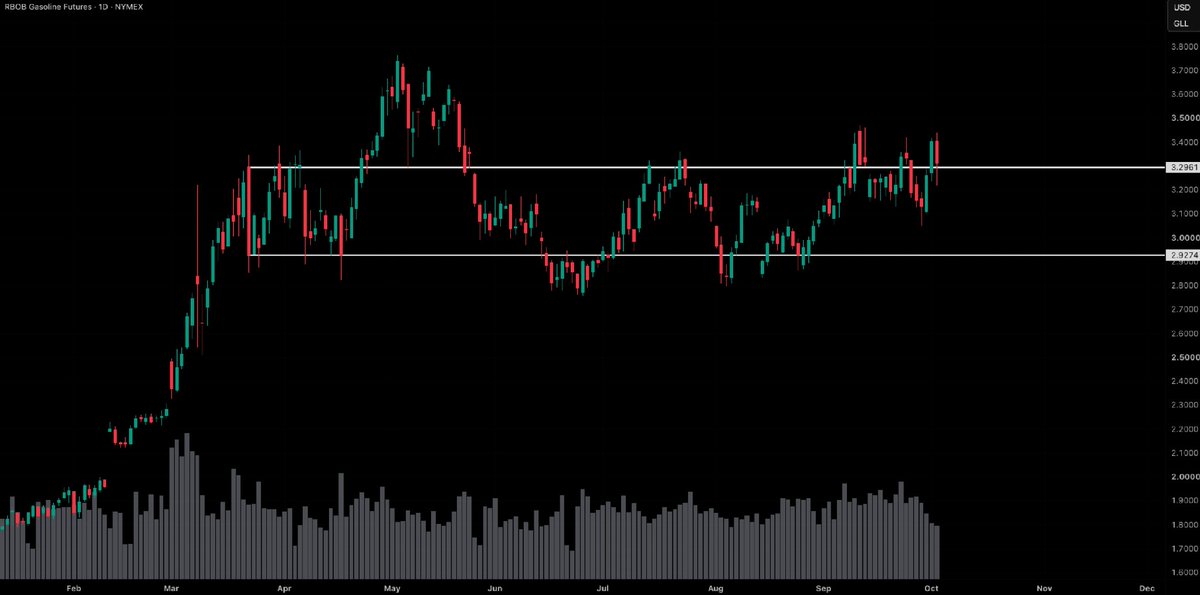
Gasoline is keeping the pressure on consumers. RBOB has returned to 3.30, while US gasoline inventories fell another 1.7mn barrels and remained 7% below their five-year average.
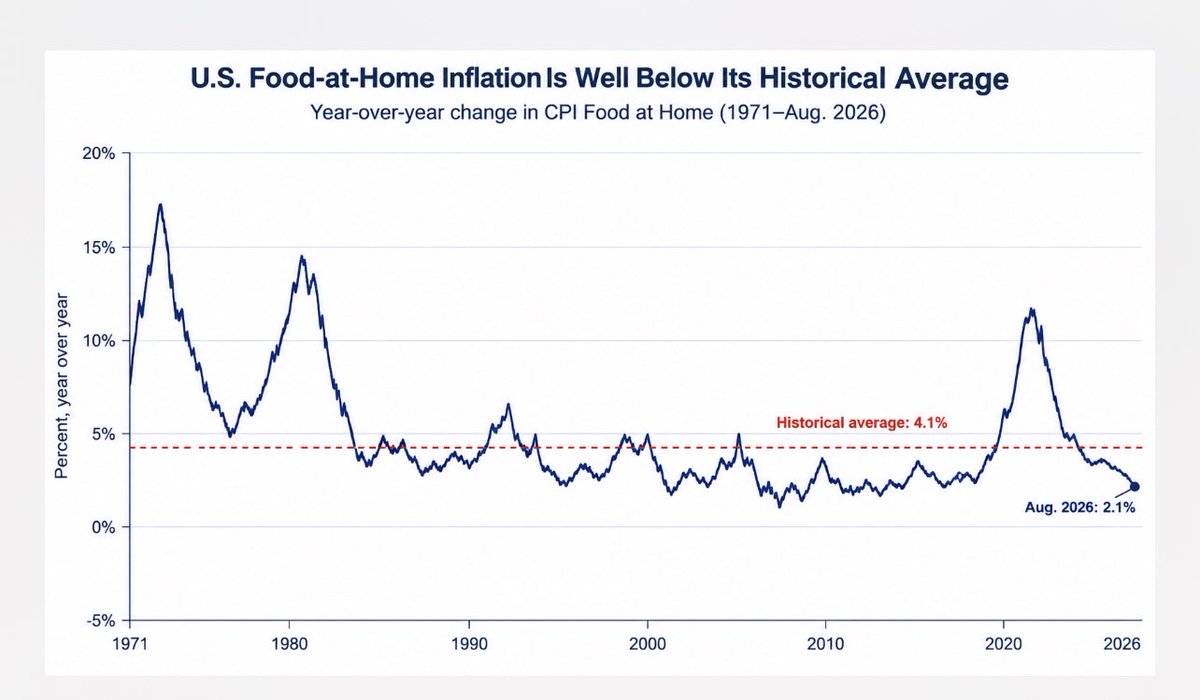
Food Inflation Is Running Far Below Normal
Food at home is half its long-run average. Trimmed-mean PCE is already near 2%. The Warsh Fed hiked anyway.
CPI Food at Home is 2.1%. The Fed and Wall Street are screaming inflation crisis.
The series is not.
St. Louis Fed data: food-at-home CPI inflation was 2.1% year over year in August 2026, roughly half the approximately 4.1% historical average recorded since the early 1970s.
That is not an emergency print. It is a below-normal one.
The Dallas Fed’s trimmed-mean PCE, the measure that strips out the noisiest price moves, was 2.2% year over year in August, the slowest since 2021, and running under 2% on a recent monthly annualized basis. Underlying inflation is already in the 2% range.
Yes, gasoline at the pump is high. That is a negative growth shock, and those dissipate. The Warsh Fed still hiked a quarter point in September, the first increase since 2023. The Powell Fed cut 50 bps in September 2024, weeks before the presidential election, when inflation was worse than this.
Screaming crisis over a grocery rate running well under its long-run norm, while trimmed-mean PCE sits near target, is inflation porn, and a midterm year is when it sells. The dataset says 2.1% food and 2.2% trimmed-mean PCE are not a reason to hike.
Diesel is still tight. US distillate inventories fell another 2.3mn barrels and were 14% below their five-year average. Middle Eastern product exports continue to lag the crude recovery, keeping transport and industrial fuel costs under pressure.
🛢️🤯 Ölkrise? Diese Zahl sollten Anleger kennen: 98%
Laut JP Morgan liegen die Rohölexporte aus Nahost wieder fast auf Vorkriegsniveau.
Was, wenn der Ölpreis nicht explodiert, sondern bald fällt wie ein Stein?
Das könnte die Inflation drücken – und Aktien im letzten Quartal antreiben.
Einziger Wermutstropfen: Bei Diesel und Co. liegen wir leider erst bei 58% des Vorkriegsniveaus…
The crude shortage is easing. Crude shipments through the Strait of Hormuz have recovered to above 80% of pre-war levels. Saudi Arabia is moving more barrels out by taking on the transit risk through Hormuz and transferring cargoes to buyers' vessels off Sohar, Oman. The partial restoration of its East-West pipeline has also revived exports through Yanbu on the Red Sea, bypassing the strait. Refined-product flows continue to lag. Brent remains inside its rising channel.
As I have repeatedly noted, Iran and Iranian-backed military groups have yet to deploy their full capabilities against shipping and oil production facilities. Despite the recovery in crude flows, I doubt Iran will give up its leverage over oil prices. Once prices fall, it will find ways to disrupt shipping or production again.
Trump's TACO talk and fake-news headlines have become noticeably more frequent over the past two weeks. Yet even alongside the announcement of the final SPR release before reserves reach their operating floor, crude's downside has been limited. At its lowest, spot Brent was only about $10 per barrel below the high from two weeks earlier.
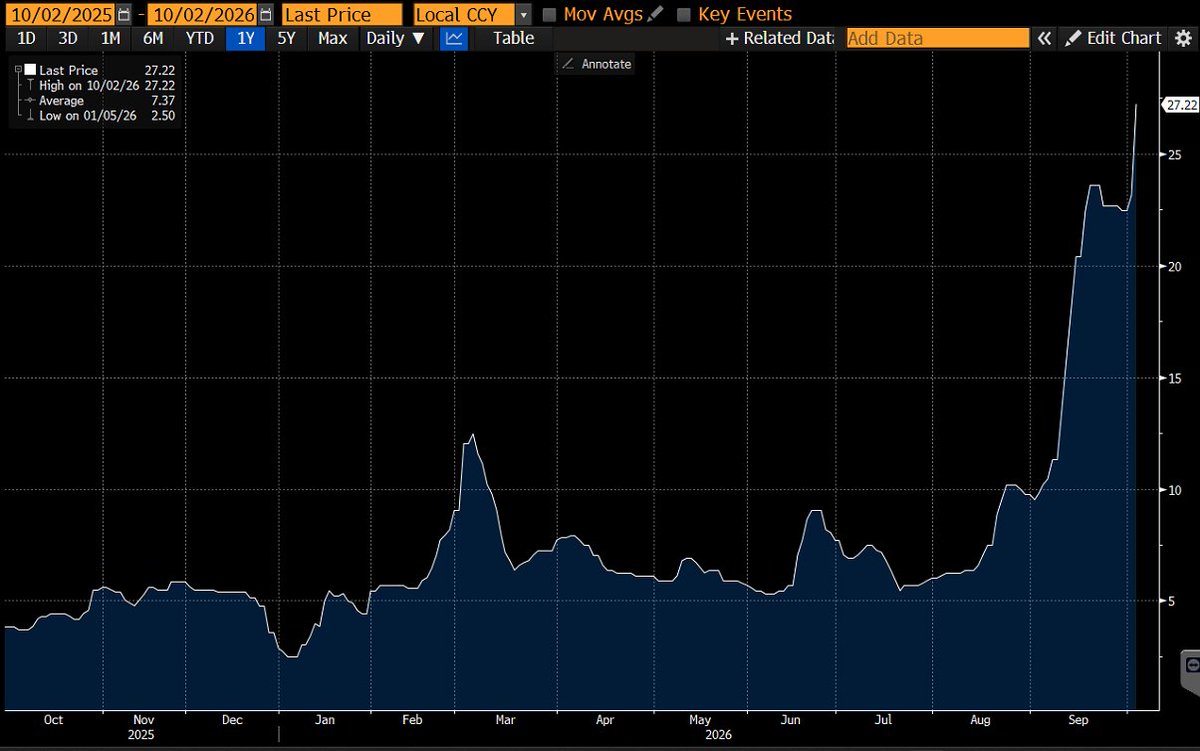
Everyone is bidding against each other for the physical oil that is still available.
The cost of shipping 2 million barrels from West Africa to China is going vertical.
Yesterday alone, it jumped 17.6% to $27.22 per barrel.