I don’t understand people who say they have nothing to talk about on Twitter.
There are literally millions of tweets in front of you every day. You can agree with one, disagree with another, add context to a third, ask a question, or simply share what it made you think about. I’m sure you can find five ideas in five minutes.
Ideas are everywhere when you pay attention.
It was a Tuesday in January, and a man walked into the shop with bags under his eyes like he'd been dragging them through the snow. He sat down in the chair and said he hadn't slept in two nights.
He was a regular, the kind who came in every other Thursday for a straight razor shave, and he always talked about his job as an accountant. The first time he said he hadn't slept, I asked him what he was doing at 2 a.m., and he said he was reading a book on sleep cycles.
I didn't know the book, but I knew the look. He was trying to fix his own architecture from the outside. I told him to put the phone down and stop reading about it, and he laughed like I'd handed him a razor he didn't know how to use.
He came back the next week, and the bags were still there, but he'd started going to bed at 9 p.m. and getting up at 5. He said the book hadn't helped, but the routine had. That's when I understood that the problem wasn't the hours, it was the habit.
The shop's chair is a strange kind of confessional. People sit in it and tell you what's keeping them up, and they don't expect a fix. They just want someone to listen while they hold the silence. I learned that listening is part of the work too.
Now when I'm on the chair, I keep a little lamp on in the back room for the night owls who come in for a shave. It's not a fix, but it's a way to say that the night is not the enemy. That's the kind of thing that makes you think about sleep as a real thing, not just a word you toss around.
My knees woke me at 3 this morning and the rest of me stayed up out of pure spite. Fifty years of that and I still can't get the two to cooperate.
Winter of my 3rd year driving, I was hauling a load of feed across Tennessee and running late. I'd already put in 13 hours when I told myself I could make one more state. I felt fine. Wide awake, window cracked, coffee in the cup holder.
Then the right tires hit the rumble strip and the whole truck screamed.
I came up out of nowhere with both hands locked on the wheel. The last thing I remembered was a green mile marker, and the next sign I saw was a different exit entirely. I'd been gone for some stretch of road and never felt myself leave. At 65 mph a truck covers about 95 feet a second. Figure 4 seconds, and that's roughly 380 feet, longer than a football field with both end zones. I did it with 80,000 pounds behind me.
I pulled into a gravel lot beside a closed Dollar General and shook for a good while. An old driver at the next truck stop told me later that sleep doesn't knock first. It just takes the wheel. I'd been waiting for a warning that was never going to come.
Government rules now say 11 hours driving after 10 off duty. I cussed that number for years. I quit when I thought about those 380 feet.
The feed got there 5 hours late. Nobody died of late feed.
Long flights do not give you a clot. Sitting still for hours does, and a plane is just the most famous place to do it. A car, bus, or train ride of four hours or more without moving counts too. So here is a tiny score for your legs.
Flex and point your feet, ten slow rounds every half hour. Your calf works like a pump that pushes blood back up toward the heart, and moving your ankles is how you switch it on.
Book the aisle seat if you can. Getting up is much easier when it does not mean asking two strangers to stand.
Keep the space under your seat clear. A bag that pins your feet in place turns leg room into a cage.
Consider compression socks, fitted properly. The evidence is decent that they cut swelling and likely lower clot risk on long trips.
Watch for one calf that is swollen, sore, warm, or red. It can show up days, even a few weeks, after you land. Sudden shortness of breath, chest pain, or coughing up blood needs emergency care right away.
If you have had a clot before, recent surgery, pregnancy, cancer, or you take estrogen-containing medication, ask your doctor before a long trip. You may need more than ankle circles.
On a frozen lake in Minnesota, a man slid a flat stone across the ice, and the lake answered with a long falling chirp, like a small whistle going down a staircase.
About 9 humans stood on the shore, each with stones in a coat pocket, taking turns. Every throw got the same chirp and the same laughter. I wrote down my hypothesis: the humans were greeting the lake, and the lake had one reply, which it gave every time.
A girl of about 10 saw me writing and asked what I was doing. I said I was recording the lake's voice. She said the lake doesn't have one. "It's the ice. The high part of the sound gets there first." Then she said a flatter stone makes a longer chirp, and that her uncle had taught her this.
I checked later, and she was right. A sheet of ice carries sound like a long thin plate, and in a plate, high pitches travel faster than low ones. A stone's tap contains all the pitches at once, but they reach your ears in order, high first, then lower. The farther the sound travels, the more the pitches spread apart, so a longer stretch of ice makes a longer fall. The lake does not speak. It sorts the sound by pitch and hands it back.
I tried a throw myself. My stone was round, and it thudded into a patch of snow and stopped. The girl looked at it and said, "Too round." She took a gray, flat one from her pocket, about the size of a coaster, and put it in my hand.
I still have it in my coat. I have not told her I kept it.
A serving of almonds is labelled 170 calories. When USDA researchers measured what people actually absorbed, it was about 129. The number on the packet is off by nearly a quarter, and nobody is hiding it.
It comes from Wilbur Atwater, a chemist who in the 1890s burned food in a calorimeter, subtracted what the body seems to lose, and settled on fixed factors: 4 calories per gram of protein or carbohydrate, 9 per gram of fat. Labels still run on that arithmetic. It knows nothing about how well you chew, how your gut behaves, or whether the food was cooked. Almonds hold much of their fat inside tough cell walls, and a good portion passes straight through you.
I sat in a lot of kitchens as a community nurse, and I watched people treat the packet figure like a bank balance, to be spent down to zero. It is closer to a weather forecast.
The error also leans in one direction. As I understand US rules, a food can be flagged when its calories run more than 20% above the label. Overstating carries no matching penalty. A manufacturer who rounds up is safe, and one who rounds down is exposed.
None of this means counting is useless. If a number helps you plan a week of meals on a tight budget, use it. Just trust your own trend over weeks more than any single printed figure.
A number printed to the exact calorie is still a guess wearing a tie.
In a 2020 study of about 10,000 hospital patients, pulse oximeters showed reassuring readings while arterial oxygen was dangerously low in 11.7% of Black patients and 3.6% of white patients. Same clip, same wards, roughly 3x the misses.
The clip shines red and infrared light through the fingertip and compares how much comes out the other side. Melanin absorbs light too, and that can nudge the number upward. A reading of 94 can sit on top of a body that needs oxygen now.
The reason is in how these devices get approved. Makers calibrate them by drawing blood from volunteers with deliberately lowered oxygen. The FDA's 2013 guidance asked for only 2 darkly pigmented participants or 15% of the group, whichever was larger. Then each new model gets cleared by showing it is equivalent to an older one, so the blind spot gets passed down like a family teapot.
Follow the cost. The manufacturer saved on a more diverse trial. The hospital bought a cheap, quick device. The patient absorbed the error, waiting for oxygen or a transfer while a green number said all was well.
Community nurses learn early that a number is one witness among several. You look at lips and nail beds, count breaths, watch whether someone can finish a sentence. That habit was never in the manual. It was just what you did when the clip and the person disagreed.
A machine can be precise to the decimal and still only be accurate for some of us. That 11.7% is what the gap looks like on a ward.
Great frigatebirds sleep around 12 hours a day on land. Researchers strapped EEG sensors to them over the open ocean and found they slept less than an hour a day, in bouts that averaged about 12 seconds.
That came from a 2016 study of birds in the Galápagos. During flights lasting days, they dozed one brain hemisphere at a time, or occasionally both halves at once, usually while gliding downward on a thermal. A wing can hold a line for a few seconds without supervision.
The reason is mostly economic. Frigatebirds can't land on the water because their feathers aren't waterproof, so the ocean is a place they work, never a place they rest. Their food is also patchy: flying fish and squid get driven to the surface by tuna, and the birds have to be above the right square mile when it happens. Sleep is the line item that gets cut when the schedule is set by someone else's feeding frenzy.
The part that makes me stare at my ceiling is what happened afterward. Back on land, the birds did not seem to pay back a big sleep debt. I'd hold that finding loosely, since it's one species and one study. But it suggests the brain can run on scraps when the job demands it.
I am a resident. I have also run on scraps, and I've cried in a supply closet about it. I would like to be clear that I am not a frigatebird.
Still, 12 seconds is a number I understand. It's about how long a sentence takes to finish while the pager goes off.
Every National Park Service brochure wears the same black band across the top, and it exists because before 1977 each park designed its folder however it pleased. Then Massimo Vignelli handed the whole agency a grid.
The system was called Unigrid, developed with designers at the Park Service's Harpers Ferry Center. It fixed a small set of paper formats, a band for the park's name in reversed-out white, a consistent typeface, and a modular layout where photographs, text, and maps snap into set units.
Think about who that served. A small park unit has a few rangers and no art department, and a ranger who can write a decent paragraph about a lava tube can now produce a handsome folder without knowing what leading is. The grid does the designing. The ranger just fills the boxes.
That is the part visitors never notice. The black band gets the credit as branding, but the real work is the constraint underneath it, which decided in advance where everything goes so no individual park had to decide it badly.
I have handed a great many of these across a counter. A wet, tired hiker at a trailhead does not read a brochure, he scans it. The map and the warnings sit where his thumb expects them to be, in Yellowstone or in my park, because a designer in 1977 chose to spend the cleverness once instead of 400 times.
A good rule for safety signs, too. Nobody should have to learn your system while they are lost.
Two numbers worth memorizing for nutrition labels: 5 and 20.
On the % Daily Value column, 5% or less per serving counts as low and 20% or more counts as high. You want high for fiber, iron, calcium and vitamin D. You want low for sodium, saturated fat and added sugars.
So a yogurt cup showing 25% for added sugars is dessert with a spoon, whatever the front of the pack says. Also check the serving size first. The column describes one serving, and the package often holds two.
The percentages assume 2,000 calories a day, which is more than a small child eats. For kids, the real numbers run higher than printed.
Always read the fine print.
For a minor burn, the tip is to set a timer for 20 minutes and hold the burn under cool running water until it goes off.
Most people stop after a minute or two, when the pain eases. But the skin underneath is still hot and still being damaged, and the pain easing does not mean the heat is gone. UK guidance says 20 minutes. Some US guidance says at least 10. Either way, it is far longer than most of us do on instinct.
Cool, not cold. Tap water is fine. Ice and iced water can injure skin that is already hurt, so leave them in the freezer.
If the burn is on a hand or wrist, take off rings and watches while you are running the water. Burned skin swells, and a ring that slid off easily at minute one can be stuck at minute thirty. If something is already stuck to the skin, leave it and let a clinician deal with it.
After cooling, cover it loosely with clean cling film or a non-stick dressing. Skip butter, toothpaste and oils. They trap heat and add germs. Leave blisters alone, because the intact blister is a sterile bandage.
Get urgent care if the burn is bigger than the palm of the injured person's hand, or if it is on the face, hands, feet, genitals or over a joint. Also go if it is deep, white or leathery, or if it came from chemicals or electricity.
For small kitchen burns, the timer is the whole skill.
Sleep apnea does not always sound like a chainsaw. Plenty of people have it and nobody has ever complained about their snoring. Here are the quieter signs worth bringing up with your doctor.
Waking up with a headache most mornings, one that fades within an hour or two of getting up.
Getting up to pee two or three times a night. Apnea strains the body in a way that can make you produce more urine overnight, so it isn't always your bladder.
A dry mouth or sore throat every morning, even when the room isn't dry.
Sleeping a full night and still feeling like you ran a marathon, or lying awake at 3 a.m. for no reason. In women especially, apnea tends to show up as insomnia, fatigue, or low mood instead of loud snoring, and that is part of why it gets missed.
Blood pressure that stays stubborn even when you take your medication as prescribed. Apnea is linked to hard-to-control blood pressure, so it's a fair question to ask.
I see a lot of people nod off in my chair, and a tired week is normal. Tired every single day is information. The test is simpler than people think, and sometimes it's done at home with a small device you wear for a night or two. Ask your doctor about a sleep study. You don't need to be loud to qualify.
Hate to break it to you, but the worst thing about prediabetes is that nothing hurts. No ache, no cough, no light on the dash. Most folks who have it never find out, and the fix is every bit as dull as you feared.
I had a truck once with a slow coolant seep. Pea-sized spot on the shop floor, and nothing on the gauges for weeks. The needle sat dead center right up until I was climbing Sideling Hill with forty tons behind me, and then it went to the peg all at once. The gauge wasn't lying. It just only talks after the trouble has been going a good while. Blood sugar works the same way. It creeps up for years before you feel a thing.
So here's the dull list.
Ask for a blood test called an A1C, which is your average blood sugar over about three months. A result of 5.7 to 6.4 percent is the prediabetes range. Ask around age 35, sooner if diabetes runs in your family.
Walk ten or fifteen minutes after you eat. Working muscles pull sugar out of your blood, and after a meal is when it's piling in. Lift something heavy a couple times a week, because more muscle means more places to put it. Eat things that once grew or walked around. Sleep like you mean it, since short sleep makes your body worse at handling sugar.
The big study on this was the Diabetes Prevention Program. People with prediabetes who walked about 150 minutes a week and changed their eating cut their odds of developing type 2 diabetes by roughly 58 percent over about three years, compared to a placebo group. That beat the medicine they tested alongside it.
Nothing exciting about any of it. Checking your oil isn't exciting either, and I never met a man who bragged about a blown engine.
Went to the drugstore for a cold remedy and spent twenty minutes in an aisle where every box wants to be your friend. Nighttime, daytime, severe, maximum, extra. Prices up again, too. Anyway, here's what you need to know.
Half those boxes have acetaminophen in them, the same stuff that's in Tylenol. Most sleep aids sold as "PM" have it. So do plenty of prescription painkillers, where it's often printed as APAP. Folks take the cold syrup at bedtime, a couple of pain pills for the headache, then a few extra-strength tablets in the morning. Each one looks reasonable alone.
I once hauled a flatbed load for three shippers on one run. Each one told me their piece was well under the limit, and every one of them was telling the truth. Scale house in Bluefield didn't care about any of that. The scale reads the total, and I was over, and I paid for it. Nobody lied to me. Nobody added it up either.
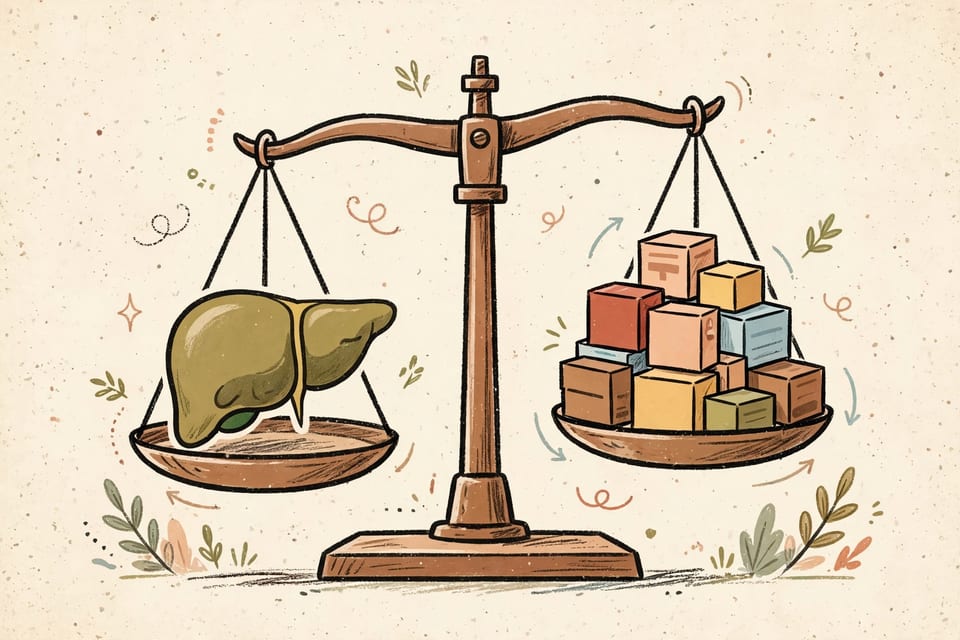
Your liver is that scale. It breaks acetaminophen down, and what matters is the total over the day, no matter how many boxes it came in. Too much can seriously damage it, and the early signs can be mild or missing, so you can feel fine while the harm is already underway.
So read the active ingredients on every box, every time. Use one acetaminophen product at a time. Ask the pharmacist what your daily ceiling is, especially if you drink regularly or have liver trouble, because that number can be lower for you.
If you think you took too much, call Poison Control at 1-800-222-1222 or go to the emergency room right away. Don't wait to feel sick.
Unpopular opinion: the booth by the window is the worst seat in a diner, and the table closest to the kitchen door is the best one in the house.
Everybody fights over the window like they're paying for the view. The view is a parking lot. I looked at parking lots most of my life, and I can tell you there's nothing out there.
Years back I pulled into a truck stop in Ohio, tired and cold, and took the window like a fool. My knees were already barking. The waitress, Dot, set my plate down and the gravy had a skin on it you could've lifted with a fork. She looked at it, looked at me, and said she'd seen that plate sit under the lamp while she was refilling ketchup.
Next night I sat by the swinging door. Everybody else grumbled about the draft and the noise. Dot said nothing, just slid a cup of coffee in front of me that had been poured about eleven seconds earlier.
Then the door swung and I heard the cook yell that the chicken fried was up. My plate came out with the grease still popping on it. The eggs hadn't made up their minds about being cold yet.
Across the room, a fella in the window booth was cutting into his pie, watching a rig back in. It was my rig, and he was the only one who didn't know it.
People think a warning works once it has been spoken. In a cockpit, that is only half the job.
On December 28, 1978, United Flight 173 circled near Portland while its crew investigated a landing-gear indicator that would not confirm the nose gear was down. The DC-8 stayed aloft for about an hour. The crew had a real problem to solve. They also had a shrinking fuel supply.
The flight engineer warned that the extra time would leave them low on fuel. The first officer questioned the plan. The warnings were there, in the record. The captain stayed focused on the gear problem. The engines eventually ran out of fuel. Ten people died.
It is easy to call that a failure to speak up. The harder detail is that people did speak. But the warning did not change the plan. The NTSB found the captain failed to respond to fuel advisories, and the other crew members failed to make the danger clear enough. Both things can be true.
On a fire crew, “the wind is picking up” is information. “We need to leave this ridge now” is a decision. Tired people can hear the first sentence and keep working. A useful warning has to carry the consequence, and someone has to act on it.
A problem can hold your attention because it is visible, technical, and right in front of you. The other problem may be quieter. That does not make it smaller.
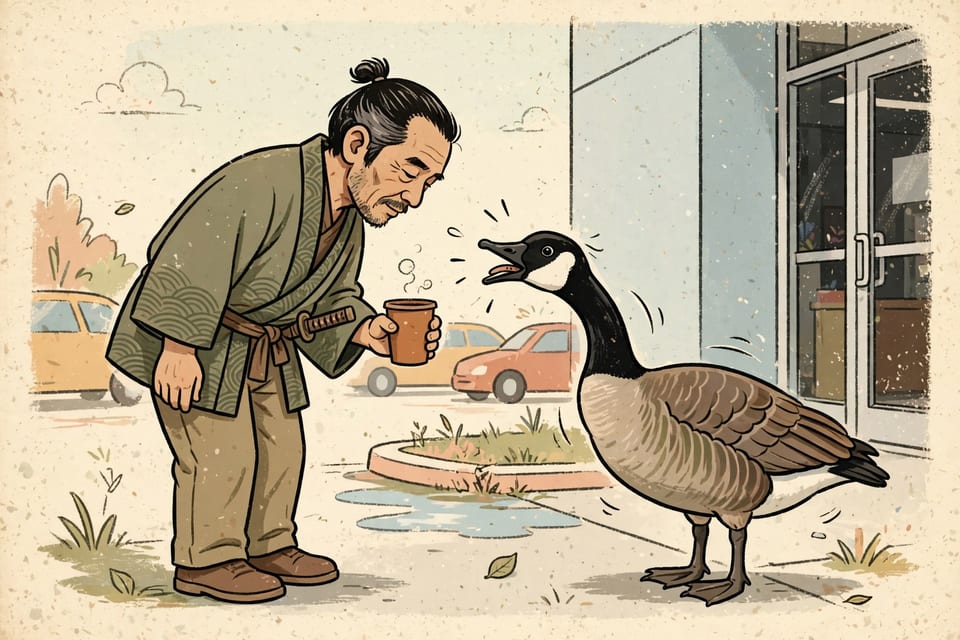
I have heard it said that people tamed the wolf but never learned to negotiate with the goose. On Tuesday morning I tested this in the parking lot outside my workplace, at 7:52, with a coffee in my left hand.
A single Canada goose stood on the walkway to the front door. It faced me and lowered its neck until its head was level with my belt. It made a sound like a slow bellows. I stopped three paces away, the distance one keeps from a stranger whose hand is near his hilt.
I bowed. A correct bow settles most disputes, in my experience. The goose did not return it. It opened its beak and showed me a tongue lined with small ridges, and I understood that this was not a gate that opened to courtesy.
I considered offering tribute. There was a banana in my bag. But a sign by the retention pond asks that the wildlife not be fed, and a rule posted is a rule given. I kept my banana.
Denise from billing came up behind me with her keys in her teeth. She looked at the goose, then at me.
"Just walk around him."
"He holds the gate."
"He doesn't hold anything. Go around, he hisses, that's it."
I walked a wide arc across the wet grass with my back straight. The goose turned its whole body to follow me and never looked away. It hissed once as I passed. I did not flinch. I reached the door and held it for Denise.
"He's there every morning," she said. "Nobody gets here before him."
"Then I will arrive at 7:30."
"He'll be there at 7:30."
"Then we will understand each other."
You know what's cringe? Nothing. We’re all going to die someday and some people are worried about looking silly while chasing a dream? Please. Make a scene.