Google = hardware store. People know what they want. Ready to buy. Costs more.
Meta = catalog at home. Creating desire they didn't have. Costs less.
Most brands fail because they only pick one. You need both.
SEO isn’t about tricks. It’s a system.
Posting random blogs won’t bring leads. Pick one service, build supporting content around it, and connect everything.
Do that consistently and growth becomes predictable, not luck.
Slow websites cost you customers.
Think of a bakery. Slow site? People leave before seeing your cupcakes. Fast site? They order in seconds.
Speed = respecting your customer's time. Fix it and watch your sales grow.
Too many indexes slow down your database like too many labels on a filing cabinet.
Stick to 1-2 per table.
Ditch duplicates.
Skip indexes on tiny tables.
Less really is more.
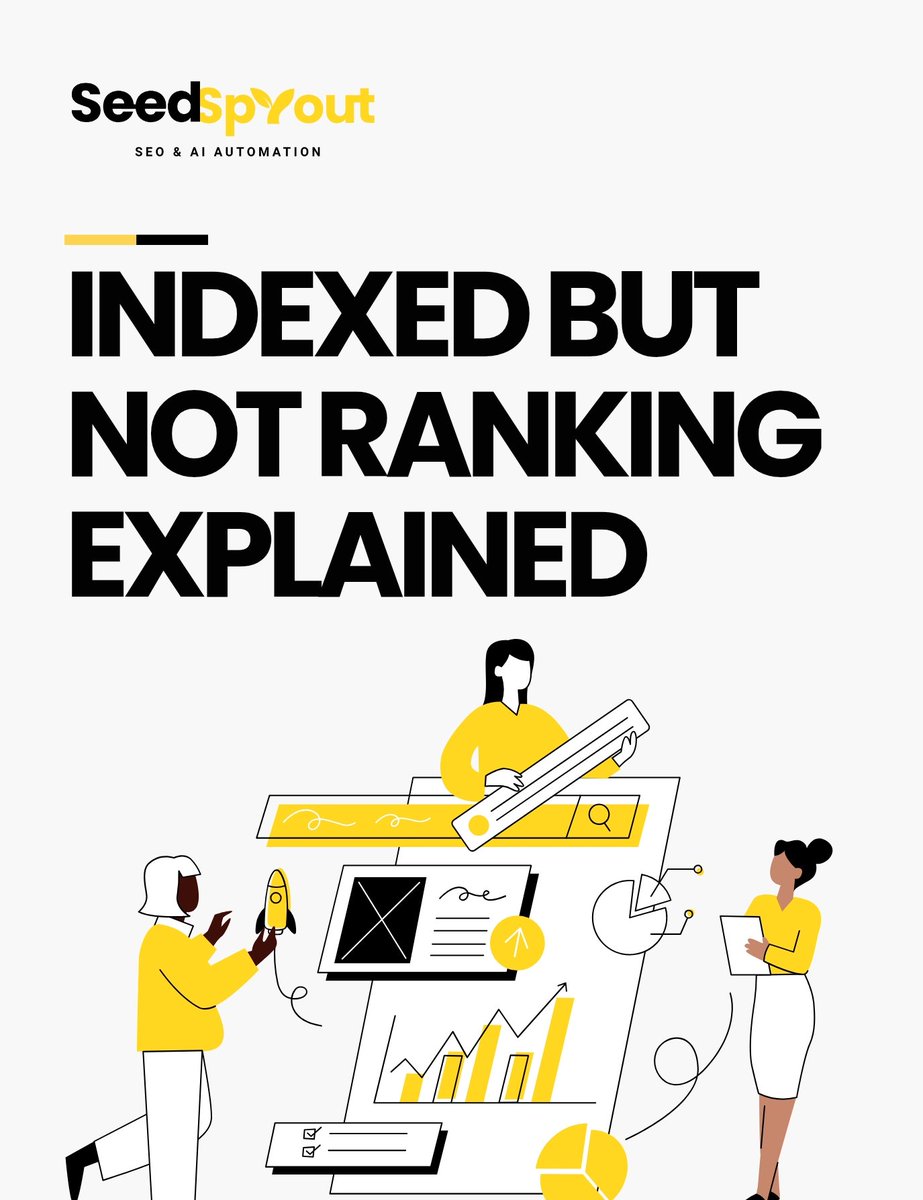
Your page can be indexed but still not rank. Indexed means Google knows it exists. Ranking means Google thinks it’s worth showing. Being indexed is step one. Quality, clarity, and usefulness decide who shows up first.
Popular business tips that are actually bad advice:
1. You do not need every platform.
2. Cheap prices attract problems.
3. Websites do not sell by themselves.
4. Looking big is not the same as being trusted.
5. Hard work without systems leads to burnout.
Technical SEO does not need to be complex. Focus on three basics: speed, mobile, and HTTPS. Fast pages keep users engaged. Mobile friendly design helps everyone. Secure sites build trust. Put people first and search engines will follow.
#seobasics#SeedSprout
1️⃣
SEO sounds confusing, but it is simple.
It helps people find your website when they search on Google.
If Google understands your site, the right people can find you.
Most SEO fails because people start with the wrong habits.
New sites chase big keywords, write for Google not people, rely on tools, and expect fast results.
Good SEO is simple. Clear pages, helpful content, and time.
Start with the basics.
SEO takes time, not magic.
Month 1 to 2: Google is learning your site. Little change is normal.
Month 3 to 4: Small wins start. Pages move up, clicks appear.
Month 6+: Rankings grow, traffic feels steady.
Think long term. That is how SEO works.
When should you start SEO?
Earlier than you think.
If you have a website, SEO already matters. Search engines need time to trust your pages. In the UK, starting early means steady traffic later.
The best time was yesterday. The next best time is now.
#seo
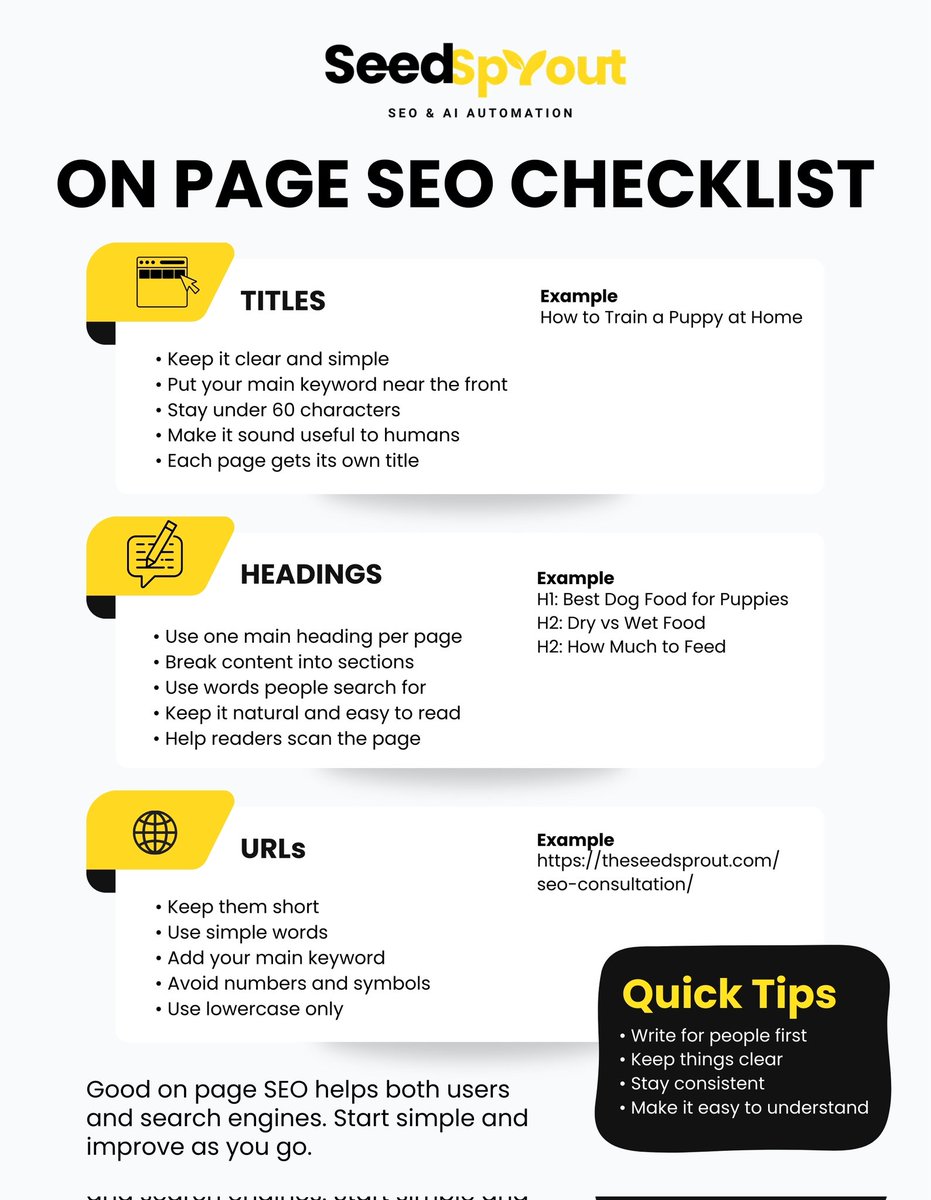
If your website is not bringing in the right visitors, the basics might be the problem.
Clear titles, simple headings, and clean URLs can make a real difference.
This checklist shows what to fix first before chasing advanced SEO.
Most small business websites fail at SEO for one simple reason. The basics are ignored. Here is a simple on page SEO checklist you can use to fix that.
Is SEO only for big brands? No.
A bakery can rank for “best cakes near me.”
A plumber can show up for “emergency plumber.”
A small store can get sales from Google.
SEO is about being useful, not being big.
#SEO#SmallBusiness#SeedSprout
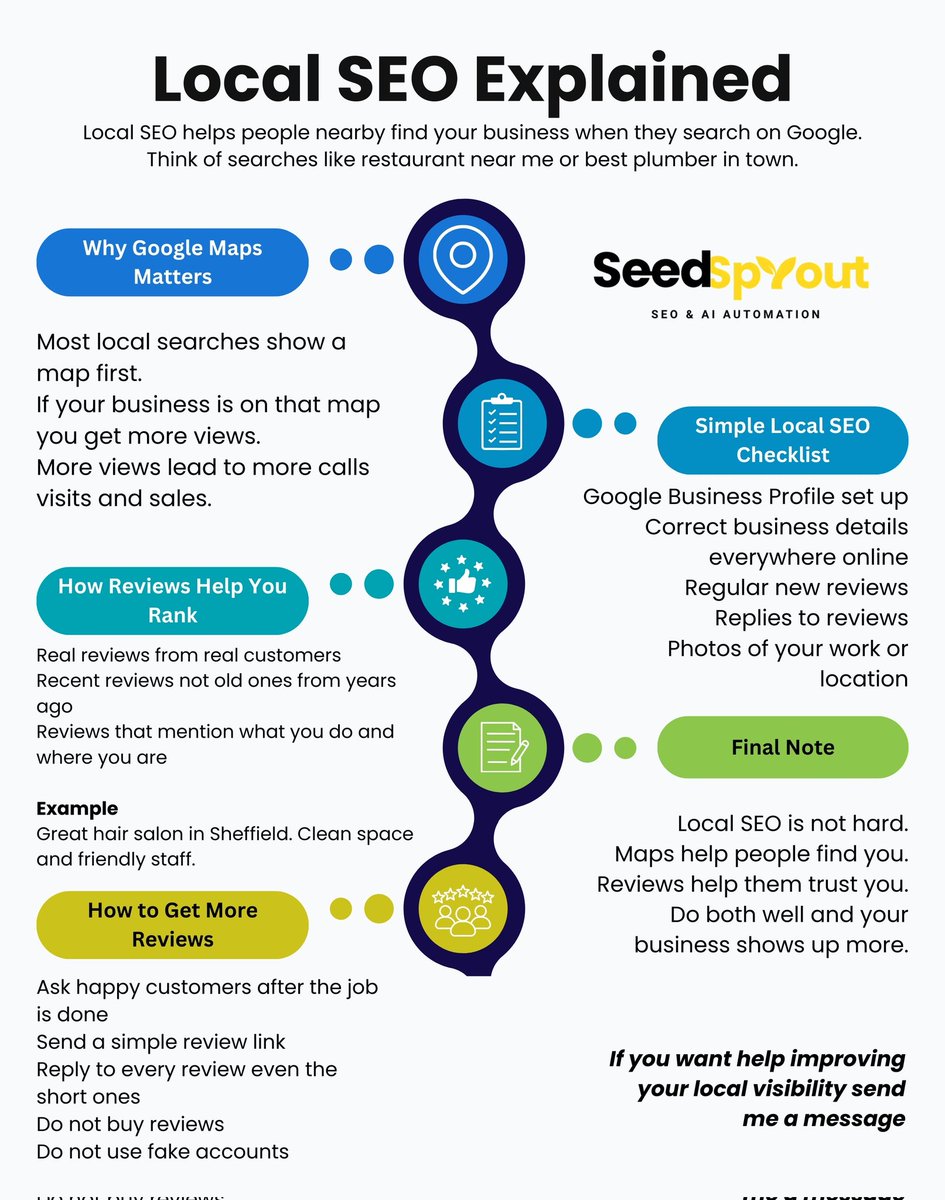
Struggling to get more local customers?
It comes down to this: show up on Google Maps + collect real reviews from happy people.
This simple breakdown shows exactly what works. Fix these and watch nearby searches find you first.
#LocalSEO#GoogleMaps
SEO is powerful, but not always the first move.
New product? Waiting months for Google traffic slows you down.
Local services? Referrals and Google Maps bring faster leads.
New ideas? Ads or content work before SEO.
SEO works best when people already know what to search for.
WHO NEEDS SEO?
Answer is "EVERYONE"
SEO is not for big brands only.
If you sell a product or service online, you need SEO.
People are already searching for what you offer.
Search is how they find you first.
The smartest growth comes from using ads and SEO together. Short term wins plus long term visibility. If you want customers to find you without paying every click, it starts with SEO.
Follow for more simple growth tips or reach out to get started.
Many small businesses rely only on ads to get customers. It feels fast and simple. But the moment you stop paying, the traffic stops. That is the hidden cost of ignoring SEO.
An ads only strategy gets more expensive over time. Costs go up. Competition increases. Trust stays low. SEO builds trust by showing your business as a real option, not just a paid result.