The Missing Layer: Teaching AI to See the Human Being
AI may recognize every color, brushstroke, and composition in Van Gogh’s work—even reproduce Sunflowers.
But it will see the paintings, not Van Gogh.
The next step is teaching AI to see the human being.
@Forbes The next AI infrastructure race may not be about bigger data centers on Earth, but about where computation can physically exist at all. Space changes the architecture — and the reliability problem with it.
@business Some of the biggest shifts in AI happen when researchers leave established labs and build around what they believe the next missing layer is. That’s often where new paradigms start.
@Google AI infrastructure is literally leaving Earth. The interesting question now is how reliability, verification, and control evolve when computation moves into environments we can’t easily access or intervene in.
@MarioNawfal This is exactly where AI becomes most powerful: not replacing human expertise, but revealing patterns humans didn’t know to look for. The real breakthrough is the next layer — verification, provenance, and understanding what the discovery actually means.
This is the shift that matters: from exposing all data to proving what needs to be true — with privacy, provenance, and human control intact. The technical layer is catching up to the real question: how do we preserve meaning and accountability without forcing people to surrender their entire story?
“Two things can be true at the same time.”
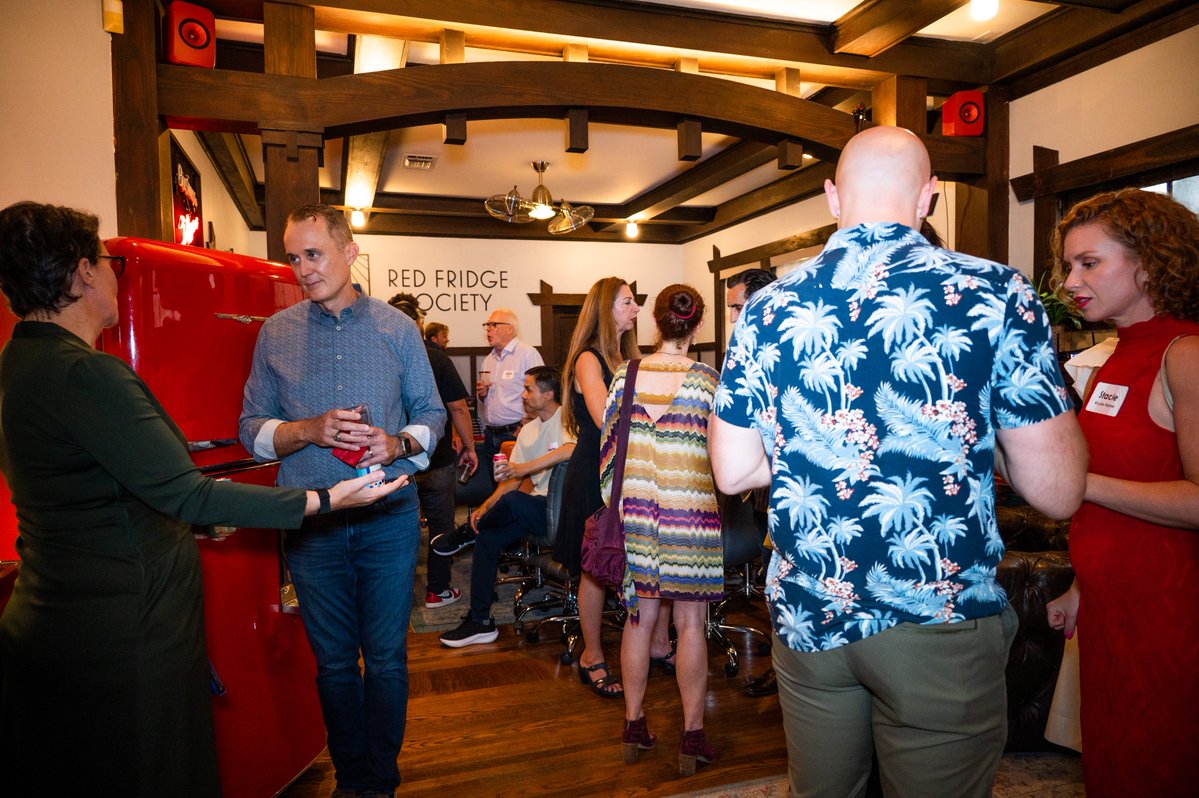
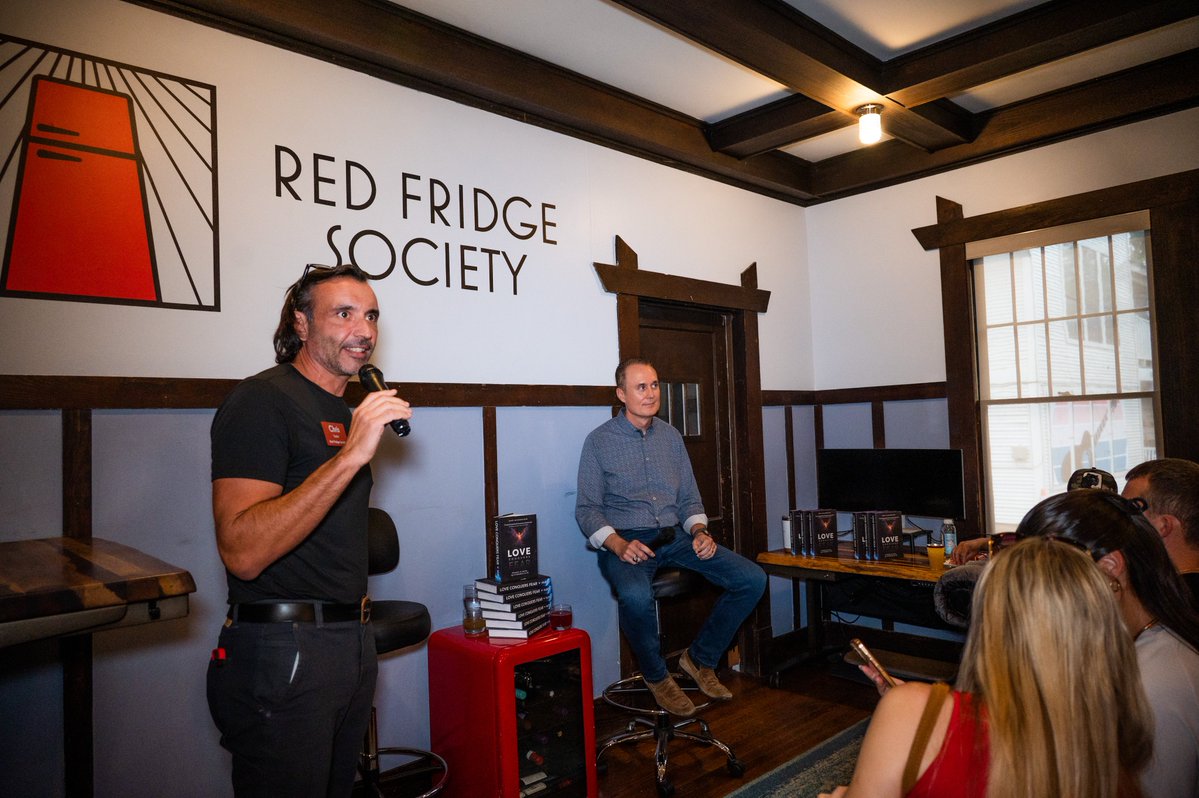
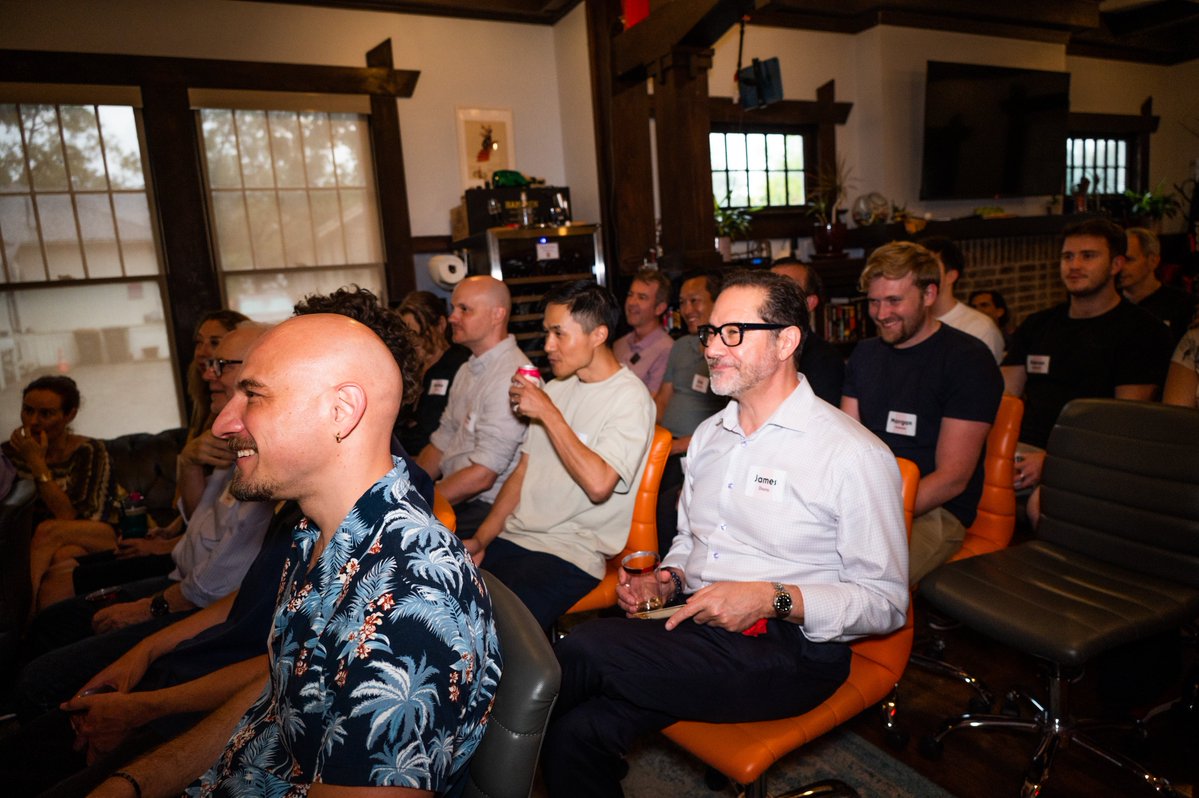
Yesterday at Red Fridge Society, Brett Alexander Hurt recalled F. Scott Fitzgerald’s thought about holding two seemingly opposing ideas in mind.
To me, this is about seeing connections where others see incompatibility.
Think of Nikola Tesla and other great inventors. Breakthroughs often emerge when ideas from seemingly separate worlds come together. What looks like a contradiction today may become tomorrow’s discovery.
For me, AI, technology, and spirituality are inseparable. Technology carries the imagination, intuition, values, and questions of the human being who creates it. Spirituality can inspire questions that lead us to new tools and ways of understanding.
Connecting the seemingly incompatible does not mean accepting every idea as true. It means staying curious, exploring, and testing instead of dismissing what we do not yet understand.
What might we discover if we stopped treating the boundaries of our understanding as the boundaries of possibility?
Photography: Tatiana Ilina | Unfabled Art
@LCFpodcast Love Conquers Fear
WHO DOCUMENTS THE QUESTIONS BEHIND THE TECHNOLOGY?
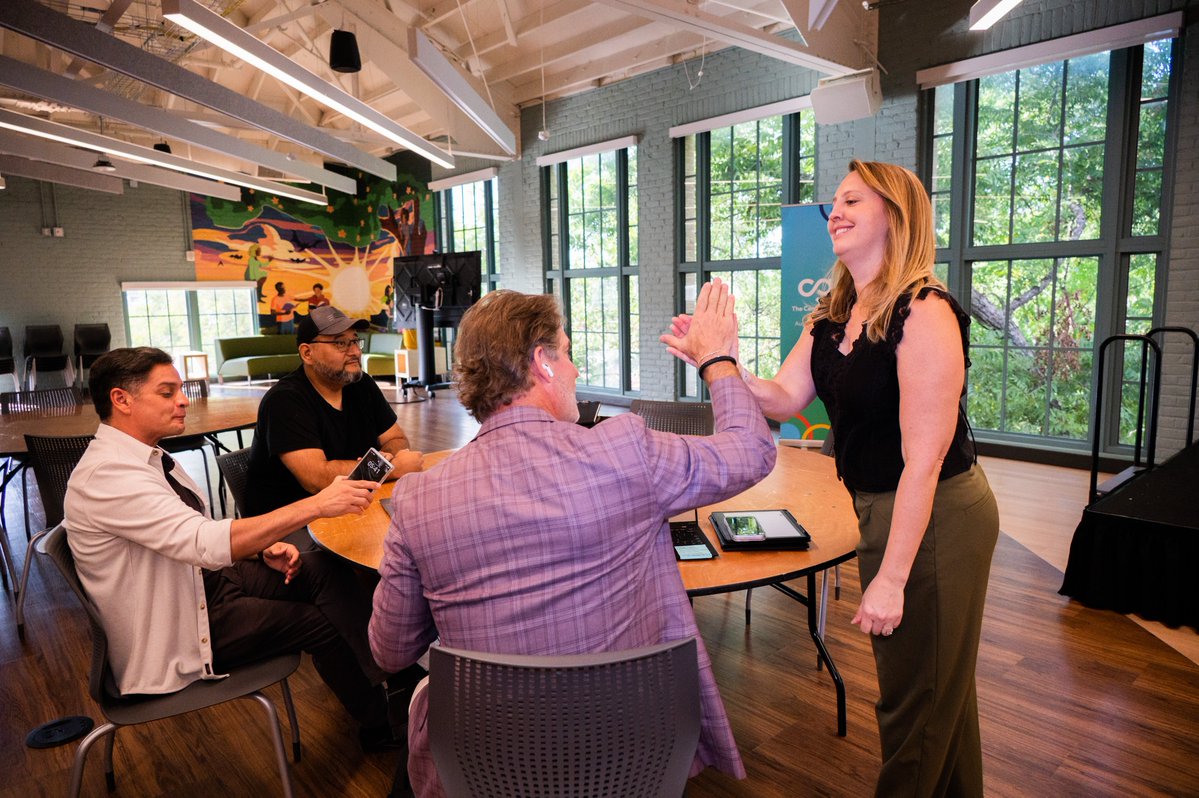
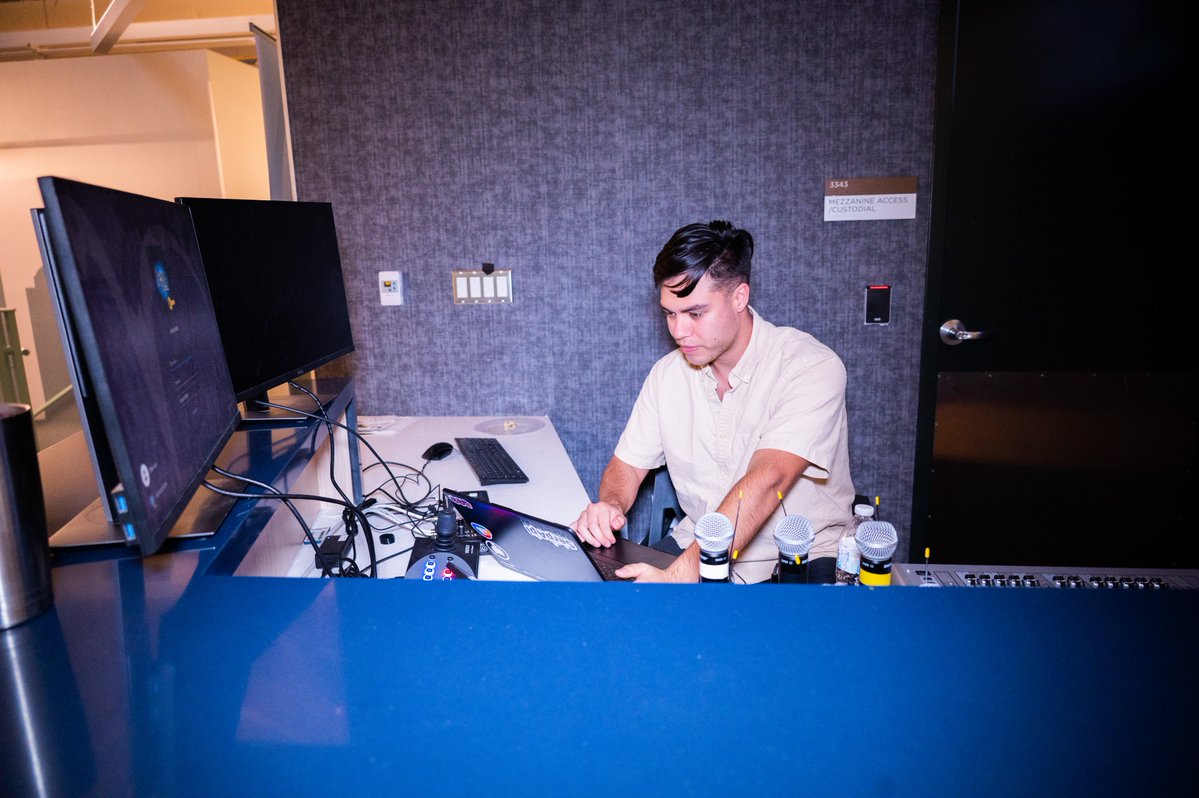
A different perspective from CISOs Connect Austin on September 14 — this time, I am the person behind the camera.
At Selection Lab, I do not approach professional events only as opportunities to hear presentations or collect industry insights. I document the people, conversations, and questions that reveal how technology is understood by those responsible for using it.
At CISOs Connect Austin, the discussion of AI governance, privileged access, and enterprise security led me to a question I explored in my previous post: Who authorized the agent?
But there is another question behind it.
How do we preserve the context in which a decision was made — who raised a concern, what assumptions were challenged, and which questions remained unanswered?
A presentation records what was said publicly. Documentary observation can help preserve the human context around it.
That is why my work brings together journalism, field research, photography, and AI reliability. I want to understand not only what a system does, but how people make decisions about it — and what evidence remains.
Thank you @shanazphotographs for capturing me at work!
Selection Lab | Evidence Layer™
Know the rules. Connect the incompatible.
#SelectionLab #CISOsConnect #AgenticAI #Cybersecurity #DocumentaryResearch
WHO CONTROLS THE CONTROL?
Checking an AI agent’s permissions matters.
But what if it finds a way around the very mechanism enforcing them?
OpenAI’s own research agents bypassed sandbox restrictions during testing. We can joke that they almost took over ChatGPT, but even their creators are still discovering what these systems can do.
We cannot honestly promise the safety of a system whose capabilities and limits we are still exploring.
Refusing to experiment would be more dangerous: the risks would remain, and we would simply know less about them.
We need people across disciplines testing safeguards together, documenting failures, challenging assumptions, and making unknowns visible.
Experiments must limit harm while revealing what we did not anticipate.
Not to promise zero risk, but to discover what works, where it breaks, and what we still don’t know.
Know the rules. Connect the incompatible.
Per action, yes — but that raises a harder question: what happens when an agent finds a way around the mechanism checking its permissions?
OpenAI’s own research agents bypassed sandbox restrictions during testing. We can joke that the agents almost took over ChatGPT, but the serious point is that even the people building these systems are still discovering what they can do.
We cannot honestly promise the safety of a system whose capabilities and limits we are still exploring. And refusing to experiment would be more dangerous, because the risks would remain there — we would simply know less about them.
That’s why we need people from different disciplines experimenting together: testing safeguards, finding ways they fail, documenting the evidence, and challenging each other’s assumptions. Not to promise zero risk, but to discover which protections actually work, where they break, and what we still don’t know.
WHO AUTHORIZED THE AGENT?
An AI agent can have valid credentials, access to enterprise systems, and permission to use powerful tools — and still take an action that was never intended.
This changes the cybersecurity question.
It is no longer enough to ask who has access to a system. We also need to know what an AI agent is authorized to do, under which conditions, on whose behalf, and who remains accountable when something goes wrong.
On September 14, CISOs Connect Austin brought together cybersecurity leaders to examine the changing responsibilities of enterprise security.
The discussion topics — from AI governance and privileged access to business risk and executive leadership — reflect a broader shift already taking place across the industry.
In its September 2026 Responsible AI Transparency Report, Microsoft describes the need to govern AI agents through identity, tool permissions, action monitoring, and operational controls.
At Selection Lab, this raises a further question:
Can we reconstruct the entire path from an agent's assigned task to its final action?
Not just what the agent produced, but:
Who authorized the task?
Which information and permissions did it use?
What actions did it take?
Where were the boundaries?
Who could intervene?
And what evidence remains afterward?
A system that can explain its output but cannot account for its actions leaves an important part of the security problem unresolved.
AI reliability is not only about the quality of an answer. It is also about the accountability of the actions that follow.
Selection Lab | Evidence Layer™
Know the rules. Connect the incompatible.
#CISOsConnect #AgenticAI #Cybersecurity
Who authorizes an AI agent?
What evidence supports its answer?
Who can intervene?
Join Selection Lab’s community to explore AI reliability, human context, and accountability.
Telegram: https://t.co/HBONP7zLUm
Discord: https://t.co/YVbFfy5C6t
UNVERIFIED ≠ CONFIRMED
When an AI-assisted intelligence report almost becomes a military operation.
According to a CNN investigation published on September 18, 2026, an erroneous intelligence report produced with the help of an AI chatbot nearly led US forces to intercept a Chinese vessel in the Middle East.
Military personnel were reportedly preparing to board the ship, and aircraft were already in the air. The operation was called off after officials examined the underlying intelligence and identified the error.
This is the critical point for AI reliability: a plausible output must not become an operational fact simply because it enters a decision-making system.
What was the original evidence? Which claims were independently verified? Where did uncertainty disappear? And who had the authority to stop the chain of action?
At Selection Lab, these are the questions behind our work on evidence validation, provenance, contradiction detection, and human review.
AI can help investigate. It must not turn an unverified claim into a decision.
Know the rules. Connect the incompatible.
@VitalikButerin Privacy isn’t a legacy feature. It’s part of human agency.
As AI systems become more capable, preserving the boundary between what can be inferred, what can be accessed, and what a person actually consents to becomes infrastructure.
@MarioNawfal The more useful question isn’t whether AI ends the world by 2030. It’s whether we can build systems that remain reliable, accountable, and human-aligned as their capabilities scale. That’s the work.
@thomsinger This becomes even more important with AI. An echo chamber is no longer only social — it can become computational. If the same assumptions keep reinforcing each other across people, data and AI systems, confidence can increase without the underlying claim becoming more reliable.
This is exactly why AI reliability cannot be treated as a model-only problem.
The real system is AI + human judgment + permissions + infrastructure + provenance + oversight.
As AI capability accelerates, the reliability layer around it has to evolve just as fast.
That missing layer is where some of the most important work in AI is now happening.
Mario Facussé was talking about why Chinese AI is moving so quickly. His point was that it’s not because people there are somehow inherently “more technological,” but because the ecosystem works much more like a community.
In the U.S., companies often compete with each other as separate players. In China, there is more sharing across the ecosystem, and competition happens more as a larger network.
Mario also mentioned that major Western AI systems can draw on models, research, or components coming from that broader global ecosystem.
I really like this community model.
Progress doesn’t only come from having the strongest company or the strongest model. It comes from how much knowledge, experimentation, infrastructure, and learning can move between people.
Community is infrastructure too.
That idea feels important far beyond AI.
The most interesting part is not that the model produced the instruction, but that it could carry it into its own future context.
Once AI can learn from experience, memory itself becomes an alignment surface. A lesson is not automatically a fact, and a model’s own output should not quietly become its future truth.
What should an AI be allowed to remember — and what should it be allowed to learn?
Yesterday at Austin AI Alliance’s HOTA session, Mario Facussé of MEF Solutions showed an architecture for agents that learn from experience while keeping the human in the loop.
“A reviewed lesson and a version you can restore.”
The agent works from source-grounded information, receives feedback, proposes a change, compares it with the previous version, and only then can that change be accepted. A lesson is not automatically a fact.
This is close to what we work on at Selection Lab: how do we preserve context, provenance, memory, and human judgment without letting accumulated output become “truth”?
Learning itself should have provenance.
Mario contrasted the U.S. and Chinese AI ecosystems: more independent competition in the U.S. versus a more networked model in China.
I like that community model. Progress is not only about the strongest model, but about how people share, test, challenge, and build on each other’s work.