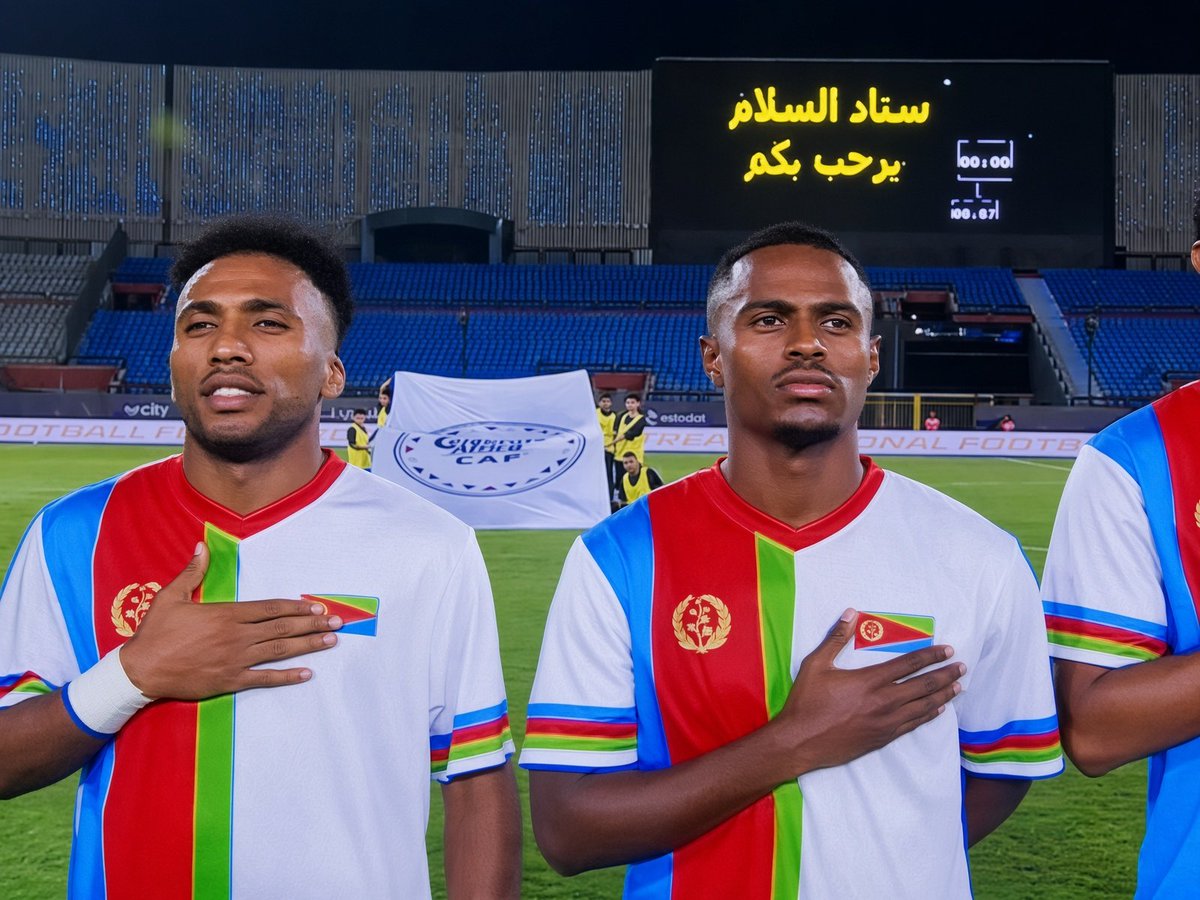
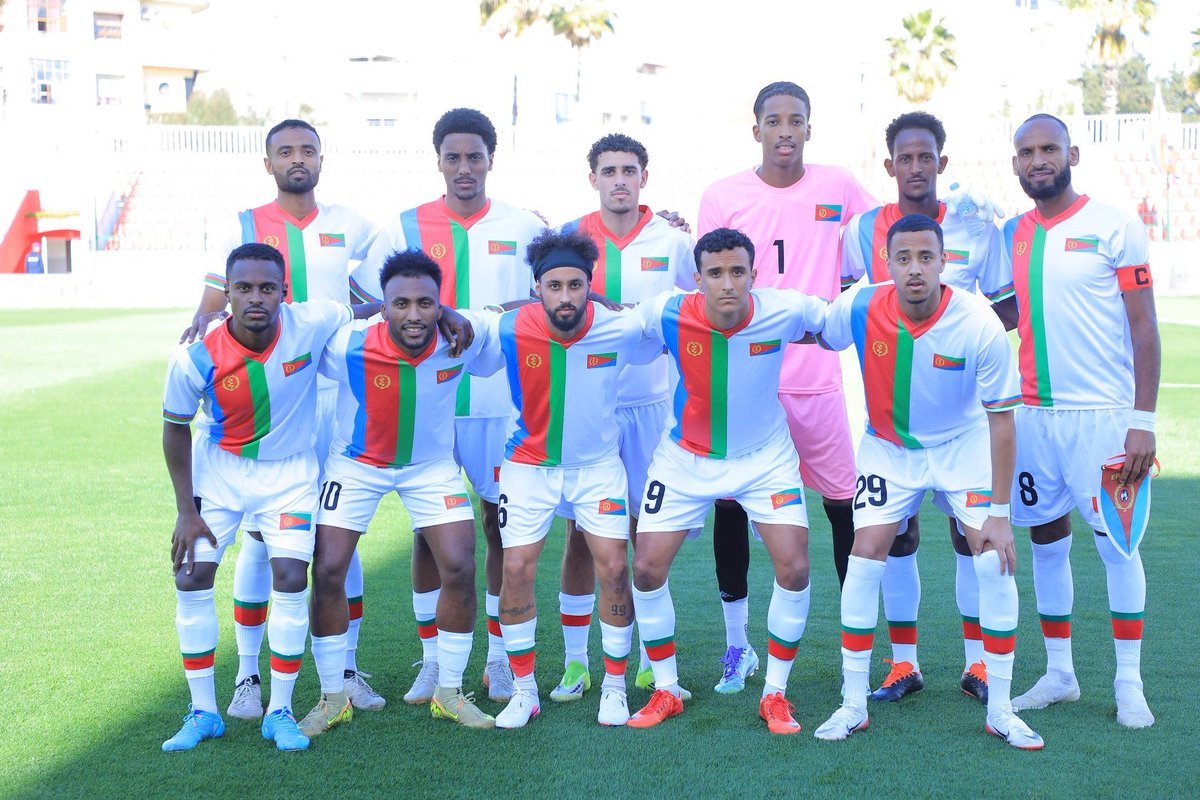
I just watched the highlights of the AFCON 2027 Qualifiers match https://t.co/nuYElfhxC2 b/n #Eritrea & #SouthAfrica. Brutal result for our Red Sea Camels, but South Africa was always the favorite and they showed why. Our players have talent, w/c you can see it in flashes and quick runs. But they were repeatedly exposed by quicker combinations, set piece execution, and second ball work. That gap is down to coaching & preparation more than ability. As I said the other day, our Red Sea Camels need technical coaches, more friendlies, and a proper setup. The raw talent is absolutely there. So, the march shall continue.
🇪🇷 June 20, In memory of our fallen fathers and mothers, brothers and sisters, sons and daughters
They were friends, spouses, colleagues, and neighbors from all walks of life.
Eternal glory to generations of Eritreans who paid the ultimate price to liberate and defend #Eritrea
🇪🇷 Natnael Tesfazion won Stage 4 of the 4 Jours de Dunkerque in Cassel, France, on his birthday and on the eve of Eritrea's Independence Day, securing his first victory for Movistar Team, and he's now 2nd in GC. Congrats Natu! Happy Independence Day! 🇪🇷#EritreaShineAt35
#BREAKING - 🚨 Ladies and gentlemen, the wait is finally over!
The Eritrean national team has officially qualified for AFCON 2027 Group Stage qualifiers after a commanding display over #Eswatini, securing back-to-back victories of 2–0 and 2–1 for a 4–1 aggregate triumph.
What a historic moment! ��🇪🇷
“THE RETURN OF ERITREA”
By Abraham Gebremichael
First… I won’t lie.
I am very happy.
It is difficult to describe this moment.
Since this was not a mere game.
It started quietly.
A tense 0–0.
Doubt in the air. Silence in the stands.
But in the last few minutes, something changed.
Eritrea took control.
Not by chance… but by belief.
Two goals.
Three shots on target.
Five minutes that changed everything.
Such is persistence in its appearance.
This is what forbearance brings about.
The Red Sea Camels do not simply come back...
They are awake.
And let’s be clear.
The football heritage in Eritrea had never died.
It was interrupted.
It was tested.
It was pushed aside.
But you cannot erase talent.
You cannot silence history.
Because history remembers.
1962.
Africa Cup of Nations.
When Ethiopia took off the trophy...
The centre of that victory was Eritrean players.
Luciano Vassallo. The captain.
A leader. A scorer.
A name that still echoes.
Italo Vassallo.
Another goal. Another moment.
Even under occupation…
The Eritrean talent was already making history.
So what you saw yesterday…
was not a surprise.
It was a return.
The talent is back.
The energy is back.
The belief is back.
And the future?
Eritrea has a future.
Glory to our martyrs.
Strength to our people.
The stone moves because we move it.
#Eritrea
🇪🇷 Eritrea National Team has arrived in Meknes, Morocco for the #AFCON2027 qualifiers!
After landing in Casablanca, the squad traveled 245 km to their base and completed their first training session.
📅 March 25
🆚 Eswatini
🏟 Stade d’Honneur
Let’s go, Red Sea Boys!
WOW! 🏁 Henok Mulubrhan has conquered the final stage of the Tour du Rwanda 2026! 🇪🇷
Huge congratulations to Team Eritrea! This win comes after an incredible, hard-fought week on the hills. You truly deserve this victory. Kudos !!!
AfDB to Invest $58m in Clean Energy Expansion and Rural Economic Growth
ERITREA – The African Development Bank Group has approved $58.04 million to expand access to reliable and clean electricity across three towns in Eritrea’s southwest Gash Barka region.
This significant investment, approved on February 18, comes from an African Development Fund grant of $37.31 million and a $20.73 million grant from the Bank’s Transition Support Facility.
It will power the Eritrea Energy Integrated Project for Tesseney, Kerkebet, and Berantu.
The financing will support the deployment of a 34-megawatt solar-powered mini-grid system, strengthening distribution networks and expanding local energy capacity.
This means affordable, reliable electricity for households and businesses in and around Tesseney, Berantu, and Kerkebet!
Beyond lighting homes, this initiative will power clean water pumping, improve irrigation and agricultural productivity, and enable small enterprises and agro-processing to extend operating hours and reduce costs.
Plus, 542 kilometers of distribution lines will be constructed or upgraded!
Expect job creation during both construction and operational phases, a boost in local technical skills, and growth for small businesses linked to renewable energy services.
Over time, this project will reduce greenhouse gas emissions and help #Eritrea transition towards a low-carbon, climate-resilient economy.
Overall, the Eritrea Energy Integrated Project is expected to benefit around 306,000 people!
This project, part of the Bank Group’s Desert to Power initiative, integrates energy access with agro-processing, irrigation, and local industrial development to unlock broader socio-economic transformation.
Kevin Kariuki, Bank Group Vice President for Power, Energy, Climate & Green Growth, welcomed the approval: “This timely investment will help deliver reliable and affordable clean power to communities in Eritrea that need it most, thereby spurring job creation, strengthening local economies and helping Eritrea move towards a sustainable energy future.”
https://t.co/9F2tnsFwdm
Biniam Girmay just banked 200 UCI points in a single afternoon!
To put that in perspective, winning a Tour de France stage gets you 120 points.
Every point Girmay earns goes straight into Eritrea's national ranking. By getting into the top 10 nations, Eritrea can send a full squad of 8 riders to the 2026 World Championships in Montreal, instead of a smaller team.
#ClasicadeAlmeria2026
SDRi Electric PLC: from ideas to reality!
An amazing and passionate team of electrical engineers who went together to Asmara University, acquired extensive knowledge and experience around the world in Solar PV design, AC Substation engineering, SCADA and general electrical systems, had never given up on their almost two decade-old idea of establishing a company in Eritrea. Even though we have been working and sharing ideas informally with authorities in Eritrea on how we can utilize our knowledge together with engineers at home, we had never given up building a company that could fulfill what we had dreamed of: building a solid and responsible company that adds value to our country's economic and social developments and makes a difference in the lives of our people because we believed paying back to our community was a noble duty. Now that that dream had come true, we are embarking on a journey in 2026 and beyond to realize our vision for our new company, SDRi Electric PLC, and Eritrea: to create a sustainable energy solutions, and together with local and international partners, we are going to realize this vision and work for a better future.
@WolduTuku@EriSolar_@Sembel82 #InvestInEritrea 🇪🇷
FROM RECORD TO RESOLVE
When the truth is settled, the future begins
By Abraham Gebremichael
They ask,
Who gave Eritrea recognition?
As if a nation is a receipt.
As if freedom requires a signature from the defeated.
As if blood must wait for permission to dry.
They shuffle papers in parliament halls,
searching for documents that never mattered,
lost files, imagined mandates,
fantasies dressed as law.
But history does not live in filing cabinets.
It lives in trenches.
In mountains that learned our names by heart.
In seas that swallowed our dead and kept their oath.
Ethiopia did not grant Eritrea independence.
It conceded to reality.
A reality carved by thirty years of resistance,
sealed by a decisive victory,
and formalized, not created by a referendum
watched by the world, not authored by Addis Ababa.
No parliament voted Eritrea into existence.
No party bestowed it.
No regime invented it.
We were already there
standing, fighting, enduring
before the question was ever asked.
They speak now of ports,
as if Assab and Massawa were bargaining chips
instead of coastlines soaked in sacrifice.
They forget or pretend to forget
that access was already agreed,
that cooperation was already offered,
that sovereignty never required surrender.
And so they ask again, louder this time,
hoping volume will replace truth:
What if Ethiopia stops recognizing Eritrea?
Then nothing changes.
Because recognition does not create a nation,
it merely acknowledges one that already exists.
Empires recognize after they lose.
Occupiers recognize after they are expelled.
History recognizes after resistance wins.
Eritrea did not separate.
It returned to itself.
For how can one separate from what one never was?
We were colonized by Turks, by Italians, by the British
and unlawfully annexed by imperial decree.
But through every flag imposed upon us,
we remained Eritrea:
in name, in memory, in blood, in refusal.
Our struggle was not for separation,
but for restoration.
Not for invention,
but for recognition of what endurance had already proven.
So when a man of power stands and says
“it took Eritrea thirty years to separate,”
he mistakes occupation for ownership
and freedom for favor.
History knows better.
And the Red Sea remembers.
Such words do not project strength.
They expose hunger dressed as pride,
a fantasy born from a famine of vision.
This is not diplomacy.
It is desecration.
A public renunciation of the law that binds nations,
and the covenant that spared Africa endless war:
the sanctity of borders,
the inviolability of states.
Eritrea’s sovereignty is not a theory debated in halls.
It is a scar.
A scripture.
A bloodline.
It was written not with ink,
but with endurance.
Every stone became a clause.
Every grave, a paragraph.
Every mother’s tear, a signature.
Independence was not borrowed.
It was paid for in full.
Stamped not by diplomats,
but by sacrifice.
To trivialize that history
is to spit upon the martyrs who made it.
To question it
is to stand before the judgment of memory itself.
We do not crave conflict.
But understand this:
restraint is not weakness
it is wisdom weaponized.
We have learned the patience of mountains,
the silence of seas,
and the discipline of fire.
Eritrea will not be provoked into chaos,
but it will never bow to fantasy.
Our coasts are watched not by fear,
but by faith.
Our defense is not loud.
It is lived.
Because sovereignty is not a loan.
It cannot be repossessed by envy,
nor rewritten by the rhetoric of decay.
We are the keepers of a covenant older than arrogance.
The Red Sea keeps its own ledger,
etched not in tide,
but in truth.
So let those who dream of conquest remember this:
empires drown where endurance sails.
And those who mistake silence for surrender
will one day hear it roar.
Glory to our martyrs.
Strength to our people.
The @_AfricanUnion|s challenges are undeniable, but calling it “dysfunctional” would misdiagnose the problem. Its foundational mandate remains intact; what has faltered is the neutrality of its internal machinery. The real issue is the extent to which PP-aligned operatives have inserted themselves into key organs, subtly repurposing institutional channels to advance PPs political agendas. #Eritrean|s know this pattern all too well, successive #Ethiopia|n regimes have historically treated the organization less as a multilateral institution and more as an appendage of their foreign policy.
Today’s developments echo that history with uncomfortable clarity. The credibility, integrity, and independence of the institution are strained when its processes begin to reflect the domestic priorities of the host country rather than the collective interests of Africa. And, in truth, #Ethiopia|s role as host state complicates matters further: it places the AU in a structurally delicate position, one in which publicly admonishing or even firmly correcting the latest actions of the host government becomes politically sensitive and diplomatically fraught. The result is an unhealthy asymmetry, one member state enjoying disproportionate influence through geography, proximity, and embedded networks.
Every institution has its vulnerabilities, its “weakest link.” The @_AfricanUnion is no exception. But those vulnerabilities become consequential when exploited from within, turning a continental body into a passive amplifier of partisan narratives. It is precisely at such moments that member states must insist on professional rigor, impartial stewardship, and fidelity to mandate, lest the organization’s voice—and its legitimacy, be gradually eroded by those who speak loudest simply because they sit closest to its corridors.
So, one should also not be easily swayed when the familiar slogan “African solutions for African problems” is invoked with great fanfare by PP cadres. In principle, it is a noble and necessary aspiration. In practice, however, it has too often been weaponized by #Ethiopia|n authorities as a political shield, an appeal to continental pride used primarily to keep scrutiny at bay and to insulate their actions from the accountability mechanisms they so readily demand of others.
When the host country speaks the loudest about “African solutions,” it is worth asking whose problems are being solved...and most importantly, whose problems are being concealed.
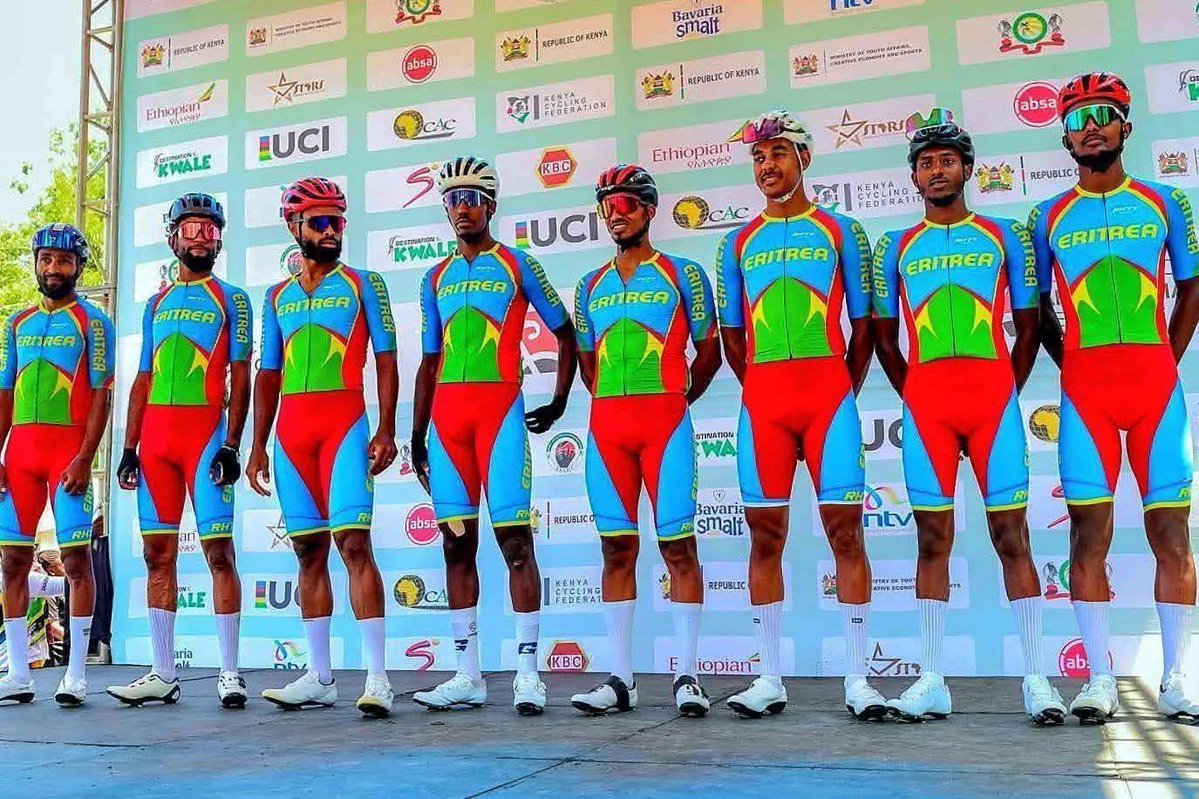
Endless gratitude to our Champions for uplifting the spirit of the entire nation. Four consecutive continental championship titles is no small feat, and you achieved it with class and courage.
Thank you for carrying the 🇪🇷 flag so high at #CAC2025 in Kenya. 🫡
IMHO, self reliant=independent, partnership= interdependence. To partner meaningfully->need to stand on your own feet. The space and time #Eritrea sought to stand on its own is what is normally perceived as 'isolation' - many in the audience pointed out this misconception.
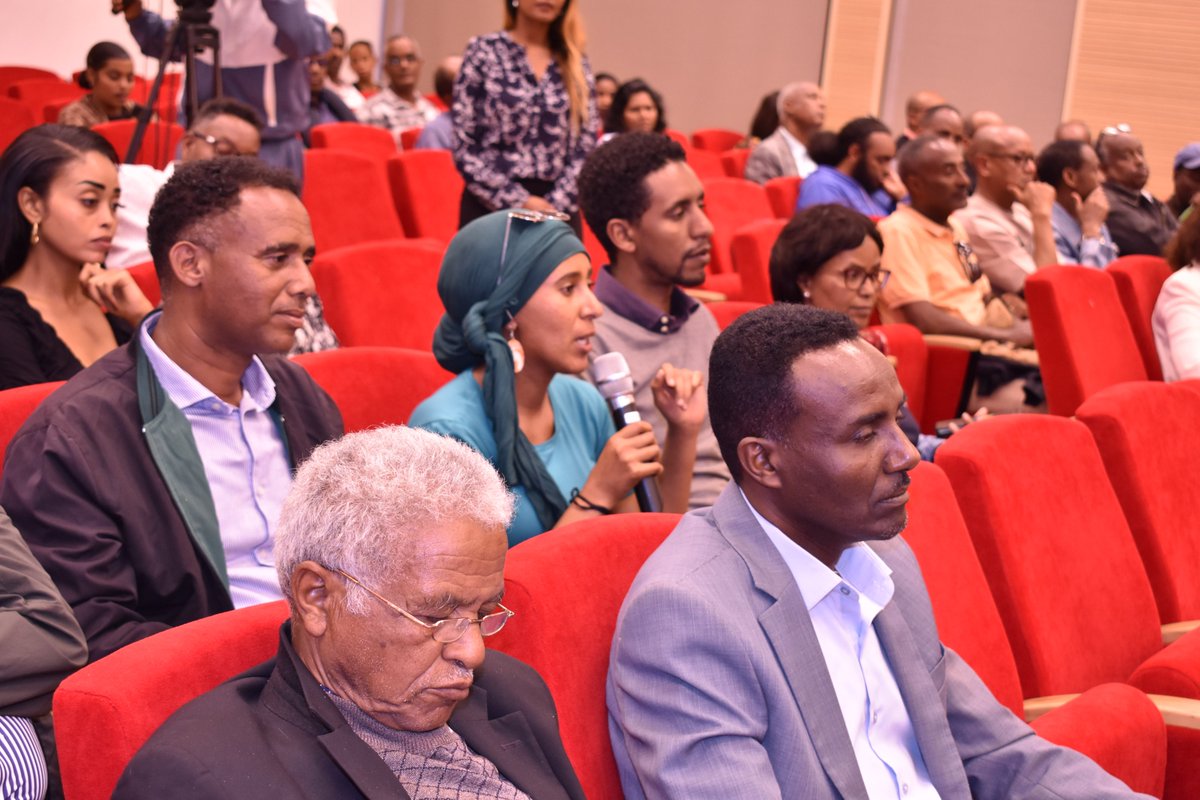
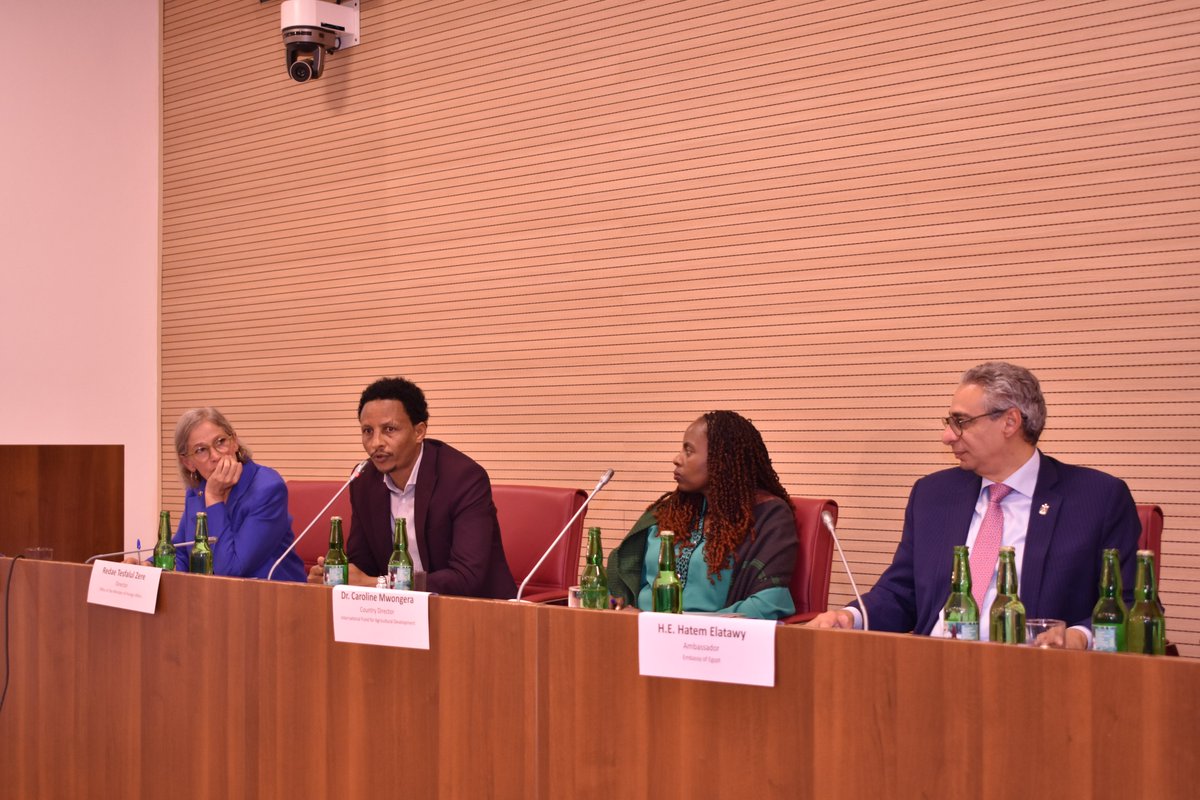
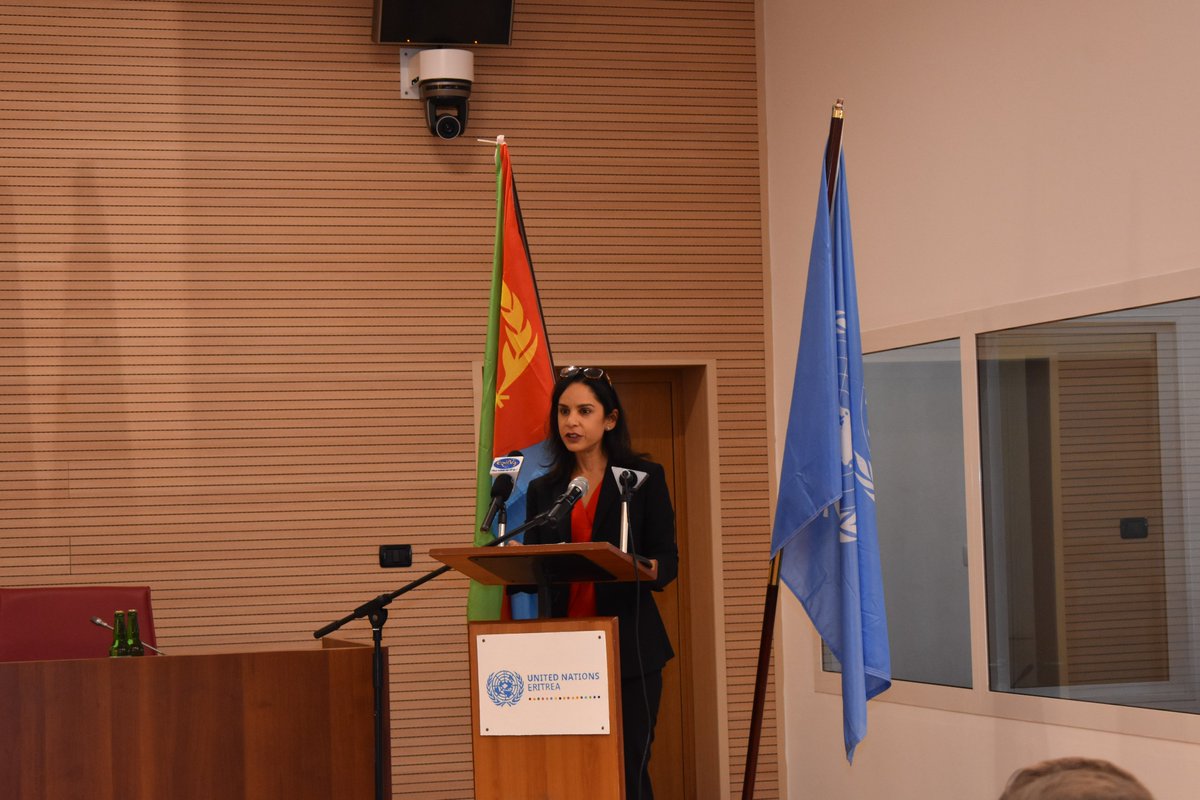
Today, in honor of #UNDay80, #Eritrea hosted a first of its kind panel discussion on self-reliance and principled partnerships. Government, partners, academics, and UN colleagues gathered for an open and frank conversation—highlighting Eritrea’s unique approach and commitment to shared progress.
Thank you to all - panelists and participants - for your insights. Today’s discussion highlighted the relevance of Eritrea’s development model and the need for renewed multilateralism rooted in equal partnership, shared values, and a commitment to sustainable progress.
Let me give you some lessons you clearly need.
1. On Eritrea’s Independence & Sovereignty
Eritrea does not merely “boast” about independence it is a matter of record. Eritrea’s sovereignty was achieved through a 30-year armed struggle and confirmed by a 1993 UN-supervised referendum, in which 99.8% of Eritreans voted for independence. Eritrea was admitted as a full member of the United Nations that same year.
👉 Therefore, independence is not up for debate. To frame it as something Ethiopia could “recover” is a direct violation of:
Article 1(2) of the UN Charter (right of peoples to self-determination)
Article 2(1) (sovereign equality of states)
Article 2(4) (prohibition of the threat or use of force against the territorial integrity of another state).
Eritrea is not “claiming” Ethiopia endangers its sovereignty Eritrea is pointing out that Ethiopia’s officials themselves have repeatedly made statements about “recovering the Red Sea,” which is a textbook violation of international law.
2. On “Revisionist Ambitions”
The PhD-holder asks, “What is revisionist about that?”
Here’s the answer: Revisionism = reopening and rewriting settled international boundaries and sovereignty decisions.
Eritrea’s independence and Ethiopia’s landlocked status were the outcome of a UN-recognized referendum and admission of Eritrea to the UN in 1993.
Any attempt to undo this is revisionism.
Ethiopia has legitimate rights under UNCLOS Article 125 to negotiate access to ports but it has no right to demand ownership of Eritrean territory.
So when Abiy or Ethiopian officials talk about “owning” Assab or Massawa, that is revisionism plain and simple.
3. On the “Involuntary Loss” Argument
The idea that Ethiopia suffered an “involuntary loss” is false. Eritrea was federated with Ethiopia in 1952 under a UN resolution, but in 1962 Emperor Haile Selassie illegally annexed Eritrea, violating the federation. This triggered the armed struggle. The 1993 referendum was Eritrea’s legitimate exercise of self-determination.
👉 To call this “involuntary loss” erases Eritrea’s right to self-determination and misrepresents history. It also ignores that Eritrea was never historically part of Ethiopia until forced annexation.
4. Regional Stability
Eritrea’s concern is valid: Ethiopia’s reckless rhetoric threatens peace in the Horn of Africa.
Eritrea has repeatedly said Ethiopia can use Eritrean ports through agreements.
But Ethiopia’s insistence on possession destabilizes the region, undermines trust, and risks conflict.
Under Chapter VII of the UN Charter, such threats could be considered a danger to international peace and security.
🚨 DO YOU HAVE ANY QUESTIONS?
#Eritrean #AbiyAhmedali #Eritrea
Facts matter. Eritrea’s history is complex and courageous. Insults won’t change history. If you want an honest discussion, come with facts, not threats. “If Eritrea’s freedom depended on ‘balls,’ it would still be a colony. Luckily, it depended on sacrifice, vision, and martyrs. That’s how real history is written. Eritrea doesn’t play games with anatomy.”
“Testing courage doesn’t happen behind a keyboard. Eritrea already passed its exam after 30 years of war, Nakfa, Red Star, and Fenkil. The invaders failed. Balls were tested. History kept the score.”
“Here is a real story. Sit down, have a drink, and listen.
When some mock Eritrea and call its people “slaves,” they reveal more about their ignorance than about our history. Eritrea is not a land of cowards. It is a land of witnesses, martyrs, and builders, a land that has stood against empire after empire, refusing to be erased.
For centuries, foreign powers tried to chain this soil. Ottoman garrisons along the coast, Egyptian expansion into Massawa, Italian colonization, British custodianship, and Ethiopian annexation each arrived with the arrogance of permanence. Each believed Eritrea was theirs to command.
Yet every occupation leaves scars, never with peace. Because Eritrea has never digested slavery. It has always resisted it.
The so-called “425 years” are not years of silence, but years of fire. The Red Sea remembers the uprisings against Ottoman and Egyptian rule. The highlands remember the first shots against Italian colonizers. The plains of Barka remember villages burned and rebuilt. The Sahel mountains hold the longest guerrilla trenches in modern African history.
Who dares call this cowardice? Who dares call this slavery?
When the world looked away, Eritrea endured thirty years of war against an Ethiopian empire armed by superpowers. From Nakfa to Afabet, from Red Star to Fenkil, Eritreans carved victory not with money, not with mercenaries, but with their own flesh and spirit. This is not the record of slaves, it is the record of free people who refused to bow.
Independence in 1991 was not charity. It was not given. It was not signed on paper. It was born in trenches, sealed in sacrifice, and carried in blood. Eritrea’s freedom is proof that no chain, however long, can outlast a people’s will.
Those who mock today do so from a safe distance, in comfort paid for by others. But Eritrea speaks not with insults. Eritrea speaks with survival. Every child learning in rebuilt schools, every farmer planting after drought, every family who lights a candle for the martyrs, they are the real answer to slander.
Eritrea is not enslaved. Eritrea is not broken. Eritrea is the land where empires entered and found their end.
Born in fire. Sealed in strength. Forever rare. Forever resilient. Forever reborn.
"Enter if you dare, they said.
They did.
But they never left the same".
Glory to our martyrs. Strength to our people.