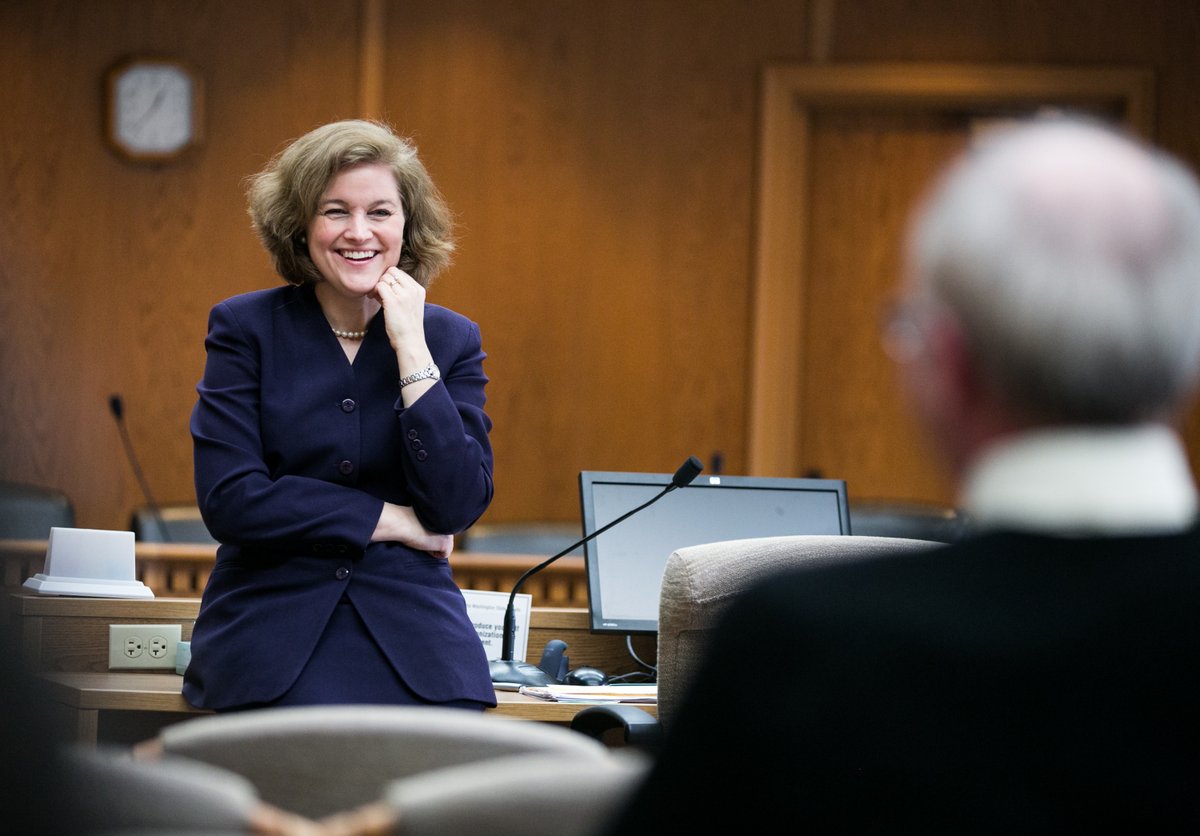
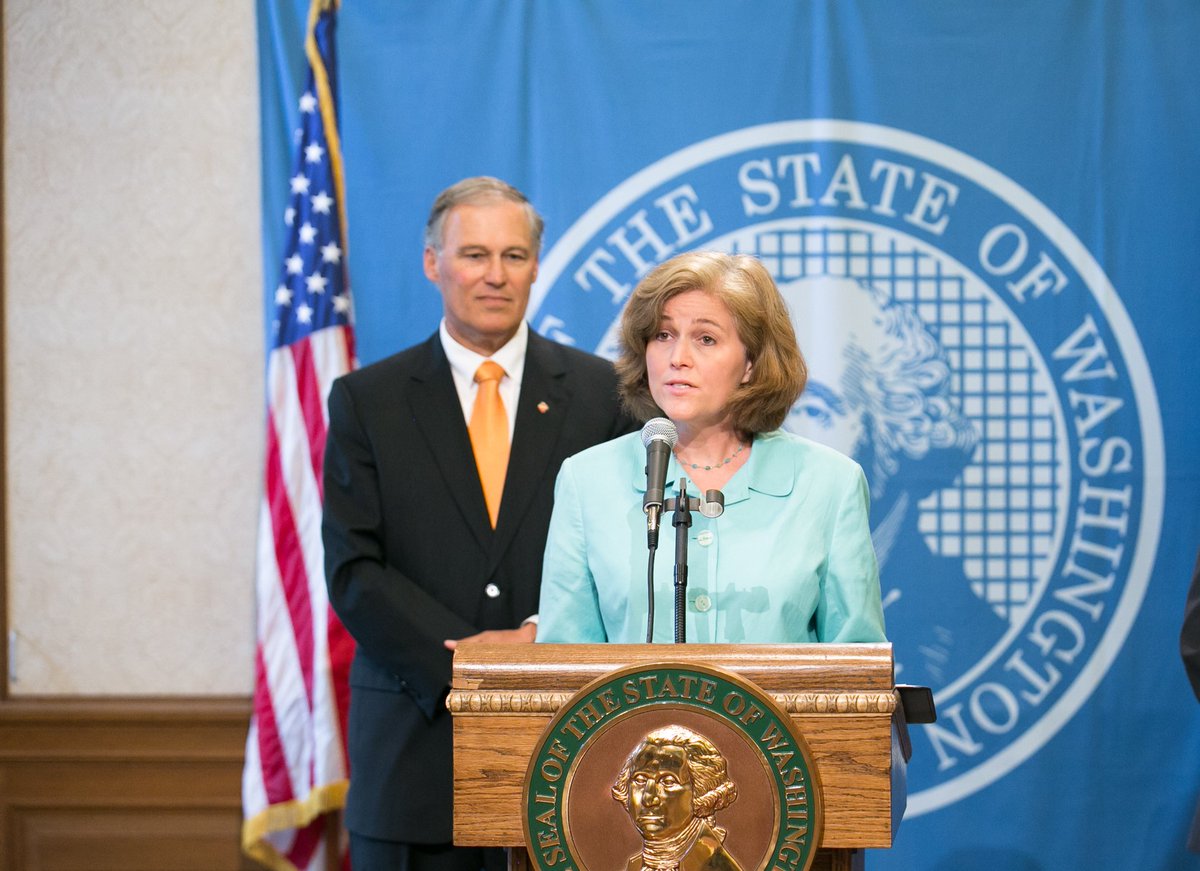
It has been one of the great honors of my life to serve as the Representative for Washington's 6th District in Congress. I’m proud of what we have accomplished – but it is time for the next chapter. I will not seek re-election in 2024.
Read my full statement here:
12 Reasons Why Cities Need More Trees:
1. Temperature Control
One large tree is equivalent to 10 air conditioning units, and the shade they provide can reduce street temperature by more than 30%.
2. Noise Reduction
Trees can reduce loudness by up to 50%. In urban areas filled with the sound of cars, construction, sirens, aeroplanes, and music, trees are essentially the best way to block noise and keep cities — along with the homes and workplaces in them — quieter.
3. Air Purity
Trees remove an astonishing amount of harmful pollutants and toxins from the air. In urban areas air quality is often disastrously bad — with severe consequences for our health. Trees make the air we breathe much cleaner.
4. Oxygen
And, while absorbing all those pollutants, trees also put more oxygen back into the urban environment. Oxygen levels are significantly lower in cities compared to the countryside; trees help to solve that problem.
5. Water Management
Trees do more than just shelter us and our buildings from rain — which is, in fact, extremely important. They also absorb huge quantities of water, reduce run-off, neutralise the severity of flooding, and make flooding more unlikely altogether. Not to forget that their roots absorb pollutants and prevent them from feeding back into a city's water supply.
6. Psychological Health
Studies have proven what we instinctively know to be true: that human beings are significantly happier when surrounded by nature rather than sterile urban environments. Our emotions, behaviour, and thoughts are shaped by the places we spend time — and trees have a profoundly positive effect on our psychology. The consequential benefits of being happier and more peaceful — as individuals and as a society — are immense.
7. Physical Health
Beyond all the other ways in which trees improve air quality and the urban environment, much to the benefit of our health, they also encourage people to go outside. Cycling, running, and walking are all more common in urban areas with plenty of trees. A knock-on effect of people spending more time outdoors is also social integration and stronger communities.
8. Privacy
A simple point, but not inconsequential, is that trees provide privacy.
9. Economics
The total economic benefit of urban trees is hard to calculate. There are costs, of course, including the repair of infrastructure damaged by roots and maintaining the trees themselves. But the total economic benefit — a consequence of everything else in this list and more — far outweighs the expenditure. Trees make cities wealthier.
10. Wildlife
Trees are miniature cities all of their own, serving as a habitat for hundreds of different species, including birds and mammals and insects.
11. Light Pollution
Trees don't only block the light shining down, therefore keeping us and our cities cooler — they also disrupt light shining up, from street lighting, cars, houses, and billboards. Skies are clearer in cities with more trees.
12. Aesthetics
And, finally, trees are beautiful. They break up the potential monotony of urban environments — the sharp geometry, the greyscale roads and buildings, the endless rows of cars — with their trunks, boughs, canopies, and flowers.
Just think: the gold and red of falling leaves in autumn, the white and pink blossom of spring, the vast green canopies of summer, and the branches lined with hoar-frost in winter. Every single tree is a myriad of intricacy and texture, of colour and scent, of dappled light on the pavement, mottled bark, knotted roots, of clustered leaves and delicate petals and stern boughs.
Few streets would not be improved by the kaleidoscopic aesthetic delights of a tree, not to mention the many different species of tree, all over the world, whether willow, oak, lime, cherry, aspen, maple, birch, horse chestnut, dogwood, hornbeam, ash, sycamore... the list goes on.
There are some drawbacks to urban trees, most of them context-specific, and they are not — of course — universally appropriate. But it seems fair to say that many cities would benefit from at least a few more trees here and there.
"I do predict by 2025 half the new-build ships will be ordered with wind propulsion
"The reason I'm so confident is our savings - one-and-a-half tonnes of fuel per day. Get four wings on a vessel, that's six tonnes of fuel saved"
https://t.co/xlhycQ6XxD
“Explosive growth in solar power means most EU countries will hit their 2030 renewable energy targets ahead of time… The bloc added 41 gigawatts of new solar capacity in 2022 — a 40% increase on 2021.” https://t.co/BX79EOweSb
Today we say goodbye to Sen. Christine Rolfes of Bainbridge Island as she moves on to the Kitsap County Commission. First elected to the Legislature in 2006, Rolfes helped guide our state through enormous challenges over the years with honor, integrity & patience. #WALeg
Washington state leads the way in sustainable aviation fuel. By incentivizing innovation, we're soaring higher and further towards a cleaner future. Thanks to the @EnvDefenseFund for supporting efforts to create a more sustainable aviation future.
https://t.co/sQgyMcNqKx
Some 8,000 miles of federally owned canals snake across the US, channeling water to crops, hydropower plants & drinking water systems. In the future, these narrow waterways might serve an additional role: as hubs of solar energy. Me for @CanaryMediaInc https://t.co/aDj386LzNM
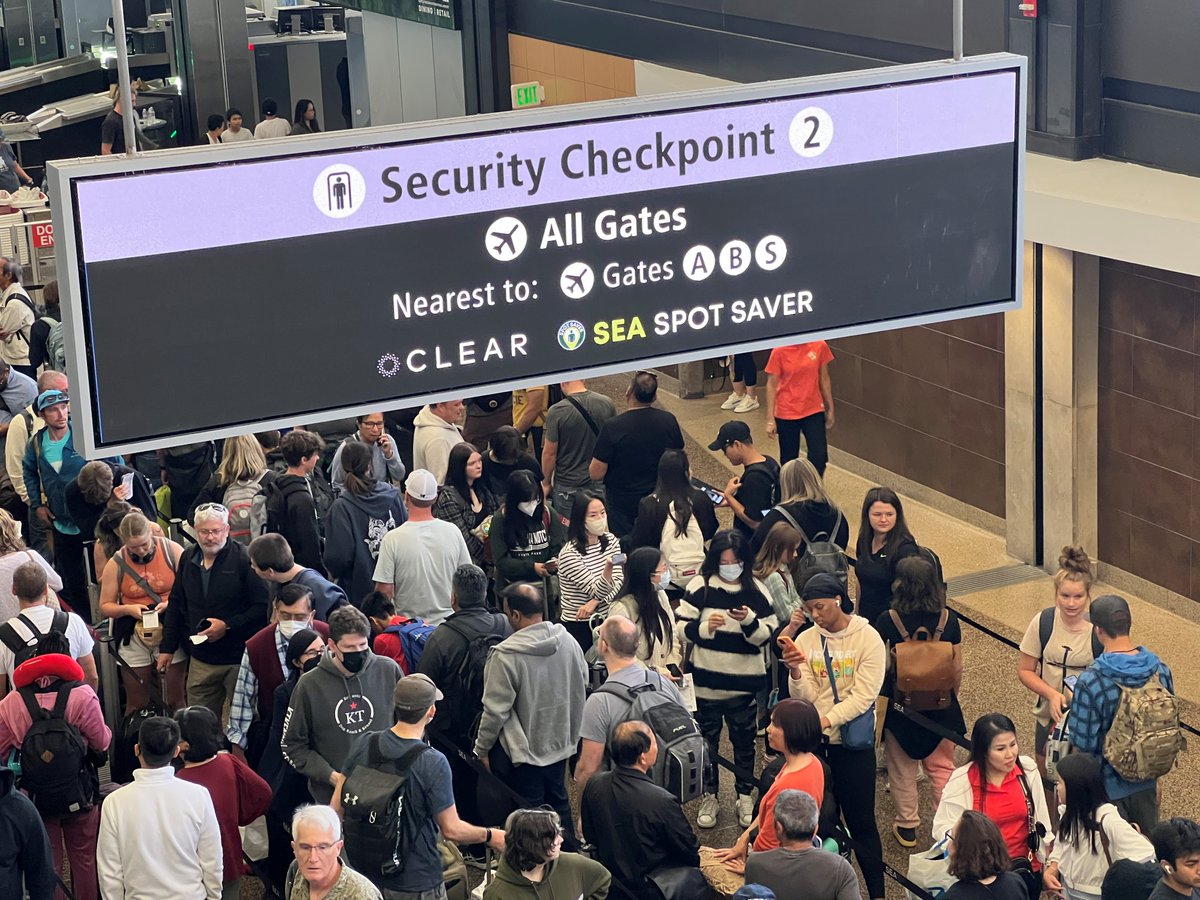
“I don’t wanna keep secrets just to keep you.” 🎵 Yesterday was the busiest day 𝗲𝘃𝗲𝗿 at SEA. In total, 73,651 passengers went through TSA Screening and an estimated >198K departing, connecting and arriving passengers went through the airport.
'By investing in Washington families and small businesses, and maintaining healthy reserves, our economy now consistently ranks as one of the strongest in the nation.' -Sen. Andy Billig on news WA held firm to its historically high credit ratings. #WALeg https://t.co/HqeVNJsOLS
@UrbanistOrg Under this exemption when does the developer do the neighborhood notice sign, tree canopy, storm water, or traffic impacts work, or do all those rules not apply anymore?
Mornin’ folks.
We’ve had a lot of people enquiring about and commenting on #bumblebees asleep on #flowers, especially at this time of year, so here’s a quick (long)🙄 thread explaining what’s going on.
Please retweet so more are more informed.
Thanks good people.
#bees
1/16
At a time when our glaciers are melting and we are experiencing record-breaking heat, this breakthrough cannot come fast enough for the atmosphere.
Sustainable aviation fuel startup breaks ground on Moses Lake plant | The Seattle Times https://t.co/6QhsOzvDMy
With 16+ years in the legislature, @SenRolfes has helped make historic investments in public infrastructure. She’s been a great partner and will make an outstanding Kitsap County Commissioner. Thank you for your endorsement!
The Washington State Senate will need a new budget writer, with state Sen. Christine Rolfes (D-Bainbridge Island) resigning to become a Kitsap County Commissioner. #waleg