⬇️Wissen, dass ich gerne verbreiten möchte.
Eine Mischung aus Lebenserfahrungen, Today I Learned (#TIL) und etwas Mathematik.
Zusatz zu meiner Bio: Ich war ehrenamtlich in Koop. m. Pol. 🇨🇭 im Bereich Verkehrserziehung Fahrrad f. Kinder / Jugendliche tätig (incl. Ausbildung).
@byte_thrasher Sorry, I forgot the last step:
99.) Realize you could have bought several new granite surface plates for the money you spend.
I don't think I will reach this step any time soon. 🤓👍
@byte_thrasher I hope my guide is of great use to you.
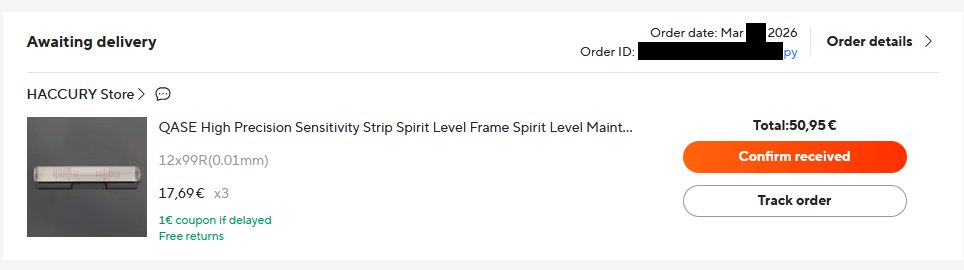
I tested it myself. I am currently at step No. 12 (waiting for delivery) but No. 10 was great fun too.🤣😭
(The video is not sped up! That's my twist gage; my fiancée touched it with her warm hands for just a few seconds.)
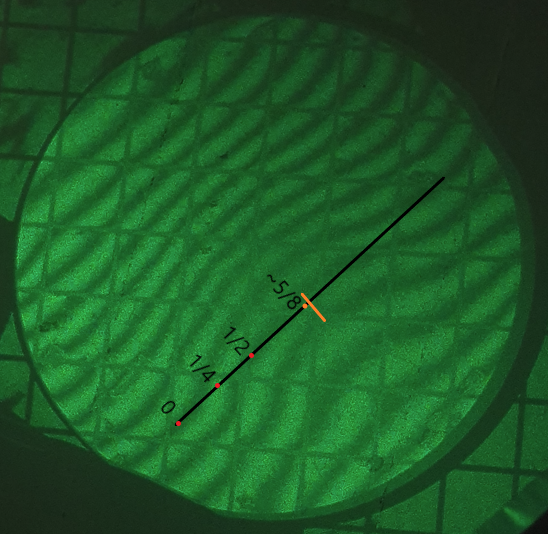
@gak_pdx@agentdavo@greg_f_miller I think the classical fringe reading is still the go-to solution. The orange dot is roughly at 1/4 of the orange line, so add 1/8 wavelength to the 1/2 wavelength one got by counting fringes.
5/8 * 520 nm ≈ 325 nm 🤷
@gak_pdx@agentdavo@greg_f_miller Get a Keyence VK-X3000 or ask Zeiss i'd guess.
Or just use FringeXP without the image editing and draw the fringes by hand (if auto trace does not work).🤷
I would expect such kind of analysis when grinding mirrors or as final inspection for commercial optical flats.
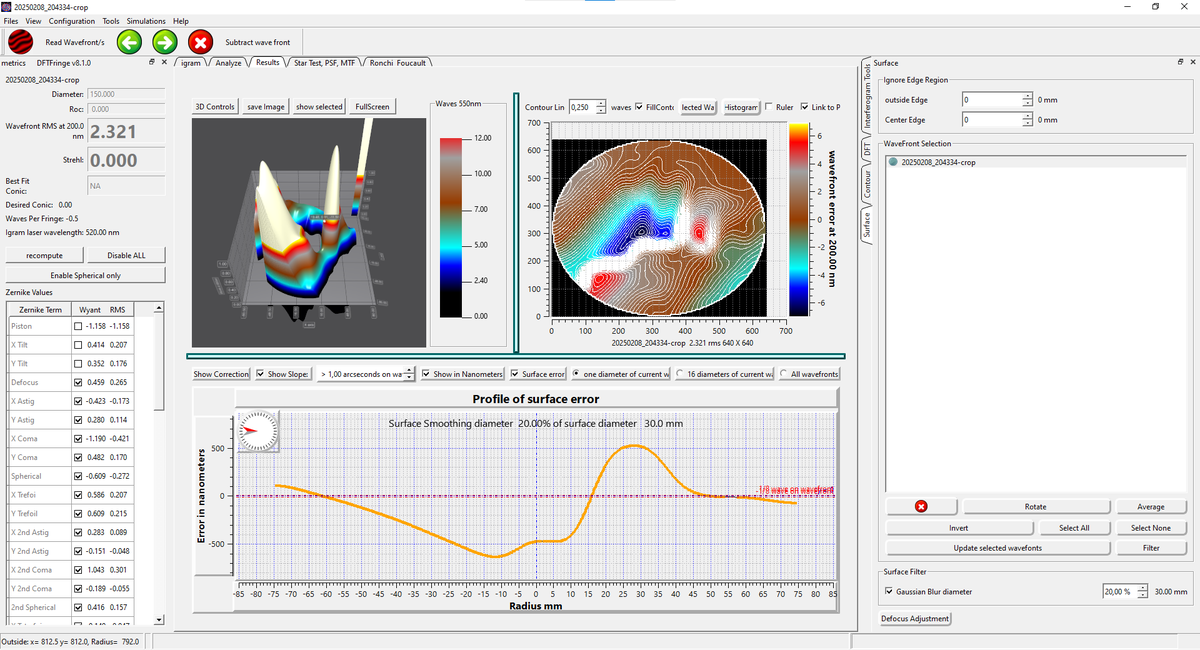
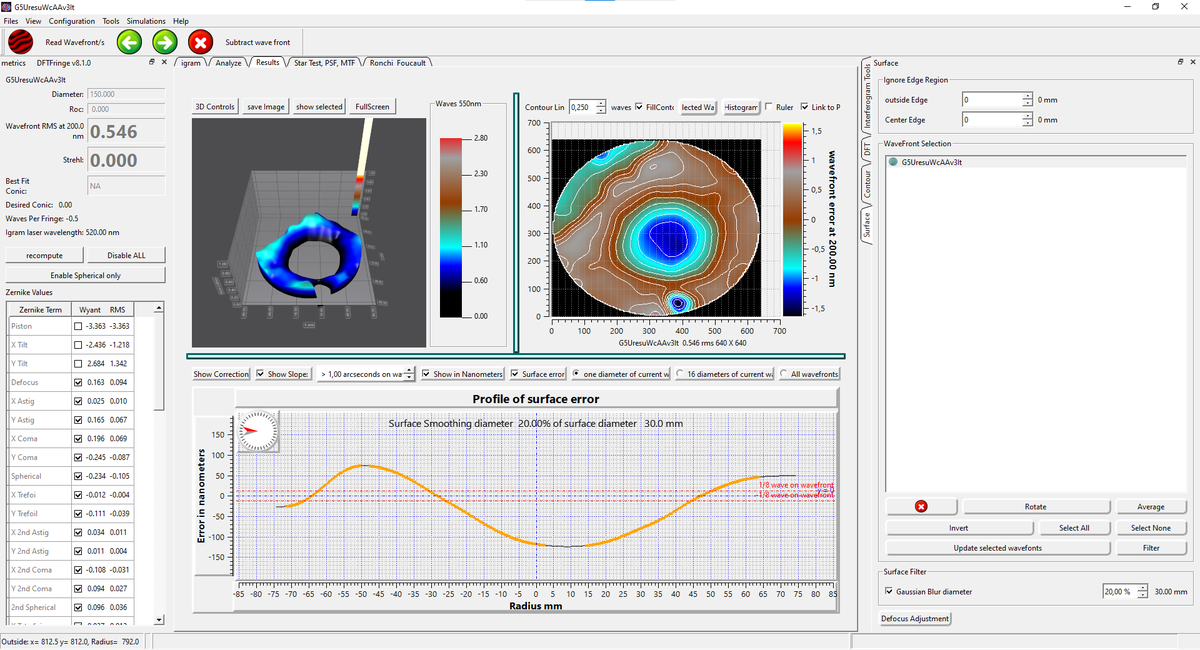
@gak_pdx@agentdavo@greg_f_miller And DFTFringe without prior image editing, contrast enhancing and gaussian blur is completely useless.
Fast but useless. 🤣
@gak_pdx@agentdavo@greg_f_miller DFTFringe does not play well with the interferogram (fringe image) i uploaded here. 😂🤣
(but the complete DFTFringe workflow took me less than 10 seconds🙃)