New working paper: "Bad Is Bad, Good Is Not Bad, and Great Is Good." First human-perception validation of an AI-based police professionalism measure.
At @CrimRxiv with Kyle McLean, Paige Vaughn, Alexis Fabila, and Geoffrey Alpert.
https://t.co/SZ8cVlQ0iN
If you read news stories about police shootings, you'll notice a pattern — a large share of the people shot by police are on probation or parole. What's going on?
In our new working paper, we build a bridge between corrections and policing scholarship to understand this. We call the concept "avertogenic" deaths: police killings shaped by upstream decisions about sentencing, diversion, and release.
The logic is simple. Courts, parole boards, and pardons boards decide who stays locked up and who returns to the community. Those decisions change who is exposed to police contact — and therefore who is at risk of a lethal encounter. Policing scholars study the encounter. Corrections scholars study the sentence. Almost nobody connects the two.
We build a simulation calibrated to national data on felony sentencing, recidivism, and police-involved mortality. Sentencing policy IS policing policy, and we need to talk about it that way.
Live at @CrimRxiv: https://t.co/lQCge5ZYP9
w/ @smourtgos and Matt Logan.
With all the discussion around efficiency and time savings, we spend some time discussing another potential benefit: improved measurement/identification and methodological approaches.
Did you know that Axon houses ~100 petabytes of BWC footage data? Equivalent to 25 million copies of “Barbie” the movie: ~3.6 billion minutes (6,849 years of watch time)….
Anyway, new preprint out where my colleagues and I discuss all things AI and BWC auditing.
@jnixy It’s a great reminder that process-based outcomes matter (e.g skill use in the field). Not just distal (and rare) outcomes. Plus, any improvement in interpersonal skills may lead to improved community member perceptions (another outcome not often captured in these evals)
#NewResearch ‼️ by Drs. @SethBWatts@BrandondelPozo Mike White & @AiliMalm: "Does automated feedback impact the acceptability of AI-generated police body worn camera review? An implementation science natural experiment," out now! Link below.
https://t.co/A1shXjyqDV
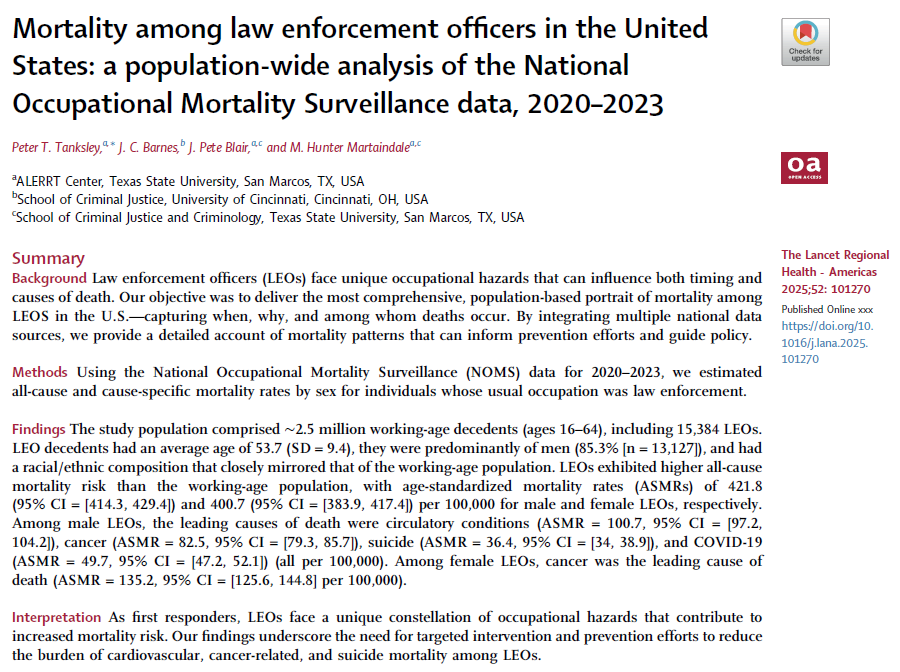
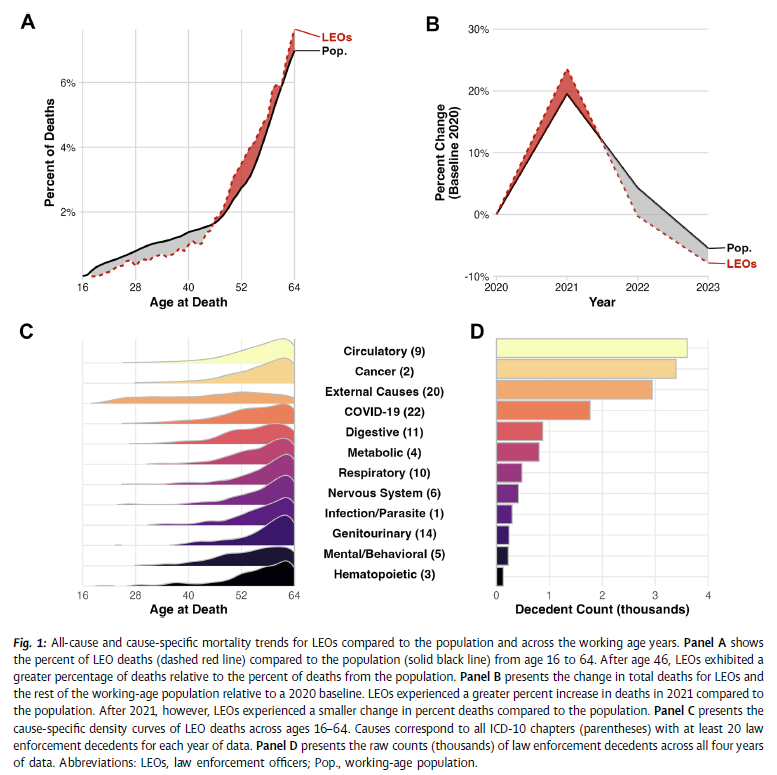
From 2020-2023, law enforcement officers "exhibited higher all-cause mortality risk than the working-age population." Circulatory conditions, cancer, suicide, and COVID-19 were leading causes of death for male LEOs and cancer was the leading cause of death for female LEOs.
New preprint up @CrimRxiv. We test whether AI-generated police officer profiles can provide a valid, scalable way to study public perceptions of officers.
Led by @UUtah's Chandler Robinson, and alongside Matt Logan and Pete Blair, we varied officer race, gender, and body type across thousands of AI-generated headshots. Participants rated competence, warmth, and agency.
Findings:
1. Male officers seen as more competent/agentic, less warm.
2. Muscular officers rated highest for competence/agency.
3. Heavier officers penalized.
4. Minority race officers viewed as warmer than White officers.
#NewResearch ‼️by @SethBWatts & co-authors @AiliMalm, Dr. Mike White, & Genesis Navarrete (@ASUCrimJustice), entitled "Officer Acceptance and Use of AI-Driven Body-Worn Camera Footage Review" now out in the American Journal of Criminal Justice. Link below!
https://t.co/nJdXYhLnWw
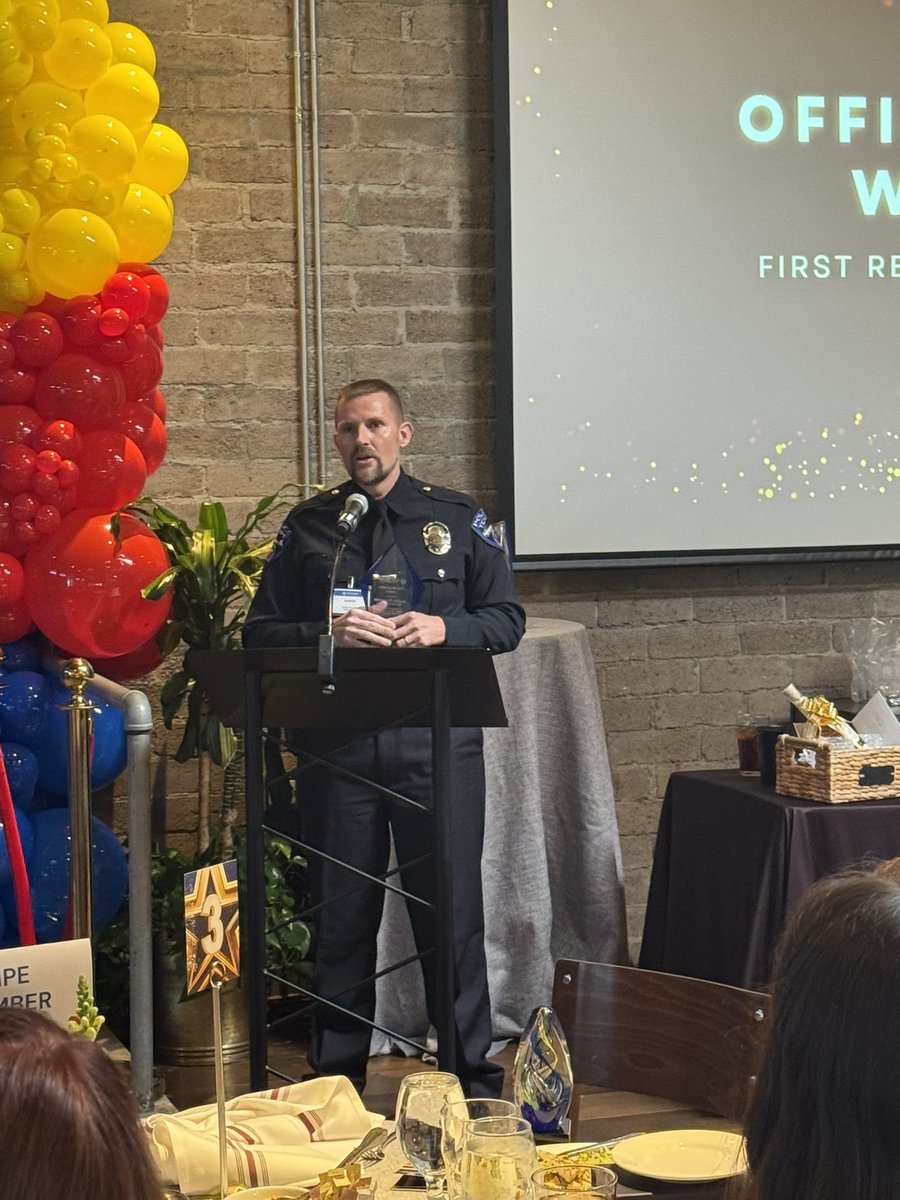
Officer Williams is top-notch. It was a pleasure to have spent all those hours with him on ride alongs this past year for the Tempe Opioid Recovery Project.
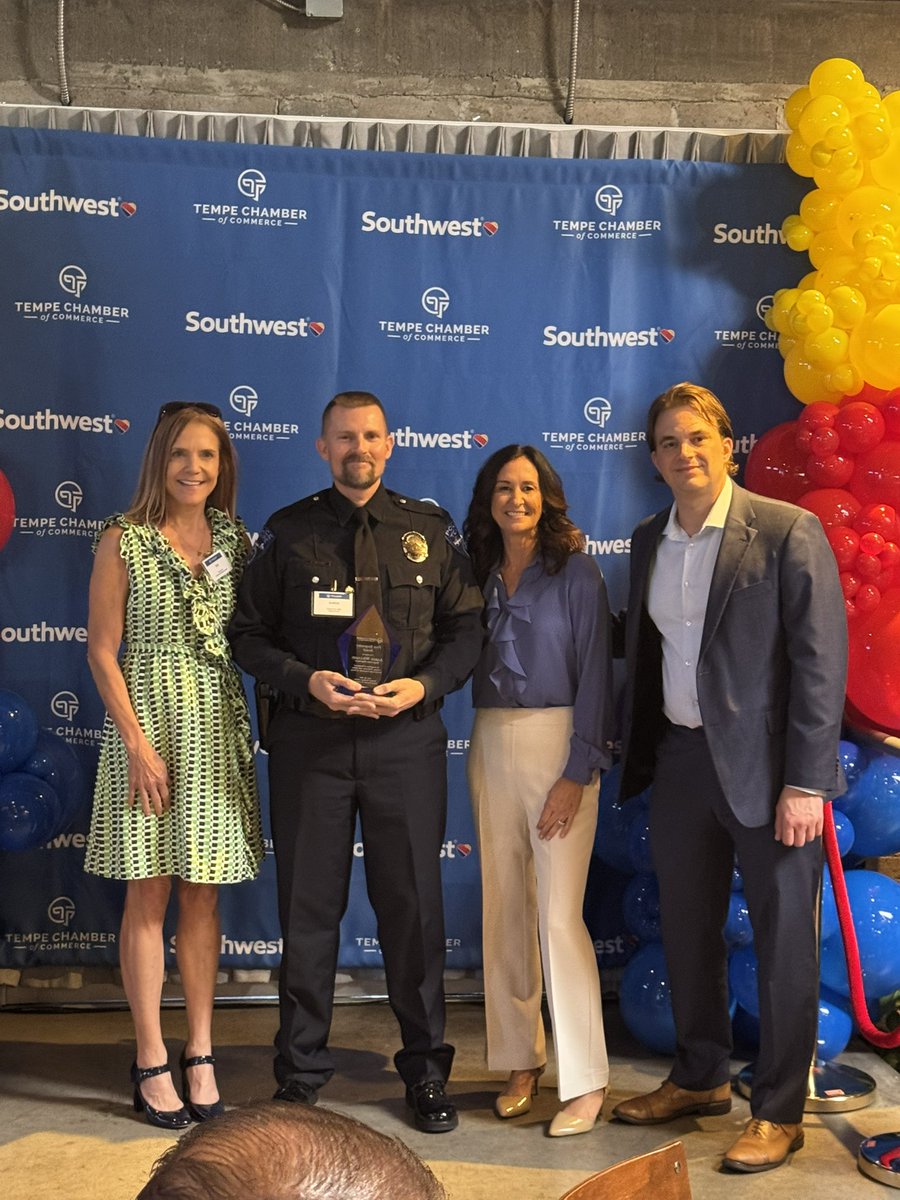
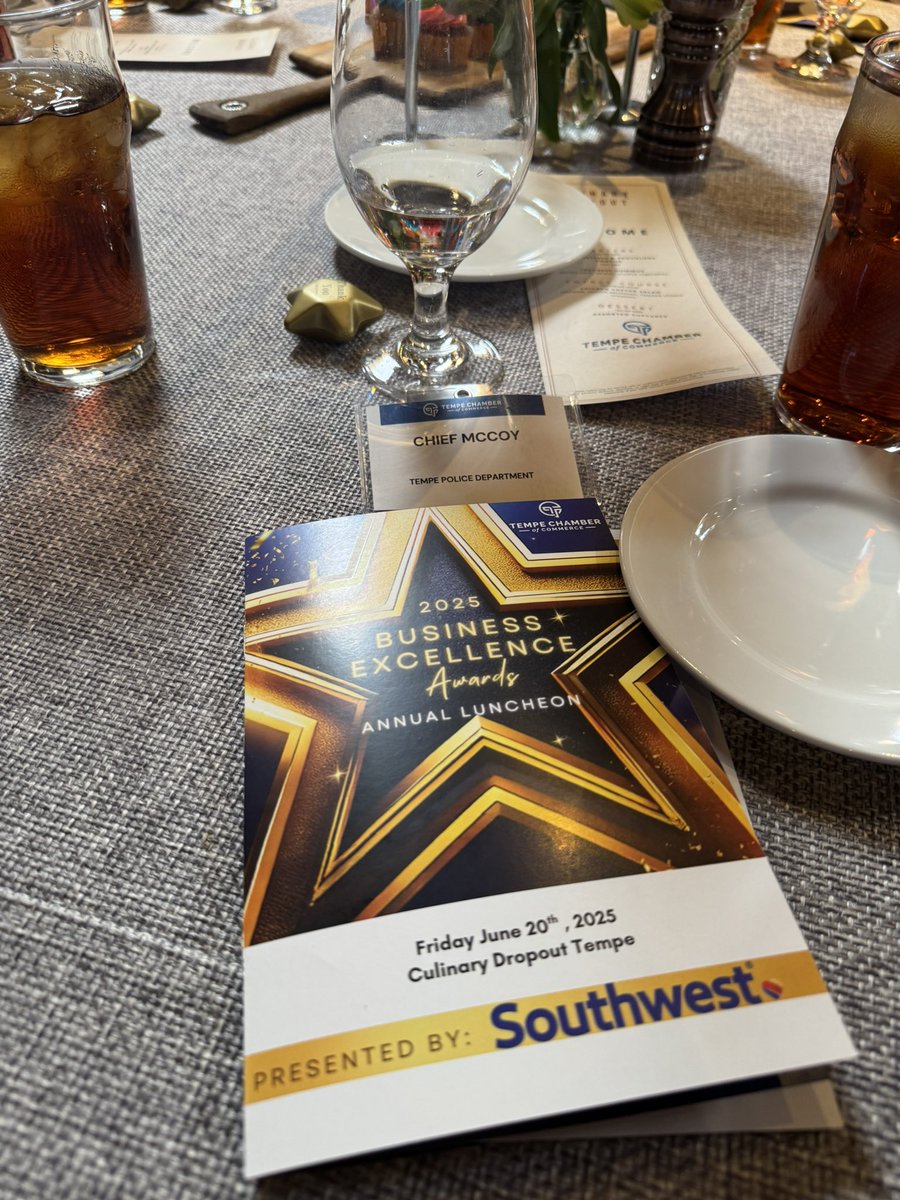
Big congrats to @TempePolice Officer Aaron Williams, named 2025 First Responder of the Year by the @TempeChamber! 👏
As our Naloxone Program Coordinator, he ensures our officers are trained & equipped to save lives when seconds matter.
Proud of his life-saving leadership! 💙
#TempePD #FirstResponderOfTheYear #ProudChief #LifeSavingLeadership #TempeChamber
How has the normative turn in social science affected our ability to produce and use theory? Using a case study of punishment studies during/after the normative turn, I find authors are mistaking normativity for theory.
Published today in @Theory_Society! https://t.co/UaJ2PyUfSc
"...despite our best efforts, our ability to compel or incentivize criminals to improve their lives remains very limited and may not be worth the effort."
What a read from Matt Logan, John Paul Wright, and Hannah Meyers in @ManhattanInst.