Tape measure aside, Governor can't inspect every road in the state.
That's why every community needs citizens who ask:
Who is handling this project?
How much was budgeted?
When should it be completed?
That's how accountability starts.
Start with your community on Tracka: https://t.co/o2xTSv1F7t
Maybe the bigger question isn’t whether Nigerians abroad are struggling.
It’s why so many Nigerians believe leaving is their best chance at a better life.
That’s a conversation about governance, public spending, transparency & accountability. Let’s focus on the issue at hand.
$1.5 billion worth of gas wasted in 1 year!
At a time Nigeria is borrowing to fund its budget, that’s revenue literally going up in smoke.
We unpack why this cycle continues, who is paying the price in our State of Gas Flaring in Nigeria report.
Read 👉 https://t.co/vxyAOWdgxX
Five months!
Government has been spending billions of naira every single day.
But the bill to help check how government spends money? Still waiting.
Nigerians should ask why.
Taxpayers’ money no dey wait. Why should accountability?
Dear Minister,
Floods may be natural
Poor planning isn’t.
How much is Nigeria investing in drainage systems, erosion control and climate adaptation?
Wait… this conversation isn’t just about floods. It’s about whether the government is planning for them in the first place!
We recently dug into state budgets to see how states are planning for growing climate threats.
Our Sub-National Budgeting for Climate Action and Green Accountability report reveals what we found.
Read 👉 https://t.co/BuCUM83MDG
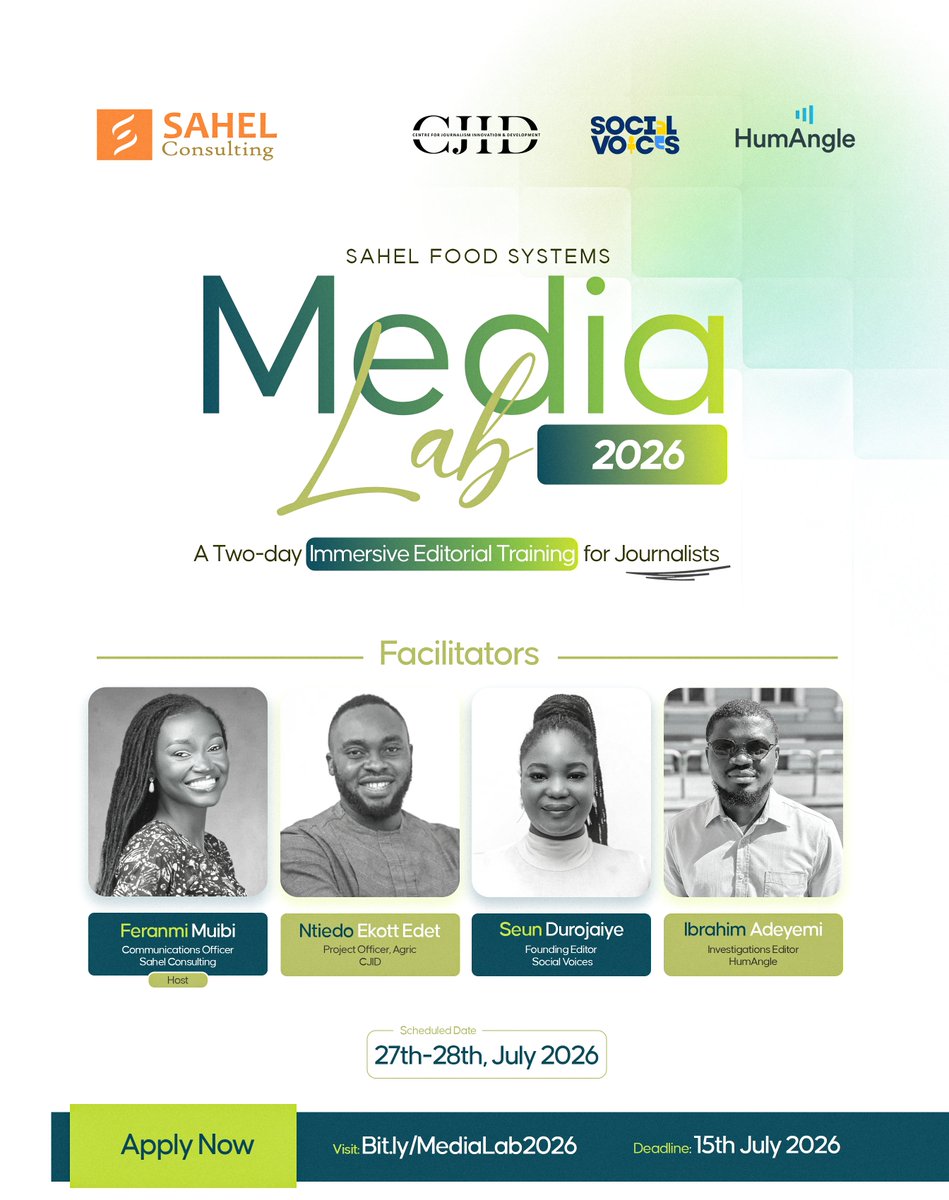
Is a food systems story ever just about food?
Learn to report the connections that shape food systems at the Sahel Food Systems Media Lab 2026.
📝 Apply by 15 July, 2026
🔗 https://t.co/AMXX6IGr7G
#MediaLab2026#SCC2026
More good news.
Don Anele Munachimso also won gold in Science.
He is the best in world science.
Remember, he is the best in IGCSE Chemistry in Nigeria.
The investment is worth it.
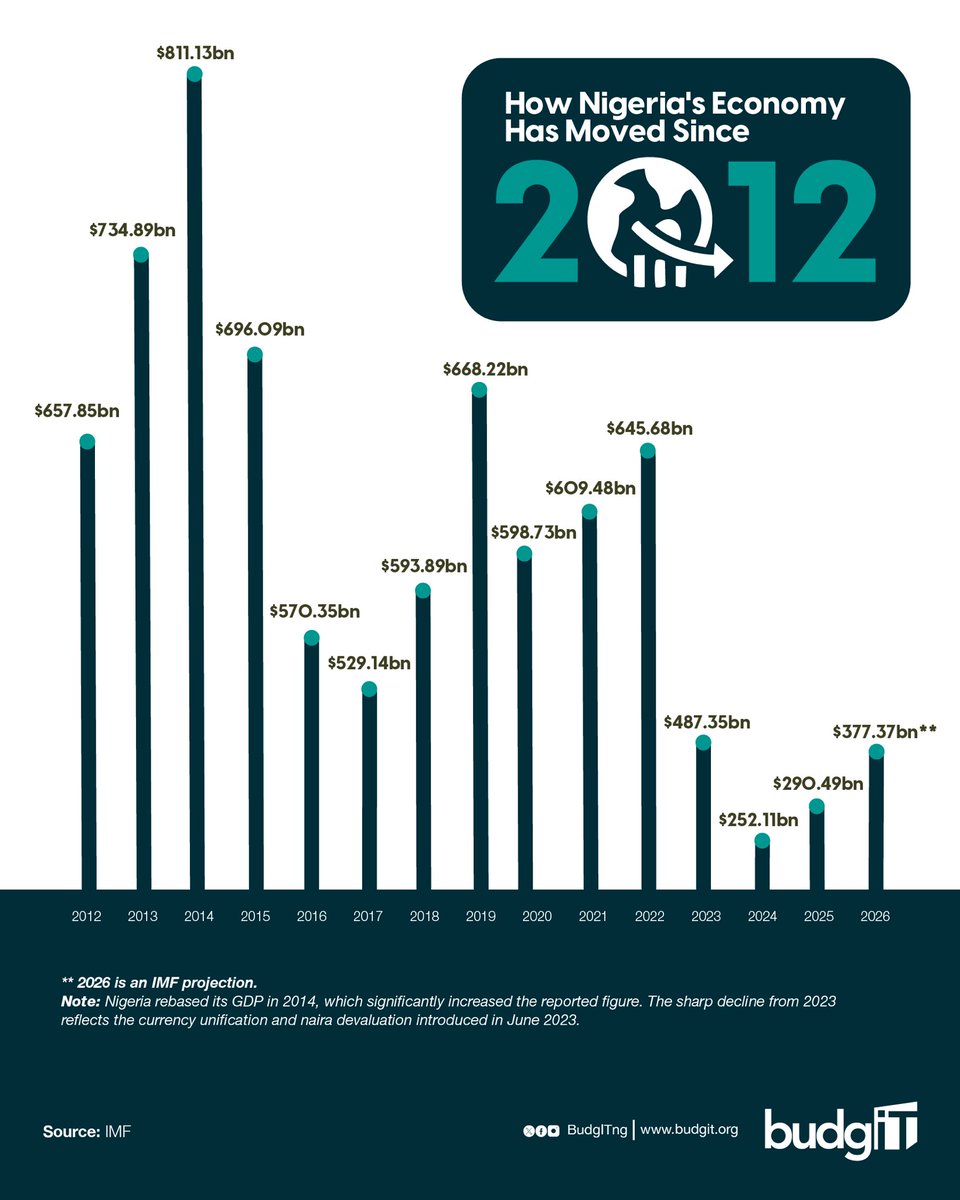
Nigeria’s economy reached a record high of $811.13bn in 2014 after GDP rebasing, briefly making Nigeria Africa’s largest economy. By 2017, falling oil prices and exchange rate pressures had brought it down to $529bn.
GDP climbed back to $645.68bn in 2022, but that recovery didn’t last. Between 2022 and 2024, under the Tinubu administration and following the move to a floating exchange rate, nominal GDP fell from $645.68bn to $252.11bn in just two years.
By 2025, GDP had recovered to $290.49bn, and the IMF projects it will reach $377.37bn in 2026. Even then, Nigeria’s nominal GDP would still be well below its 2014 peak in dollar terms.
It’s important to remember that these are nominal GDP figures. That means much of the movement reflects changes in the exchange rate, not necessarily changes in the actual size of the economy.
The numbers may be improving, but economic recovery means little if Nigerians don't feel it in their everyday lives.
#AskQuestions #GetInvolved #DataOfTheDay
Dear Mr. @taiwoyedele
Honourable Minister,
Thank you for taking the time to address the concerns raised following the IMF’s observations. Public engagement on matters of fiscal policy is essential, and your willingness to respond is welcome.
I believe your statement correctly makes one important distinction that should not be lost in the public debate. The IMF did not accuse the Federal Government of operating an illegal “shadow budget,” nor did it allege that public funds were stolen or expended without legal authority. It is therefore right to caution against characterising the IMF’s observations as allegations of criminality where none were made.
However, the issue that appears to remain unanswered is the very concern the IMF raised. The question is not simply whether the expenditure was lawful. The question is why expenditure equivalent to approximately 2% of GDP was reportedly not reflected in the official budget in a manner that resulted in a divergence between Nigeria’s reported fiscal deficit and its actual financing needs.
That distinction matters. Expenditure can be perfectly lawful and still not be presented in a way that provides citizens, legislators, investors and development partners with a complete picture of the government’s fiscal position. Transparency is not only about legality; it is also about comprehensiveness, clarity and faithful representation.
Your statement explains that some expenditures arise through statutory transfers, first-line charges, multi-year capital projects, intervention mechanisms and other lawful arrangements. If these categories account for the IMF’s observations, it would greatly strengthen public confidence if the Ministry published a reconciliation showing how those expenditures relate to the figures referenced by the IMF. Such a reconciliation would move the discussion from competing narratives to verifiable facts. Which is important at this point.
Specifically, it would be helpful to clarify:
1. Which expenditures make up the approximately 2% of GDP referenced by the IMF?
2. In which public fiscal reports are those expenditures disclosed?
3. How do those reported figures reconcile with the approved Appropriation Acts and the government’s published fiscal deficit?
4. Why did the IMF conclude that there was a difference between the reported fiscal deficit and the government’s actual financing needs if the reporting already presents a complete picture?
I also commend your reference to President Bola Ahmed Tinubu’s request to eliminate overlapping and multiple budgets. That acknowledgement suggests there is room for improving the coherence and presentation of Nigeria’s fiscal framework, which appears broadly consistent with the IMF’s recommendation.
Ultimately, this should not become a debate about whether the government acted lawfully versus whether the IMF acted responsibly. Both can be acting in good faith while highlighting different aspects of the same issue. The public deserves clarity on both legality and transparency.
The strongest way to settle this matter is through evidence. A detailed reconciliation of the relevant expenditures, their legal basis, and their treatment in Nigeria’s fiscal reports would answer the IMF’s observations far more convincingly than competing interpretations ever could.
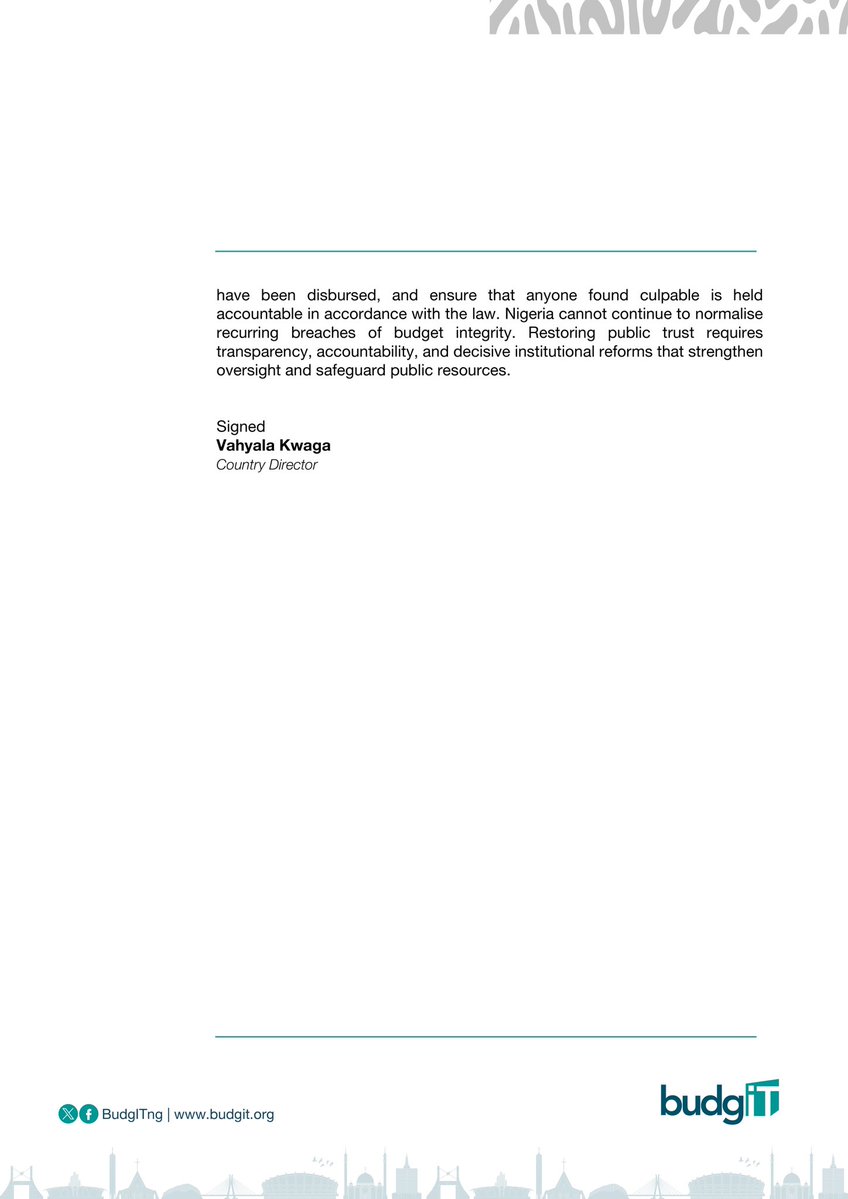
BudgIT Calls for Urgent Probe into N1.3 Billion Allocation to Purported Presidential Agency, Warns of Systemic Failures in Nigeria's Budgeting Process
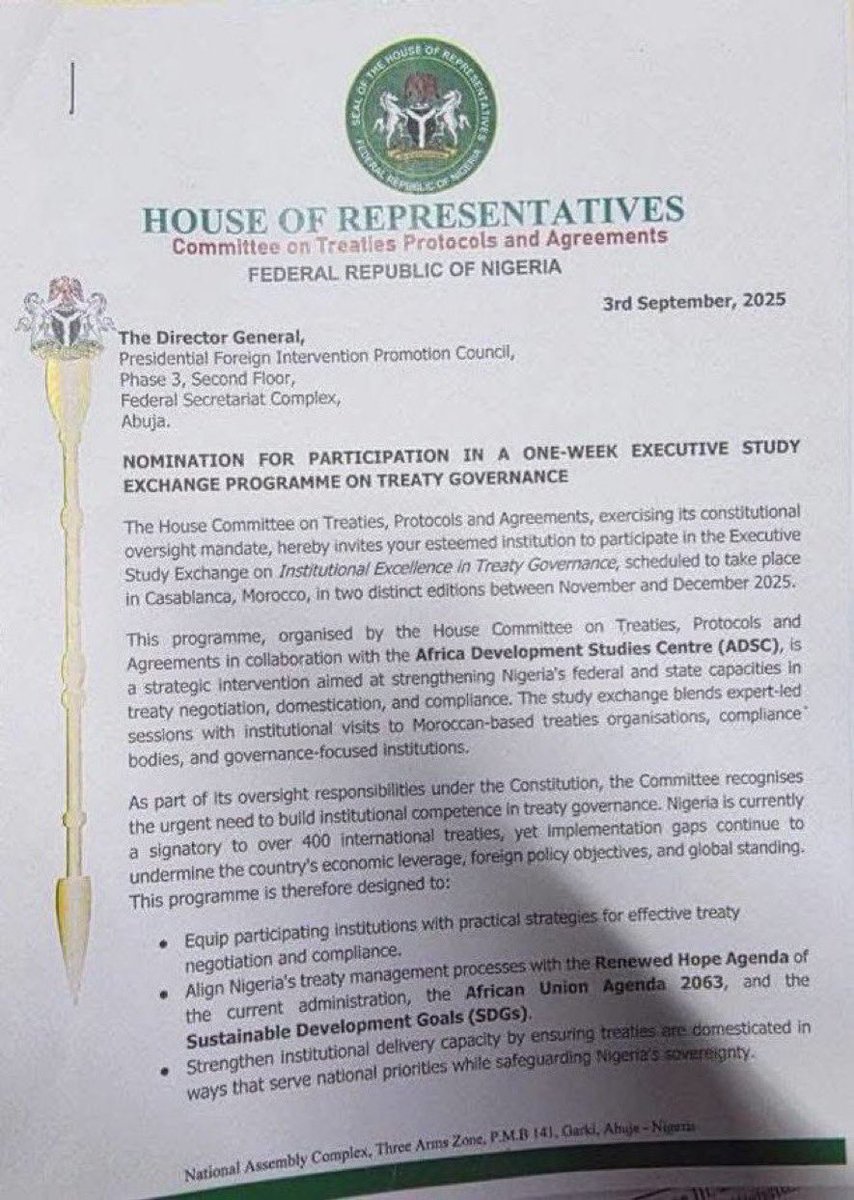
BudgIT has expressed concern over the N1,302,978,784 allocation to the purported Presidential Foreign Intervention Promotion Council (PFIPC), also referred to as the Presidential Economic Advisory Council (PEAC), in the 2026 Appropriation Act, following the Presidency's statement that the agency does not exist.
PRESS STATEMENT
🧵
#AskQuestions #GetInvolved
This is ridiculous nonsense.
Are you aware of how budget allocations actually happen?
Are you suggesting that I could wake up, prepare a budget of N10 billion for the “Petroleum Trust Fund”, then persuade the Budget Office to assign a specific code, and that code would be allocated to the PRESIDENCY? Then I could go to NASS, have NASS allocate billions to that Petroleum Trust Fund code, return to NASS to defend those billions, and finally get the President's signature?
I then go to the Federal Secretariat, rent an office, host seminars with foreign ambassadors in Abuja, and even visit the EFCC? All of this just because someone forgot to remove an accounting line?
The real issue in Nigeria isn't these politicians; it's the poor voters who believe they are helping politicians but are actually suffering from Stockholm Syndrome.
For any true Nigerian to even attempt a defence of this chaos shows how low morals have fallen in our society.
This PFIPC scandal is one of the most ridiculous and dangerous stories to come out of this criminal administration.
And the more the government talks, the more insulting it becomes to the intelligence of Nigerians.
We are expected to believe that one man simply woke up one morning, created a federal agency out of thin air, occupied an office inside the Federal Secretariat, received local and foreign investors, interacted with government officials, defended the agency’s mandate before the Senate, had the agency captured in the national budget, and nobody in government knew anything about it.
Then suddenly, after everything falls apart, APC wants Nigerians to believe it was all just one man’s scam.
Who exactly are they trying to deceive?
Government is not a beer parlour where anybody walks in, hangs a signboard and begins operating.
The Federal Secretariat is not a shopping mall where anyone rents an office and starts parading himself as a Director General.
A federal agency does not find its way into the Appropriation Act by accident. Budget lines do not magically appear. Offices are not magically allocated. Files do not process themselves. Security clearances do not issue themselves. Meetings with investors do not organise themselves.
Every single stage requires government officials, leaves a paper trail, has people responsible.
That is why this explanation from the government simply means fvck you Nigerians, you can’t do sh!t
Let’s assume for a split second that PFIPC was truly fake as Bayo and co wants us to believe, then what we are looking at is not merely fraud. It is criminal negligence on a scale that should shake the entire federal bureaucracy.
If a private citizen can allegedly infiltrate government to this extent, then Boko haram probably has a room in the villa.
But if PFIPC was not fake, and is only being disowned because the story has the Chief of Staff mentioned in a bribery case, then that is something even more scary. A man is ready to burn down the whole country to save himself.
Tinubu and co cannot escape this with carefully crafted press statements.
The contradiction becomes even more embarrassing when reports show that PFIPC appeared in the national budget with over a billion naira allocated to it.
How does a non existent agency receive a budget?
Who inserted it,approved it, defended it?
Who signed off on it, audited it?
These are not rhetorical questions.
They are questions every Nigerian taxpayer deserves answers to.
Then the only witness to all of these mysteriously dies moments after the case went public.
How fortunate.
That is unacceptable.
The APC administration has built a reputation of criminality and one day will be made to account for their crimes against this country.
This scandal fits perfectly into that pattern.
Whether this turns out to be outright corruption, institutional complicity, gross incompetence, or all three combined, one fact remains impossible to ignore.
This did not happen in isolation.
Someone approved those files.
Someone processed those documents.
The Nigerian people deserve to know who.
This is no longer about PFIPC.
This is about whether government institutions still mean anything.
Because if Presidency’s version is true, then Nigeria’s federal bureaucracy has been reduced to a circus where anyone can allegedly create a government agency and operate freely from within government premises.
And if it’s false, then the criminality is even deeper.
Whichever way you look at it, this is not just a scandal.
It is an indictment of governance under Tinubu and his APC gang.
Nigerians should be grateful to Matthew Adeyemi Adeniyi, whichever way this scandal ends up.
If @aonanuga1956's elaborate and utterly implausible treatise on the matter is to be believed, Adeyemi has proved what many of us have alleged since 2015 - that the @OfficialAPCNg is a collection of supremely incompetent and greedy criminals.
He fooled the Federal Secretariat management team into allocating offices to his "fake" agency, and thus proved that they are at the very least utterly incompetent and possibly irredeemably corrupt.
He fooled the @cenbank, @DrYemiCardoso et al, into opening CBN accounts for his agency, thus proving that the CBN under Cardoso has turned into a cesspit of an insane level of incompetence and again, possibly fetid corruption.
He fooled the President Tinubu and his Minister of Finance into including his "fake" agency in the 2026 budget, this proving their lack of diligence and lack of dedication to their jobs.
He fooled the National Assembly, led by @SenGodswill, into passing that budget, with an actual financial allocation of billions of ₦₦₦ for his "fake" agency, thus proving that the National Assembly of the @OfficialAPCNg is nothing but a rubber stamp and possibly deeply corrupt.
If Adeyemi is right, and the agency really exists and was in fact created by the Presidency, included in the budget and given an allocation from taxpayer funds, he has proved that the @OfficialAPCNg government of @officialABAT is a cesspit of metastasised grand larceny, greed, corruption, avarice, and just plain looting - which is a position many of us have long held, since before Tinubu acquired the Presidency.
As resilient as Nigeria has proved to be, I do not think Nigeria will survive this stratospheric level of conjoined corruption and incompetence.
#Gbajagate