10 GitHub repos that should be illegal — they're killing $50 billion in corporate revenue.
SAVE IT
1. yt-dlp
Downloads any video from YouTube, X, TikTok, Instagram, anywhere. YouTube Premium charges $14 a month to do less than this. It is 100% free.
Repo → https://t.co/TaRtkcd4qy
2. Ollama
Run GPT-4-class AI on your laptop. No API costs. Developers spend $500 a month on OpenAI for what Ollama runs offline for $0.
Repo → https://t.co/gyZhUdzsnZ
3. Fooocus
Midjourney-quality image generation on your own GPU. Midjourney charges $30 a month. Fooocus runs unlimited generations for free.
Repo → https://t.co/NDPJpIdYJs
4. Whisper
OpenAI's transcription model, open-sourced. Otter charges $20 a month for what Whisper does for free, in 99 languages.
Repo → https://t.co/blaJ4i4MnH
5. Plausible Analytics
Privacy-first Google Analytics replacement. Google Analytics 360 costs $150,000 a year for enterprises. Plausible self-hosted costs $0.
Repo → https://t.co/RFrcpqTBQ7
6. AppFlowy
Open-source Notion. Notion charges $20 per user per month for teams. AppFlowy runs unlimited users on your server for free.
Repo → https://t.co/IDMykTCkMU
7. Penpot
Open-source Figma. Figma charges $45 per editor per month. Penpot does the same job, self-hosted, free forever.
Repo → https://t.co/Lx1CYUP4p4
8. n8n
Open-source Zapier. Zapier Pro costs $600 a month for a real workflow. n8n self-hosted runs unlimited automations for $0.
Repo → https://t.co/hdycABGGc1
9. Cal .com
Open-source Calendly. Calendly Teams costs $16 per user per month. Cal. com is free for individuals and open source for teams.
Repo → https://t.co/haz8ihRsHm
10. Bitwarden
Open-source 1Password. Password managers charge $8 per user. Bitwarden is unlimited, forever, free.
Repo → https://t.co/XCZ2JtWqWQ
Here's the wildest part:
That's $50 billion in corporate revenue these repos are quietly destroying every single year.
None of these are illegal.
All of them should be.
Save this. Share it with the person in your life still paying for what's been free this whole time.
100% free. 100% open source.
We are entering a new era of on-device automation. ✨
Watch Gemma 4 E4B navigate and drive an iOS simulator directly using Argent. Local models can handle complex interactions and software navigation autonomously.
🚨🇷🇺Chaos in Moscow as a group of Russians robbed a jewelry store after losing their jobs due to the EU’s latest sanctions.
Of course, I’m joking - this is Starmers UK, where posting this video could get you banned from entering the country.
"People who stop attending church become congregants of something else. The environmental movement.. offers a salvation narrative complete with a fall from grace, a coming apocalypse, and a list of personal sins involving meat, plastic, and air travel." 🎯https://t.co/YqYz36ZZcy
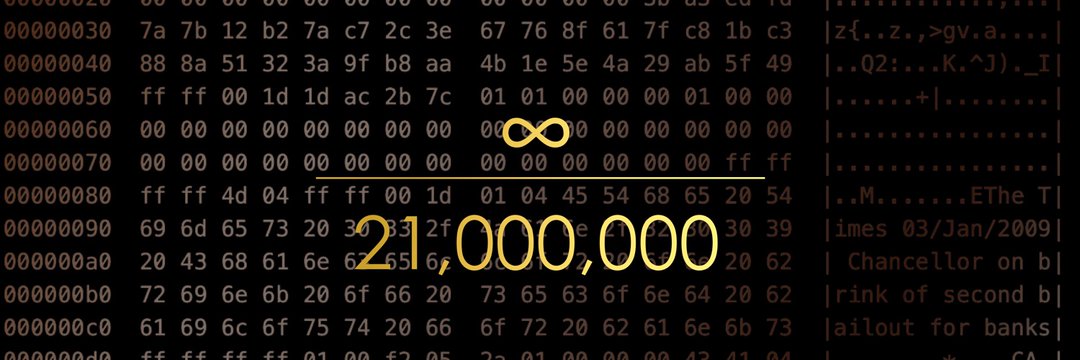
Hoje, Hal Finney faria 70 anos.
Antes de ser congelado, ele deixou uma carta de despedida: “O Bitcoin e Eu” 📝
Aumente o som e escute ela narrada em português. É um dos textos mais belos da história da criptomoeda.
Obrigado por tudo, HAL 🙏
POV: claude traveled 6 months into the future and told you exactly how your next move failed.
it's called a premortem.
daniel kahneman (nobel prize-winning psychologist behind "thinking fast and slow") called it his single most valuable decision-making technique.
google, goldman sachs, and procter & gamble all use it before major launches.
here's the problem it solves.
when you ask claude "is this a good plan?" it finds all the reasons to say yes.
that's what it was trained to do. so you walk away feeling confident.
you execute, and spend weeks / months building on top of that plan.
then it blows up.
and you realize the problem was obvious in hindsight, you just never stress-tested it because claude told you it was solid.
a premortem fixes this by flipping the frame.
instead of asking "what could go wrong?" you tell claude "it's 6 months from now and this is already dead. tell me how it died."
that shift turns off claude's optimism because there's nothing to be optimistic about. the premise already says it failed.
so claude stops looking for reasons your plan will work and starts explaining how it fell apart.
claude comes back with every way your plan could die, each one with a full failure story and the early warning signs to watch for.
then a synthesis pulls it all together:
> which failure is most likely
> which failure is most dangerous
> the single biggest hidden assumption you're making (often the most valuable part)
> a revised version of your plan with the gaps closed
you say "premortem this" and give it your plan. the skill handles the rest.
Edward Snowden said it the best:
"When you say 'I don't care about the right to privacy because I have nothing to hide,' that's no different than saying 'I don't care about freedom of speech because I have nothing to say.'"
"Simply because you are following the law, doesn't mean that you'll be exempt from governmental interference in your private life."
Scientists have created one of the most detailed 3D reconstructions of a human cell (eukaryotic cell) ever produced.
This groundbreaking model, often termed a "Cellular Landscape Cross-Section Through a Eukaryotic Cell," combines data from X-ray tomography, nuclear magnetic resonance (NMR), and cryo-electron microscopy to map molecular structures in extreme detail.
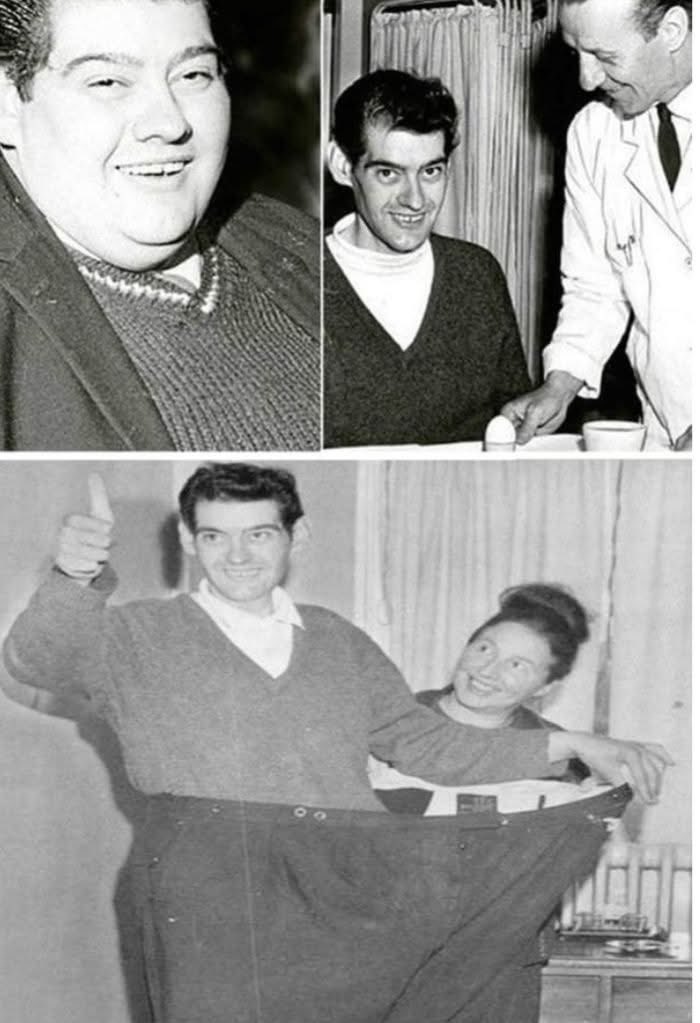
Em 1965, um jovem irlandês de 27 anos chamado Angus Barbieri, então com obesidade severa, decidiu embarcar em algo que parecia impossível: ficar 382 dias sem comer absolutamente nada.
Por mais de um ano, ele viveu apenas do próprio estoque de gordura, além de água, líquidos variados e suplementos vitamínicos. Seu organismo entrou em um estado tão profundo de adaptação que Angus chegava a ficar 40 a 50 dias sem precisar ir ao banheiro.
Esse jejum extremo não foi uma aventura solitária. Todo o processo ocorreu com supervisão integral do médico William Kinnear Stewart, em ambiente controlado, com exames frequentes e monitoramento hospitalar constante.
A ideia inicial era que o tratamento durasse apenas 40 dias. Mas algo surpreendente aconteceu: Angus dizia sentir-se bem. Seu corpo, segundo ele, parecia aceitar a ausência de comida. Empolgado com a perda de peso e determinado a mudar de vida, decidiu seguir adiante — e acabou levando o jejum a um patamar nunca registrado antes.
Ele iniciou o processo com 207 kg. Ao final, havia eliminado 125 kg. Terminou com cerca de 82 kg.
Quando finalmente interrompeu o jejum, na manhã de 11 de julho de 1966, ele voltou a se alimentar de forma simples: um ovo cozido, uma fatia de pão com manteiga e uma xícara de café. Mais tarde contou que aproveitou cada mordida — e que se sentiu satisfeito quase de imediato.
Nos anos que se seguiram, Angus continuou sendo acompanhado por médicos. Cinco anos depois, seu peso permanecia abaixo dos 90 kg — e assim continuou pelo resto da vida.
Embora extraordinária, essa história é um caso extremo e raríssimo, realizado sob vigilância médica rígida. O corpo humano pode, em algumas circunstâncias muito específicas, adaptar-se a jejuns prolongados, mas fazer algo assim sem orientação profissional é extremamente perigoso.
Ainda hoje, a jornada de Angus Barbieri é vista como um dos relatos mais impressionantes sobre até onde o organismo humano pode ir quando submetido ao limite máximo.