Tomorrow, we connect, exchange ideas and explore new possibilities.
The Global Sustainable Entrepreneurship & Economic Forum (GSEF) is almost here!
I look forward to the conversations, fresh perspectives and connections that will come together around a shared ambition: advancing entrepreneurship, investment and sustainable economic growth across East Africa.
Forums like GSEF remind us that progress takes more than good ideas. It takes people willing to collaborate, share knowledge and turn opportunities into action.
Whether you are an entrepreneur, investor, policymaker or development partner, there is value in being in the room, listening, asking questions and exploring what we can build together.
I hope to see you all at GSEF tomorrow!
Come ready to connect, learn and create opportunities that extend well beyond the forum.
See you there!
#GSEF2026 #Entrepreneurship #Investment #EastAfrica #RegionalIntegration #SustainableDevelopment
We were never meant to carry the weight of the world while losing ourselves beneath it.
On 10th October, I had the privilege of speaking at The Weight We Carry, an event hosted by Caafiya Women’s Wellness in honour of Mental Health Awareness Month.
I spoke about the many roles women navigate every day: wife, mother, sister, friend, founder, and leader. Each comes with its own expectations, responsibilities, and invisible pressures.
And somewhere in between showing up for everyone else, we can forget to show up for ourselves.
We carry the guilt of saying no. The pressure to get everything right. The fear of letting people down. And the unspoken expectation that being strong means never admitting that we are tired.
But who said being a strong woman means carrying everything?
Perhaps true strength is knowing when to pause, when to ask for help, when to set boundaries, and when to give ourselves the same grace we so freely extend to others.
Because beyond every role we play, there is us — women with our own dreams, emotions, ambitions, fears, and needs.
We deserve to be cared for, too.
My gratitude to Caafiya Women’s Wellness for creating a space for these important conversations and bringing women together to reflect on their wellbeing.
May we learn to carry our responsibilities without losing ourselves in the process. ❤️
#TheWeightWeCarry #MentalHealthAwareness #WomensWellness #MentalHealthMatters #WomenEmpowerment
Africa’s carbon markets don’t just need ambition. They need execution.
Today, Kigali, Rwanda, hosts the opening of the Carbon Markets Africa Summit 2026, bringing together stakeholders to discuss the future of carbon markets on the continent.
The opportunity is significant. But the real question is what Africa will do with it.
Carbon markets could help mobilise finance for forest conservation, clean energy, climate-smart agriculture and other projects that deliver measurable climate benefits.
But the value of these markets will not be determined by the number of carbon credits Africa produces alone.
It will depend on the quality of those credits, the confidence investors have in the market, the strength of the systems governing transactions and, importantly, how much value remains within African economies.
Three things will matter:
Credibility: Building trust through transparent systems and verifiable emissions reductions.
Capital: Connecting credible projects to buyers, investors and financing that can support them at scale.
Fair value: Ensuring that the communities protecting forests, restoring ecosystems and delivering climate solutions share in the benefits.
Africa has an opportunity to shape a carbon market that goes beyond exporting credits to building local capacity, creating jobs and financing its own climate priorities.
That requires more than market access. It requires a deliberate strategy for who benefits, how value is created and where the money flows.
As the conversations begin in Kigali, one thing is clear: the success of Africa’s carbon markets should be measured not just by the credits sold, but by the climate impact and economic value they deliver.
#ClimateFinance #CarbonMarkets #Africa #SustainableDevelopment #CMAS2026
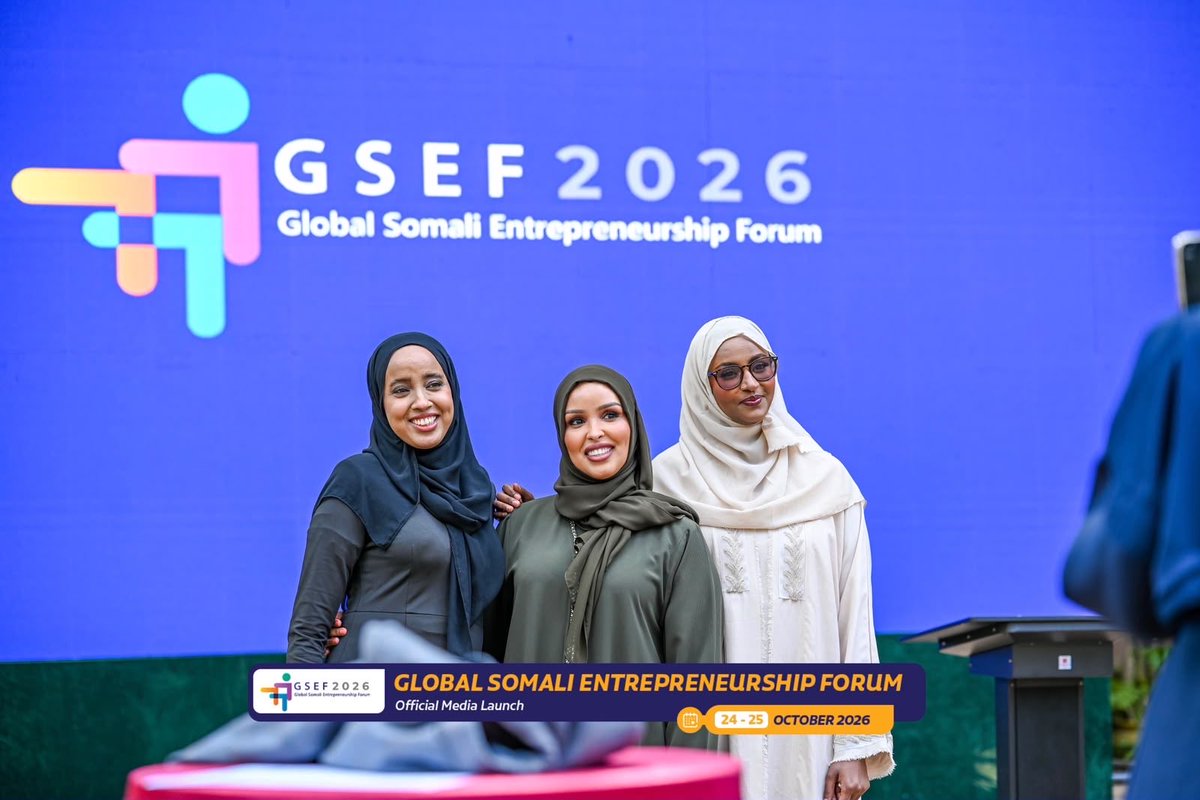
As the @GSEFForum prepares for its third edition, the media launch sets the stage for conversations that go beyond entrepreneurship to explore how we can unlock investment, strengthen regional connections and create opportunities for businesses to thrive.
The launch was graced by Hon. Yusuf Hassan, Member of Parliament, and Ambassador Ali Affey, alongside strategic partners, delegates and distinguished guests united by a shared vision of advancing entrepreneurship, investment and regional economic cooperation.
Under the theme “Shaping the Future of East Africa through Innovation, Inclusive Governance, Regional Integration, and Sustainable Investment,” GSEF 2026 will bring together leaders, entrepreneurs, investors, policymakers and development partners to foster meaningful connections, strengthen partnerships and unlock new opportunities across Somalia and the wider East African region.
As we look towards the forum, the conversation is about creating an environment where businesses can grow, investment can flourish and regional collaboration can translate into tangible economic opportunities.
The stage is set. The momentum is building. We look forward to welcoming you to GSEF 2026.
🎥 Watch the media launch report: https://t.co/0omffK1Z9J
#GSEF2026 #Entrepreneurship #Investment #RegionalIntegration #EastAfrica
There is something powerful about seeing an idea grow into a platform that creates real connections and opportunities.
GSEF is back in Nairobi for its third edition, bringing together entrepreneurs, investors, policymakers and partners to drive regional investment and create new opportunities across Africa.
Proud to be part of the journey.
Thank you, Citizen Digital, for telling the story. 👇
https://t.co/wUoQAEC2Cp
#GSEF2026 #Investment #Entrepreneurship #EastAfrica
Mental health and financial wellness are deeply connected especially for women navigating the demands of work, family, business, and everyday life.
I’m honoured to be the keynote speaker at The Weight We Carry, a meaningful conversation centred on supporting women through mental wellness and financial literacy.
Let’s talk about the things we carry, the things we don’t always say out loud, and how we can build healthier, more financially empowered lives.
📅 10th October 2026
⏰ 2:00 PM – 6:00 PM
📍 MAA Hotel
🎟️ Ksh 3,500
I’d love to see you there. 🤎
#TheWeightWeCarry #MentalHealthAwareness #WomensWellness #FinancialLiteracy #WomenEmpowerment #MentalWellness #FinancialWellness
Your lunch has a climate story.
Not just because of what is on your plate.Think about everything that happens before that food gets to you:
Growing it, watering it, harvesting it, transporting it, storing it, selling it and eventually, eating it.
Now consider what happens when food is wasted.All the land, water, energy, labour and transport used to produce that food have already been spent.
But the food itself never gets eaten.
And this matters because food loss and waste also contribute to greenhouse gas emissions.
So climate action isn’t always about something huge and complicated. It starts with something as ordinary as:
Buying what we need. Storing food properly. Using leftovers. And being more intentional about what ends up in the bin.
#ClimateChange #FoodWaste #ClimateAction #Sustainability #Mazingira #ClimateAwareness
Excited to have Fadumo Ali joining us at #GSEF2026!
From AI and automation to building business bridges between Asia and East Africa, Fadumo brings an exciting global perspective to the Forum.
Looking forward to having her with us in Nairobi!
One conversation I’m particularly looking forward to at GSEF 2026!
Somalia’s entry into the EAC is opening new opportunities for trade and investment, and the diaspora has an important role to play.
The opportunity is ours to shape.
Don’t forget to register and be part of the conversation!
#GSEF2026 #DiasporaInvestment #EastAfrica
Excited to welcome Hon. Ilham Gassar Member of the East African Legislative Assembly (EALA), to the GSEF 2026 lineup!
Looking forward to the insights and perspectives she will bring to the conversation.
An incredible lineup you don’t want to miss! 🌍
@Ilhamgassar
#GSEF2025 Highlights!
Celebrating the connections, conversations, partnerships and opportunities that brought our community together.
As we look ahead to GSEF 2026, we're building an even bigger platform for entrepreneurs, investors and business leaders.
📍Radisson Blu, Upper Hill, Nairobi, Kenya
📅24-25 October 2026
#GSEF2026 #SomaliEntrepreneurs #Investment #Innovation #EastAfrica #Networking
We look forward to welcoming @amb_mahboub to this year’s Forum.
We are truly honoured to have him join us and look forward to the valuable insights and wealth of experience he will bring to the discussions.
Kenya is expecting a wetter-than-average OND 2026 season. Are we prepared?
The Climate Outlook for the October–November–December (OND) 2026 “Short Rains” season indicates that above-average rainfall is expected across 80% of the country.
Rainfall is expected to continue in western parts of Kenya and begin during the second and third week of October across other parts of the country.
The season is also expected to be marked by:
🌧️ Prolonged wet spells
⛈️ Occasional isolated storms
🌊 Increased risks of flooding in vulnerable areas
For many people, more rainfall may sound like good news.
And it can be.
Good rainfall can support agriculture, replenish water sources and improve livelihoods.
But when rainfall is intense or prolonged, the risks increase, especially where infrastructure, drainage systems and settlements are not prepared.
This is why climate information needs to become climate action.
The question is not just “Will it rain?”
The bigger question is:
Are our communities, businesses, farms and cities prepared for what that rain could mean?
Climate resilience starts with preparation.
And preparation starts with paying attention.
#ClimateResilience #KenyaClimate #ShortRains #OND2026 #ClimateAction #Adaptation #Mazingira
Africa’s carbon markets are moving from concept to infrastructure. 🌍
For years, conversations about African carbon markets have often centred around individual projects and carbon credits.
But something bigger is happening.
Across the continent, countries are building the policy, regulatory and institutional infrastructure needed to participate in carbon markets.
🇰🇪 Kenya is strengthening its national carbon-market framework.
🇬🇭 Ghana is advancing cooperation under Article 6.
🇳🇬 Nigeria is developing its carbon-market ecosystem.
🇷🇼 Rwanda is putting frameworks in place for carbon-market participation.
🌍 West Africa is working toward stronger regional coordination through ECOWAS.
ECOWAS has been developing a regional carbon-market platform as part of efforts to strengthen access to climate finance and support implementation of member states’ climate commitments.
And the opportunity is significant.
But so are the questions.
Who benefits from carbon markets?
How are communities protected?
How do countries maintain environmental integrity?
How do carbon markets contribute to national climate goals?
And how do we ensure that carbon finance actually supports meaningful climate action?
The next phase of Africa’s carbon market story may therefore be less about “Can we generate carbon credits?”
And more about:
“Can we build carbon markets that deliver climate, economic and community value?”
#CarbonMarkets #Article6 #ClimateFinance #Africa #ClimateAction #CarbonCredits
Alhamdulillah. 🤍
A heart full of gratitude for blessings seen and unseen.
“So which of the favors of your Lord will you deny?” Surah Ar-Rahman
May Allah grant us all a blessed, peaceful and beautiful week ahead. 🤍
Kenya has just introduced a new framework for its carbon market, including a cap on international carbon-credit sales of 10 million tonnes of CO₂ equivalent through 2030.
The framework introduces a clearer approval process and prioritises areas such as renewable energy, transport and waste.
Why does this matter?
Because carbon markets can become a source of climate finance for projects that reduce emissions and support communities.
But for that to happen, we need integrity and transparency.
Carbon markets should answer important questions:
Who owns the project?
Who benefits financially?
Are communities meaningfully involved?
Are the emissions reductions real?
And are environmental and social safeguards being followed?
Kenya’s new framework is an important step, but the real test will be in implementation.
Climate finance must not only mobilise capital. It must create real environmental and social value.
#ClimateFinance #CarbonMarkets #Kenya #ClimateAction #GreenFinance #EnvironmentalJustice #EarthStoryAfrica
Welcome to today’s #MazingiraMonday
Today, we’re talking about urban planning and why green spaces matter.
What is urban planning?
Urban planning is the process of designing how cities grow, deciding where people live, work, move, and access public spaces.
From an environmental perspective, good urban planning means building cities that work with nature, not against it. It protects trees, parks, rivers, and other green spaces while supporting growth and development.
Why is this important?
Trees and green spaces do much more than make our cities beautiful. They:
Cool our neighbourhoods.
Improve air quality.
Reduce flooding by absorbing rainwater.
Support biodiversity.
Create healthier spaces for people to live, work, and relax.
Green spaces are not a luxury. They’re essential infrastructure.
What’s happening in Nairobi?
Neighbourhoods like Kilimani, Kileleshwa, and Westlands are changing rapidly as new developments continue to rise.
While growth is necessary, many mature trees are being cleared to make way for construction, leaving less room for nature. According to Global Forest Watch, Nairobi has lost hundreds of hectares of tree cover over the past two decades due to urban expansion.
The question isn’t whether we should develop, it’s how we develop.
Why should we care?
When we replace green spaces with concrete, our cities become hotter, flooding becomes more common, air quality declines, and biodiversity is lost.
Over time, these changes affect our health, our wellbeing, and our ability to adapt to climate change.
What can we do?
Protect mature trees.
Include green spaces in every new development.
Enforce sustainable planning policies.
Plant more indigenous trees.
Support nature-based solutions in our cities.
A modern city isn’t measured only by the number of buildings it has. It’s also measured by how well it protects the environment and the people who call it home.
Thank you for joining us for today’s Mazingira Monday.
See you next Monday as we continue exploring the environmental issues shaping our future.
#MazingiraMonday #GreenCities #UrbanPlanning #Nairobi #ClimateAction #NatureBasedSolutions #EarthStoryAfrica