Stop fooling people with “cheap fuel” marketing.
Fuel is not cheap because the litre price is lower. Fuel is cheap only when cost per kilometre is lower.
If petrol/E20 at ₹102.12 gives 40 km/l, the running cost is ₹2.55 per km.
Now E85 is being shown as “₹20 cheaper” at around ₹82.12 per litre. Sounds great, right?
But E85 has much lower energy because ethanol carries less energy than petrol. So if mileage drops from 40 km/l to around 29 to 32 km/l, the so-called cheap fuel becomes equal or even costlier per km.
This is the real scam:
Government shows price per litre.
Public pays cost per kilometre.
And this is not just about mileage. Ethanol absorbs water. Water plus oxygen plus metal means corrosion risk. If ethanol-water separation happens inside storage or fuel systems, the bottom layer can become more corrosive and damaging to tanks, pumps, injectors, lines, seals and older fuel-system parts.
Basic chemistry:
Ethanol oxidation can form acetic acid:
C2H5OH + O2 → CH3COOH + H2O
Acid can attack iron:
Fe + 2CH3COOH → Fe(CH3COO)2 + H2
Rust needs iron, oxygen and water:
4Fe + 3O2 + 6H2O → 4Fe(OH)3
So stop calling it cheap unless you publish the full truth:
1. Blend percentage at every pump
2. Vehicle compatibility clearly displayed
3. Expected mileage loss
4. Cost per km, not just price per litre
5. Long-term impact on older vehicles
6. Warranty clarity in writing
If ethanol is truly better, prove it with transparent cost-per-km data. Don’t make citizens pay the same price for lower energy fuel and then tell them it is a national service.
Cheap per litre is marketing. Cheap per kilometre is reality.
Coffee is one of the only drinks with strong evidence that benefits the liver. Here's what decades of research actually says about how to drink it right:
Coffee genuinely lowers liver disease risk.
Meta-analyses show regular drinkers have about 35% lower risk of significant liver fibrosis and nearly 50% lower risk of liver cancer compared with non-drinkers.
Aim for 2–3 cups a day, minimum.
The effect is dose-dependent. The Hepatology socities such as AASLD and EASL says 3 or more cups daily is reasonable for liver benefit, if you tolerate it.
Caffeinated works better than decaf.
But decaf still helps.
Caffeine blocks adenosine receptors that drive liver scarring. Decaf lowers chronic liver disease risk too, just by a smaller margin (UK Biobank, n=494,585).
The target dose: ~300 mg caffeine/day, or 3 cups.
Fibrosis protection kicks in around the 75th percentile of intake, roughly 308 mg caffeine, or 2.25 cup equivalents, per day - the AASLD 2023 advises 3+ cups for liver benefit.
What a "cup" actually means
One standard cup = 240 ml (8 oz), not a 60 ml tiny Indian "cup." A 240 ml filter coffee has ~95–165 mg caffeine. A single espresso shot (30 ml) has only ~60–75 mg.
Coffee-to-water ratio: 1:15 to 1:17.
For filter/drip/pour-over: 15 g of ground coffee to 250 ml water. This is the standard brewing ratio and gives clean extraction of chlorogenic acids and caffeine.
Choose medium roast, not dark.
Medium roast has significantly higher chlorogenic acid (CGAs) content than dark roast. Dark roasting thermally degrades CGAs, the main antioxidant doing liver work.
Arabica beats Robusta.
Arabica beans are richer in CGAs and polyphenols, the antioxidants doing most of the liver-protective work.
A note here:
Arabica for polyphenols, Robusta for caffeine.
Arabica (1.5% caffeine) has more CGAs and polyphenols. Robusta (2.7% caffeine) has more caffeine but a cruder phenolic profile. A 70:30 Arabica-Robusta blend is a reasonable compromise.
Water temperature: 92–96°C.
Just off a rolling boil. Too hot (>96°C) burns the grounds and extracts bitter compounds; too cool (<90°C) under-extracts CGAs and caffeine.
Grind size matters.
Medium grind (table-salt texture) for filter/drip. Coarse for French press. Fine for espresso. Brew time: 3–4 minutes for pour-over, 4 minutes for French press, 25–30 seconds for espresso.
Filtered coffee is the safest daily choice.
Paper filters trap cafestol and kahweol, naturally present plant diterpenes that raise LDL cholesterol if consumed daily in large amounts. Pour-over (V60, Kalita, Melitta) or drip machines with paper filters give you CGAs and caffeine without the cholesterol penalty.
Espresso and French press: fine, but not unlimited.
They retain more polyphenols but also more diterpenes (so more chances of increased lipids). Great occasionally; don't make them your 5-cups-a-day default if you have high cholesterol or heart disease.
South Indian filter coffee: acceptable, with caveats. The metal filter does not remove diterpenes as well as paper, so limit to 1–2 cups/day if you have dyslipidemia. The decoction itself is rich in CGAs. Use less sugar. Skip condensed milk.
BUT ULTIMATE: Drink it black. Or close to it.
Sugar, syrups, flavored creamers and whipped cream cancel the liver benefit, especially if you already have fatty liver, diabetes, or obesity. Skim milk or unsweetened plant milk is fine.
Instant coffee: still works.
UK Biobank (n=494,585) showed instant coffee drinkers had similar reductions in chronic liver disease as ground coffee drinkers. Not as potent, but far better than no coffee.
Cold brew: underrated for the liver.
Medium roast + coarse grind + 6–7 hours at room temperature extracts CGAs and caffeine efficiently with lower bitterness. pH and CGA content are comparable to hot brew.
Timing.
Spread across the day. one at breakfast, one mid-morning, one early afternoon. Stop by 2 pm if you have insomnia.
It helps across almost every major liver disease.
Evidence supports benefit in fatty liver (MASLD), alcohol-related liver disease, hepatitis B and C, cirrhosis, and liver cancer.
The mechanism isn't magic, it's chemistry.
Chlorogenic acid cuts oxidative stress and liver fat. Caffeine inhibits stellate cell activation (that promotes scarring or fibrosis). Melanoidins and polyphenols reduce inflammation.
Who should go easy.
Pregnancy, children, those with uncontrolled heart rate and rhythmn issues (arrhythmias), panic disorder, or insomnia.
And no, coffee does not undo a bad diet or bad choice - such as alcohol, herbal supplement or that Ayurvedic "liver tonic."
Sources: Modi et al., Hepatology 2010; Kennedy et al., BMC Public Health 2021 (UK Biobank); Fuller & Rao, Sci Rep 2017; AASLD MASLD Clinical Care Pathway 2023; EASL 2016 CPG, Frontiers in Nutrition 2026 (Italian coffee cohort).
Dr Kunal Tyagi ,2019 Batch !
����Hospitals are for saving lives, not media shows. 🚫📸
Doctors are Right to refuse “special treatment” for those who barge in with cameras.
In a hospital, the only VIP is the Patient.
What is your opinion ?
#medtwitter
Pakistan’s Objectives Behind the Terror Attack in Pahalgam, South Kashmir:
1. Undermine Kashmir’s Tourism Industry: Disrupt the narrative of prosperity and normalcy by targeting the thriving tourism sector in the Kashmir Valley.
2. Internationalise the Kashmir Issue: Amplify Pakistan’s proxy war in Kashmir during high-profile international visits, such as PM Modi’s trip to Saudi Arabia and US VP JD Vance’s visit to Rajasthan, to draw global attention.
3. Divert Focus from Domestic Instability: Shift attention from Pakistan’s internal challenges, including unrest in Balochistan and KPK, and the ongoing losses of Pakistan Army and ISI personnel, masking General Asim Munir’s failures.
4. Counter Lack of Global Support: Express frustration over limited backing from Western and Muslim-majority nations for Pakistan’s stance on Kashmir.
5. Boost Terrorist Recruitment and Infiltration: Inspire and facilitate further recruitment and cross-border infiltration of Islamist terrorists to sustain terrorism strategy.
Flew @airindia from IXE to BOM. Very pleasant experience, courteous staff, clean airline, great food, even the app and boarding pass option in it is very well made, air India has come a long way and I’m super proud of it. Hoping to travel more by air India now.. #AIFans#FlyAI
We travelled to jaipur today with @airindia pleasantly surprised by how things gave changed, top class facilities starting from their app and boarding pass option to the food served.The other Indian flights seem cheap and underwhelming compared to this. Good job Airindia!
I just saw an ad promoting A2 Ghee.
A2 GHEE? At five times the usual price?
What kind of nonsense is this? A1 and A2 are proteins, but ghee is 99.5% to 99.7% fat and moisture with no protein—neither A1 nor A2.
Don’t fall for these scams.
Andrew Huberman does not take the flu shot.
Andrew Huberman also, all by himself, confirms why people should not listen to him.
"I do not work in a hospital or a clinic and I do not see large numbers of people (read: patients) on a daily basis."
For someone who spends a whole lot of time scripting podcasts and recording in front of a few people, away from actual clinical work, misinformation comes easy and inherently.
Huberman, the neuroscientist advise on how to keep influenza a highly contagious viral disease at bay?
Cold showers, sauna, deep cold plunges - because they "activate" the innate immune system 🥀
- it is just the begining of 2024 and this is such a great start to heath disinformation.
What Huberman, a neuroscientist has completely and ignorantly missed out (because he is not a clinical doctor) is that flu shots:
Prevent risk of stroke across adult population: https://t.co/aDUyeBNXf1
Vaccination reduced severe influenza-associated illness among adults by 32%: https://t.co/IBi5kz75TY
Prevents absenteeism among healthy working adults, reduced absence from work and was a highly cost-effective tool in the context of healthcare expenditure and work productivity: https://t.co/ZYje4vAOGU
Was associated with lower post-influenza death rate among older adults with breakthrough influenza, even during seasons with "antigenic-drifts:" https://t.co/7HAIXOX9r4
Have compelling evidence to show that vaccination was associated with a decreased risk of major cardiovascular events, particularly myocardial infarction, and cardiovascular death: https://t.co/n0LccFu4in
Get your flu shots as advised by your doctor, because in part two or three of the series, Huberman will start selling supplements to prevent the flu.
PS: For Indians, please follow these influenza vaccination guidelines published here by the Pulmonology/Respiratory Society: https://t.co/V4f5EKQ4cR
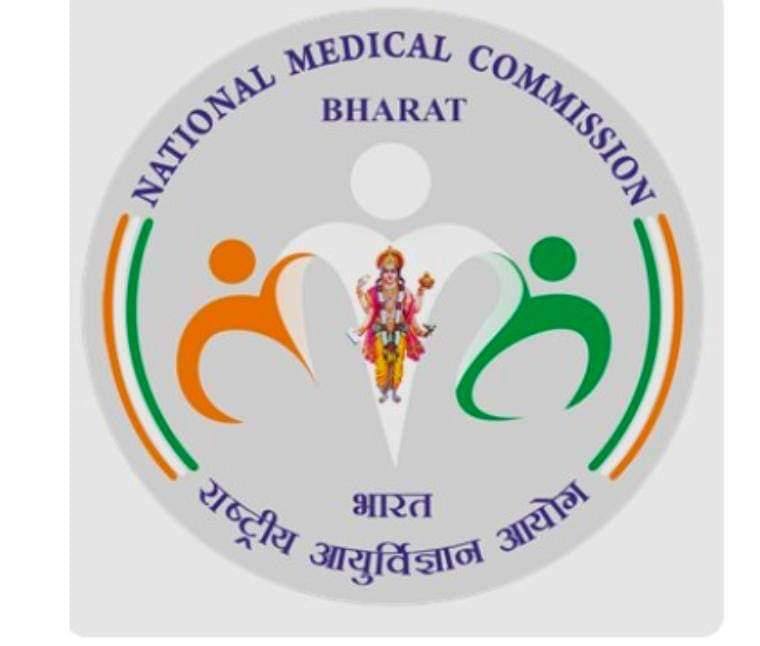
The National Medical Commision of India, the apex "scientific" body that regulates medical education and medical professionals has silently dropped the Ashoka State Emblem from it's logo, replacing it with an image of the Hindu God Dhanvantri, the embodiment of pseudoscientific Ayurveda, thus signaling the shameless entry of India into the inner circle of pseudoscience Hell.
If the NMC Members in charge of this abomination has some shame, they'll change the logo to a more secular one...one that does not embrace pseudoscientific beliefs, driven by religion and faith, but by science and rationality. Some shame at least.
Traditional vegetarian Indian diets are protein-deficient.
Although I've written a lot about vegetarian sources of protein, I'm often asked about this over & over
Here's a step-by-step guide on how to complete your daily protein requirement being a vegetarian: