In 1968, George Land (with Beth Jarman) conducted a research study to test the creativity of 1,600 children ranging in ages from three-to-five years old. This was the same creativity test he devised for NASA to help select innovative engineers and scientists. The assessment worked so well he decided to try it on children. He then re-tested the same children at 10 years of age, and again at 15 years of age (a longitudinal study).
The test was designed to indicate how well someone could look at a issue and devise new, different, innovative ways to address it. To do that, they asked children at these various ages to come up with ways to use a paperclip. The results may surprise you.
•Creativity scores amongst 5-year old’s: 98%
•Creativity scores amongst 10-year old’s: 30%
•Creativity scores amongst 15-year old’s: 12%
•Given to 280,000 adults (average age of 31): 2%
The results are not as we would expect, are they? The proportion of people who scored at the “Genius Level” decreased with age. We might think that it should increase with our level of education. But clearly not.
Why is this? Well, it seems we have employed a system that educates the genius right out of people. And how have we done this?
The industrial revolution began in Great Britain in the mid 1700's and by 1760 in the U.S was gaining steam - literally. Steam power was the catalyst. This first industrial revolution exploded from about 1760 to 1840. It was followed by the age of science and mass production, and then the digital revolution. We are now at the beginning of the next phase of dramatic technological expansion and social change—the Fourth Industrial Revolution.
Coinciding with the first industrial revolution was an educational revolution, Public Education. The system was created in the late 1600's and in the 1700's was developed into the system we still use today. It was designed to meet the challenges of the first industrial revolution. But, when that revolution gave way to the second, and third, and fourth, our educational system did not. It was devoted to the original system. Alongside the first industrial revolution, it has continued to insist on manufacturing the same student, over and over, tweaking content for new technologies.
So, today's education system produces student conformity just as any good industrial manufacturing process would do with its product. But not student creativity, diversity or individual expression, which fits the needs of our day. As a result, ideas for paperclips decline and genius dries up.
This is not the path to a world where AI is built into everything. It is vital to bring our children back to the path of 98% genius level as presented by Dr. Land. We can also bring back us adults back from the institutional learning of schools and universities.
The reality is we simply have no choice as there is no path forward if human individuality and creativity is not asserted as our primary function.
This is and always has been the path of humanity. We just need to remember to remember.
Whether you're at #ISTE19 or #NotAtISTE, you can enter the Eduscape #SocialMedia Raffle!
PRIZES:
-1 #PhotonEDU Robot
-1 #ubbu Classroom License
HOW TO ENTER:
-Follow @Eduscape
-Retweet this tweet
The winner will be randomly selected at 1:00PM ET on Wed 6/26. Good luck! 🎉🎟️🏅
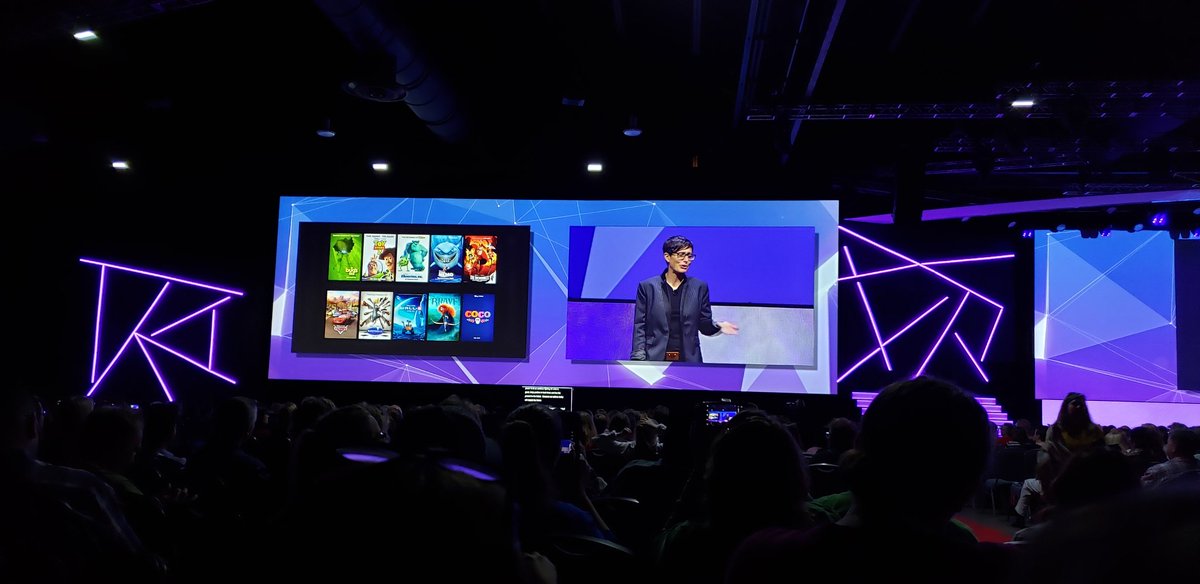
❤️ all of these examples from @dafeinberg that show how @Pixar has to overcome never-been-done-before challenges daily (whether they are big or small in a film). How do we create learners that thrive in this creative, failure-forward environments AND welcome all learners? #iste19
When you climb these stairs at #ISTE19 remember, you came to learn and share, but you also came to be celebrated! Thank you, Educators, for all you do for children everyday! #notAllHeroesWearCapes