Memlekette dolandırıcılığın adı ticaret oldu artık. Hacimli bir çıktı almam gerekiyordu. Yakınımdaki bir baskıcıya gidip fiyat sormadan mailine gönderdim. İşleme başlamadan fiyatını sordum, nakit 1.200 TL, kartla ödersen + KDV dedi. Kalsın dedim çıktım. 500 metre ilerideki baskıcıdan KDV dahil 600 TL'ye işimi hallettim. Normal değil bu fark. Serbest piyasa bu değil. Ticaret değil bunun adı. Bu kazançlar helal de değil. İnsanların fiyat algısı şaştığı için, herkes tuttuğunu tokatlama peşinde. Bu ahlaksızlıkla nasıl mücadele edilir, hiç bilmiyorum.
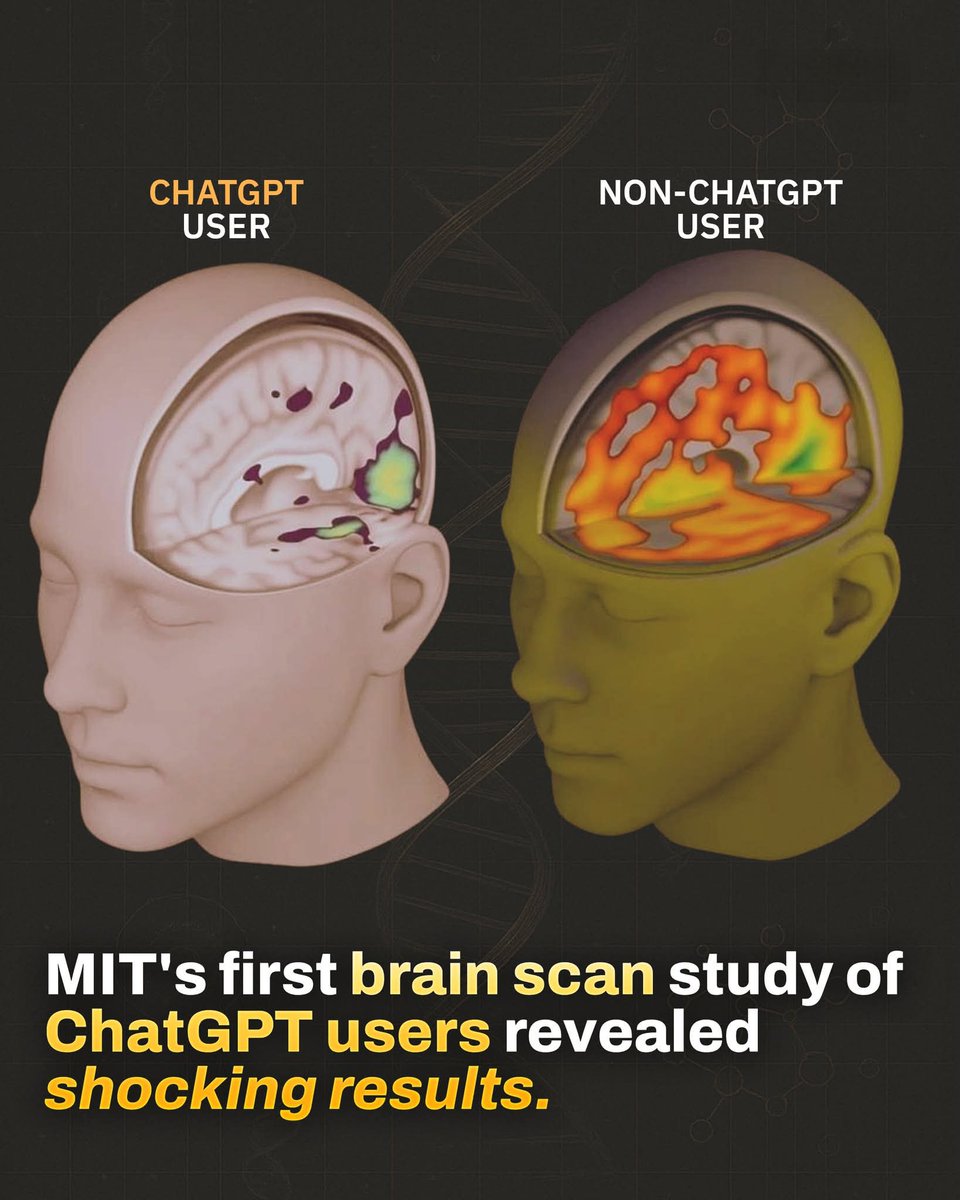
🧠 MIT recently completed the first brain-scan study on ChatGPT users—and the results are deeply revealing.
Rather than boosting brain function, prolonged AI use may be dulling it.
Over four months of cognitive data suggest we might be measuring productivity all wrong ⤵️
In MIT’s study, participants had their brains scanned while using ChatGPT.
→ 83.3% of users couldn’t recall a single sentence they’d written just minutes earlier.
→ In contrast, those writing without AI had no trouble remembering.
Brain connectivity dropped sharply—from 79 to 42 points.
→ That’s a 47% drop in neural engagement.
→ The lowest cognitive performance among all user groups.
Even after stopping ChatGPT use in later sessions, these users showed continued under-engagement.
→ Their performance remained lower than those who never used AI.
→ This suggests more than dependency—it’s cognitive weakening.
Beyond the scans, educators flagged the writing itself.
→ Essays were technically solid, but often called “robotic,” “soulless,” and “lacking depth.”
Here’s the paradox:
→ ChatGPT makes you 60% faster at completing tasks…
→ But it reduces the mental effort required for learning by 32%.
The top-performing group?
→ Those who began without AI and added it later.
→ They retained the best memory, brain activity, and overall scores.
Using ChatGPT can feel empowering—but it may quietly offload your thinking.
→ You gain speed, but lose engagement.
→ You get answers, but stop learning how to think.
The takeaway isn’t to avoid AI—but to use it intentionally.
→ Use it to assist, not replace your mind.
→ Build cognitive strength—not dependency.
MIT’s early study on AI and the brain lays out the stakes. The way we use these tools matters more than ever.
Zarif bir hasta geldi. “Müsade buyurursanız değerli vaktinizi almadan kısaca rahatsızlığımdan bahsetmek isterim” dedi. Dinledim, ultrasonunu yaptım. Giderken gülümseyerek “müteşekkirim, yolunuz gül bahçesi gibi latif olsun” dedi.
Ayaklarım yerden kesildi, nezaket büyülü bir şey.
Gerçekte yaşadığımız kaotik ve sıkıntılı sahnelerin olmadığı, kusursuz bir kurgu tüketiyoruz.
Ve biz bunları izlerken farketmeden herşeyi kıyaslamaya başlıyoruz..
Karlı Kayın Ormanında ve Genco Erkal’dan Nazım şiirleri. 2002 yılında 13. İstanbul Tiyatro Festivalinin açılış gösterisi olarak Rumelihisarı'nda sergilenen Nâzım’a Armağan’dan. #GencoErkal