7 years ago my eye had to be removed to save my life.
7 years on - I've become a lay expert on reading blood tests, skin checks and medical research.
This year I share my journey.
Have you registered yet? #rarecancer@AnthonyMJoshua@AOMA_MASC@MASC_Trials
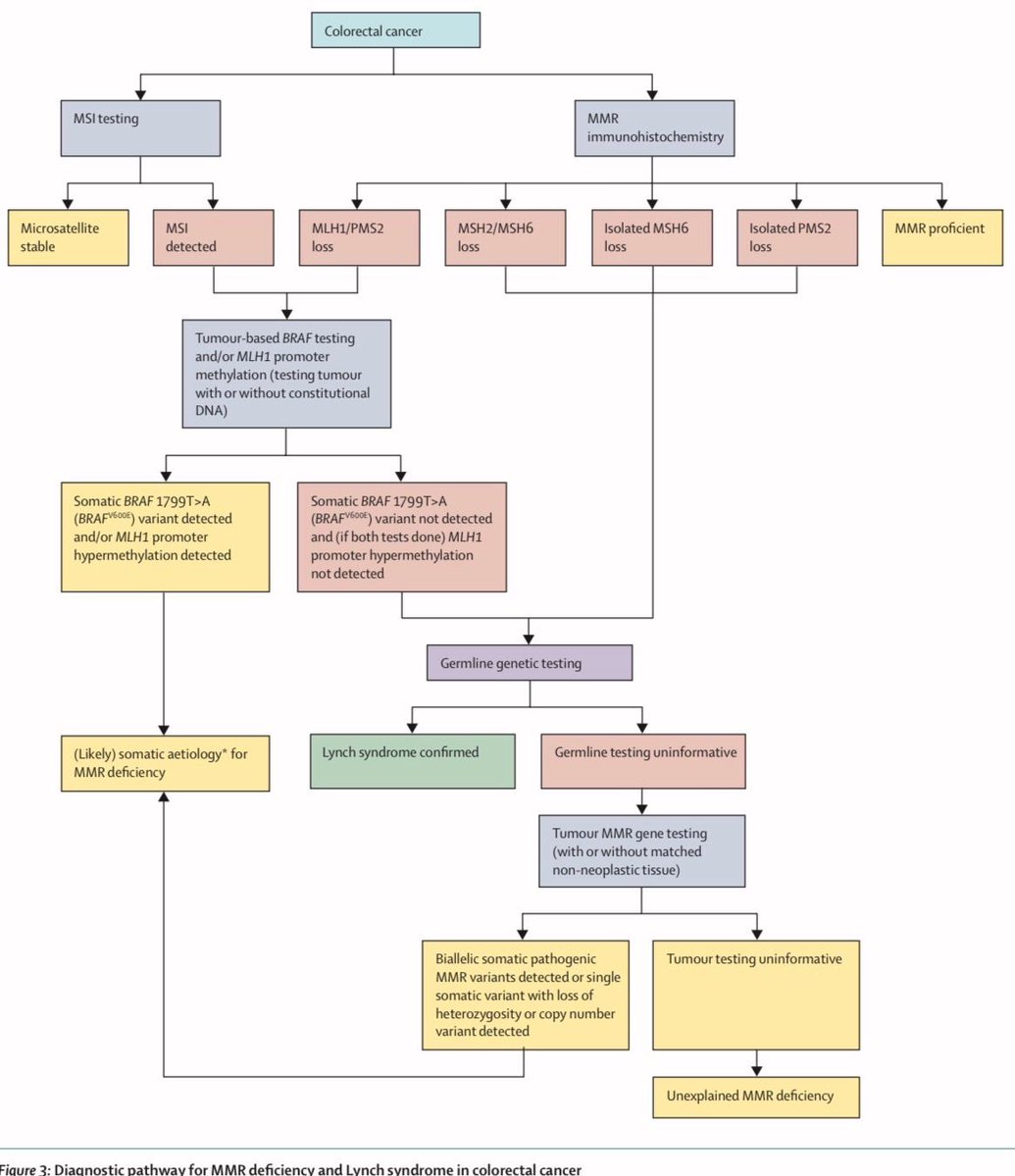
🚨 dMMR ≠ Lynch syndrome!
A crucial distinction every oncologist should know.
A new Lancet review highlights the diagnostic pathway:
🔬 MLH1/PMS2 loss? Check BRAF V600E and/or MLH1 methylation.
🧬 MSH2/MSH6 or isolated MSH6/PMS2 loss? Consider germline testing.
🔍 Germline negative? Look for double-somatic MMR alterations.
💡 Key message: Tumour MMR deficiency is a starting point, not a hereditary cancer diagnosis.
📊 Save this diagnostic algorithm!
@oncoalert@esmo_open@myesmo@asco
#LynchSyndrome #PrecisionOncology
Full paper link in comment below ⬇️.
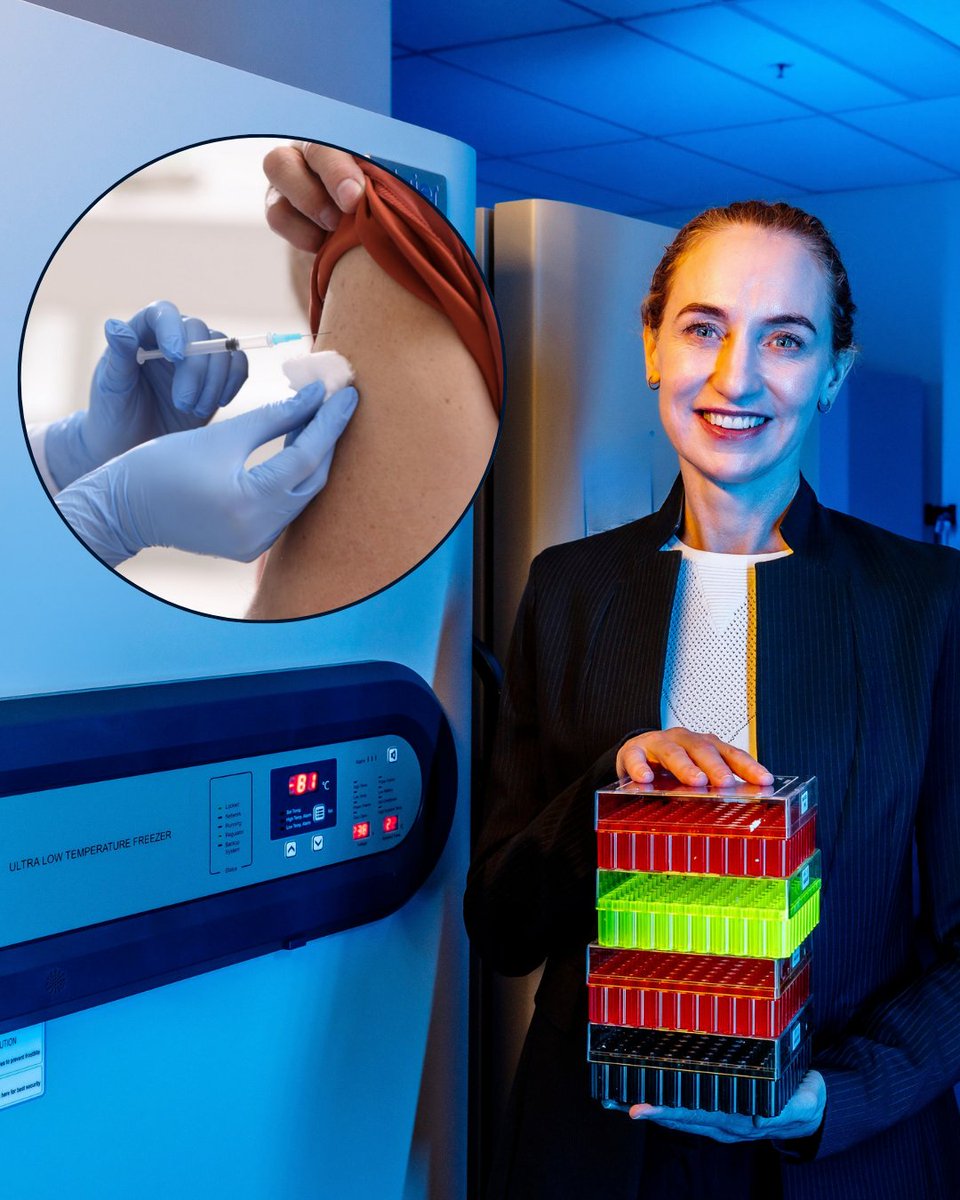
WORLD-FIRST PERSONALISED THERAPEUTIC CANCER VACCINE REDUCES RISK OF MELANOMA RECURRENCE.
Results of the phase 3 INTerpath-001 clinical trial, being presented by Professor Georgina Long at the ESMO2026 Congress, open the door to a new era of personalised cancer treatment.
This international trial included 1137 patients across 157 sites, including 6 sites in Australia. The patients had undergone surgery to remove their melanoma, but were at high risk of it returning.
The trial showed adding a personalised therapeutic cancer vaccine to standard immunotherapy treatment reduced the risk of recurrence or death by 42%.
Unlike a traditional vaccine that prevents disease in healthy people, this is a therapeutic vaccine, designed for people who had cancer and are at high risk of the cancer returning after surgery.
The vaccine is intismeran, a new type of treatment called individualised neoantigen therapy. It is designed specifically for each patient using tissue from their own tumour. Based on the unique identity of neoantigens in each patient’s tumour and using mRNA technology, a ‘wanted poster’ is created to help the immune system find and kill cancer cells, so the cancer is less likely to return or to spread.
“These findings are a foundational shift in our approach to cancer: harnessing the immune system in a more personalised way to reduce the risk of melanoma recurrence or death. This has not been achieved before in the history of cancer drug development. It is the coming together of technology, our biological understanding of cancer and the immune system, and the courage to take this idea into the clinic.” – Professor Georgina Long AO, Principal Investigator
These results now enter a regulatory review process which may take several years.
Read more > https://t.co/bCE4QhYsBZ
Melanoma Institute Australia is affiliated with The University of Sydney.
@ProfGLongMIA@Sydney_Uni @syd_health
#ESMO2026 #CancerVaccine #intismeran
📷Tim Bauer
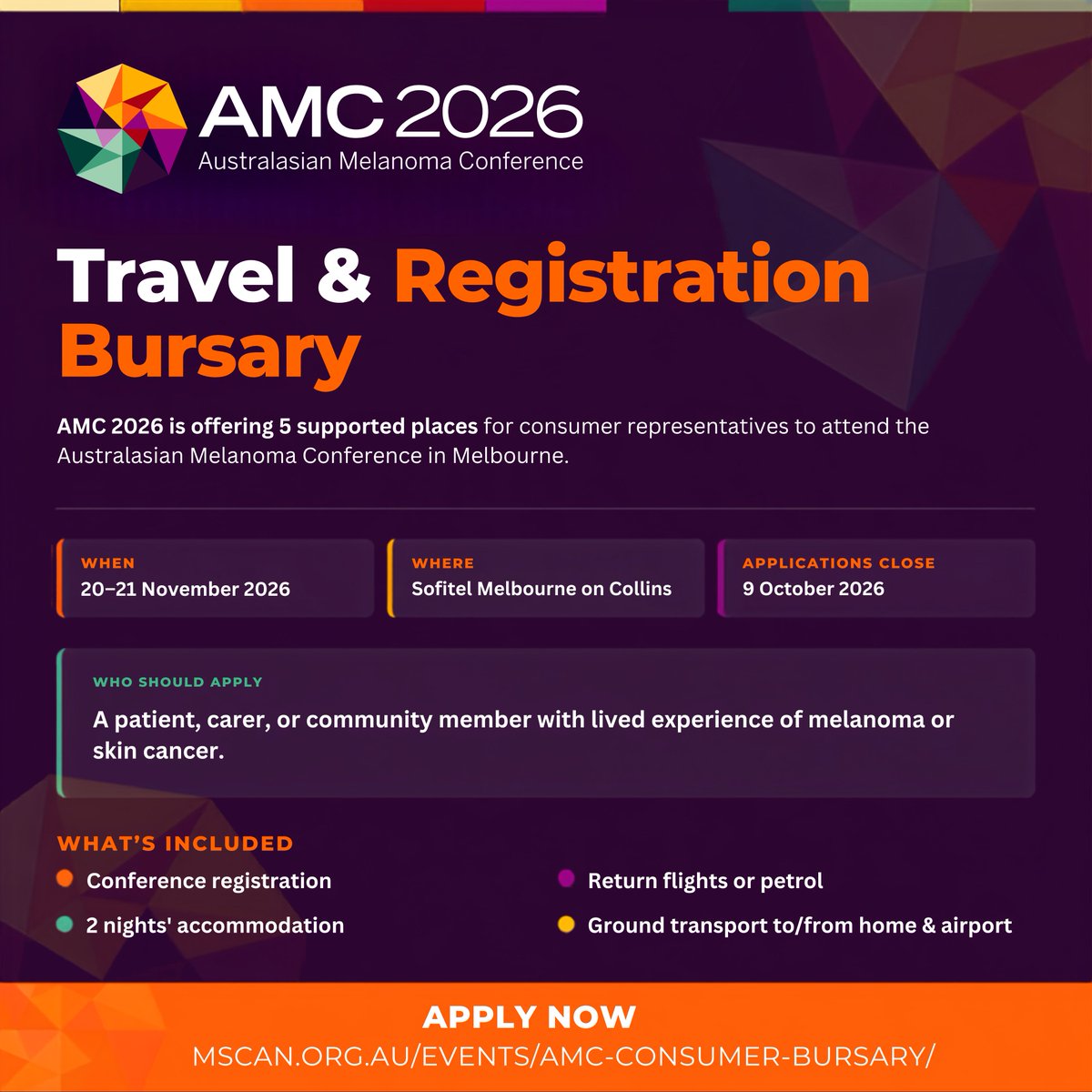
👏We're pleased to share that the Australasian Melanoma Conference 2026 is offering five Consumer Travel & Registration Bursaries for people with lived experience of melanoma or skin cancer.
📌Applications close Friday 9 October 2026.
Learn more via the link in our bio.
👋Meet the Convenor: Prof Mark Shackleton
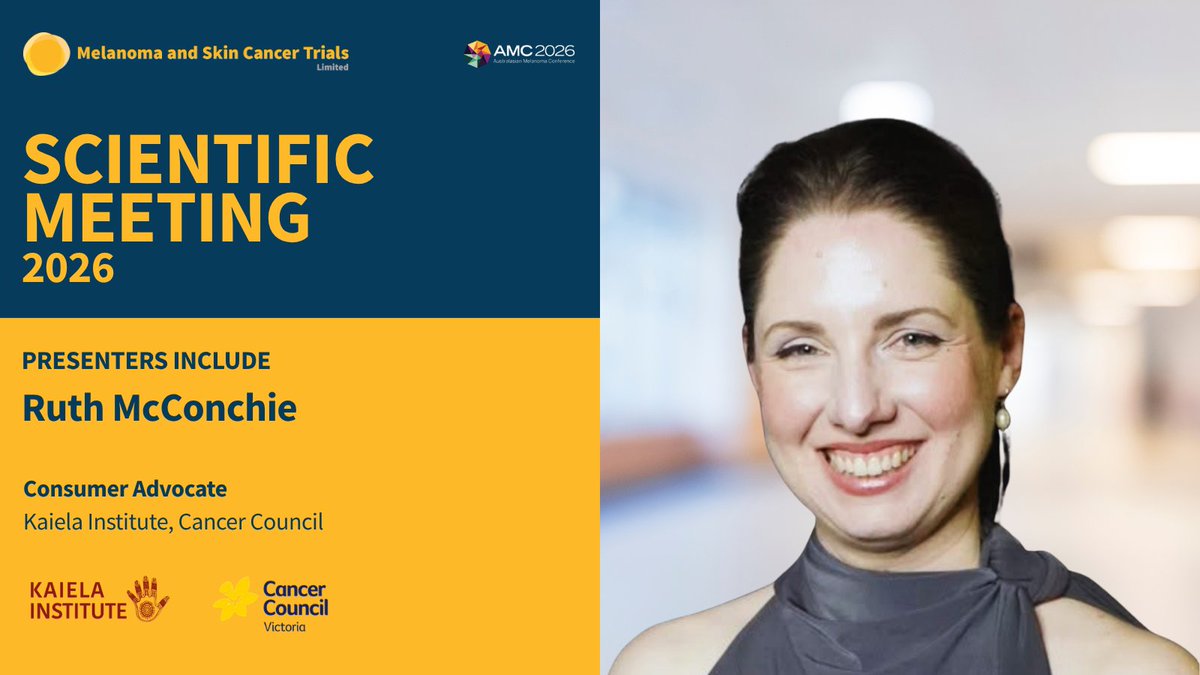
Melanoma and Skin Cancer Trials Scientific Meeting 2026 | 19 November
Join us to hear the latest research, connect with experts, and help shape the future of melanoma and skin cancer research. 🔬
Register: https://t.co/yLE1YGuZV2
In our third episode of our special vodcast series, Redefining Immunotherapy: Lessons from Melanoma, our experts focus on one of the most important challenges in modern cancer care: immunotherapy toxicity.
From subtle early warning signs to life-threatening immune-related adverse events, this episode explores how clinicians can better predict, recognise and manage toxicity while still maximising the life-saving potential of immunotherapy.
Led by @ProfGLongMIA, the panel of experts - including Prof Alex Menzies, A/Prof Matteo Carlino and A/Prof Ines da Silva - share real-world insights from decades of combined experience, including:
• how to educate patients to improve early reporting of symptoms
• when to pause treatment and why “less can be more”
• practical approaches to managing colitis, hepatitis, pneumonitis and neurological toxicities
• the evolving role of steroids, infliximab and targeted immunosuppression
• why early intervention can improve both quality of life and survival outcomes.
Packed with nuanced clinical discussion, relatable patient scenarios and candid expert debate, this episode delivers valuable insights for healthcare professionals using immunotherapy across melanoma and other cancer settings.
Watch on YouTube> https://t.co/qNFa7MYc0F.
If you missed our earlier episodes, take a look on YouTube or search “Melanoma Insights” in Spotify or your favourite podcast app.
#Immunotherapy #Vodcast
#BREAKING: Victoria Police have revealed they “strongly believe” fugitive Dezi Freeman is in the Mount Buffalo National Park area deceased.
It comes as police and volunteers begin a five day search of 1.3 kilometres of land in the park over five days. https://t.co/PD9s2vY610
Have you ever wondered what it looks like to fly around a fire? This is the view from the Air Attack Supervisor as they circle overhead on the Brassknocker Fire, which is burning in remote terrain on the NSW Far South Coast.
Lung cancer is a common cancer affecting Aboriginal and Torres Strait Islander people. During #LungCancerAwarenessMonth visit #OurMobAndCancer for culturally safe information including what you and your mob can do to reduce your #LungCancer risk: https://t.co/VtoxEPKlI5
🌞 Proud to join the melanoma & skin cancer community at Parliament House for the Start of Summer BBQ with Parliamentary Friends of Melanoma & Skin Cancer Awareness.
Thank you MSCAN & Co-Chairs Jason Clare MP & Darren Chester MP.
#SkinCancerAwareness#auspol#MSCAN#AMSCA
A drug used to treat diabetes and chronic disease is to be listed on the Pharmaceutical Benefits Scheme, making it cheaper for almost 70,000 Australians https://t.co/ixtFWkESjr
🗣️Join Dr David Ancona-Lezama live at the 2025 AOMA Virtual Summit for their educational talk: ‘Update on Prompt Diagnosis of Choroidal Melanoma' on Saturday 8 November. https://t.co/VRTMPFV3dI
As melanoma in situ (MIS) diagnoses rise, concerns about overdiagnosis are growing - with real implications for patients, clinicians and the health system.
In this episode of our podcast 'Melanoma Insights for Professionals', experts from dermatology, pathology, psychology and research come together to explore the drivers of overdiagnosis, the psychological impact of an MIS label, and the role of emerging diagnostic tools and data.
This podcast is suitable for multidisciplinary specialist, primary care physicians and other healthcare professionals.
Search “Melanoma insights” via your favourite podcast app or listen via the Melanoma Education Portal link here (Clinicians only; free log in required) > https://t.co/75o1fNRyGv
#MelanomaInsights #MelanomaInSitu
🗣️Join A/Prof Claire Phillips live at the 2025 AOMA Virtual Summit for their talk: ‘Stereotactic radiotherapy for posterior choroidal melanoma’ on Saturday 8 November. https://t.co/VRTMPFV3dI
Registrations now open! Australasian Ocular Melanoma Alliance (AOMA) Virtual Summit, 8 Nov. This free, online event will feature international & Australian ocular melanoma experts and consumer sessions.
Register: https://t.co/zmanVoBqfI
Findings from Project Shirley show that #Cancer#FearofRecurrence is common & burdensome in early stage HR+ HER- #BreastCancer patients (90% greatest concern), but that discussion of prognosis & related FCR can help reduce the impact #BCT2025