Something bigger is starting to form around SHELTR.
Not just uploads anymore.
Dataset workflows.
Recovery aware infrastructure.
Lineage.
Streaming retrieval.
Distributed storage.
Proof-ready foundations.
Still early.
But the system is starting to feel real.
#AI
3. Current direction for SHELTR:
• chunked uploads
• SHA-256 dedupe
• async pipelines
• immutable lineage
• streaming retrieval
• proof-ready architecture
Exploring @shelbyserves for decentralized storage + retrieval.
Building decentralized AI dataset infra on Aptos.
1. Building SHELTR on @Aptos.
The focus is not another AI wrapper or hype layer.
We’re building dataset infrastructure for AI workflows:
• ingestion
• orchestration
• lineage
• retrieval
• distributed storage compatibility
both are becoming important pieces of the stack.
2. AI datasets are turning into infrastructure problems.
Teams spend massive time dealing with:
- broken datasets
- duplicated storage
- missing lineage
- retrieval bottlenecks
- inconsistent formats
- workflow chaos
SHELTR is being designed to reduce that operational mess.
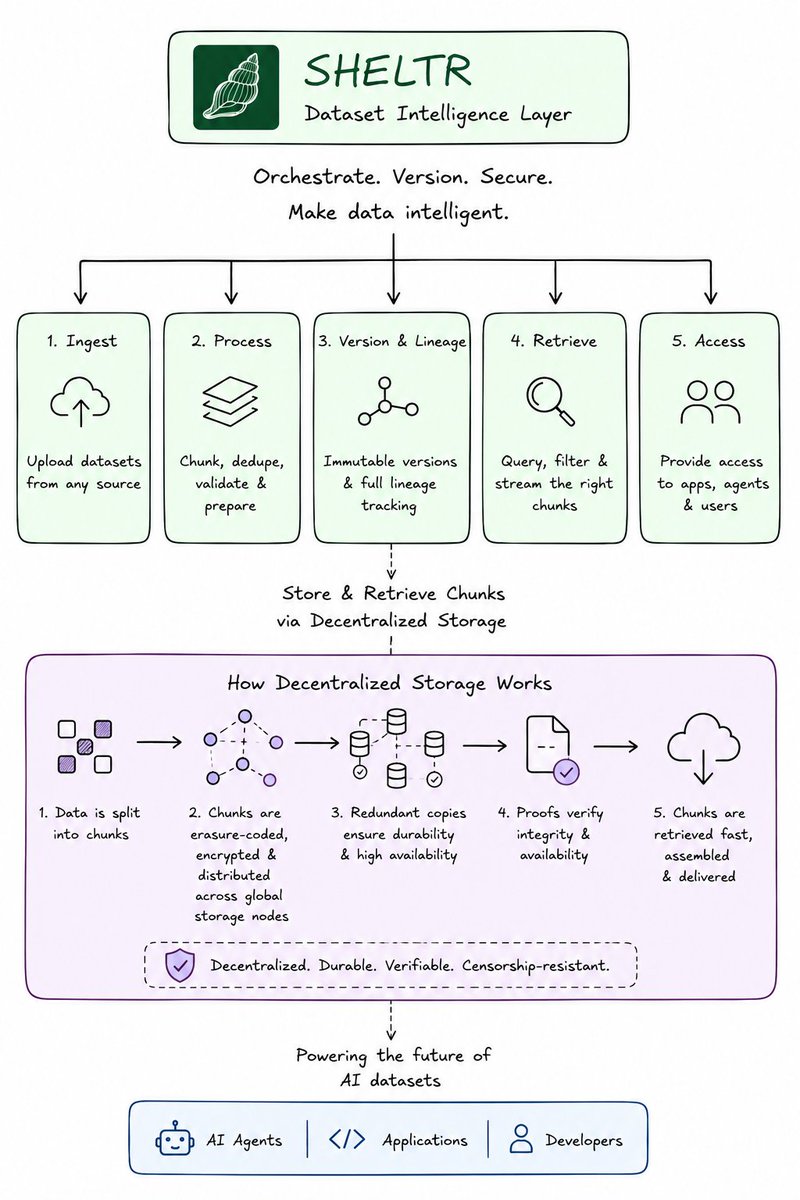
Working on SHELTR’s dataset workflow layer.
datasets get chunked, validated, versioned, distributed across decentralized storage, then retrieved and streamed efficiently when needed.
Trying to make AI dataset infrastructure less painful and more reliable with @shelbyserves.
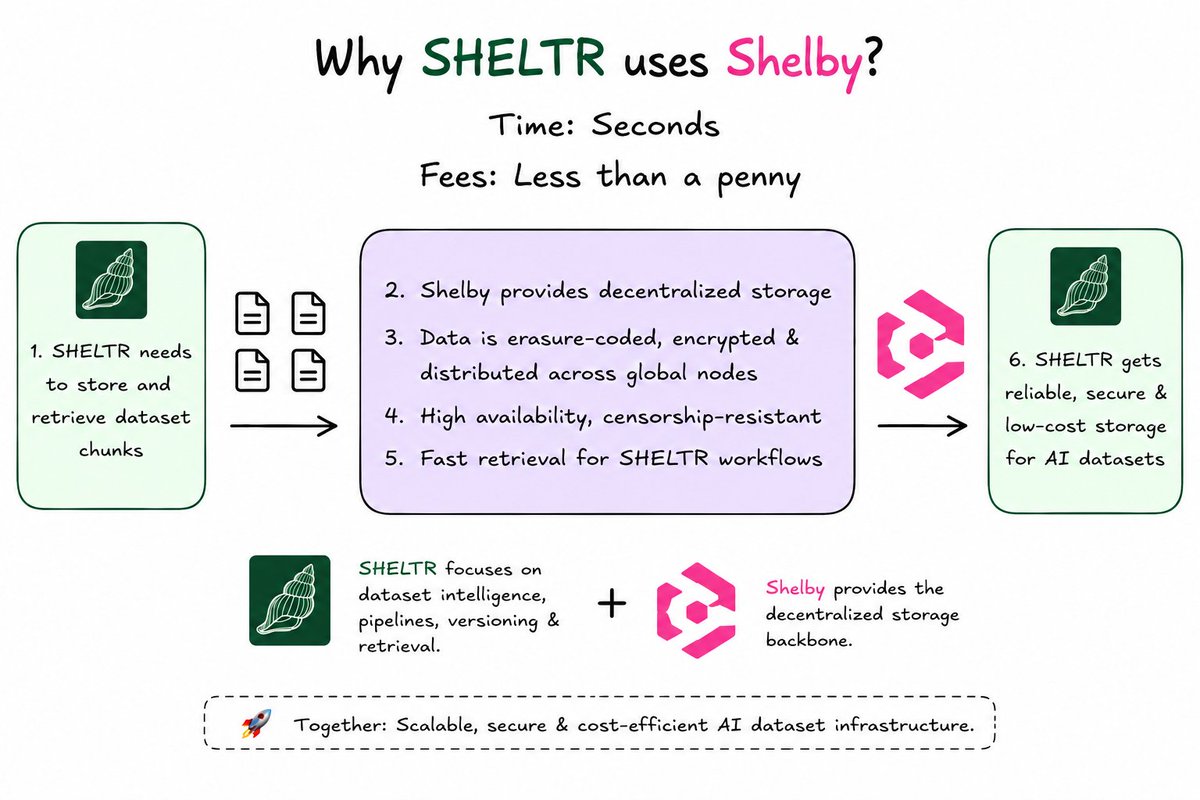
Why SHELTR uses @shelbyserves:
AI datasets are large, fragmented, and painful to manage at scale.
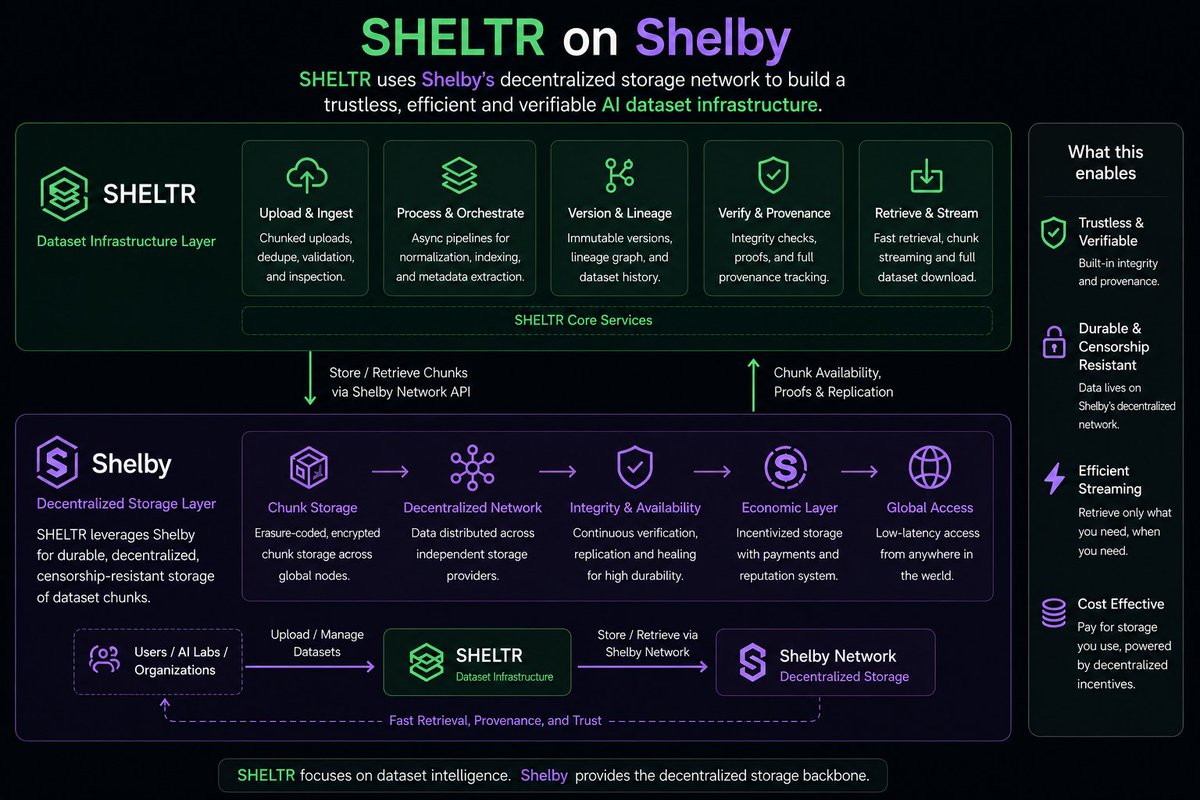
SHELTR handles: dataset pipelines, versioning, lineage, retrieval, orchestration.
Shelby handles: decentralized chunk storage, durability, replication, fast access.
Infra > hype.
SHELTR handles the dataset intelligence layer.
@shelbyserves handles the decentralized storage layer.
Together: chunked AI dataset storage, streaming retrieval, immutable lineage, proof ready infra, distributed dataset access.
Building the data layer AI infra still lacks.
Building SHELTR.
A decentralized AI dataset infrastructure layer on top of @shelbyserves.
AI developers spend more time cleaning, restructuring, versioning, and moving datasets than actually training models.
SHELTR is being built to fix that.
Less dataset chaos. More building.