Really enjoyed writing this article for
@UniMelb's Pursuit with @olgahannonen. If we could sum up the relationship between nomads/transnational remote workers and local communities using just one expression, it would be this: "it's complicated!"
https://t.co/IsrQEH4jkg
@TourismJournal@olgahannonen An interesting article, but there are a couple of issues with it. To start, there's still no reliable data on just how many nomads there are. The "35 million" number frequently cited by journalists is just a guestimate from a blog that's now being taken as gospel.
"Digital nomadism, and tourism in general, have long been questioned as a form of colonialism by researchers and academics. Is this actually true in practice?"
Happy to have shared some of my more critical thoughts on #digitalnomadism with @junkee 🤘
https://t.co/hexdPc7WOO
Okay, I know that at one point in the future the joy I feel from having my work referenced by other academics in actual, legit journals will recede, but for the moment, it's still novel and exciting & just damn cool! Excellent paper by @MariToivanen! https://t.co/8FPerqq449
@chancecollabs@PlumiaCountry Man, I totally support what you guys are hoping to achieve as I agree that mobility rights shouldn't be based on where you're born. But yeah, unfortunately what is realistically attainable falls short of what both of us want. Keep up the good work though 💪
It seems that @PlumiaCountry will be a class-based country, open only to knowledge workers who earn at least $50k USD. Will it just be a country for rich or middle class people? How is this any fairer from the current system?
https://t.co/KMEHEXXKjg
@chancecollabs@PlumiaCountry Yes, totally. They would have access to global mobility that they wouldn't otherwise have. But as I argue, it's only an option for a certain (creative?) class. Hence my point/observation of a class-based country.
@chancecollabs@PlumiaCountry But how will any number not serve as an obstacle? According to Plumia, their mission is to unlock "global mobility rights for everyone." I think it's a great idea, but let's be honest and admit it's not for everyone...
📚📚📚 3 Book Reviews in the latest issue of our #OpenAccess journal @BerghahnAnthro
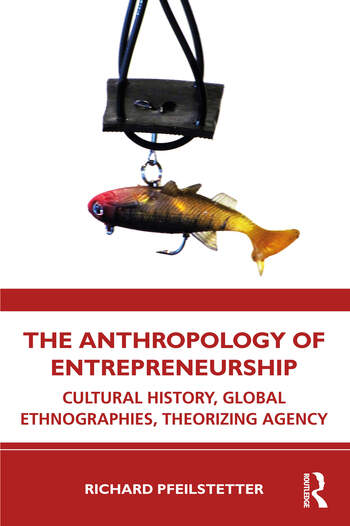
The first of these is anthropologist Richard Pfeilstetter’s recent (2022) book ‘The Anthropology of Entrepreneurship’
https://t.co/M3K3Kz69ha
Nomads yearn for connection, and to relate. And yet, they are wary of being too connected as it may limit their freedom to form connections and relate (with others) ... Such is the nomad paradox of connection!
The default pricing policies & schemes of much of the world are based on a sedentarist ideology that assumes (and rewards) longer stays & commitments, and penalises — in the pocket — shorter stays. This is where digital nomads literally pay the price in living transient lives.
In case you missed it.
CALL FOR PAPERS
Digital Nomadism: Transforming Places, Contesting Spaces A Special Issue in Tourism Geographies
Guest Editors: Olga Hannonen & Kati Pitkänen
Scan QR code or see below for details: https://t.co/W9c0HgYz9r