Thread 1/3
Reminder to Canadians : In November 2025, @CTVNews published Sharan Kaur's (@msSharanKaur
) op-ed "Inside the Conservative Party’s culture of fear"—a blistering anti-Poilievre piece alleging a "cult-like" leadership style.
It blew up for all the wrong reasons.
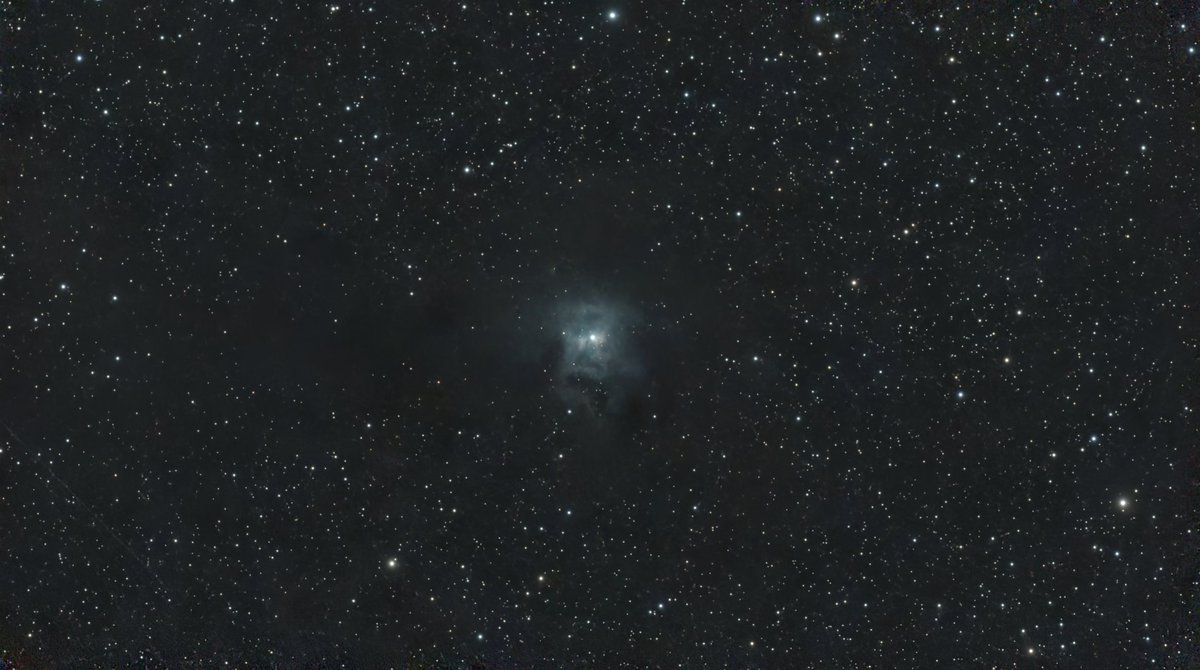
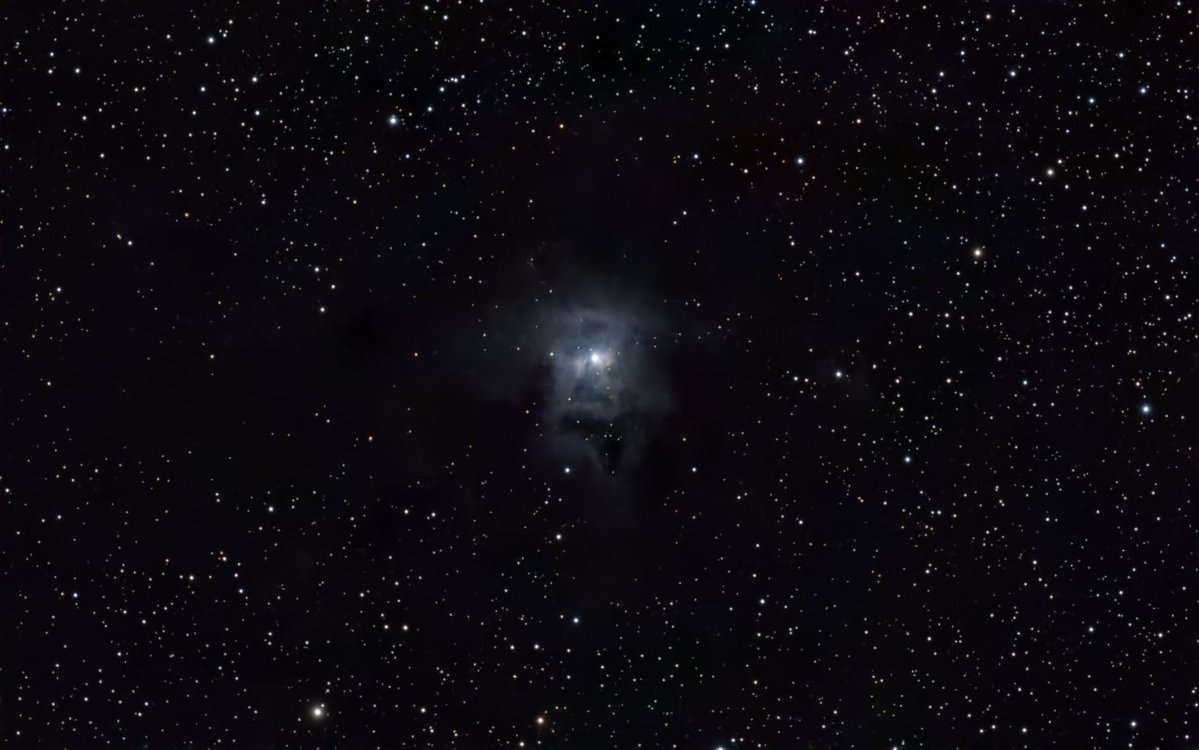
Seestar S50 Pro is pretty alright.
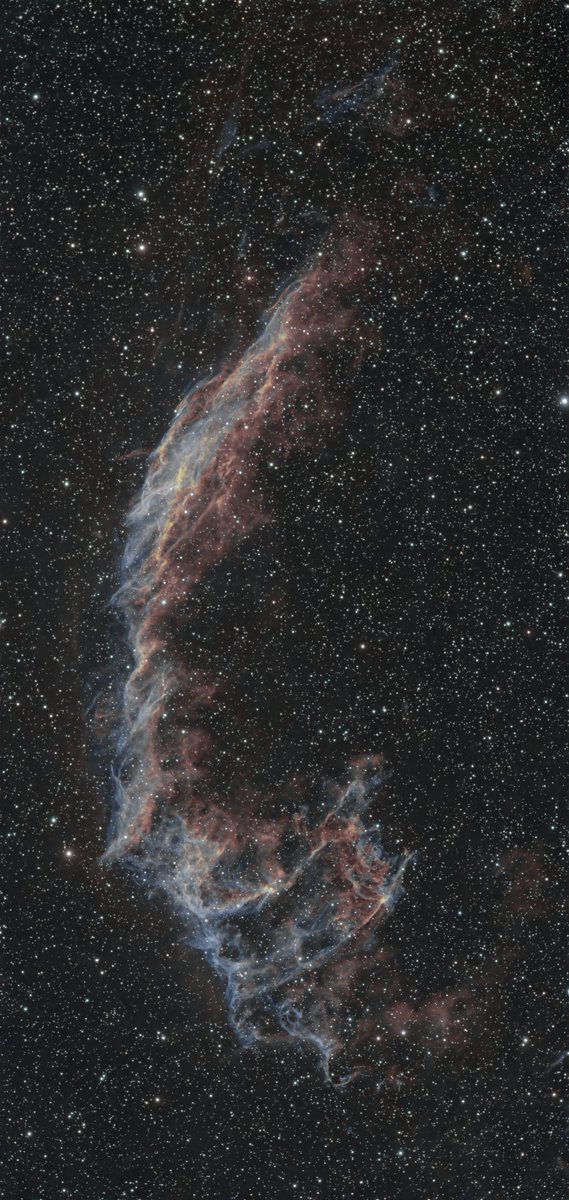
C33 / NGC 6992 the torn eastern rim of a star that went off ~15,000 years ago and would have outshone Venus in daylight.
The “Network Nebula” is just shock-heated gas. Those teal threads are thinner than the Earth–Pluto gap, stretched across a loop 6 full moons wide. Herschel catalogued the pieces separately in 1784 because he didn’t know they were one explosion.
The few hundred metres line is fine for size and speed if the object is actually distant. It’s extra. Height doesn’t need it.
Two of the same Dwarf 3s in a yard with a known baseline already separates near clutter, jet altitude, and stars. I’ve done that. If Billy can get a loaner, he can prove it to himself cheap before he spends on a second unit and internet at another site.
If you can do 100 m at no extra cost, sure. You’ll get tighter speed and size on anything that shows up in both telescopes. If it only shows up in one, it was never at 25,000 ft.
Speed only becomes real once you have the object’s own range. A 737’s known speed is a scale check for the jet, not for the speck. If you assume the speck is at the same height as the plane, you just multiply the error. Pollen at 50 m treated as 8 km looks like a missile. If stereo gives range for both, then yes, you get a usable speed, and the plane’s known speed is how you check the whole solution.
Same with the IR gear he was excited about. If it’s just an IR-pass filter on an IR-sensitive sensor, that’s been done. Courtney at Farsight walked into the same thing and still sells access to this “special knowledge.” Sony NightShot was doing it in 1998. IR shows more of the clutter. It does not put a speck at airliner height.
Almost everyone who has spent money on gear goes through this. I’m honestly trying to save him the embarrassment and get his energy pointed in the right direction.
All that said, I hope he does prove there is something there, because there is a there there. I haven’t seen him post anything we haven’t all seen and been able to pass. If it looks like a balloon, unless you can get up close and grab a pic, it’s a balloon. If it’s travelling in a straight line or a long arc, it’s a satellite. If it’s flashing, it’s a plane. If it oscillates, it’s a bug. If it flaps, you get the point.
Good. Multi-cam as standard is the right ask.
That last stereo object is likely a star. Same pixels in both feeds. Billy may have known that and still put it at plane height. It wasn’t. And that result doesn’t turn the new single Dwarf 3 clips into 25,000 ft intercepts.
If some of these orbs are real, two of the same Dwarf 3s in a backyard with a known baseline would show it. I’ve done that. I have 9 Dwarflab units, 3 of them Dwarf 3s. The bits aren’t sitting with the planes. They’re airborne clutter. Pollen, pappus, birds, bugs, moths, spiders. Yeah, spiders fly with electrostatic lift. IR just shows more of the same.
If Billy won’t run that test, he’s either grifting or he’s afraid he’ll prove himself wrong. Until then it’s still just said.
I mean, to be fair… Billy isn’t obligated to prove his claims and can just say stuff. Sure thing.
He can keep stacking out-of-focus dots into “white spheres.” He can keep calling pappus “spikey things.” He can keep treating a 1.6s speck next to a jet as an intercept.
I might be some rando. That doesn’t change the claim. If some of these orbs are real, fine — prove which ones. A lot of what is being shown still looks like airborne clutter, and that does not become a craft at airliner altitude just because it shares a frame with a plane. One camera can’t measure that. If the two-camera work did, post the baseline, the disparity, and the error bars. Until then it’s still just said.
@pixelvillain99@BillyKryzak The answer sums it up I think. That and calling a graphically slick thing Data Dense when it has no real data and Tagging Coulthart may show the intent. I could be wrong and he's lining up a loaner Dwarf 3. As for an answer, maybe this graphic will help.
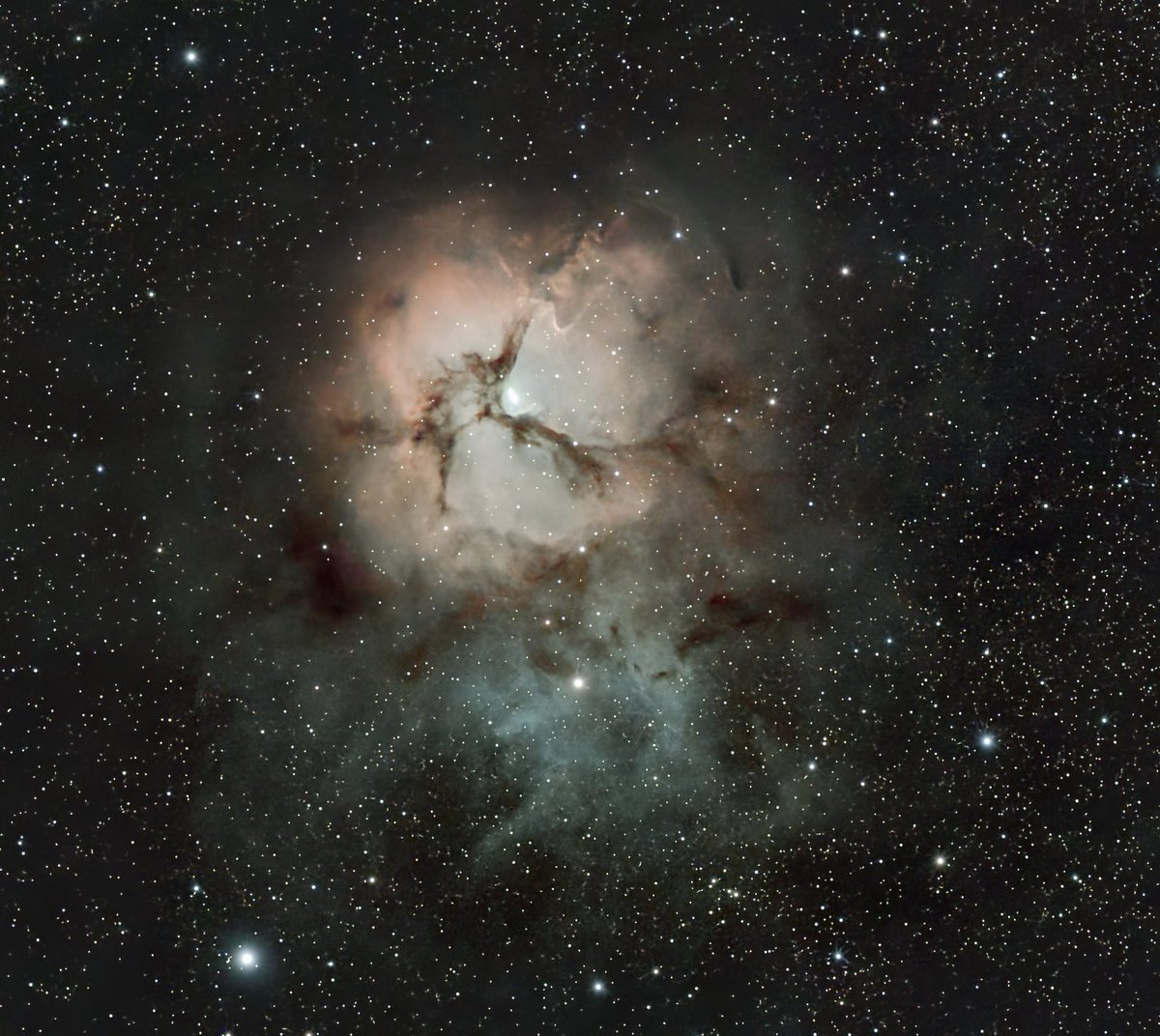
The Trifid is three nebulae in one frame: ionized hydrogen glowing pink, cold dust reflecting blue, and the dark rifts that give it the name. Sagittarius starfield behind it. 10 minutes on the Origin Mark II.
Ran the numbers using both camera feeds, spaced about 660m apart.
Simple rule: things close to two separated cameras look noticeably different between them. Far away things look nearly the same.
The dot lands in almost the same spot in both feeds, off by just a few pixels. That rules out it being close, at the plane's distance or otherwise.
Distance and behavior point to a star. Doesn't prove what it is, but it does rule out being near the plane.
Real on the sensor is not in dispute. Photons arrived. That is the easy part.
What the image does not show is distance. The jet is resolved. The boxed object is not. Stacking an unresolved point source produces a round glow. That is the point-spread function, not proof of a white sphere at aircraft altitude.
Until range is measured, pollen, a seed, a droplet, or other nearby debris remains on the table. Same angular size at 30 m and at 10 km are not the same object.
Two Dwarf 3s 20–30 m apart still settle this. At a few kilometres the parallax should already be hundreds of pixels. Something close to the cameras would jump hard or vanish from one frame.
A second unit looks like a solvable local problem. There are already Dwarf 3 owners in the South Jersey club scene, including at SJAC events, and nearby groups such as the Delaware Valley Amateur Astronomers have multiple users and a loan culture. Ask for one night with a second scope. You may not need to buy anything.
If it sits with the plane, the test will show that. If it is close-in clutter, that will be obvious in one pass.
The tracking and plate-scale work is real. But range is still the missing measurement.
Angular size and angular speed from one camera, combined with an assumed cloud or jet altitude, is not a distance measurement. Until range is independently established, the derived physical size and speed remain conditional on that assumption.
There is a straightforward way to test it.
Put two Dwarf 3s 20–30 m apart, synchronize the observations, and triangulate the same objects. At ranges of a few kilometres, the parallax should be enormous and easily measurable. Something close to the cameras—a moth, seed, leaf, or other debris—should produce dramatically different geometry or may not even appear in both views.
And finding a second Dwarf 3 in your area appears to be a very solvable problem. A New Jersey Dwarf 3 owner has already documented using his scope at a South Jersey Astronomy Club star party. Nearby Delaware Valley Amateur Astronomers also has multiple documented Dwarf 3 users and maintains a club equipment-loan program.
So ask the local astronomy community for one night with a second Dwarf 3. You may not need to buy anything.
That experiment answers the central question:
Are these objects actually at cloud/aircraft distances, or are they much closer to the cameras?
If they're at the inferred altitude, the test strengthens your case enormously. If they're not, you'll know that too.
This isn't asking you to abandon the hypothesis. It's asking you to measure the variable the hypothesis currently assumes.
Until range is measured, claims about physical size, physical speed, a geographically distributed phenomenon, or what governments may be responding to don't follow from the pixels alone.
You've done the tracking work. Now measure the distance.
@CanadianPM@FinanceCanada@ISED_CA@ESDC_GC VIX now vs the decades governments also called ‘uncertain.’ Markets are not pricing 2026 as an outlier. The ‘global uncertainty’ line is doing political work: it justifies retaliation and new spending without having to defend the specific deal that was rejected.
This is past the low-information problem. If it looks like a duck, treat it as a duck.
A balloon-shaped object with a tail, a burst, then a hang is not a puzzle that needs a new class. Ground calm still allows strong, sheared winds a layer up, so zip-then-loiter is normal. Spend the effort on things that do not already look like known objects.
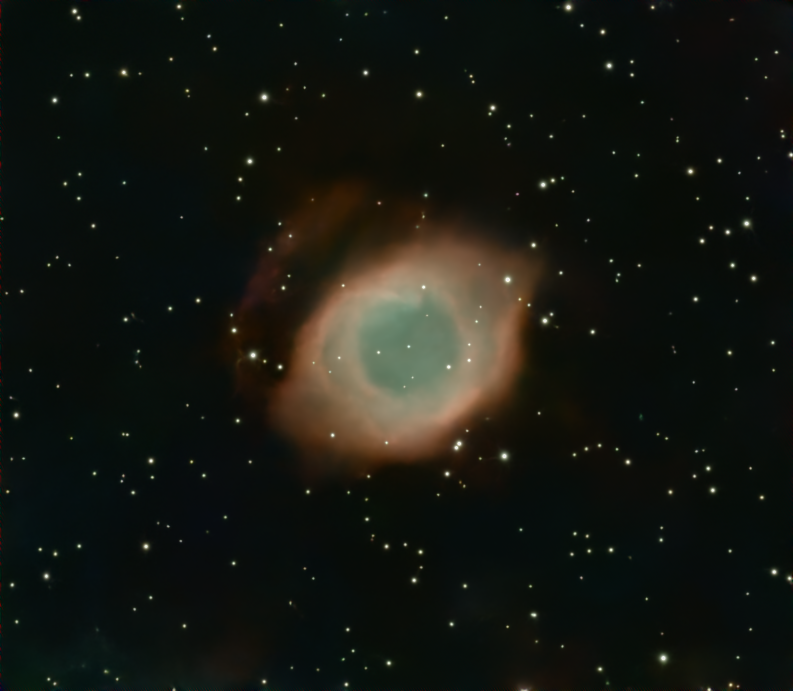
Helix Nebula (NGC 7293) Captured in one night with 3 Dwarf Mini's.
A dying sun-like star that shrugged off its outer layers ~10,600 years ago. About 2.5 light-years across, 650 ly away in Aquarius.
That teal “eye” is the leftover white dwarf lighting up the gas. We’re looking almost straight down the barrel of the expanding shell.
One of the closest bright planetary nebulae in the sky.
What's really going on in that "spiraling UAP" clip
I tracked the dot's exact position in every one of the 258 frames of the video. Once you plot it out, it's tracing a tight loop over and over: 2.12 loops per second, 18 full rotations across the 8.6-second clip. Same steady loop-the-loop the entire time.
Moths fly exactly like this. Looping and corkscrewing is ordinary moth flight. Labs have filmed and measured it for years.
A lepidopterist could tell you whether a steady 2 Hz loop points to a particular family or species. Either way it is too much like an insect to have value.
First is a CoStack with 3 Dwarf Minis. Second is just a quick Photometric calibration. Third one is the same but run though AstroWizard.
@dwarf_lab33747 Perhaps add the Photometric calibration as an option.
@brokebut911@BillyKryzak Not surprised, that first post showed the overflow of intelligence. Don’t take it personally though. Float on by like the seeds.