Being a parent to a 12-year-old, this one touched a raw nerve @andymukherjee70 My daughter is extremely upset she has to give up French. Like you rightly said, the super rich can switch to IB, and anyone who cannot afford a Rs 50-60k monthly school fees will be pushed to revive lost civilizational glory. Thanks for writing this.
She refused to be photoshopped. Following pushback from @IndianExpress and the brilliant @RitikaChopra__ , the original Harappan Dancing Girl is being restored in textbooks. But why were we so afraid of her gaze? I write about the woman who outlasted 4,500 years of scrutiny.
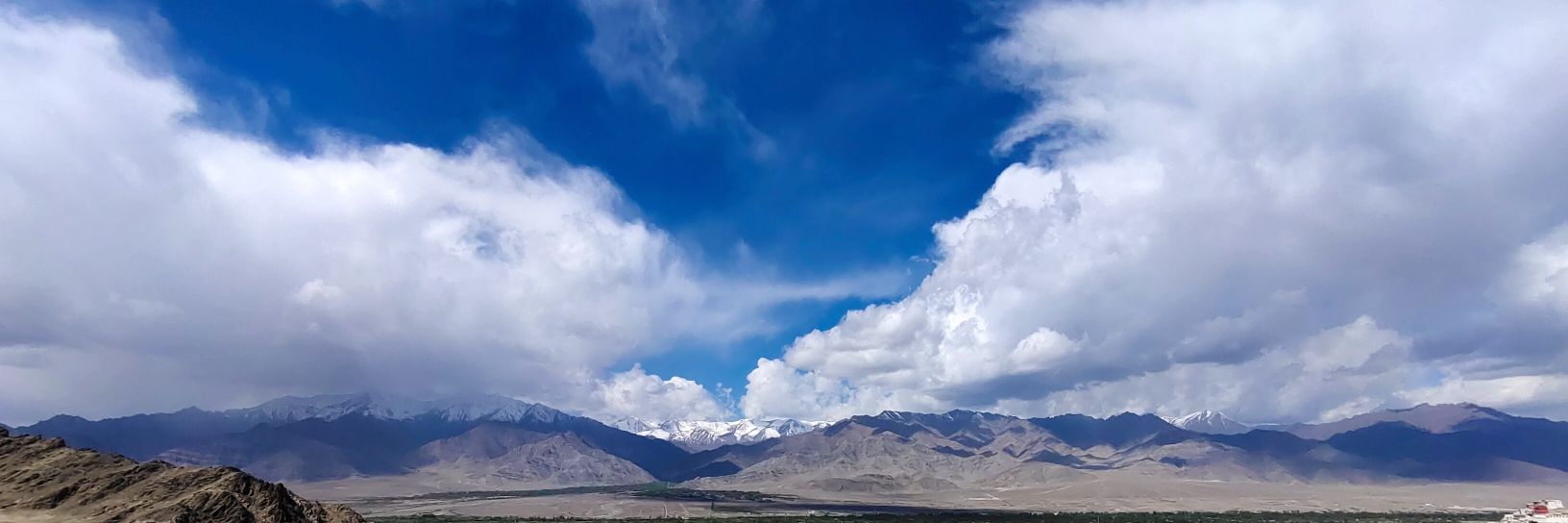
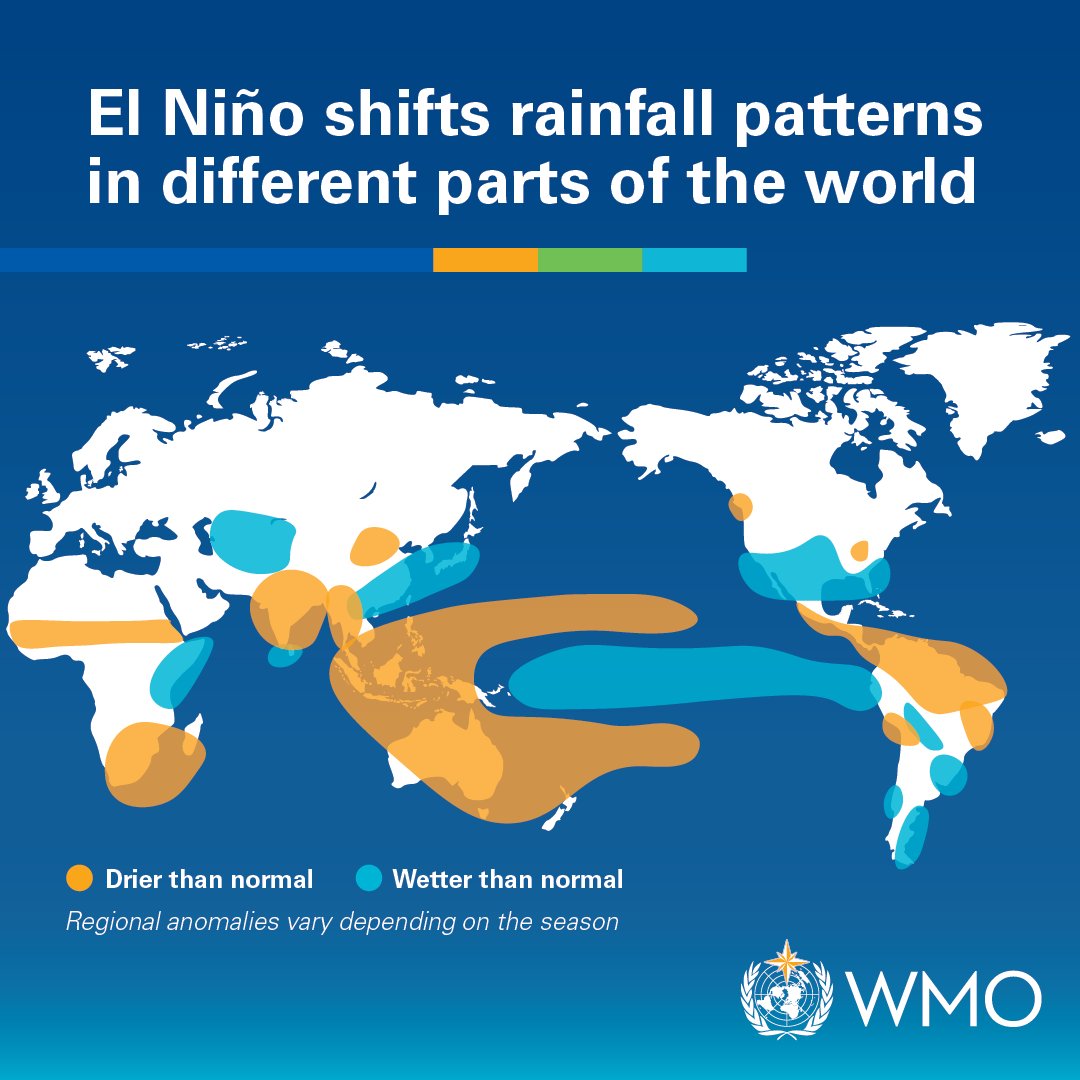
The Little Boy is here. El Nino has set in, officially.
63% chance of a very-strong El Nino, as per the latest forecast from NOAA (https://t.co/v8v1xIMpx8)
So, what does a 'super' El Nino mean for India?
Laying out the risks in this @livemint Long Story
Key takeaways:
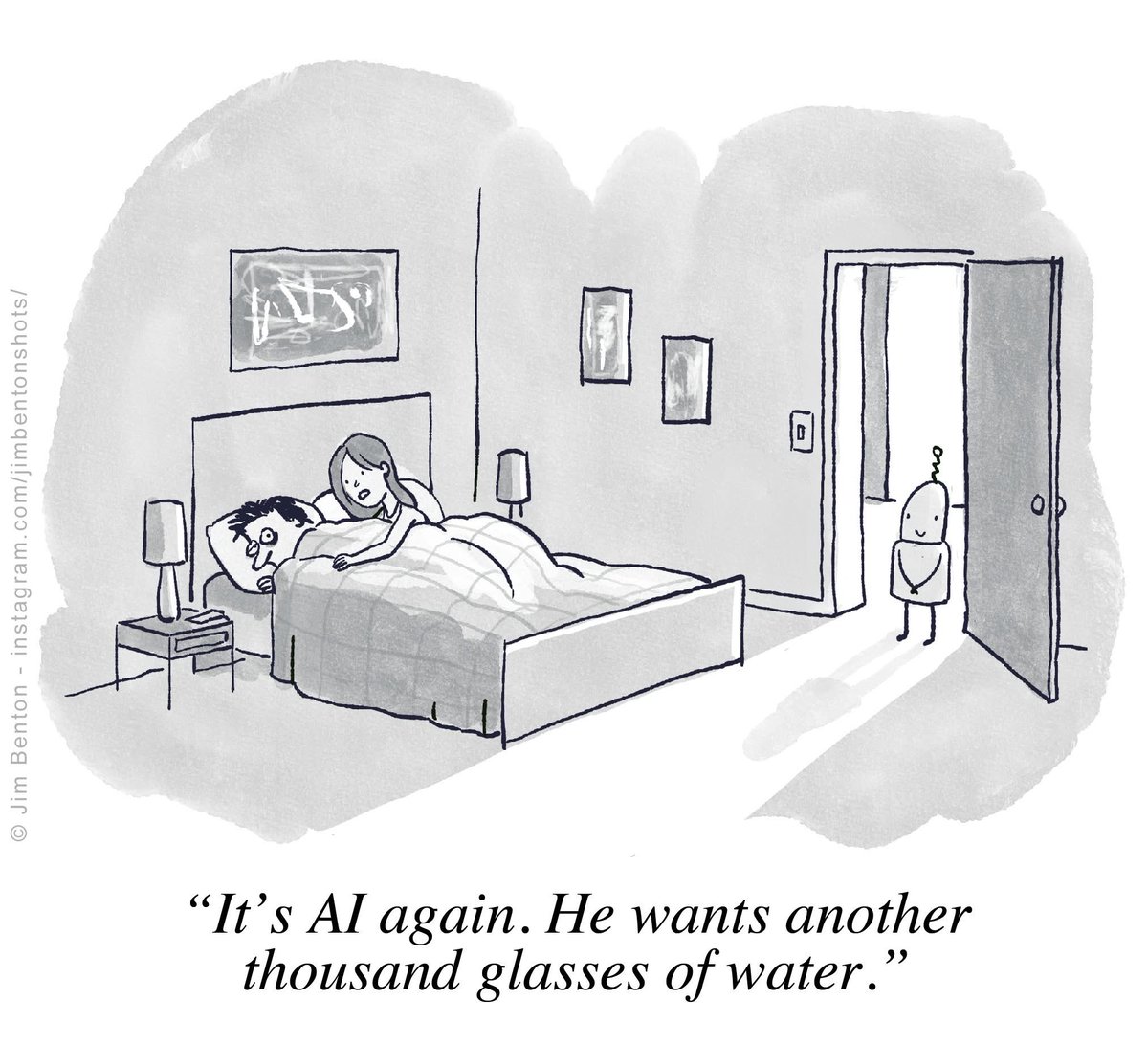
1. A strong El Nino persisting through March next year means the summer of 2027 could get very very hot and dry (see latest NOAA chart). Drinking water shortages in pockets is a strong possibility.
2. There is no perfect correlation between the strength of El Nino and the quantum of monsoon rainfall deficit- only in 3 out of 6 strong El Nino years since 1951, did the Indian monsoon record a deficit of 10% or more (see chart1)- so all is not bleak yet
4. Distribution of monsoon rainfall will be critical for Kharif crops- but resilience of Indian agriculture to deficit rains has improved greatly over the past few decades (see chart2)- but be ready to pay more for vegetables, cooking oils etc
5. Keep a close watch on Indian Ocean Dipole, currently in a neutral state, which can offset some of the negative impacts of a very strong El Nino
6. As a senior scientist said: El Nino is like a terrific fast bowler. But much will depend on the pitch it bowls on.
So, fingers crossed!
Read more: https://t.co/cEP61n4PfC
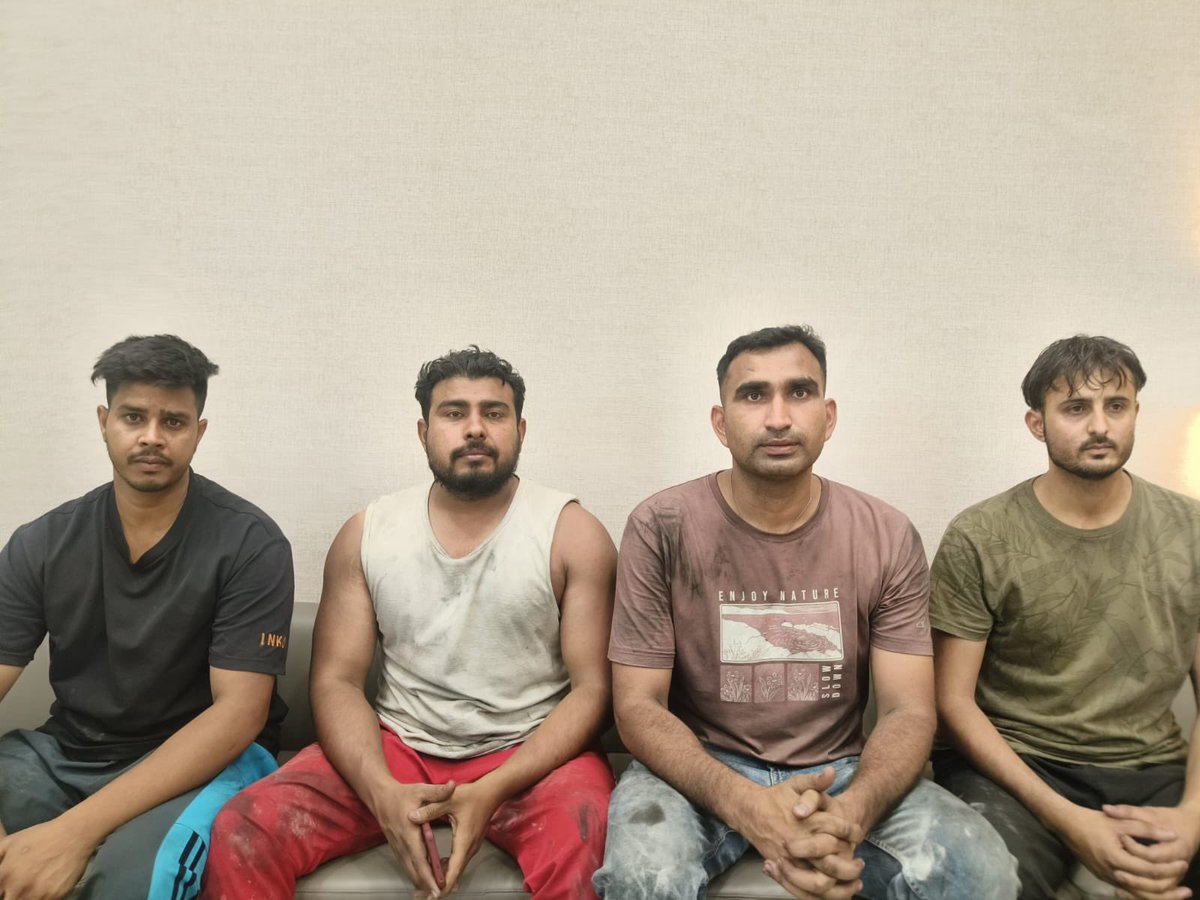
When systems fail, individual heroes rise. These are people who rescued people and administered CPR in the hauz rani fire . (L to R) Amir Khan, Mohd Shoaib, Wasim Raja and Mohd Afzal
@sayantanbera She is fighting a whole system outside that mat. The comment section is a microcosm of this country. We keep tearing into her, ensure she's unsupported, robbed of focus, mental balance and then say she didn't "qualify". Her very survival is a mark of victory.
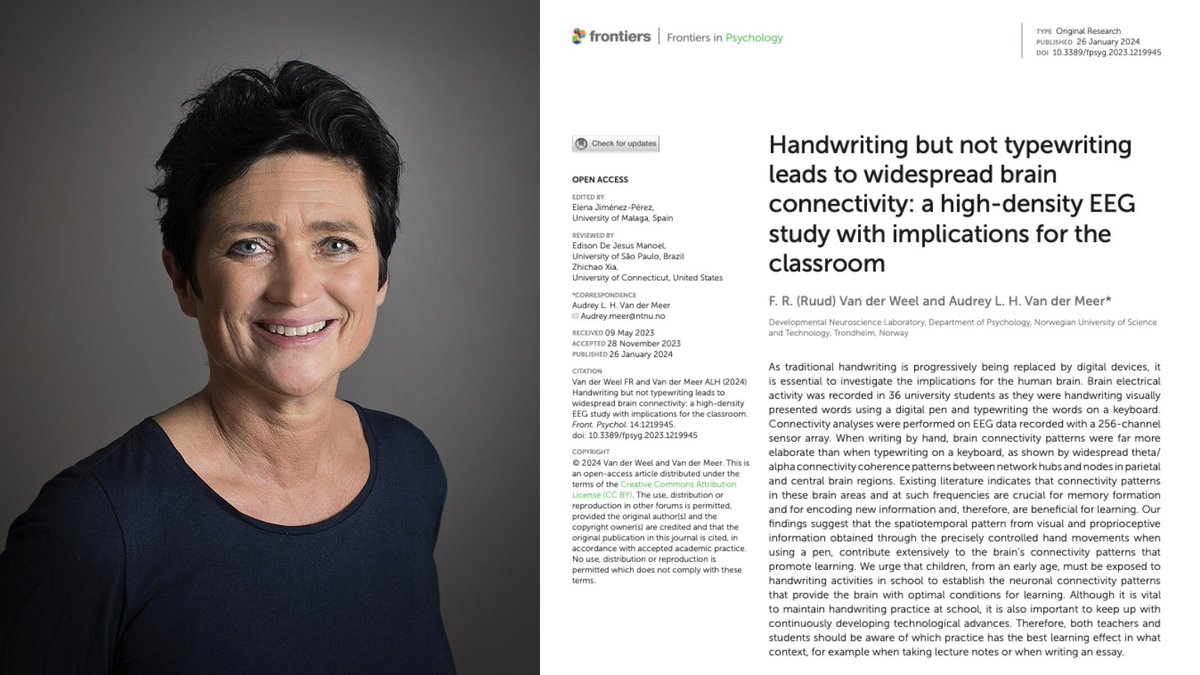
A Norwegian neuroscientist spent 20 years proving that the act of writing by hand changes the human brain in ways typing physically cannot, and almost nobody outside her field has read the paper.
Her name is Audrey van der Meer.
She runs a brain research lab in Trondheim, and the paper that closed the argument was published in 2024 in a journal called Frontiers in Psychology. The finding is brutal enough that it should have changed every classroom on Earth.
The experiment was simple. She recruited 36 university students and put each one in a cap with 256 sensors pressed against their scalp to record brain activity. Words flashed on a screen one at a time.
Sometimes the students wrote the word by hand on a touchscreen using a digital pen, and sometimes they typed the same word on a keyboard. Every neural response was recorded for the full five seconds the word stayed on screen.
Then her team looked at the part of the data most researchers had ignored for years, which is how different parts of the brain were communicating with each other during the task.
When the students wrote by hand, the brain lit up everywhere at once.
The regions responsible for memory, sensory integration, and the encoding of new information were all firing together in a coordinated pattern that spread across the entire cortex. The whole network was awake and connected.
When the same students typed the same word, that pattern collapsed almost completely.
Most of the brain went quiet, and the connections between regions that had been alive seconds earlier were nowhere to be found on the EEG.
Same word, same brain, same person, and two completely different neurological events.
The reason turned out to be something nobody had really paid attention to before her work. Writing by hand is not one motion but a sequence of thousands of tiny micro-movements coordinated with your eyes in real time, where each letter is a different shape that requires the brain to solve a slightly different spatial problem.
Your fingers, wrist, vision, and the parts of your brain that track position in space are all working together to produce one letter, then the next, then the next.
Typing throws all of that away. Every key on a keyboard requires the exact same finger motion regardless of which letter you are pressing, which means the brain has almost nothing to integrate and almost no problem to solve.
Van der Meer said it plainly in her interviews.
Pressing the same key with the same finger over and over does not stimulate the brain in any meaningful way, and she pointed out something that should scare every parent who handed their kid an iPad.
Children who learn to read and write on tablets often cannot tell letters like b and d apart, because they have never physically felt with their bodies what it takes to actually produce those letters on a page.
A decade before her, two researchers at Princeton ran the same fight using a completely different method and ended up at the same answer. Pam Mueller and Daniel Oppenheimer tested 327 students across three experiments, where half took notes on laptops with the internet disabled and half took notes by hand, before testing everyone on what they actually understood from the lectures they had watched.
The handwriting group won by a wide margin on every question that required real understanding rather than surface recall.
The reason was hiding in the transcripts of what the two groups had actually written down.
The laptop students typed almost word for word, capturing more total content but processing almost none of it as they went, while the handwriting students physically could not write fast enough to transcribe a lecture in real time, which forced them to listen carefully, decide what actually mattered, and put it in their own words on the page.
That single act of choosing what to keep was the learning itself, and the keyboard had quietly skipped the choosing and skipped the learning along with it.
Two studies. Two countries. Same answer.
Handwriting makes the brain work. Typing lets it coast.
Every note you have ever typed instead of written went into your brain through a thinner pipe. Every meeting, every book highlight, every idea you captured on your phone instead of on paper was processed at half depth.
You did not forget those things because your memory is bad. You forgot them because typing never woke the part of the brain that would have made them stick.
The fix is the thing your grandmother already knew.
Pick up a pen. Write the thing down. The slower road is the faster one.
The 1970s oil crisis made sugar producer Brazil embrace ethanol-blended fuel. The ongoing oil crisis is making India consider doing the same. But is the switch advisable given the impact it could have on food supplies and prices?
Watch!
https://t.co/TAh8f9A67U
@JoseyJohn | @sayantanbera
Don't miss @arunjei's spectacular story in @IndianExpress today.
A profile of @actorvijay, the sort I was waiting for, with lights, camera, dialogues and action.
https://t.co/wqBJH010rB
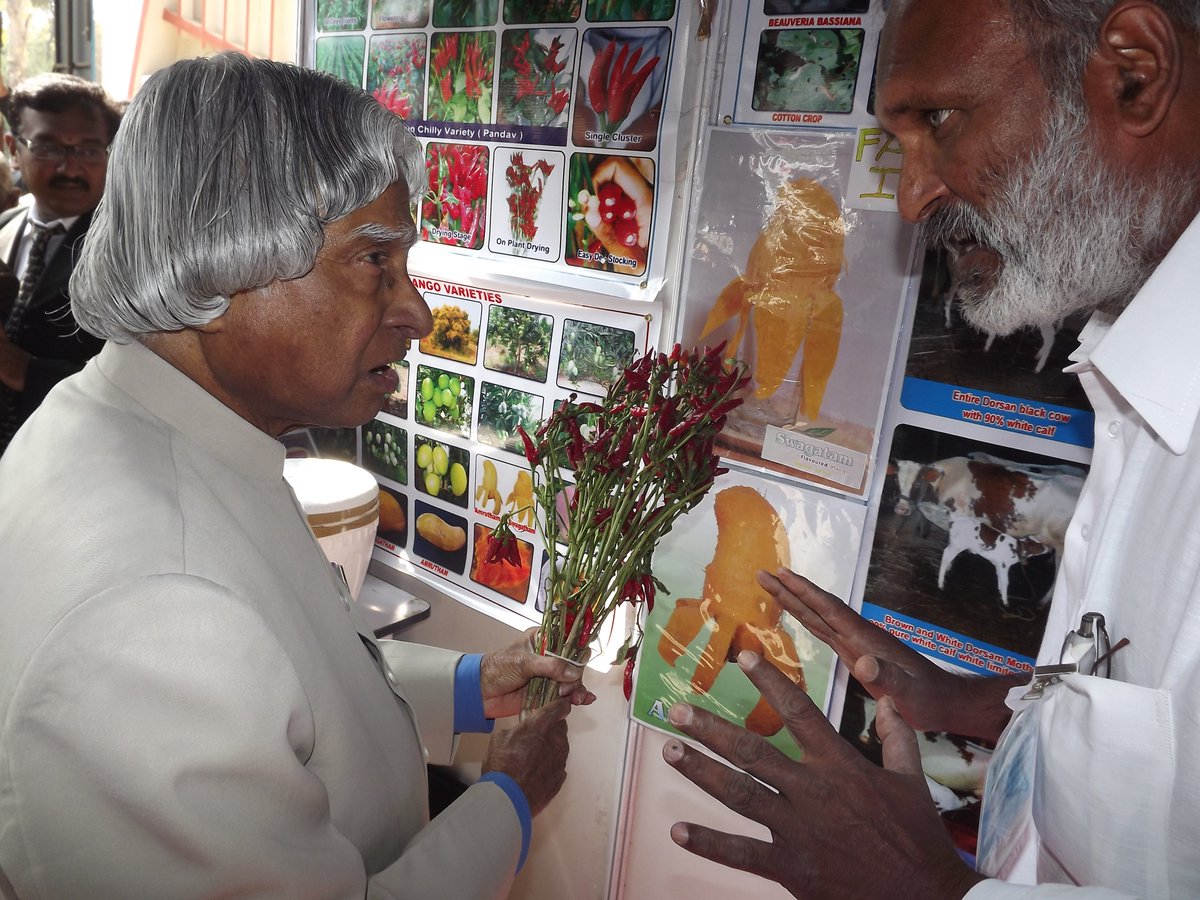
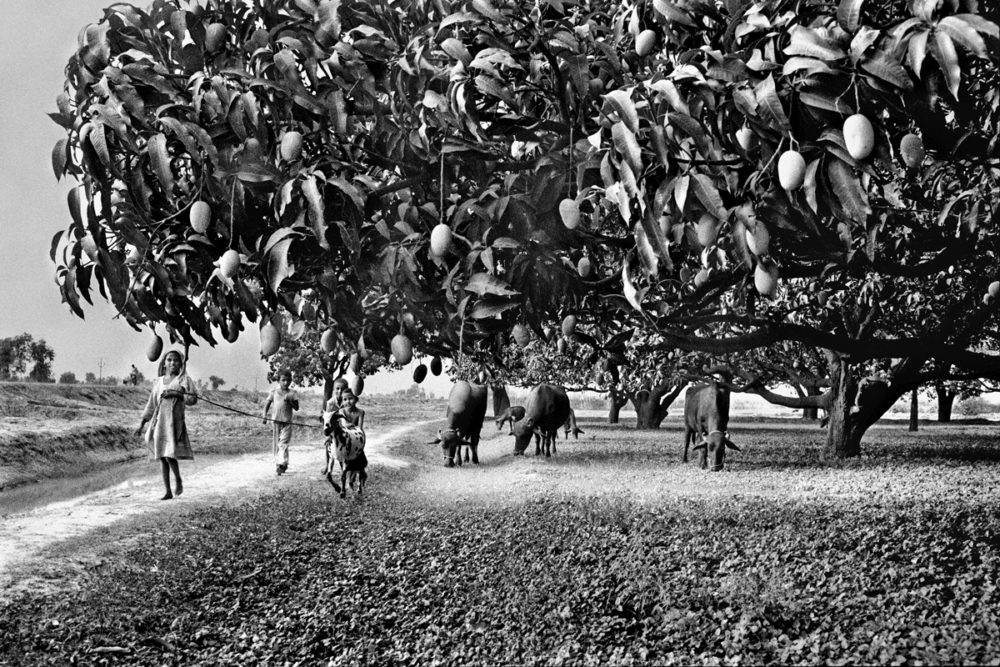
What a phenomenal story! A barefoot scientist, Kongara Ramesh has done the impossible - "he developed a mango that can be frozen skin-on, and stored for months-on-end, peeled like a banana, and savoured like an ice lolly" Do read his brilliant profile by the fab @sayantanbera
(1/3) Cities are no longer cooling down once the sun sets — turning heat stress into a round-the-clock occurrence.
For instance Delhi's heat pattern is driven by land use that clearly influences the land surface temperature (LST). Night temperatures do drop, but not evenly.
He cracked the code of an ‘eternal' mango, co-authored scientific papers on a fungi, healed tens of thousands for free. Now 72 and evicted, he is starting over—armed with nothing but genius and a few grafts. Meet K. Ramesh, a school dropout and scientist extraordinaire: @livemint Long Story
https://t.co/ed9iX6JvcF
I travelled through Great Nicobar today.
These are the most extraordinary forests I have ever seen in my life. Trees older than memory. Forests that took generations to grow.
The people on this island are equally beautiful - both the adivasi communities and the settlers - but they are being robbed of what is rightfully theirs.
The government calls what it is doing here a “Project.” What I have seen is not a project. It is millions of trees marked for the axe. It is 160 square kilometres of rainforest condemned to die. It is communities that have been ignored while their homes have been snatched away.
This is not development. This is destruction dressed in development’s language.
So I will say it plainly, and I will keep saying it: what is being done in Great Nicobar is one of the biggest scams and gravest crimes against this country’s natural and tribal heritage in our lifetime.
It must be stopped. And it can be stopped - if Indians choose to see what I have seen.