Zimbabwean national arrested over alleged fake SA ID “factory”-
Police in Johannesburg have arrested a Zimbabwean national accused of manufacturing fraudulent South African smart ID cards and other forged documents.
An operation in Hillbrow on Wednesday led to the seizure of six SA smart IDs, 22 blank smart ID cards, a laptop and a smart-card printing machine.
The suspect is expected to appear in court soon, while investigations continue.
Police have warned the public against producing or obtaining fraudulent identity documents and forged paperwork.
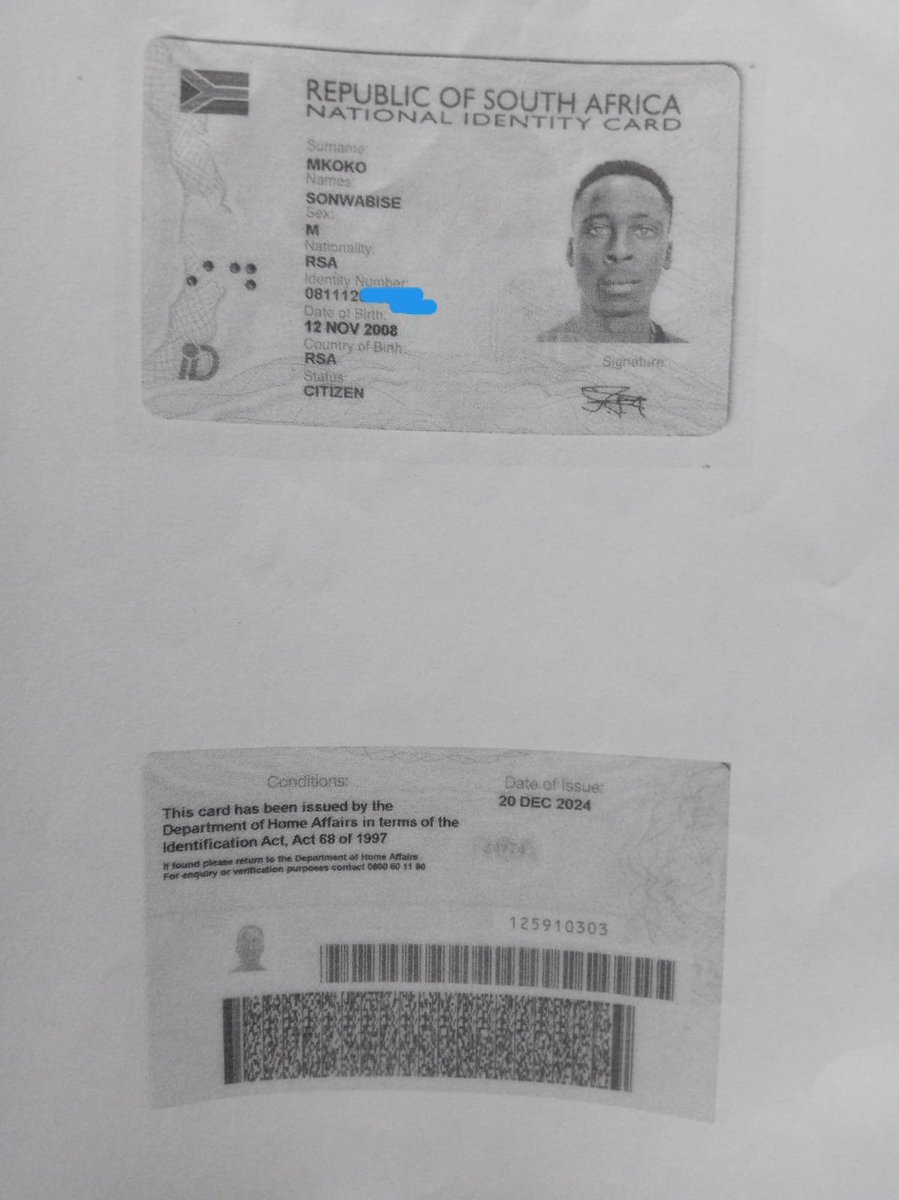
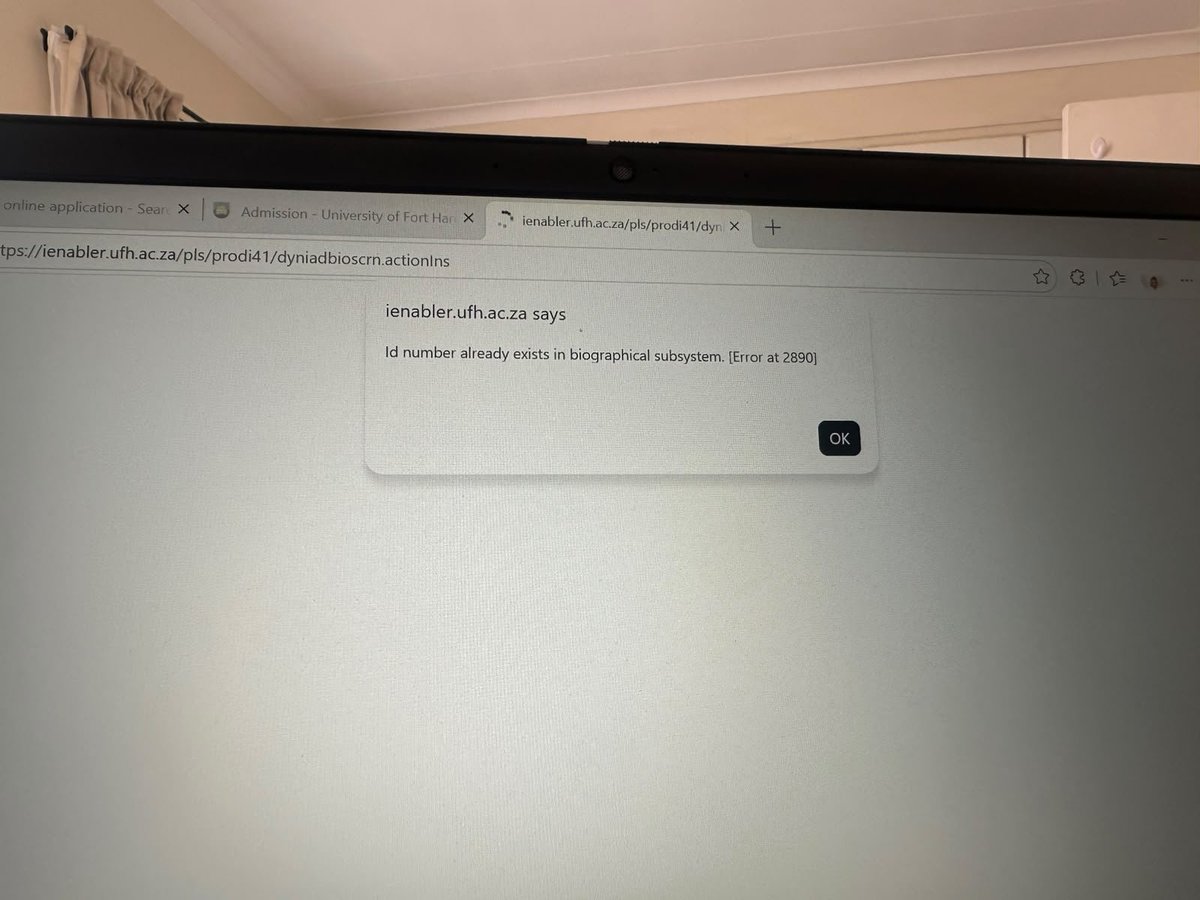
@HomeAffairsSA@CAOKZN
Please explain how is this Siyabonga Luyanda Bennedict Zulu sharing the same ID number as my son he has even applied for NSFAS and awaiting for financial aid using my son's ID number? 😳
🚨MARCH & MARCH IS BARKING AT A WRONG TREE - TREVOR
Trevor Noah makes a brutal point about South Africa’s anti-immigration protests:
You can be angry about crime, inequality and pressure on public services, but targeting vulnerable immigrants while ignoring the people who allow the system to be abused makes absolutely no sense.
In a nutshell : “Don’t fight the symptom while protecting the people breaking the system.” 😭😂
You’ve done everything. Whatever happens next is out of your hands now. You’ve told the world!
Now we wait to see if the people who claim they hate corruption will act.
Fear? there’s no room for fear…
Even if the worst does happen, that means; it was always going to happen.
Ibidalwe ngu Thixo.
Ibizokwenzeka kakade!
Love your fight. 🙏🏾✊🏾🇿🇦❤️
WATCH | Senior Department of Transport official Esethu Hasane says he fears for his safety after blowing the whistle on alleged irregularities involving millions of rand spent on questionable communications contracts.
Next week we are in KwaThema.
8&9 September in Hong Kong
19 September - Gqeberha
26 September - Joy Of Jazz
31 October - Cape Town (catch early bird now)
Next week we are in KwaThema.
8&9 September in Hong Kong
19 September - Gqeberha
26 September - Joy Of Jazz
31 October - Cape Town (catch early bird now)
Both Zimbabwe and South Africa must rethink how they define the middle class.
In 2008, I hosted two friends at my home in Harare, the late South African journalist Ben Said and @ChrisMaroleng. We had a heated argument about this because, at the time, someone earning around R8,000 a month in South Africa was described as middle class.
I argued with Ben that this definition was bogus because it confused earning more than the poor with actually being economically secure. Calling someone middle class does not make them middle class simply because their salary sits somewhere in the middle of an income distribution.
A meaningful definition of middle class should be based not merely on income, but on a reasonable standard of living and a degree of economic security.
You should ordinarily be able to afford decent housing, whether through a mortgage or sustainable rent, own and maintain a reliable car or have dependable transport, pay your utilities without constantly deciding which bill to postpone, buy adequate and nutritious food, access decent healthcare, educate your children, afford insurance, save part of your income every month, contribute towards a pension or retirement plan, take an occasional holiday, replace essential household appliances without resorting to expensive debt, and participate in ordinary social and cultural life.
Most importantly, a genuinely middle-class household should have disposable income, assets and financial resilience. After paying the mortgage or rent, food, electricity, water, transport, school costs, healthcare, insurance and other normal expenses, there should still be money available for savings, investment and some enjoyment of life. Is this happening in Zimbabwe?
Middle class should not mean that you can afford your monthly bills only when everything goes right. It should mean that your household can remain economically stable when something goes wrong.
A broken refrigerator, a major car repair, an unexpected medical bill or a temporary interruption in income should be an inconvenience, not an immediate financial catastrophe that forces you into expensive debt.
There should also be some capacity for wealth accumulation. Over time, a middle-class household should ordinarily be able to build assets through home equity, pension savings, investments, a business or other productive assets. Otherwise, someone can have all the outward appearances of middle-class consumption while remaining permanently financially vulnerable.
That is why we need to stop defining the African middle class merely by asking who earns more than the poorest citizens. Middle class should describe a standard of living, economic security and the ability to build wealth, not simply a position on an income table.
If you earn a so-called middle-class salary but spend virtually everything on basic living costs, have no meaningful savings, no assets, no retirement provision, and missing one or two salaries would plunge your household into crisis, we should ask an uncomfortable question.
Are you really middle class, or are you simply a better-paid poor person with middle-class expenses?
Well, if the Zimbabwean government is saying that it is building a genuine fast-growing middle class, you need to ask yourself; how many Zimbabweans have medical aid or access to medical aid? 8% of Zimbabweans are on formal medical aid. You have got to ask yourself; how many Zimbabweans own homes? How many Zimbabweans between the ages of 25 and 60 own homes?
I happen to be Zimbabwean, and I can tell you that it is a country where people get shocked that a journalist can own a house in Zimbabwe, another in Johannesburg, and another in London. And that journalist is 55 years old, yet they ask you, “Where did you get your money?”
In a proper middle-class society, that journalist should have much more than just three homes in three different countries. That’s what being middle class means.
BREAKING NEWS: As of 1 Sept 2026. Lobola will no longer be considered a customary marriage unless you are legally registered with Home Affairs.
Bitter exes will no longer fight for inheritance. 🥺🥺🥺🥺🥺
#SIUWorkingForYou| SIU SECURES SPECIAL TRIBUNAL JUDGMENT HOLDING FORMER NKANDLA PROJECT ARCHITECT PERSONALLY LIABLE TO PAY FOR R147.2 MILLION LOSS
The Special Investigating Unit (SIU) has secured judgment by the Special Tribunal ordering Mr Minenhle Makhanya, the former architect and principal agent responsible for the security upgrades at former President Jacob Gedleyihlekisa Zuma’s private residence in Nkandla, KwaZulu-Natal, to pay the National Treasury R147,269,444.06.
These charges arose from Public Protector report that ordered ABSA Bank to repay the interest of R1 billion it illegally obtained from the South African Reserve Bank. When ABSA and the Reserve Bank took that report on review, the Constitutional Court ordered me to pay personal legal costs. Ordinary South Africans responded. They crowdfunded every cent of the R260 000 �� many giving as little as R10 – to defend a Public Protector who had dared to act.
Under my leadership the Office of the Public Protector achieved its first clean audit since the institution was established in 1996. Then delivered two further consecutive clean audits. That record of integrity was met not with recognition, but with a coordinated campaign by the ANC and DA to remove me.
I was illegally removed after sending 31 questions to President Cyril Ramaphosa arising from the Phala Phala investigation. Today that same President faces impeachment proceedings.