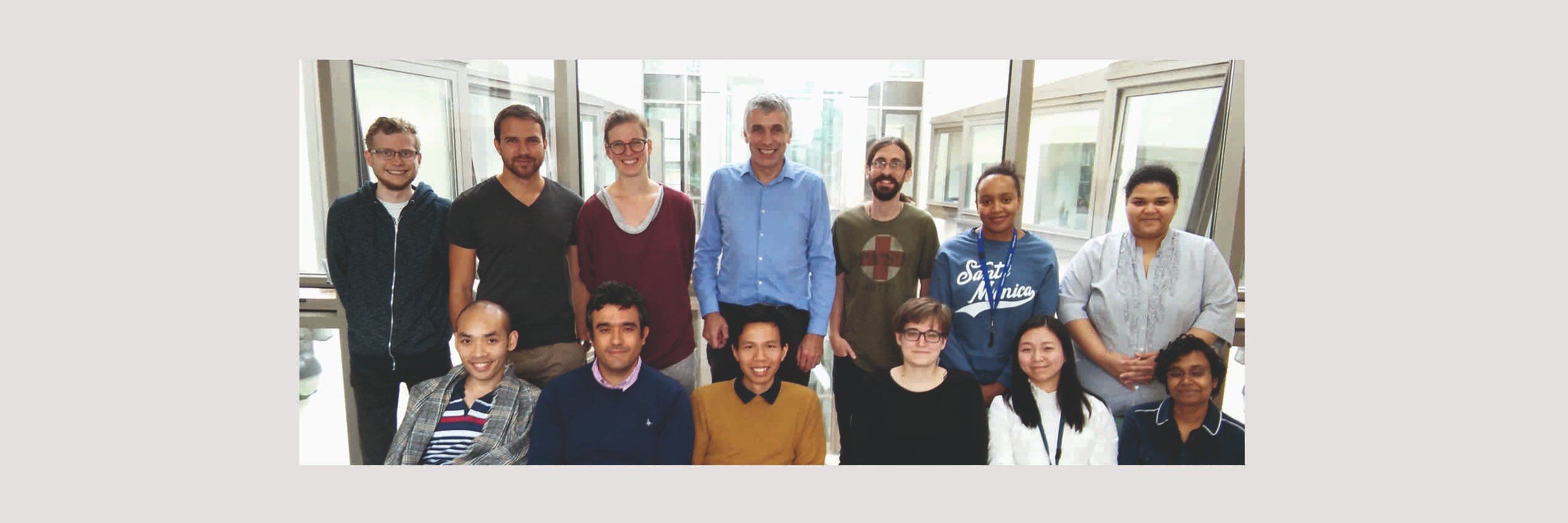
Peter Simmonds runs a research group in University of Oxford. Very interested in the broader evolution of viruses and constraints under which they are placed.
Here is my re-visiting of the C->U hypermutation phenomenon in SARS-CoV-2 genome 4 years from the start of the COVID pandemic:
https://t.co/JfVvJP5kIX
A trajectory of loss of C's / gain of U's, but weak 5' context effect and RNA structure dependence on edited sites. APOBEC 3A??
Before #COVID19, when was the last #coronavirus#pandemic? Some have argued for 1889-1892 for the zoonosis of human #OC43 from bovine coronavirus, but in our new paper: https://t.co/ggnZ8H3GbS, we suggest 1899-1900, based on a review and replication of existing molecular data.
Have you ever wondered how nucleic acid editing pathways (APOBEC, ADAR, and epitranscriptomics) might impact the adaptation of zoonotic viruses to humans? Of course you have! Lucky for you, we have a new review in COVIRO considering just that issue: https://t.co/RgEfJVmWlo
The largest study to date on the viruses residing within our tissues
Unmasking the tissue-resident eukaryotic DNA virome in humans https://t.co/AHFwabcwFK
@AdrianJ44426152@simroux_virus This should provide at least an initial guide to how a virus (or a virus sequence) might be assigned. It also provides downloadable alignments of informative genes used for classification.
Each chapter is regularly updated, and most virus families are now included.
Four principles to establish a universal virus taxonomy
https://t.co/eFQMdVMsOA
It was a wonderful experience to share a workshop with world experts on virus diversity, genomics and classification.
@AdrianJ44426152@simroux_virus The online (10th) ICTV Report:
https://t.co/VfCDkRvs37
provides comprehensive information on the assignment criteria for species and other ranks that are used for each virus family, and a description of the properties of members of each.
@AdrianJ44426152@simroux_virus The downloadable ICTV Virus Metadata Resource contains information of virus names and the taxon they are assigned to:
https://t.co/IouWRMxXSB
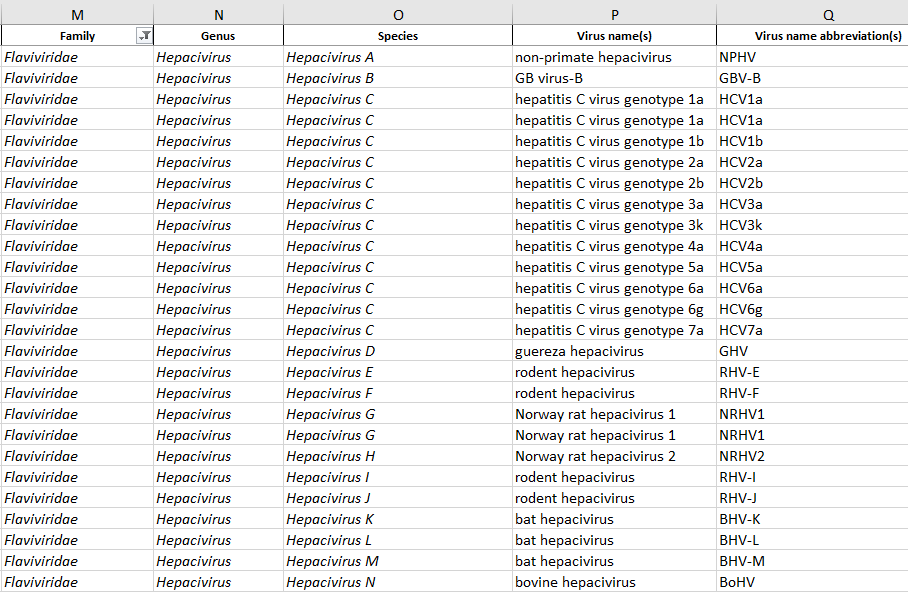
As an example, here is the listing for members of the genus Hepacivirus. Is this what you meant?
@edwardcholmes @DuckSwabber I'll let the experts comment here on alignments, but I don't think there is any doubt that RNA viruses possess a homologous RdRp. As described, there is clearly scope for structure-based or other analyses to better define deeper phylogenies. As for cellular reconstructions.....
We believe these principles can be used to create a coherent and logical organisational structure for virus taxonomy that can incorporate the vast diversity of viruses that exist in the world.
These principles traverse a range of seemingly intractable points of disagreement and contention that have bedevilled virus classification since its inception in the 1960s. Resolution of these conflicts provides a clear strategy for harnessing the genomics revolution in virology
@edwardcholmes @DuckSwabber RdRp is the hallmark gene for the realm of most RNA viruses, clearly homologous and distinct from cellular polymerases. Other gene sets are used for other realms. Analogous to constructing deeper phylogenies of prokaryotes, eukaryotes and archaea using ribosomal genes?
@ArisKatzourakis @josegabrielnb @OxfordBiology@alexander_suh Many congratulations @josegabrielnb
, not just for the fascinating and enlightening discussion during the viva, but also for that body of great work on mavericks and virus evolutionary history. A fantastic DPhil! Great also to meet with Alex @alexander_suh, many shared interests
@ArisKatzourakis Well, the Oxford comma does prevent this (published!) book dedication being misunderstood:
To my parents, Ayn Rand and God.
Spiritual ancestry indeed! or:
Among those interviewed were his two ex-wives, Kris Kristofferson and Robert Duvall
I never knew! Thanks Wikepedia,
Come and work with some fantastic people (Oxford/UCL) on using genomics to improve safety of transfusion and transplantation: https://t.co/EAzOBhnL12
https://t.co/tio6otyEi8
Fully funded Oxford PhDs:
https://t.co/1Vr1RSJ4HR
Fully funded UCL PhD:
https://t.co/eZWHprcVtW
Project background:
Genomic Revolutions in Donation Screening and Safety (GRiDDS) is funded NIHR for 5 years and providing resources for a major expansion of genomics-based technologies in blood and transplant donation screening and emerging virus / pandemic preparedness .
We will be starting a major project to apply genomics to blood and transplant donor microbiology screening. We have project manager, post-doctoral and several funded PhD positions in Oxford and UCL - Apr/22. Great collaborative work with NHSBT:
Links to follow
Please RT!
Links for the posts:
In Oxford:
https://t.co/A8dhXxUIWM
https://t.co/fzkXEieEOd
in UCL:
https://t.co/Q7yAdAqSzp
and the PhDs for Oxford:
https://t.co/31I9XnxK8A
and UCL:
https://t.co/y4u1R70LdZ