@Samiie4s@papaye01016819@oualido خانز الترمة و ضعيف جنسيا و مثلي كاتهز القلوة، حسابك غادي يتفضح، تزيد تعليق اخر غادي ندير ليك فضيحة، اخر تحذير ا خانز الزك
Sam Altman (CEO of Open AI):
"You no longer need to write prompts."
In just 38 minutes, he explains how to use ChatGpt at a level that most people can't even imagine.
It's talk he gave to stanford students. A friend sent me the recording last night.
After watching it, I realized I was only taking advantage of about 15% of what this tool can really do.
Watch it in full and then read the guide l leave below on how to create a system that prompts itself.
🚨 أندرو نج (Andrew Ng) يُطلق الكورس الأقوى في تاريخ الـ Agents: ساعتان فقط لنقل أعمالك من مجرد Agent عادي إلى الأوتومة الكاملة! 🧠💥⚡️
ساعتان فقط كفيلتان بمسح 99% من الشروحات والدورات التي حفظتها هذا العام! الكورس يتجاوز خطوة بناء العون الأول، ليدخلك مباشرة في عالم هندسة المخططات لتعمل منظومتك في الخلفية بدون تدخلك نهائياً!
📌 التسلسل الزمني والمرعب للتعلم:
9:14: بناء أول Agent لك.
33:11: تشغيل الأعوان داخل الحلقات التكرارية (Agent Loops).
1:02:46: هندسة المخططات (Graph Engineering).
1:30:15: الأعوان التي تعيد كتابة وبرمجة نفسها تلقائياً!
1:49:05: بناء المنظومة الشاملة المكتملة (Full Graph System).
💡 التدرج الذهبي للذكاء الاصطناعي:
Prompts → Agents → Loops → Graphs
المعادلة بسيطة: ستست��دم نفس النموذج وستستهلك نفس الـ Tokens، لكن إنتاجية أسبوعك بالكامل ستتغير إلى الأبد!
احفظ التغريدة بـ Bookmark، ابدأ مشاهدة الدورة فوراً، وشاركها مع كل مطور مهتم بالـ AI Agents! 🧵👇
Use Fable 5 as orchestrator and Opus + Codex to execute (to save fable usage):
Fable 5 (max reasoning) = orchestrator
Opus = deep reasoning subagent
Sonnet = mechanical work subagent
Codex = peer Sr. engineer, different perspective
Setup:
1. Set Fable 5 as your main model In Claude Code: /model → Fable 5 → reasoning /effort to max
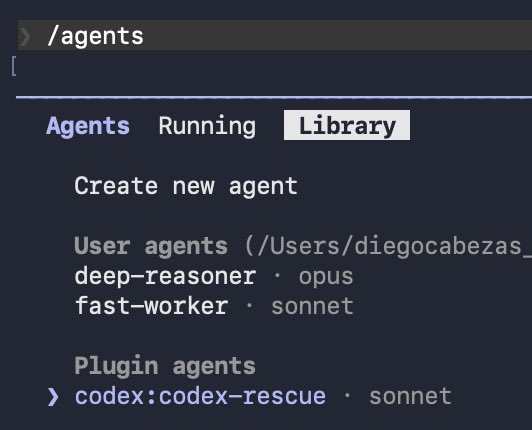
2. Create 2 subagents with /agents In Claude Code:
deep-reasoner → pinned to opus "Use for reasoning-heavy phases, architecture, debugging complex issues, algorithm design. Think thoroughly, return a concise conclusion the orchestrator can act on."
fast-worker → pinned to sonnet "Use for mechanical tasks, boilerplate, tests, formatting, simple edits. Execute efficiently."
3. Add OpenAI's official Codex plugin (install codex cli in your computer first), In Claude Code type:
/plugin marketplace add openai/codex-plugin-cc
/plugin install codex@openai-codex
/codex:setup
4. Drop this in your CLAUDE.md in your folder:
## Orchestration workflow
You (Fable) are the orchestrator. Plan, decompose, synthesize.
Reasoning-heavy phases → deep-reasoner
Mechanical work → fast-worker
Codex (/codex:rescue --background) is a cracked engineer on par with deep-reasoner, from a different perspective. Treat as a peer, not a reviewer.
High-stakes decisions: task Opus + Codex on the same problem in parallel, synthesize the best of both, without showing either the other's answer. Keep your own context lean.
5. Then prompt Fable like a tech lead: "Goal: [what you want] Context: [files, constraints] You're the lead. Delegate reasoning to deep-reasoner, grunt work to fast-worker, fresh-perspective problems to Codex. Show me your plan first, then execute."
That's it.
Anthropic engineers just built a full app from scratch with nothing but a loop of agents
40 minutes from the team that builds Claude Code
three agents running in a cycle: one plans, one builds, one judges, looping until the app actually works
nobody in that demo wrote the same prompt twice. they designed the loop once and walked away
watch it, then read the full guide on how to build one below
KARPATHY WROTE THIS DOCUMENT TO COMPLETELY AUTOMATE OBSIDIAN WITH CLAUDE
I was ready to abandon my second brain
manual cross-referencing was destroying my workflow, but finding this exact document opened my eyes to a completely different approach
it is incredibly convenient -> Karpathy's method turns the AI into a full-time maintainer for your Zettelkasten:
> the LLM reads every new source and integrates it into a structured wiki
> Obsidian becomes your visual IDE while Claude operates as the backend
> the agent runs automated checks to find contradictions across your notes
> your entire vault compounds automatically without you typing a single link
the friction is completely gone. I just feed it raw documents and the agent organizes my entire life
here is the official document from Karpathy explaining the architecture 👇