Let's decode what actually happened here.
Axios reported that Trump exploded at Netanyahu. Called him "fucking crazy." Said "you'd be in prison if it weren't for me." Said "everybody hates you now."
The journalist is Barak Ravid again, we talked about it. Israeli. Based in Washington. Covers the Netanyahu-US relationship for Axios, and every latest deals to calm the markets.
This is the same journalist who wrote the exact same type of story about Biden. There is literally a book chapter about this pattern. It is called "Fuming Biden." The same reporter. The same format. The same function. Different president.
Now watch the response.
Mark Levin, a close ally of both Trump and Netanyahu, did not deny the story. He demanded an FBI investigation into who leaked it. When your defense is "this should never have leaked" instead of "this never happened," you have confirmed the call happened.
But here is the part that matters.
Why would Levin, a friend to BOTH men, confirm the most explosive account of their relationship ever published?
Because it serves both.
Trump gets to look tough. Not Netanyahu's puppet. Willing to put Israel in its place. His base loves it.
Netanyahu gets cover. He "paused" the Beirut strike, but not because Iran threatened him. Because his "friend" asked him to. His base loves it too.
And look at what actually changed on the ground. Nothing.
Israel cancelled the Beirut strike. But the ground invasion of Lebanon continues. The IDF is still miles deep. A soldier died today from a Hezbollah drone. Netanyahu's office said: "position unchanged."
The performance was perfect. Trump gets the headline. Netanyahu gets the cover. The deal gets another 48 hours of "progress." Markets get a reason to breathe.
And the war continues exactly as planned.
This is the same playbook. Every time public opinion turns against the war, a story appears showing the US president is "furious" with Israel. It creates the illusion of restraint while changing nothing.
Biden was "furious" for 14 months. The war never stopped.
Trump is "furious" now. The ground invasion is expanding.
The visible game is: Trump controls Netanyahu.
The real game is: both men are performing for their audiences while the machine moves forward.
Nothing has been signed. Nothing has stopped. The war is not winding down. It is being managed.
Neither one controls the other. They walk arm in arm. Know that.
BREAKING: President Trump responds after Iran ends all negotiations with the US, per CNBC.
"I really don’t care. I couldn’t care less," Trump says.
He also said he was "going to ask" Israeli Prime Minister Netanyahu "what’s going on with Lebanon."
On this day in 1943, a thousand starving Japanese soldiers ran screaming out of the fog on a frozen Alaskan island, bayonets lashed to broken sticks, to die.
The island was Attu, the westernmost tip of the Aleutian chain. It was the only piece of North American soil the Japanese had captured in the entire war. The Americans had been trying to take it back for nineteen days in the worst conditions either side had ever fought in: freezing rain, knee-deep mud, fog so thick a man could not see his own rifle, and tundra that swallowed boots and never gave them back.
The Japanese garrison was down to 800 men. They had no food left. No medicine. No way off the island. They had been told no rescue was coming.
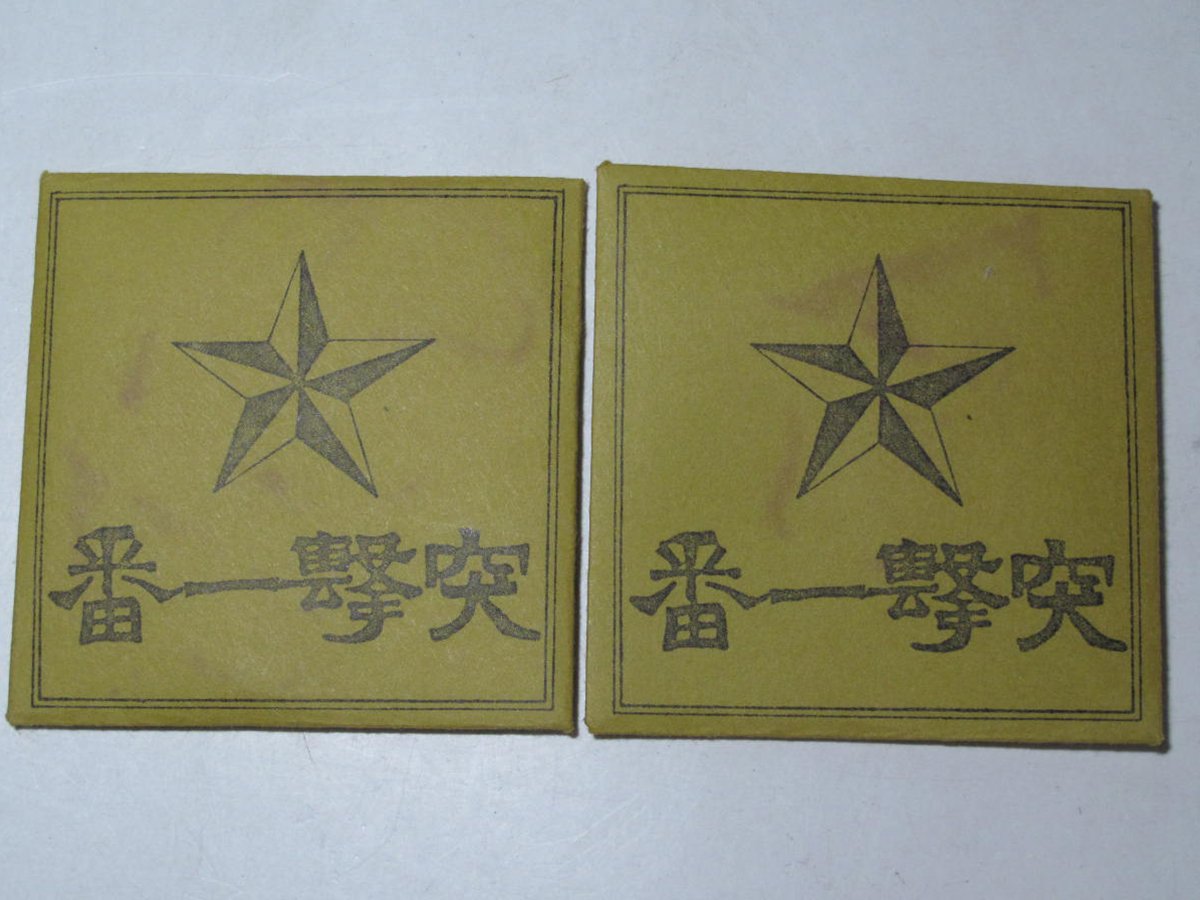
Their commander was Colonel Yasuyo Yamasaki, a 51 year old career officer who had been on Attu for less than three weeks. On the night of May 28, he gathered every man who could still hold a weapon. This included his wounded. Those who could not walk were shot or given grenades. Those who could limp were given anything that could stab. Some had bayonets. Some had bayonets lashed to ski poles. Some had bayonets lashed to tent stakes.
Then he led them straight at the American line in the dark.
It was the largest banzai charge of the Pacific war up to that point.
They came through a gap in the fog at 3:30 AM, completely silent until they were inside the American positions. Then they screamed. They overran the front line in minutes. They overran the artillery batteries behind it. They reached the field hospital and butchered the wounded in their cots. They got within a hundred yards of the American command post before they were finally stopped by a scratch force of engineers, cooks, military police and walking wounded who fired at point blank range until their rifles were too hot to hold.
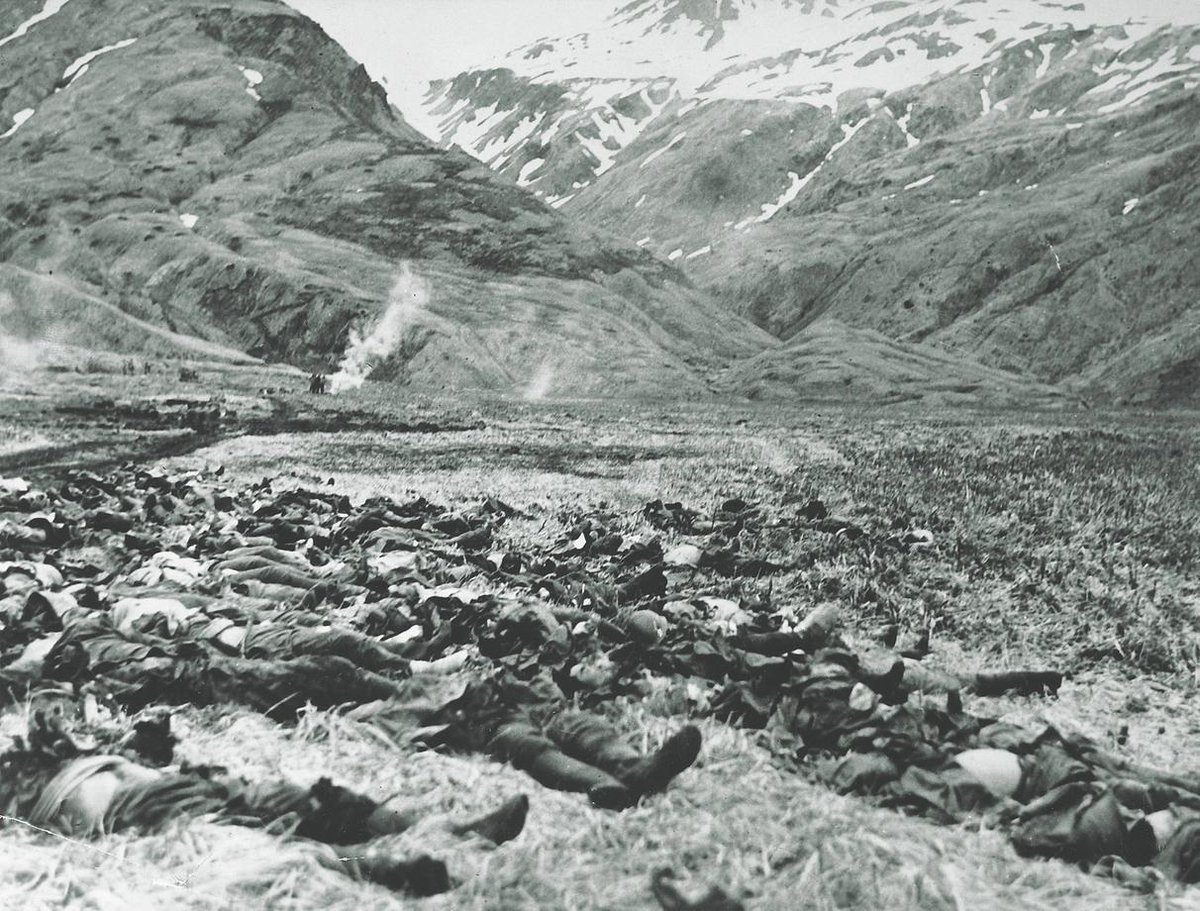
When the sun came up, the snow on the slope was carpeted with bodies.
The Americans counted 500 dead Japanese on the ground in front of them. Then they began finding the rest. Almost all of the remaining defenders had killed themselves with grenades held against their chests. American soldiers walking the field afterward described finding small groups of three or four men curled in a circle, their bodies folded around the same grenade.
Out of a Japanese garrison of nearly 2,900, the Americans took 28 prisoners.
It was the second highest American casualty rate of any battle in the Pacific war, after Iwo Jima.
Almost no one in the United States has heard of it.
Brazilian Hell...
A man dies and goes to hell.
There, he finds that there is a different hell for each country.
He goes to the German hell and asks,
"What do they do there?"
He is told: "First, they put you in an electric chair for an hour. Then they lay you on a bed of nails for another hour. Then the German devil comes in and beats you for the rest of the day."
The man doesn't like it, so he moves on and checks out the American hell, the Russian hell and hells of other countries.
He finds that they're all more or less the same as the German hell.
Then he comes to the Brazilian hell and finds that there is a long queue of people waiting to get in.
Amazed, he asks, "What do they do here?"
He is told: "First, they put you in an electric chair for an hour. Then they lay you on a bed of nails for another hour. Then the Brazilian devil comes in and beats you for the rest of the day."
"But that is exactly the same as all the other hells; so why are so many people waiting to get in here?" wonders the man.
He is told, "Because the maintenance here is so bad that the electric chair does not work. Someone has stolen all the nails from the bed, and the Brazilian devil is a former government servant, so he just comes, signs the attendance register, and then goes to the canteen."
Mexico paid $20 million for eight minutes in this movie. Then those eight minutes forced them to invent an entire cultural tradition.
Before Spectre, Mexico City had no Day of the Dead parade. The holiday was celebrated at home, at cemeteries, with family altars. Quiet, intimate, centuries old. Sam Mendes fabricated a massive street parade for the opening sequence, shot it with 1,500 extras in skeleton costumes across the Zócalo, and audiences worldwide assumed they were watching a real annual event.
Mexico's government had negotiated hard for the placement. Leaked Sony hack emails showed officials offered up to $20 million in tax incentives for four minutes of positive portrayal. Sony was drowning in a $300 million budget. The deal included script changes: the Bond girl had to be a Mexican actress, the villain could not be Mexican, and the city's modern skyline had to appear on screen.
Then the movie opened in 182 countries and tourists started booking flights to Mexico City for the parade.
The parade that did not exist.
Tourism authorities panicked. Visitors were arriving expecting the spectacle they saw in the film and finding nothing. So in October 2016, the government spent $500,000, hired 650 volunteers, built dozens of floats and giant skeleton marionettes, and staged the first real Día de los Muertos parade in Mexico City's history. 250,000 people showed up. They openly called it a "Spectre-style parade" in press materials.
Ten years later, the parade draws millions. Anthropologists call it the "pizza effect," where a cultural element gets exported, transformed abroad, and reimported as authentic. Mexico's most famous public celebration of its most sacred holiday was invented by a British director shooting a $300 million spy movie.
That tracking shot is doing more for Mexico City's economy every November than the $20 million they paid for it.