Como decirlo con tacto?
Hay hombres de 35 que se les para la pija con mujeres de 25. Y a otros con mujeres de 45.
Hay mujeres de 35 que se les moja la concha con hombres de 25. Y a otras con hombres de 45.
Por qué decidimos que todas las personas apuntan al mismo rango etario??
Suponete que soy un tipo de 30 y algo, serio, con guita, que quiere tener hijos.
Por qué elegiría a una tipa de 35 años que "gana bien" (irrelevante, ya que yo ya gano buena guita según la premisa) pero a duras penas podría darme un hijo vs una pendeja núbil menor de 25?
@alerosenfeld Por qué mejoraría sabiendo que es Massa?
Un tipo que, dependiendo el año, opinó de maneras muy diferentes: eso es muy negativo para el mercado
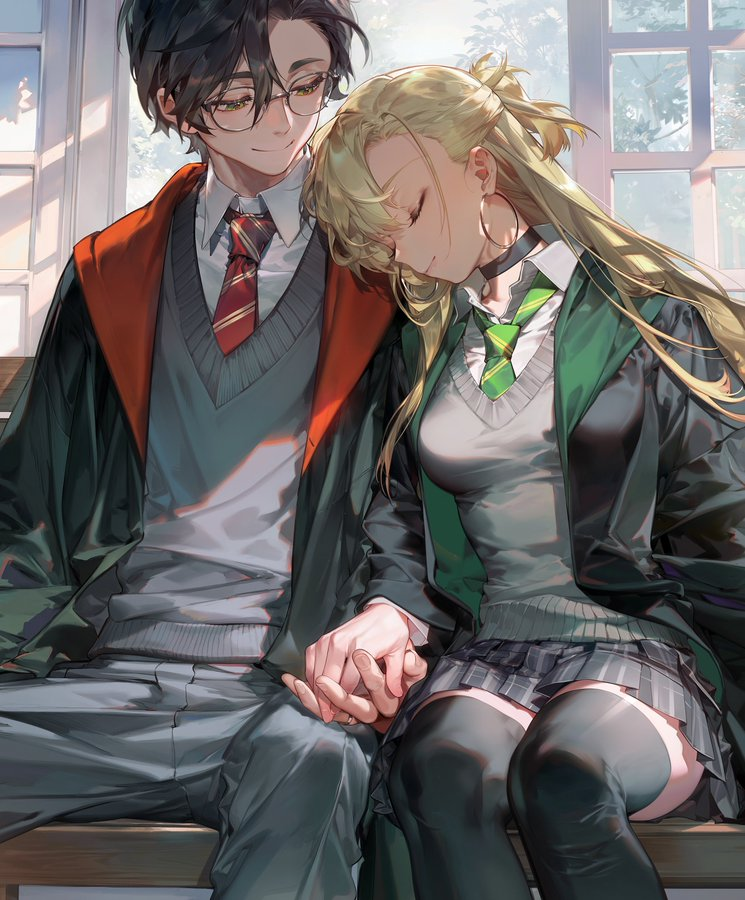
I don't think people fully understand just how magical the Malfoid Movement really is, especially for those on the right.
Think about it. For the last 10–20 years or so, whenever people tried to argue that the right still had some degree of cultural influence, what examples did they usually bring up?
Almost always The Lord of the Rings, and only in the last decade or so has anime become another common example. And I understand why. A lot of anime still embraces relatively wholesome themes and values that are familiar to Western audiences, such as chivalry, honor, loyalty, sacrifice, and traditional romance.
But that's the problem. It's still Japanese culture at the end of the day.
These works are written by Japanese authors, in Japanese, and primarily for Japanese audiences. Yes, many are inspired by Western culture, and some even borrow heavily from European history, mythology, and literature. But inspiration is not the same as cultural origin. You can certainly appreciate these works for their values, but trying to claim them as achievements of Western culture is rather silly when they were ultimately created within a completely different cultural environment. A Confucian environment =/= a Western environment, despite the similarities.
Unlike anime, the entire foundation of Malfoid is Harry Potter, a work deeply rooted in British and broader European culture. The boarding schools, aristocratic families, castles, folklore, social hierarchies, and even the general atmosphere of the wizarding world are all drawn from that cultural background. And regardless of what J.K. Rowling says or believes today, the fact remains that she is a British author who was born and raised within that Anglo cultural tradition. There is no need to awkwardly attribute Western cultural influences to something that was created outside of it. Those influences are already present in the original work. Just look at the Basilisk, Albus Dumbledore acting as a Merlin figure, the use of Latin, and so on. There's no awkward reinterpretation of these elements as "Kuro Ryuu" or "Kaze Ryuu." They're presented directly as what they are, like the Basilisk itself.
Now, what makes the Malfoid Movement particularly remarkable is that people are taking this existing foundation and actually creating something new from it.
And I think this is something that a lot of people, especially those who spend their time complaining about the decline of Western culture, fail to understand.
There is a fundamental difference between consuming culture and creating culture. For years, people have been pointing toward Tolkien, or more recently anime, as examples of the values and storytelling they wish were more common. But pointing toward an established masterpiece and praising it is not the same as producing and creating something yourself.
With Malfoid, however, we are seeing ordinary people create artwork, fanfiction, character interpretations, and entire romantic narratives within an existing Western literary universe.
There was no political organization behind it, no corporate campaign, and no grand attempt to manufacture some kind of cultural revival. People simply liked the idea and started creating.
And there's another aspect of this movement that I find particularly interesting, Harry Potter was originally written in English.
Seriously, can any of you imagine what would have happened if Harry Potter had originally been a Japanese LN? Before the movement could even gain momentum, we'd probably already be bombarded with localizers and self-appointed "cultural interpreters" arguing about what the author actually meant, whether the fans understood the original text, and why certain interpretations were supposedly wrong.
But Harry Potter is different, since it was written in the modern lingua franca. English-speaking fans can read the original work directly, without having to rely on a translation or somebody else's interpretation of what the author supposedly intended. Of course, people can still argue about the meaning of the story, but at least there is no language barrier separating the audience from the original text.
But going back to my original point, what makes this entire movement so remarkable is that it represents something people have been complaining about for years without necessarily recognizing it when it finally appears.
For the last two decades, we've heard endless arguments about the decline of Western creativity, the disappearance of traditional romance, and the supposed inability of modern audiences to produce anything worthwhile. And yet, here we are, witnessing thousands of people enthusiastically creating new stories and artwork based on a Western literary work. So I seriously doubt that most of the naysayers complaining about Malfoid even understand what the movement represents in the first place. And that's why I keep saying that Malfoid is bigger than all of them.
It's bigger than some niche, snobbish author trying to lecture everyone about what constitutes good literature.
It's bigger than these politically addicted commentators who seemingly cannot look at anything without turning it into another culture-war clickbait.
And it's certainly bigger than the divide between the left and the right.
Because what we're witnessing here, at least to me, is something far more interesting. I would go so far as to argue that the Malfoid Movement is an outward expression of the creative spirit of Western youth. People from different Western countries, different culture backgrounds, and entirely different walks of life are coming together to create something simply because they find it beautiful, romantic, or interesting. They aren't waiting for some established literary authority to tell them whether their ideas are worthwhile. They're simply putting those ideas into the world and allowing others to build upon them.
And isn't that what culture is supposed to be?
Not something permanently confined to a handful of established masterpieces, nor something that belongs exclusively to one political faction, but a living tradition that ordinary people continuously contribute to.
Culture doesn't survive simply because people keep pointing toward the achievements of previous generations. It survives because new generations continue to engage with it, reinterpret it, and eventually contribute something of their own!
The next genuinely great work to emerge from this movement might already be getting written right now. Whether it becomes a classic is something only time can tell, but the creative potential is certainly there.
That's why I find it so embarrassing when people who constantly talk about defending culture turn around and dismiss the very people who are actively participating in it. You cannot spend years complaining that nobody creates anything worthwhile anymore, only to ridicule people the moment they actually start creating.
At some point, you have to ask yourself whether these people genuinely care about culture, or whether they simply enjoy complaining about its decline.
@_str4wberrei Please don't. I know it's hard. But please don't. Been there. I know how dark it looks. But things find a way. Please. You are worthy of everything. Ask for help. Please
One of the most enlightening takes on Malfoid that I've seen so far was a YouTube video I watched today that has since been lost to the aether.
At the end of the video he made the point that this kind of story is extremely culturally important for the right. Not because it's conquering a leftist beloved IP or because it reintroduces beauty and romance to storytelling. Not that those aren't fine things.
No it does something much bigger.
For at least two decades we in the west have been subjected to nothing but deconstructive storytelling. Every expectation and trope is so routinely subverted that we know the story from the start. Its why so much modern media is just...
...boring.
Because God forbid the guy actually get the girl, the bad guy be bad and get his comeuppance, or the ending be at all happy. (Aside: I believe this is responsible for the recent rise in eastern media)
But I digress. What Malfoid actually is, is an inversion of the deconstruction of media. Its taking a broken story and making it whole. It takes a plot that was ok but flawed, and uses traditional story telling to fill in those gaps and create a recognizable pattern that elevates the whole thing.
He doesn't call it this in the video, but I like to think of it as "reconstructive" or "restorative" story telling: the elevation of a story by the inclusion of traditional storytelling methods and tropes so that it speaks to what is true about the human condition.
There was one other example he gave that comes, of all places, from Star Wars. While almost all of modern Star Wars under Kathleen Kennedy was deconstructionist crap, one show stood out: The Mandolorian.
After the debasement of Luke Skywalker in the ironically name Rise of Skywalker, many people were extremely discouraged. Mark Hamill himself said that he didn't agree with anything that his character was doing and he didn't recognize Luke by the end.
In steps Jon Favreau and Dave Filoni, and in the final scene of season 1 of The Mandolorian we get to see Luke Skywalker back in his rightful spot as the Big Damn Hero, doing the Right Thing and Saving The Day. Grown men cried watching that scene; once again seeing their childhood hero back in his rightful roll.
It was reconstructive, restorative even, and why the left went all-out attacking the show.
I know we all lament the idea of Malfoid fading even if we know it's inevitable. What we should do though is learn from it and take those lessons forward to new projects, be they fanfic or entirely new IPs:
- understand that "creative" work is not the domain of the left
- avoid deconstruction at all costs and instead speak to the truth of human nature
- embrace traditional western storytelling
On that last point, I want to remind y'all that not every story is a love story. The western storytelling tradition is rich with different story tropes that each serve a purpose: tragedy (Anakin and Padame in the prequel series), comedy (White Christmas), heroes journey (Dartanian from Three Musketeers), great quest (LoTR), rebirth (Kousko in Emperor's New Groove or the Beast in Beauty and the Beast), rags to riches (Edmond in Count of Monte Cristo).
There's more, but you get the idea. Don't be afraid to retell these stories again and again. They resonate so well because they speak to fundamental elements of the human condition.
Its tempting to wonder what other stories are out there that might be a tweak or two away from greatness, but I wouldn't get hung up on that. You aren't gonna catch lightning in a bottle twice.
Instead I say look forward, using these lessions, and build something great from the ground up, borrowing pieces from the past to build the future.
@grok@dosinaga2@marxposting Y te faltaron las muertes en la guerra, Grok, podrías sumar la cantidad de soldados que murieron en la Gran Guerra Patriótica, y podrías contarnos cuantos de estos soldados eran, como decía Vysotsky, "si me me muero, no escribas que soy comunista"?