The 10-year Treasury yield is perhaps the most important financial benchmark in the global fiat system, as it drives valuations and market trends worldwide. It is widely—and erroneously—regarded as the risk-free rate of return.
The 10-year Treasury yield can be thought of as a key barometer of the US dollar-based fiat system—a critical measure akin to its beating heart.
Bond yields move inversely to bond prices. When bond prices fall, bond yields rise.
A rising 10-year Treasury yield signals trouble for the US dollar because it means investors are selling Treasuries, which pushes up the US government’s borrowing costs. That is why the 10-year Treasury yield is a major pain point for the US government.
The 10-year Treasury yield was 3.97% when the war started. Now it is around 4.60%, an increase of roughly 63 basis points.
I expect the 10-year Treasury yield to keep climbing over the coming weeks and months—until it forces the Fed’s hand. At that point, the intervention will be sold as “stability,” but the mechanism will be familiar: suppress yields by debasing the currency.
At today’s debt levels, every 1 basis point increase in the government’s average borrowing cost adds roughly $3.9 billion in annual interest expense. So a 63 bps rise is not trivial—it translates to nearly $250 billion in additional yearly interest costs, materially widening a 2025 budget deficit that was already around $1.8 trillion.
Higher yields mean the US government must pay tens or even hundreds of billions more in interest on its debt. At the same time, the global economy faces even greater added costs because Treasury rates serve as the benchmark for borrowing worldwide.
That is not an insignificant move. However, given all the headwinds I have discussed, I suspect the 10-year Treasury yield is headed much higher because investors will demand higher yields to compensate for rising inflation. Further, if Hormuz remains closed, drastically higher oil prices are all but certain. Higher energy prices mean higher prices across the economy and higher official inflation rates, which means investors will demand still higher yields to compensate.
The problem is that interest on the federal debt is already over $1.2 trillion and is now the second-largest item in the budget. The US government cannot afford yields going much higher because the interest expense would push it toward bankruptcy.
I am not sure how—or even if—the US government can manage this situation. Something has to give, and we will not have to wait long to find out what.
The Iran war may prove to be more than another foreign policy disaster. It could be the trigger that exposes the fragility of the entire dollar-based financial system.
Mining companies today are generating the largest profit margins of any sector in the global economy by far.
Much of the market remains asleep and still analyzes mining through an outdated framework from decades ago.
To be clear:
Miners today are producing profit margins nearly double those of tech companies.
At current metal prices, this environment is absolute nirvana for well-run mining businesses.
https://t.co/rRpQ7qqZ5H
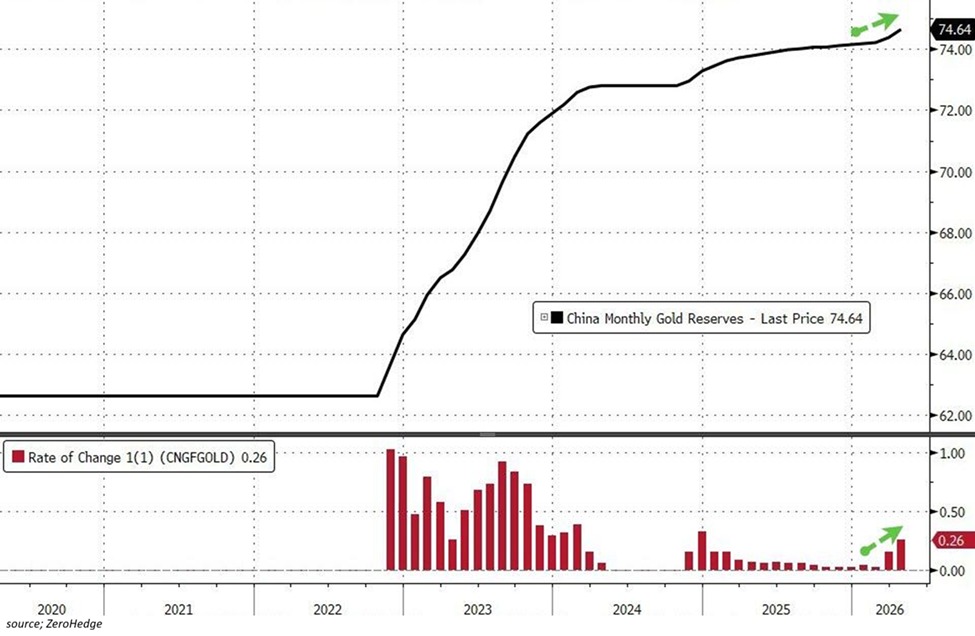
BREAKING: China’s central bank bought +8 tonnes of gold in April, the most since December 2024.
This follows +5 tonnes acquired in March, the 2nd-largest two-month addition since Q1 2024.
This also marks their 18th consecutive monthly purchase, bringing total official holdings up to a record 2,322 tonnes.
Year-to-date, China’s central bank has bought +15 tonnes of gold, on track for its biggest annual purchase since 2023.
Since 2022, the country has officially increased its gold holdings by +372 tonnes, or +19%, making China one of the strongest gold buyers in the world.
China is buying the dip in gold.
The global silver market is expected to remain in a deficit for a sixth consecutive year amid robust demand for bars and coins, and declining supplies, according to the Silver Institute https://t.co/Xk77T9mmqZ
Energy Fuels produced a so-called heavy rare earth element for the first time at its plant in Utah, advancing efforts to build a domestic supply of critical minerals used in electronics and defense technology. https://t.co/egcDJz3oLF
@KobeissiLetter They died to protect isreal, not the US. Shame they died for no cause, but will always be grateful for those who paid ultimate sacrifice
Bitcoin’s “digital gold” promise is unraveling as traders forgo the token for surging metals, exposing a narrative that once defined the asset’s macro appeal https://t.co/PJ4dEVFge0
The US can have…
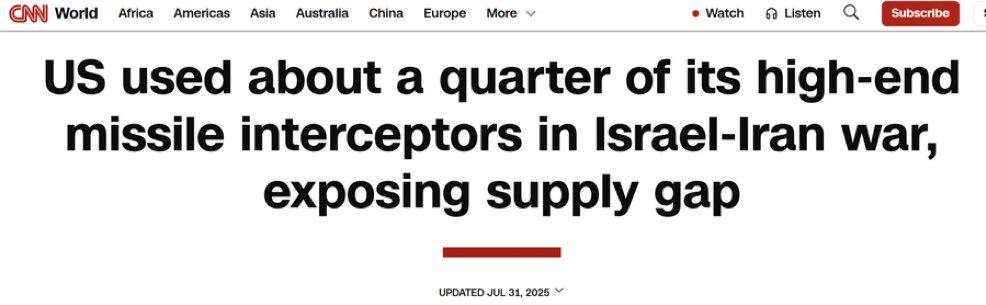
1) a strong USD (which means we run out of air defense missiles in <1 month of medium intensity combat defending Israel, & then have to ask China nicely for critical minerals to make more), or…
2) a weak USD
“What…do…you…WANT?” We have chosen wisely IMO
Ever wonder how minerals connect to the future of clean energy and advanced technologies?
@Energy_Fuels recent YouTube video describes how we process #HeavyMineralSands and why they’re a critical link to the #RareEarths magnets powering the modern world.
⛏️Rare Earths are essential for permanent magnets used in electric mobility, wind energy, robotics, drones and defense technologies.
⛏️ Heavy Mineral Sands like titanium and zircon play a vital role in construction projects, pigments and ceramics.
Watch the full video to learn more:
https://t.co/HQaEPhWI7T
$UUUU $EFR #mining
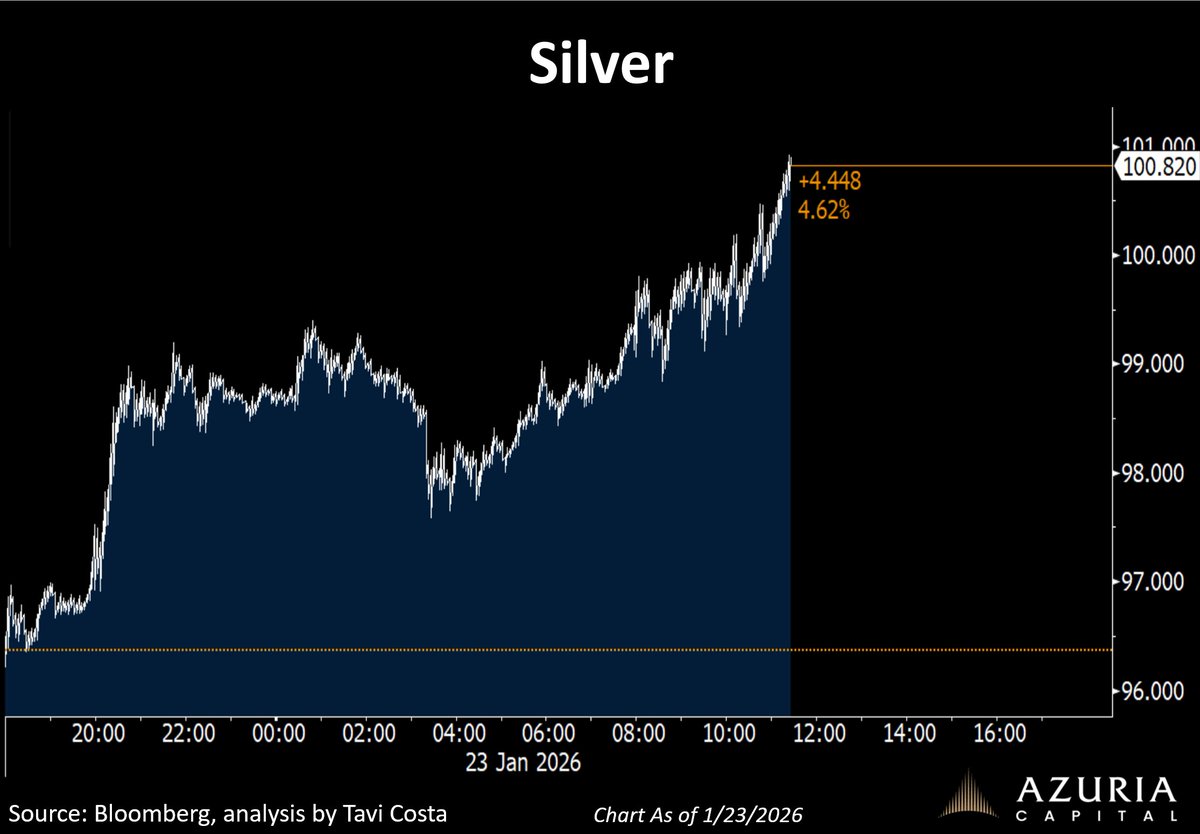
Ladies and gentlemen — our time has arrived.
Welcome to triple-digit silver.
Before anyone calls a top, remember this:
Silver’s total value relative to global debt outstanding is just 0.6%.
Game on.
🚨@Energy_Fuels to acquire Australian Strategic Materials to create new "mine-to-metal & alloy" rare earth champion 🚨
Read the full details in our most recent press release: https://t.co/Xx6dcwwZNL
$UUUU $EFR #EnergyFuels#rareearths